Nepal's Digital Horizon: What Changed in 2026 for Remote Workers
Nepal's highly anticipated digital nomad visa finally launched in 2026, ushering in new opportunities and stringent requirements for remote professionals. This article unpacks the changes, what to expect, and how to apply.
June 30, 2026
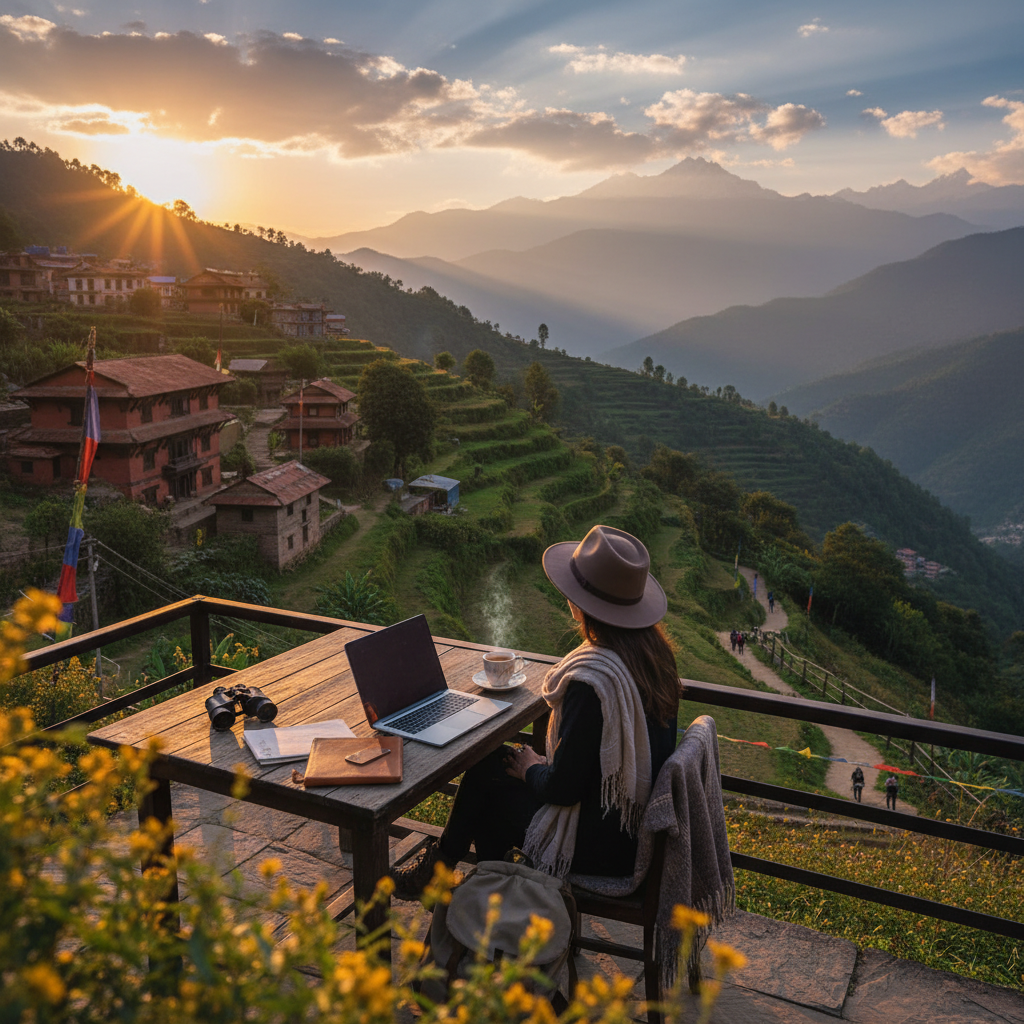
Kathmandu's Thamel district buzzed with its usual chaotic symphony of motorbikes, prayer flags, and street vendors. But beneath the familiar veneer, a distinct shift was palpable among the guesthouses and co-working spaces in early 2026. For years, whispers and unconfirmed reports had circulated about Nepal embracing the global phenomenon of remote work. Now, after persistent advocacy from local tourism bodies and a recognition of the potential economic infusion, the Nepalese government formally launched its dedicated digital nomad visa. This wasn't merely an administrative tweak; it was a comprehensive policy overhaul, marking a profound change from the patchwork of short-term tourist and business visas that digital nomads had previously navigated. The new framework, effective from January 1, 2026, aimed to attract high-earning, location-independent professionals, offering a structured pathway for longer stays and contributing to the nation's burgeoning digital economy. This guide details these critical changes, providing a comprehensive and current overview of Nepal's digital nomad visa in 2026.
Quick facts
| Feature | Details |
|---|---|
| Income requirement | NPR 250,000 per month (approx. USD 1,875 / EUR 1,720) |
| Visa duration | Initial 1 year |
| Renewable | Yes, for 1 additional year |
| Application fee | NPR 30,000 (approx. USD 225 / EUR 206) |
| Processing time | 4-6 weeks |
| Tax rate for holders | 15% on Nepali-sourced income (foreign income exempt) |
| Family members allowed | Yes, dependents via separate visa application |
| Path to residency | No direct path |
What is the Nepal digital nomad visa?
Before 2026, Nepal did not offer a specific visa catering to digital nomads. Remote workers often relied on consecutive tourist visas or short-term business visas, which came with inherent limitations, such as restricted lengths of stay and often required border runs or complex extension processes. This informal arrangement lacked legal clarity and provided no specific rights or benefits to the remote professional community. The new Nepal digital nomad visa, officially termed the 'Remote Work Permit (RWP)', is a dedicated legal instrument introduced by the Department of Immigration, effective January 1, 2026. This permit is designed for foreign nationals who work remotely for an employer or clients outside Nepal, do not engage in the local Nepali labor market, and meet specific financial criteria. Its introduction signifies Nepal's strategic intent to diversify its tourism-reliant economy by attracting longer-term, higher-spending visitors who can contribute to local economies through their consumption of services, rent, and local goods, without burdening the local job market. Unlike a mere visa extension, the RWP provides a clear legal status, establishing specific rights and obligations for the holder and aims to regularize the presence of a growing number of digital nomads in the country. The RWP is initially valid for one year and is renewable once for an additional year, providing a maximum stay of two years under this specific category.
Nepal digital nomad visa requirements
The eligibility criteria for the Nepal digital nomad visa have been significantly tightened and codified compared to the previous informal arrangements. Applicants must now strictly adhere to these guidelines to qualify for the 'Remote Work Permit'.
General Requirements:
- Nationality: Open to citizens of all countries that have diplomatic relations with Nepal.
- Age: Must be 18 years of age or older.
- Work Location: Must perform work remotely for an employer or clients located outside of Nepal. Engaging in local Nepali employment is strictly prohibited.
- Clean Record: Must possess a clean criminal record from their country of origin and any country of residence in the last five years.
- Health Insurance: Mandatory valid international travel and health insurance that covers the entire duration of stay in Nepal, with a minimum coverage of USD 50,000 for medical emergencies and repatriation.
Financial Requirements:
This is where 2026 brought the most significant change. Previously, there was no specified income threshold. Now, applicants must demonstrate a stable, verifiable monthly income from foreign sources. The minimum required income is NPR 250,000 per month (approximately USD 1,875 or EUR 1,720, based on mid-2026 exchange rates). This income must be consistently earned for at least six months prior to the application date. Acceptable proofs of income include:
- Bank statements from the past six months, clearly showing direct deposits from an employer or clients.
- Employment contract or service agreements from foreign entities, detailing salary/fees.
- Invoices and payment confirmations for freelancers or business owners.
- Official tax returns from the country of origin, validating reported foreign income.
Documentation Requirements:
- Completed online visa application form.
- Valid passport with at least six months validity beyond the intended stay and at least two blank pages.
- Recent passport-sized photographs (as per Nepali immigration specifications).
- Proof of employment or business registration outside Nepal (e.g., employment contract, company registration documents, client agreements).
- Proof of foreign-sourced income meeting the NPR 250,000 monthly threshold (bank statements, payslips, tax returns).
- International health insurance policy documents.
- Return flight ticket or onward travel itinerary (though this might be waived upon demonstrating sufficient funds).
- No objection letter from the applicant’s current employer, explicitly stating remote work approval (if employed).
- Evidence of accommodation in Nepal (e.g., hotel booking for initial stay, rental agreement).
How to apply for the Nepal digital nomad visa
The application process for the Nepal digital nomad visa, while structured, requires careful attention to detail. It's a multi-stage process that can be initiated before arrival or, in some specific cases, after entering Nepal on a tourist visa.
1. Pre-Application & Document Gathering:
Begin by gathering all required documents as listed above. Ensure all financial documents clearly show the specified income threshold. For documents not in English or Nepali, obtain certified translations. It's advisable to have digital copies for online submission and physical copies for in-person submission.
2. Online Application Form:
Access the official Department of Immigration website and complete the online visa application form for the 'Remote Work Permit (RWP)'. Fill in all details accurately and upload digital copies of your passport, photographs, and initial supporting documents. This generates a confirmation slip with a unique application ID.
3. Submission at Nepali Embassy/Consulate (Outside Nepal):
If applying from outside Nepal, you will typically submit your application and supporting documents, along with the application fee, at the nearest Nepali Embassy or Consulate in your country of residence. They will review your documents and conduct an initial assessment. An interview might be required.
4. Submission at Department of Immigration (Inside Nepal - limited cases):
In certain circumstances, individuals who have already entered Nepal on a valid tourist visa with a clear intention to apply for the RWP may be able to convert their visa. This is not guaranteed and requires prior approval and a compelling justification. In such cases, the full application is submitted to the Department of Immigration in Kathmandu. It's highly recommended to apply from your home country to avoid complications.
5. Biometrics and Interview (if required):
Upon successful initial review, you may be called for a biometrics appointment and/or an interview to clarify any aspects of your application.
6. Processing and Approval:
Processing typically takes 4-6 weeks from the date of complete submission. You will be notified via email or through the diplomatic mission about the decision. If approved, you will receive an approval letter or a visa sticker in your passport.
7. Visa Sticker Issuance:
If approved by an embassy/consulate, the visa will be affixed to your passport. If processed within Nepal, you will visit the Department of Immigration to receive your visa sticker.
Important Note: The government has made it clear that applying for the RWP from within Nepal after arrival on a typical tourist visa should not be seen as a right, but rather as an exception, typically reserved for those who can demonstrate unforeseen circumstances or a legitimate change in circumstances that prevents them from returning to their home country for application. Consulting with the country's official immigration website or a reputable immigration lawyer in Nepal is crucial for the most current and specific advice.
Cost breakdown
The financial aspects of securing the Nepal digital nomad visa have been clearly defined in 2026. Transparency in fees is a welcome change for applicants.
| Item | Cost in NPR | Equivalent USD (approx.) | Equivalent EUR (approx.) |
|---|---|---|---|
| Application Fee | 30,000 | 225 | 206 |
| Visa Sticker Fee | 15,000 | 112.50 | 103 |
| Health Insurance | 25,000 - 50,000+ | 187.50 - 375+ | 172 - 345+ |
| Translation/Notarization | 5,000 - 15,000 | 37.50 - 112.50 | 34.50 - 103 |
| Immigration Lawyer (optional) | 50,000 - 150,000 | 375 - 1125 | 345 - 1035 |
| Total Estimated Initial | 125,000 - 260,000 | 937.50 - 1950 | 860 - 1790 |
- Application Fee (NPR 30,000): This non-refundable fee is paid during the initial application submission to the Department of Immigration or relevant Nepali diplomatic mission. It covers the administrative processing of your application.
- Visa Sticker Fee (NPR 15,000): Once approved, this fee is paid to receive the actual visa sticker in your passport. It is separate from the application fee.
- Health Insurance (NPR 25,000 - 50,000+): Costs vary significantly based on the provider, coverage level, and applicant's age/health status. A minimum coverage of USD 50,000 for medical and repatriation is mandatory.
- Translation and Notarization (NPR 5,000 - 15,000): If any of your supporting documents are not in English or Nepali, you'll need certified translations, incurring additional costs.
- Immigration Lawyer Consultation (NPR 50,000 - 150,000): While not mandatory, many applicants, especially those new to Nepali bureaucracy, opt for professional assistance. This range covers initial consultations to full application support.
All monetary figures for USD and EUR are approximate based on an assumed exchange rate of 1 USD = 133.33 NPR and 1 EUR = 145.00 NPR, current as of mid-2026. Actual costs may fluctuate with exchange rates.
Taxes for digital nomads in Nepal
The 2026 taxation laws for holders of the Nepal digital nomad visa have been clarified to prevent double taxation for genuinely foreign-sourced income while ensuring compliance for any domestic earnings. The key principle is the source of income.
- Foreign-Sourced Income: Income earned from an employer or clients located outside of Nepal, and remitted into Nepal, is generally considered foreign-sourced. Under the current tax regime effective 2026, holders of the Remote Work Permit (RWP) are exempt from Nepali income tax on this foreign-sourced income. This is a significant incentive, allowing digital nomads to potentially benefit from tax residency rules in their home country if applicable, or to enjoy tax-free status on their remote earnings in Nepal.
- Nepali-Sourced Income: Any income generated from activities within Nepal, such as providing services to a Nepali company or selling goods locally, will be subject to Nepali income tax. The standard progressive income tax rates in Nepal apply to such income. For incidental local earnings, a flat rate might apply, but for substantial local work, it would likely fall under standard progressive rates, potentially reaching up to 36% for higher brackets. However, engaging in local employment is prohibited under the RWP.
- Tax Residency: Holders of the RWP are generally not considered tax residents of Nepal solely based on their RWP status, especially if their permanent home and center of vital interests remain outside Nepal and they do not exceed 183 days of physical presence in Nepal in a fiscal year. However, exceeding this threshold or establishing significant economic ties could lead to tax residency, making seeking advice from a tax professional specializing in international taxation essential. This is particularly relevant for those contemplating a second-year renewal.
- VAT and Local Taxes: Digital nomads will be subject to Value Added Tax (VAT) on goods and services purchased in Nepal, just like any other consumer. Local municipal taxes may also apply depending on rental agreements and service consumption.
It is imperative for RWP holders to maintain meticulous records of their income sources and to consult with a qualified tax advisor, especially given the complexities of international tax treaties and personal financial situations.
Family members allowed
The Nepal digital nomad visa allows for the inclusion of immediate family members, but it's not an automatic extension. Each family member must apply for their own separate visa, typically a dependent visa or a specific family-category visa, which is linked to the primary RWP holder's status. The process and documentation are distinct for each family member.
Eligible Family Members:
- Spouse (legally married).
- Dependent children under the age of 18.
- Children with disabilities, regardless of age, who are financially dependent on the primary applicant.
Requirements for Dependents:
- Separate Application: Each family member must complete a separate online visa application form.
- Proof of Relationship: Marriage certificate (for spouse), birth certificates (for children), all appropriately attested and translated.
- Financial Sufficiency: The primary RWP holder must demonstrate sufficient additional funds to support their dependents. The additional financial requirement is generally an extra 50% of the primary applicant's income threshold for the first dependent, and 25% for each subsequent dependent. For example, if the primary needs NPR 250,000, a spouse might require an additional NPR 125,000, bringing the total family requirement to NPR 375,000.
- Health Insurance: Each dependent must have their own international health insurance covering their stay in Nepal.
- Passport and Photographs: Valid passport and passport-sized photographs for each dependent, matching the primary applicant's requirements.
- Clean Record: Background checks may be required for adult dependents.
Application Process:
Family members can apply concurrently with the primary RWP applicant or at a later stage. It is generally recommended to apply together to streamline the process. The applications will be reviewed together, and approval for dependents is contingent upon the primary applicant's RWP approval. All applications should be submitted at the same Nepali Embassy/Consulate or Department of Immigration office.
Cost for Dependents:
Each dependent will incur their own visa fees (application and sticker fees) in addition to individual health insurance costs. There is no discounted 'family package' fee structure. This means the overall cost for a family of three (e.g., two adults and one child) will be significantly higher than for a single applicant.
For Bangladeshi passport holders
Bangladeshi citizens are eligible to apply for the Nepal digital nomad visa under the same terms and conditions as other foreign nationals. Nepal has long enjoyed close diplomatic and cultural ties with Bangladesh, and travel between the two nations is generally straightforward.
Specific Considerations for Bangladeshi Applicants:
- Visa Application Centre: Bangladeshi citizens will typically submit their Nepal digital nomad visa application to the Embassy of Nepal in Dhaka. Ensure all documents are prepared as per the general requirements, paying close attention to financial proofs and external employment contracts.
- Document Verification: The Nepali Embassy in Dhaka may have specific requirements for document attestation or verification. It is advisable to contact them directly for the most precise instructions on legalizing documents like marriage certificates, birth certificates, or educational qualifications, if required.
- Proof of Income: The NPR 250,000 monthly income requirement remains constant. For Bangladeshi freelancers or remote employees, clear bank statements showing deposits from foreign clients/employers are crucial. Due to currency fluctuations, it's beneficial to show income significantly above the minimum threshold to account for potential exchange rate shifts between BDT and NPR.
- Language: While documents can often be submitted in English, official government documents originating from Bangladesh (like national ID cards, if required) might need certified English translations if not already bilingual.
- Travel Logistics: Direct flights between Dhaka and Kathmandu are regular and affordable, making the journey hassle-free once the visa is approved.
Bangladeshi digital nomads should follow all general application guidelines meticulously and leverage the established diplomatic channels for a smooth application process. The introduction of the Nepal digital nomad visa in 2026 presents a clear and structured opportunity for Bangladeshi professionals to experience remote work from the Himalayan nation.
Nepal-specific pitfalls and tips for nomads
While the 2026 Nepal digital nomad visa offers a fantastic opportunity, understanding the unique challenges and characteristics of working remotely from Nepal is crucial for a smooth experience.
Pitfalls:
- Internet Reliability: While major cities like Kathmandu and Pokhara generally have decent fiber optic internet, outages can occur, especially during monsoon season or due to infrastructure issues. Speeds outside urban centers can drop significantly. Always have a backup plan, such as a local SIM card with a substantial data package.
- Power Outages (Load Shedding): While historical load shedding has significantly decreased, sporadic power cuts can still happen. Invest in a good power bank for your devices and ensure your accommodation has a reliable inverter or generator backup if consistent power is critical.
- Bureaucracy and Language Barriers: Despite improvements, navigating Nepali government offices can still be time-consuming and require patience. While many people speak English, particularly in tourist areas, official documentation and some interactions may require Nepali, necessitating a local contact or professional help.
- Healthcare Access: Quality healthcare facilities are primarily concentrated in Kathmandu and a few other major cities. For more remote locations, access to advanced medical care is limited. Robust international health insurance with emergency evacuation coverage is non-negotiable.
- Cultural Differences and Expectations: Nepal is a deeply traditional society. Understanding and respecting local customs, dress codes, and social norms is important, especially outside tourist enclaves. Patience and an open mind are vital.
- Proof of Exit: The Department of Immigration may scrutinize your declared intention to depart Nepal upon the expiry of your visa. While not always enforced for long-term visa holders, having a plausible exit strategy or an actual return ticket can prevent complications.
Tips for Success:
- Secure Reliable Accommodation: Research and book suitable accommodation well in advance, preferably with good Wi-Fi and power backup. Look for serviced apartments or guesthouses known to host long-term visitors.
- Get a Local SIM Card: NTC (Nepal Telecom) and Ncell are the primary providers. Ncell generally offers better data speeds. Purchase a local SIM upon arrival for a reliable data connection.
- Network with Other Nomads: Kathmandu and Pokhara have growing digital nomad communities and co-working spaces. Connecting with others can provide valuable insights, support, and friendship.
- Embrace the Pace: Life moves at a different rhythm in Nepal. Adopt a flexible mindset and be prepared for occasional delays or unexpected changes. Stressing over minor inconveniences will detract from the experience.
- Learn Basic Nepali Phrases: Even a few words like 'Namaste' (hello/greeting), 'Dhanyabad' (thank you), and 'Kati ho?' (how much?) can go a long way in showing respect and fostering goodwill.
- Budget Wisely: While Nepal can be affordable, maintain a buffer in your finances for unexpected costs like medical emergencies, repairs, or travel changes.
- Stay Informed: Regularly check the Department of Immigration's official website for any policy updates or changes, as immigration rules can evolve.
Frequently asked questions
What is the Nepal digital nomad visa?
Nepal's digital nomad visa, officially the 'Remote Work Permit (RWP)', is a dedicated visa category launched in 2026 for foreign nationals working remotely for employers or clients outside Nepal, allowing a legal stay of up to two years without engaging in local employment.
Who is eligible for the Nepal digital nomad visa?
Eligible applicants must be 18+, work remotely for foreign entities, earn at least NPR 250,000 monthly from foreign sources, and hold valid international health insurance. A clean criminal record is also mandatory.
How much does the Nepal digital nomad visa cost?
The primary official fees include an application fee of NPR 30,000 and a visa sticker fee of NPR 15,000. Total estimated initial costs, including mandatory health insurance and potential translation services, range from NPR 125,000 to NPR 260,000.
How long does Nepal digital nomad visa processing take?
Processing for the Nepal digital nomad visa typically takes 4-6 weeks from the date of complete application submission. This timeframe can vary based on the volume of applications and the thoroughness of documentation.
Can I bring my family on the Nepal digital nomad visa?
Yes, immediate family members (spouse, dependent children under 18) can join. Each family member must apply for a separate dependent visa, demonstrating additional financial capacity from the primary applicant to support them.
Do I pay tax in Nepal on the digital nomad visa?
No, holders of the Nepal digital nomad visa are exempt from Nepali income tax on their foreign-sourced remote work income. However, any income generated from activities within Nepal would be subject to local taxation.
Can Bangladeshi citizens get the Nepal digital nomad visa?
Yes, Bangladeshi citizens are fully eligible to apply for the Nepal digital nomad visa, adhering to the same requirements and application process as other nationalities. Applications are submitted via the Embassy of Nepal in Dhaka.
How long is the Nepal digital nomad visa valid, and can it be renewed?
The Nepal digital nomad visa is initially valid for one year. It is renewable once for an additional year, allowing a maximum stay of two years under this specific visa category.
Sources
- Department of Immigration, Government of Nepal - Official Website (consult the country's official immigration website)
- Ministry of Culture, Tourism and Civil Aviation, Nepal - Official Policy Updates 2026 (consult the country's official immigration website)
- Nepal Rastra Bank (Central Bank of Nepal) - Mid-2026 Exchange Rate Data (consult the country's official immigration website)
- Himalayan Times, 'Nepal unveils Remote Work Permit for digital nomads', January 5, 2026.
Compare with: Thailand, Indonesia, Sri Lanka
Interested in applying for the Nepal visa?
Tell us a bit about yourself and we'll send tailored guidance on eligibility, paperwork, and next steps.