Your Step-by-Step Guide to the Philippines Digital Nomad Visa in 2026
Dreaming of remote work amidst pristine beaches and vibrant culture? This comprehensive guide breaks down the Philippines Digital Nomad Visa application process, eligibility, fees, and everything you need to know for 2026.
June 29, 2026
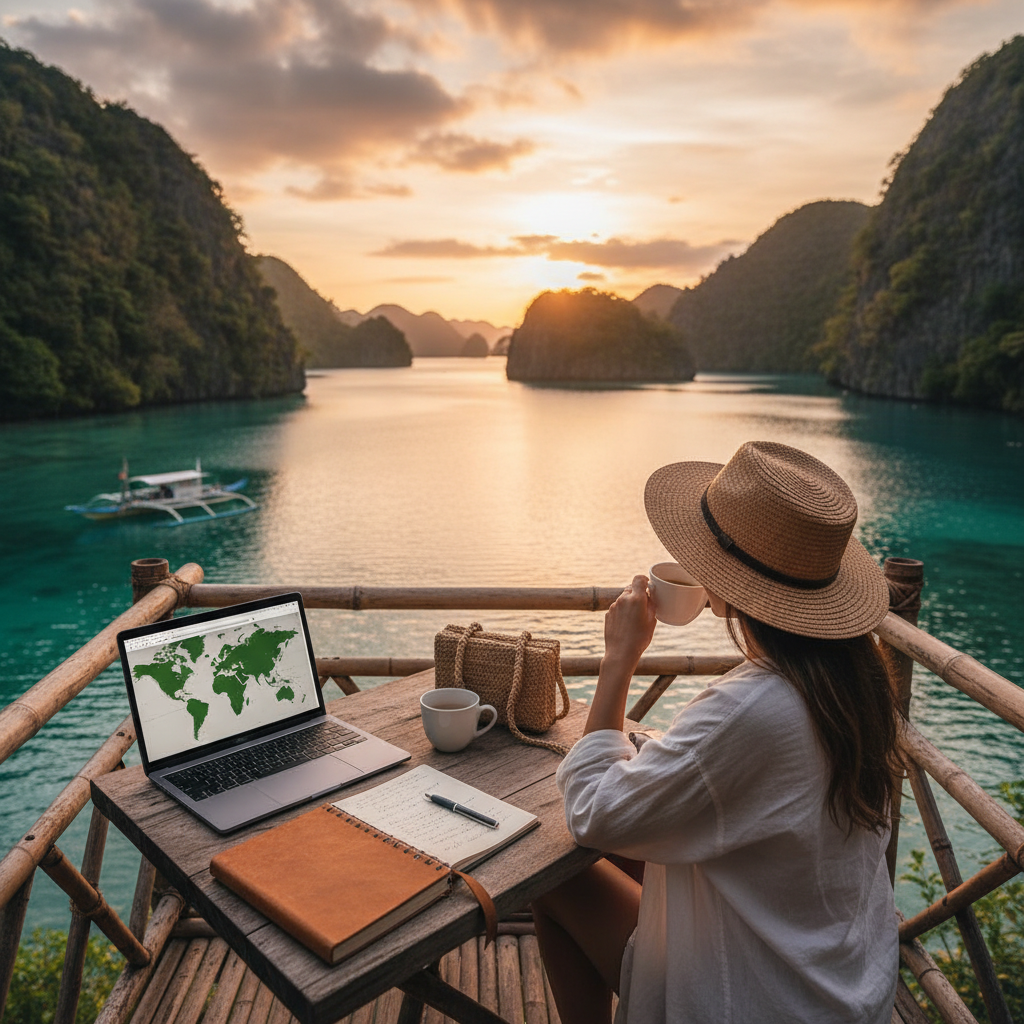
Picture this: you're wrapping up your workday, closing your laptop, and the only sound is the gentle lapping of waves against a powdery white-sand beach. The air is warm, fragrant with tropical blossoms, and a fresh mango smoothie awaits. This isn't just a fantasy; it's the daily reality for many remote workers embracing the Philippines as their temporary home. With its stunning natural beauty, welcoming culture, and an increasing commitment to supporting the burgeoning digital nomad lifestyle, the Philippines is quickly becoming a top contender for the Work From Anywhere movement. If you're ready to trade your cubicle for a coworking space overlooking the ocean, understanding the precise steps to secure your Philippines Digital Nomad Visa is your first crucial task. This guide will walk you through every single action you need to take in 2026, ensuring a smooth transition to your island dream. We'll cover everything from eligibility to taxes, processing times, and crucial tips to avoid common pitfalls.
Understanding the Philippines Digital Nomad Visa: Who Is It For?
The Philippines' Digital Nomad Visa, while not explicitly named as such, is primarily facilitated through specific long-stay visa categories that cater to remote workers and digital entrepreneurs. The most relevant pathway for individuals seeking to live and work remotely in the Philippines for an extended period, without formally being employed by a Philippine entity, is often a combination of short-term tourist permits followed by an application for an Alien Certificate of Registration (ACR I-Card) and subsequent visa extensions, or, in some cases, exploiting specific provisions within the Special Resident Retiree's Visa (SRRV) for younger individuals, or exploring specific long-stay options for professionals. However, as of early 2026, the Philippines is actively developing a dedicated Digital Nomad Visa. While the final legislation is still being refined, it is expected to mirror similar programs globally, targeting individuals who work remotely for foreign-based companies or clients.
Preliminary Eligibility Requirements (Based on current drafts and similar global visas):
- Nationality: Open to citizens of most countries with diplomatic relations with the Philippines.
- Employment Status: You must be employed by a company registered outside the Philippines, or be a freelance professional/digital entrepreneur with clients predominantly located outside the Philippines.
- Income Threshold: A stable, verifiable minimum monthly income. Early indications suggest this will be around USD 2,500 – USD 3,000 (approximately PHP 140,000 – PHP 170,000 based on a PHP 56/USD exchange rate) for single applicants, and potentially higher for families. This income must be derived from sources outside the Philippines.
- Health Insurance: Proof of comprehensive international health insurance coverage valid for the duration of your stay in the Philippines, with a minimum coverage of USD 100,000 (approx. PHP 5.6 million).
- Clean Record: A clean criminal record, with a background check certificate from your country of origin and any country you have resided in for more than six months in the past five years.
- Age: Usually, applicants must be 18 years or older.
The Application Journey: Your Checklist for Success
Applying for the Philippines Digital Nomad Visa (once officially launched) will follow a structured process. Here’s a detailed, step-by-step walkthrough of what you can expect in 2026. Remember, always consult the country's official immigration website for the most current forms and requirements.
Phase 1: Pre-Application Preparation (The Paperwork Hunt)
Before you even think about submitting an application, you need to gather your essential documents. Treat this as a treasure hunt for bureaucracy!
- Passport: Ensure your passport is valid for at least six months beyond your intended stay. Renew it if necessary. Make several photocopies of the biographical data page.
- Visa Application Form: Download and meticulously complete the official Digital Nomad Visa application form from the Philippine Bureau of Immigration website. Do not leave any fields blank; use "N/A" where not applicable.
- Proof of Remote Employment/Self-Employment: This is critical. Prepare:
- For Employees: A formal employment contract from your foreign employer, stating your position, salary, and explicit permission for remote work. Include recent payslips (at least 6 months) and bank statements showing salary deposits.
- For Freelancers/Entrepreneurs: Business registration documents (if applicable), client contracts, invoices, and bank statements showing consistent income from foreign clients (at least 6 months). A professional portfolio or website is also highly recommended.
- Proof of Income: Bank statements (personal and/or business) from the last six to twelve months, clearly indicating your income meets the threshold. An affidavit of financial support might be required if relying on joint accounts.
- Health Insurance Certificate: Obtain a certificate of coverage from your international health insurance provider, clearly stating the policy number, coverage dates, and benefits, ensuring it meets the minimum coverage requirements.
- Police Clearance/Criminal Record Check: Secure a police clearance certificate or a certificate of good conduct from your country of citizenship. If you've lived in other countries for more than six months in the past five years, obtain clearances from those countries as well. These documents often need to be apostilled or authenticated by the Philippine Embassy/Consulate in your home country.
- Medical Certificate: A general medical examination report from a licensed physician, confirming you are in good health and free from contagious diseases. This might include chest x-rays and laboratory tests.
- Accommodation Proof: While not always strictly mandatory for initial applications, having a booking for your first few weeks (e.g., a hotel, Airbnb, or coworking/coliving space) is advisable. This shows intent and preparedness.
- Photographs: Recent passport-sized color photographs (usually 2x2 inches), with a white background, without glasses, and taken within the last 6 months.
- Curriculum Vitae (CV)/Resume: An up-to-date CV detailing your educational background and work experience.
- Academic Credentials: Copies of your highest educational degrees or professional certifications.
For Dependants (Spouse and Unmarried Children under 21):
- Copies of their passports.
- Marriage certificate (for spouse), birth certificates (for children), authenticated or apostilled.
- Medical certificates for each dependant.
- Police clearance for dependants aged 18 and above.
- Proof of financial capacity to support dependants (covered by primary applicant's income).
- Additional passport-sized photographs.
Phase 2: Application Submission (Making It Official)
Once your dossier is complete, it's time to submit.
- Online Portal (Expected): The Philippines is likely to implement an online application portal for preliminary submissions. You will upload scanned copies of all your documents here. Be precise with filenames and ensure image quality.
- Interview/Biometrics (Potentially): Depending on the application volume and your nationality, you might be invited for a virtual or in-person interview at a Philippine Embassy/Consulate or the Bureau of Immigration office to discuss your application and provide biometrics (fingerprints and photo).
- Appointment for Hard Copy Submission: After successful online pre-screening, you will likely schedule an appointment to submit the hard copies of your original documents and pay the application fees. This could be at a Philippine Embassy/Consulate in your country of residence or directly at the Bureau of Immigration if you entered on a tourist visa and are converting.
Phase 3: Fees and Processing (The Waiting Game)
This is where you incur the costs and patience becomes a virtue.
Estimated Fees (as of 2026, subject to change):
- Application Fee: Approximately PHP 5,000 – PHP 8,000 (USD 90 – USD 140).
- Visa Issuance Fee: Approximately PHP 10,000 – PHP 15,000 (USD 180 – USD 270).
- ACR I-Card Fee: PHP 2,500 – PHP 3,000 (USD 45 – USD 55). This is mandatory for all foreign nationals staying in the Philippines for more than 59 days.
- Express Lane Fee (Optional): If available, expect to pay an additional PHP 500 – PHP 1,000 (USD 9 – USD 18) for faster processing.
- Notarization/Consular Fees: Varies depending on your country of origin, but can range from USD 50 – USD 200 per document requiring authentication.
- Medical Exam: Can range from PHP 1,500 – PHP 3,000 (USD 27 – USD 55) in the Philippines, or more in your home country.
- Police Clearance: Varies by country, typically USD 20 – USD 100.
- Health Insurance: Highly variable, but budget USD 50 – USD 200+ per month depending on age, coverage, and provider.
Total estimated initial cost (excluding health insurance): USD 500 – USD 1,000.
Processing Times:
- Initial Review/Pre-screening: 2-4 weeks.
- Full Application Processing: 4-8 weeks from the date of hard copy submission.
- ACR I-Card Issuance: 1-2 weeks after visa approval and payment.
- Total Expected Time: Plan for a minimum of 2-3 months from the start of your document gathering to receiving your physical visa and ACR I-Card.
Phase 4: Post-Approval and Arrival (Embracing the Tropics)
Congratulations! Once approved, your journey truly begins.
- Visa Stamping: Your visa will either be stamped in your passport at the embassy/consulate or issued electronically, which you then present upon arrival.
- ACR I-Card Collection: Upon arrival in the Philippines, and once your visa is active, you will be instructed on collecting your Alien Certificate of Registration (ACR I-Card). This is your official identification as a foreign resident and is crucial for many transactions.
- Bureau of Immigration Registration: You may need to report to the nearest Bureau of Immigration office within a certain period after arrival, particularly if your initial entry was on a tourist visa and you're converting it.
Tax Treatment for Digital Nomads in the Philippines
This is a critical area for remote workers. The general principle in the Philippines is that income derived from sources within the Philippines is taxable. However, for digital nomads working for foreign entities, the situation is usually more straightforward:
- Foreign-Sourced Income: Income earned from an employer or clients located outside the Philippines, where the work is performed for entities outside the Philippines, is generally considered foreign-sourced income. As a non-resident alien or a resident alien (depending on your visa type and length of stay) with foreign-sourced income, you are typically not subject to Philippine income tax on this income.
- Philippine-Sourced Income: If you engage in any local freelancing, provide services to Philippine clients, or set up a local business, that income will be subject to Philippine income tax.
- Double Taxation Agreements (DTAs): The Philippines has DTAs with many countries, including Bangladesh. These agreements prevent you from being taxed twice on the same income. If your home country taxes its citizens on worldwide income, the DTA will usually provide relief, ensuring you are taxed in only one jurisdiction or offered tax credits.
- Importance of Documentation: It is paramount to maintain impeccable records of your foreign employment contracts, client agreements, and bank statements clearly showing the origin of your income to demonstrate it is foreign-sourced if ever questioned by the Bureau of Internal Revenue (BIR).
Specific Considerations for Digital Nomads from Bangladesh: For Bangladeshi remote workers, understanding the DTA between Bangladesh and the Philippines will be crucial. Generally, as long as your income is generated from clients or employers outside both the Philippines and Bangladesh, and you do not establish a 'permanent establishment' in the Philippines, you should be exempt from Philippine income tax on that foreign-sourced income. However, always consult with a tax professional specializing in international taxation for personalized advice, especially concerning your home country's tax obligations.
Family and Dependants
The Philippines Digital Nomad Visa is anticipated to be family-friendly. You can typically include your:
- Legally married spouse.
- Unmarried children under the age of 21.
Each dependant will need to meet similar documentation requirements (passport, police clearance for adults, medicals, etc.) and will incur additional fees for their visa and ACR I-Card. Their stay will be tied to the primary applicant's visa duration.
Renewals and Long-Term Stay
The initial validity for the Philippines Digital Nomad Visa is expected to be one year. Renewals will likely be straightforward, provided you continue to meet the eligibility criteria, especially the income threshold and health insurance requirements. You will typically apply for renewal at the Bureau of Immigration office in the Philippines well before your current visa expires (e.g., 30-60 days prior). Ensure continuity of your remote work and financial stability for renewal.
Philippines-Specific Pitfalls to Avoid
While the Philippines offers an idyllic Digital Nomad Lifestyle, there are specific challenges to be aware of:
- Internet Connectivity: While major cities and tourist hubs like Manila, Cebu, and Boracay have decent internet, speeds can vary significantly in more rural or remote areas. Research your chosen location's connectivity meticulously before committing.
- Typhoon Season: The Philippines experiences a significant typhoon season (June to November). Be prepared for potential disruptions, power outages, and travel delays during this period. Good travel insurance and emergency preparedness are essential.
- Bureaucracy and Corruption: While efforts are being made to streamline processes, navigating local bureaucracy can still be slow and occasionally opaque. Patience is a virtue. Always deal with official channels and avoid fixers offering shortcuts.
- Traffic in Major Cities: Manila, especially, is notorious for its severe traffic congestion, which can impact productivity and quality of life. Consider cities like Cebu, Davao, or regional islands for a more relaxed pace.
- Cultural Differences: Embrace the local culture with an open mind. Filipinos are generally very hospitable, but understanding local customs and etiquette will greatly enhance your experience. Learn a few basic Tagalog phrases!
- Security Concerns: While generally safe for tourists, certain areas in the southern Philippines are advised against by several foreign governments due to security risks. Always follow official travel advisories.
Philippines Digital Nomad Visa: Overview
| Feature | Details (Estimated for 2026) |
|---|---|
| Target Audience | Remote workers, freelancers, digital entrepreneurs employed by foreign entities. |
| Initial Validity | 1 year |
| Renewal | Renewable annually, subject to continued eligibility. |
| Minimum Income | USD 2,500 - USD 3,000 per month (approx. PHP 140,000 - PHP 170,000). |
| Application Fees | PHP 15,000 - PHP 25,000 (USD 270 - USD 450) including visa and ACR I-Card (initial). |
| Processing Time | 2-3 months overall. |
| Taxation | Foreign-sourced income generally tax-exempt in the Philippines. |
| Dependants | Yes (Spouse, unmarried children under 21), additional fees apply. |
| Health Insurance | Mandatory, minimum USD 100,000 coverage. |
| Required Docs | Passport, employment/client contracts, bank statements, health insurance, police clearance. |
For Bangladeshi Nomads: Cost of Living Comparison
For digital nomads from Bangladesh, the cost of living in the Philippines can offer a different perspective. While certain expenses, particularly imported goods, might be higher than in Dhaka, the overall lifestyle and access to an international standard of amenities, especially in major cities or tourist hubs, can be quite appealing. Here’s a rough comparison for key expenses:
| Expense Category | Dhaka, Bangladesh (Average BDT) | Manila, Philippines (Average PHP) | Manila (Approx. USD) |
|---|---|---|---|
| 1-Bedroom Apt (City Centre) | BDT 20,000 - 40,000 | PHP 25,000 - 45,000 | USD 450 - 800 |
| Utilities (Basic, 1 person) | BDT 2,000 - 4,000 | PHP 3,000 - 6,000 | USD 55 - 110 |
| Internet (60 Mbps+ fiber) | BDT 1,000 - 1,500 | PHP 1,500 - 2,500 | USD 27 - 45 |
| Meal (Inexpensive Restaurant) | BDT 150 - 300 | PHP 150 - 300 | USD 2.70 - 5.50 |
| Local Transport (Monthly Pass) | BDT 800 - 1,500 | PHP 1,000 - 2,000 | USD 18 - 36 |
| Coworking Space (Monthly) | BDT 5,000 - 10,000 | PHP 5,000 - 10,000 | USD 90 - 180 |
(Exchange rates approx. 1 USD = 110 BDT, 1 USD = 56 PHP. These are averages and can vary significantly by location within the city and lifestyle choices.)
While rent in Manila might be higher than in Dhaka, the quality of infrastructure, particularly internet and access to international amenities, could offer a significant upgrade for many. The availability of numerous coworking spaces across the Philippines also makes adjusting to a new remote work environment seamless. Financial planning for this transition, especially regarding initial setup costs and currency exchange, will be essential for Bangladeshi Digital Nomads.
Frequently Asked Questions (FAQ)
-
What is the minimum income required for the Philippines Digital Nomad Visa?
- Current projections for 2026 indicate a minimum stable, verifiable income of approximately USD 2,500 – USD 3,000 per month, derived entirely from foreign sources. This threshold may be higher for applicants bringing dependants.
-
Can I work for a Philippine company or client with this visa?
- No, the Philippines Digital Nomad Visa is specifically designed for individuals whose employment or client base is located outside the Philippines. Working for a local Philippine entity would typically require a different type of work visa and local tax obligations.
-
Will I need to pay taxes in the Philippines on my foreign income?
- Generally, no. Income earned from foreign sources by a digital nomad on this visa is expected to be exempt from Philippine income tax. However, if you generate any income from Philippine sources, that will be taxable. Always verify your specific tax situation with a qualified international tax advisor.
-
How long is the Philippines Digital Nomad Visa valid for, and can it be renewed?
- The initial validity is expected to be one year. Yes, it is anticipated to be renewable annually, provided you continue to meet all the eligibility criteria, including the income requirement and maintaining valid health insurance.
-
Is health insurance mandatory, and what are the requirements?
- Yes, comprehensive international health insurance is mandatory. You will need to show proof of at least USD 100,000 in coverage, valid for the duration of your intended stay in the Philippines. This ensures you can cover any medical emergencies or treatments during your time abroad.
Sources
- Philippine Bureau of Immigration: Consult the country's official immigration website (details for the specific Digital Nomad Visa page expected upon launch).
- Philippine Department of Tourism: Consult the country's official tourism website for related information.
- Bangko Sentral ng Pilipinas (BSP): For official exchange rates.
- Nomad List & Numbeo: For approximate cost of living data (cross-referenced with official local sources where possible).
- Bureau of Internal Revenue (BIR): Consult for specific tax regulations (seek professional advice).
- Department of Foreign Affairs (DFA): For consular services and document authentication.
- Tax treaties between the Republic of the Philippines and various countries (e.g., Bangladesh) – available on the DTA section of the BIR website.
Interested in applying for the Philippines visa?
Tell us a bit about yourself and we'll send tailored guidance on eligibility, paperwork, and next steps.