Philippines Digital Nomad Visa: Unmasking Common Rejections & How to Dodge Them in 2026
Dreaming of remote work from the Philippines? This investigative guide uncovers the most frequent reasons for digital nomad visa rejections and provides actionable strategies to ensure your application sails through in 2026.
June 29, 2026
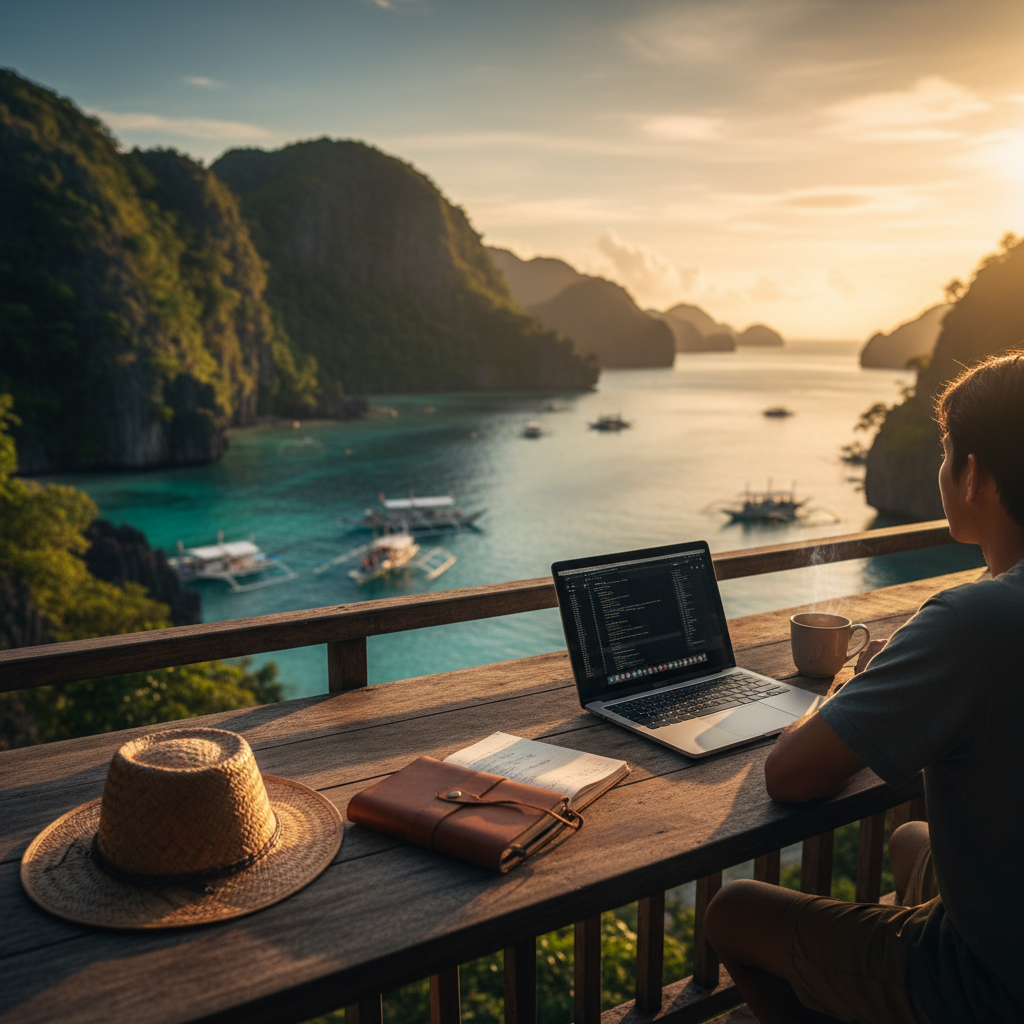
The turquoise waters of Palawan, the vibrant streets of Manila, the promise of warm smiles and a lower cost of living – for many, the Philippines represents an idyllic backdrop for a digital nomad lifestyle. But as more remote workers flock to its shores, the reality of obtaining a Digital Nomad Visa (DNV) has become a labyrinth of precise requirements and potential pitfalls. Far too many aspiring digital nomads, lulled by the allure of a tropical work-from-anywhere paradise, find their dreams dashed by seemingly minor oversights or misunderstandings in the application process. This isn't just about ticking boxes; it's about understanding the nuances, anticipating the scrutiny, and proactively addressing the common failure modes that can lead to a heartbreaking rejection. In 2026, with global demand for DNVs soaring, the Philippines Bureau of Immigration (BI) is processing applications with increasing diligence. This guide cuts through the noise, exposing the real reasons why applications fail and providing you with the investigative insights needed to secure your place in this stunning archipelago.
The Philippines Digital Nomad Visa: A Snapshot for 2026
Officially known as the Special Resident Retiree's Visa (SRRV) with a specific Work from Anywhere (WFA) option through the Philippine Retirement Authority (PRA), or variations of long-stay business/investor visas adapted for remote work, the Philippines has been refining its offerings. While a dedicated 'Digital Nomad Visa' in the vein of many European nations is still under active development, the existing pathways for sustained remote work residency are robust for 2026. This guide focuses on the most commonly utilized and adapted pathways for bona fide digital nomads.
Eligibility Criteria: The Foundation of Your Application
Before diving into the pitfalls, let's firmly establish the foundational eligibility for a digital nomad seeking to reside and work remotely in the Philippines. While specific visa types may vary, the core requirements for any extended stay for remote workers generally coalesce around these points:
- Nationality: Generally open to foreign nationals with valid passports.
- Age: Typically 18 years or older.
- Income Proof: Stable and verifiable foreign-sourced income.
- Health Insurance: Comprehensive international health insurance valid in the Philippines.
- Clean Record: No criminal record.
- Remote Employment: Proof of remote employment or self-employment (digital entrepreneurship, freelancing) outside the Philippines.
Unmasking the Most Common Rejection Pitfalls and How to Avoid Them
Many applicants approach visa processes with a 'checklist mentality,' believing that simply providing documents is enough. The Philippines' immigration system, like many others, often looks beyond the surface, seeking genuine intent and robust evidence. Here are the most frequently encountered rejection scenarios and the strategies to circumvent them.
Pitfall 1: Insufficient or Unverifiable Income Proof
This is arguably the number one reason for rejection. Applicants frequently submit bank statements that show fluctuating balances, or employment contracts that don't explicitly state remote work, or worse, use screenshots of crypto wallets as sole proof of funds.
- The Issue: The Philippine immigration authorities need to be absolutely convinced that you have a stable, consistent, and genuinely foreign-sourced income stream that meets the minimum threshold. They are looking for financial self-sufficiency and assurance that you won't become a burden on the state.
- 2026 Income Thresholds: For a single applicant, current interpretations often lean towards a consistent monthly income of around USD 2,000 - USD 3,000 (PHP 117,000 - PHP 175,000), or demonstrably sufficient savings. This can vary slightly based on the specific visa pathway (e.g., SRRV requires a deposit). For dependants, an additional USD 500 (PHP 29,000) per month per dependant is a good estimate. Always consult the country's official immigration website or the PRA for the most current figures. The key is consistency.
- How to Avoid:
- Bank Statements: Provide 6-12 months of bank statements from a reputable international bank, clearly showing regular income deposits. Highlight these deposits. Ensure the bank statements are officially stamped or certified.
- Employment Contract: If employed, ensure your contract explicitly states your remote work status, company location (outside Philippines), and salary. An official letter from your HR department confirming your remote work authorization is highly beneficial.
- Freelancers/Self-Employed: Submit comprehensive documentation: client contracts, invoices, proof of recent payments from multiple clients, business registration documents (if applicable), and tax returns from your country of origin (last 1-2 years). A detailed business plan outlining your online services or digital entrepreneurship can significantly strengthen your case.
- Affidavits: If your income sources are diverse, consider a notarized affidavit explaining your remote career and how your income is generated.
Pitfall 2: Ambiguous Remote Work Status or Employer Location
Some applicants mistakenly believe that 'online work' automatically qualifies. The core principle of a digital nomad visa is that your work is for a foreign entity or clients, and does not draw local employment opportunities away from Filipinos.
- The Issue: Immigration officials will scrutinize whether your work is genuinely foreign-sourced and does not involve local employment in the Philippines. If your 'employer' is a shell company in the Philippines or your client base is exclusively local, your application will be red-flagged.
- How to Avoid:
- Clear Contracts: Your employment agreement or client contracts must specify the employer's/client's country of origin as outside the Philippines. If you consult for international clients, list their locations.
- Website/Portfolio: If you're a freelancer or run an online business, have a professional website or portfolio that clearly showcases your international clientele and remote-friendly services. This demonstrates a legitimate remote career.
- Business Registration: If you have an online business, providing your foreign business registration documents adds significant weight. Even for Bangladesh-based digital nomads, demonstrating international client relationships and foreign income is crucial; documents like proof of foreign currency transactions or export revenue from services are excellent.
Pitfall 3: Incomplete or Incorrect Application Forms & Supporting Documents
Basic administrative errors are surprisingly common. Missing signatures, outdated forms, uncertified copies, or entirely missing documents can lead to immediate rejection or significant delays.
- The Issue: The Philippine Bureau of Immigration (BI) has specific forms and requirements. Any deviation signals a lack of attention to detail and can lead to immediate rejection.
- How to Avoid:
- Double-Check Everything: Before submission, meticulously review every form and document against the official checklist provided by the BI or PRA. Use a physical checklist and tick off each item.
- Official Sources Only: Download forms directly from the official BI or PRA websites. Do not rely on third-party sites that may host outdated versions.
- Certification: Ensure all photocopies of original documents (passport, birth certificates, marriage certificates, academic degrees) are certified true copies by the issuing authority or a notary public where required.
- Translations: Any document not in English must be accompanied by a certified English translation.
- Passport Validity: Ensure your passport has at least 6 months of validity beyond your intended stay. Many rejections happen due to insufficient passport validity.
Pitfall 4: Lack of Comprehensive International Health Insurance
Many applicants underestimate the importance of robust health insurance.
- The Issue: The Philippine government wants assurance that you can cover any medical emergencies or healthcare needs during your stay, preventing burdens on their public health system. Basic travel insurance is often insufficient.
- How to Avoid:
- Specific Coverage: Obtain comprehensive international health insurance that explicitly covers medical expenses, hospitalization, emergency repatriation, and personal liability in the Philippines. Ensure the policy clearly states its validity period and maximum coverage amount.
- Proof of Policy: Submit the official policy document, not just an application summary. Highlight key coverage details and the validity period.
- Minimum Coverage: Aim for a policy with at least USD 50,000 - USD 100,000 (PHP 2.9 Million - PHP 5.8 Million) in medical coverage, though higher is always better.
Pitfall 5: Criminal Record or Negative Background Check
While less common for the typical digital nomad, even minor infractions can lead to rejection.
- The Issue: The Philippines prioritizes national security and public safety. Any past criminal history, even minor, if not properly disclosed or if deemed a risk, will result in rejection.
- How to Avoid:
- Police Clearance: Obtain a national police clearance from your country of origin and typically a local police clearance in the Philippines (after arrival or as part of a residency application). Ensure these are recent.
- Honest Disclosure: If you have any past legal issues, consult with an immigration lawyer. Attempting to conceal information will almost certainly lead to a permanent ban or severe penalties.
Pitfall 6: Misrepresenting Intent or Falsifying Information
The most severe pitfall leading to immediate and sometimes permanent rejection.
- The Issue: Any form of deception, falsification of documents, or misrepresentation of your remote work, income, or personal circumstances will be met with zero tolerance.
- How to Avoid:
- Truthfulness: Always provide accurate and truthful information. It is better to have a slightly weaker but honest application than a fraudulent one.
- Professional Help: If you are unsure about any aspect of the process, engage a reputable immigration consultant or lawyer in the Philippines. They can guide you through the intricacies and ensure compliance.
Comparison Table: Common Rejection Points & Solutions
| Rejection Point | Common Failure (What NOT to do) | How to Avoid (What TO do for 2026) | Estimated Impact of Rejection |
|---|---|---|---|
| **1. Income ** | Screenshots of crypto, 1-month bank statement, vague job letter | 6-12 months certified bank statements, clear remote work contract, tax returns for freelancers. Consistent income >USD 2k/month. | Loss of application fee, significant delay, potential travel ban. |
| 2. Remote Work Proof | Employer not specified as foreign, no client contracts provided | Explicit remote clause in foreign employment contract, multiple international client contracts, foreign business registration. | Rerouting to tourist visa, unable to work legally. |
| 3. Documentation | Outdated forms, uncertified copies, missing signatures | Use latest forms from official BI/PRA, all copies certified, all fields completed, signed correctly. Certify all translations. | Processing delays, resubmission required, eventual rejection. |
| 4. Health Insurance | Basic travel insurance only, low coverage, no validity dates | Comprehensive international health insurance (min. USD 50k medical coverage), clear policy dates for the entire stay. | Requirement to obtain proper insurance, or outright rejection. |
| 5. Passport Validity | Passport expires within 6 months of intended stay | Ensure passport has at least 12 months validity from application date. Renew if necessary قبل (before) applying. | Immediate rejection, inability to apply until renewed. |
| 6. Criminal Records | Non-disclosure of minor offenses from country of origin | Obtain and submit unblemished Police Clearance Certificates (PCC) from home country; truthful disclosure is paramount. | Immediate rejection, potential permanent ban from entry. |
Application Process: Step-by-Step (Adapted for Digital Nomads)
The process for securing an extended remote work residency in the Philippines, whether via SRRV or other long-stay options, typically involves these steps:
- Research & Select Visa Type: Determine the most suitable long-stay visa or permit for your specific situation (e.g., SRRV for WFA, Long-term Tourist Visa conversion, Investor visa options for significant funds). The PRA offers the SRRV with various sub-categories, some of which are ideal for work-from-anywhere individuals.
- Gather Documents: Based on your chosen pathway, compile all required documents as outlined in the sections above, paying strict attention to certification and translation mandates.
- Online Application/Initial Submission: Some pathways may involve an initial online registration or submission of documents to the relevant agency (e.g., PRA) or embassy/consulate in your home country.
- Deposit (if applicable): For SRRV options, you will need to deposit the required amount into a PRA-accredited bank in the Philippines. E.g., for SRRV Smile, this could be USD 1,500 (approx. PHP 87,000) for a single applicant, which remains in the account as long as you hold the visa.
- Biometrics & Interview (in-country or embassy): You may be required to attend an interview and provide biometrics (fingerprints, photograph) either at a Philippine embassy/consulate abroad or at the Bureau of Immigration/PRA office in the Philippines.
- Processing & Approval: Your application will be reviewed. This is where meticulous documentation prevents rejections. The BI or PRA will conduct background checks.
- Visa Issuance: Upon approval, your visa stamp will be affixed to your passport.
- ACR I-Card: If staying long-term, you will be issued an Alien Certificate of Registration Identity Card (ACR I-Card) by the BI, which serves as your ID in the Philippines.
Exact Fees (2026 Estimates)
Fees can fluctuate, so always verify with official sources. These are common fees for relevant long-stay options:
- SRRV Application Fee: USD 1,400 (approx. PHP 81,000) for the principal applicant, USD 300 (approx. PHP 17,400) per dependant.
- Annual Fee (SRRV): USD 360 (approx. PHP 20,900) per year.
- ACR I-Card Fee: USD 50 (approx. PHP 2,900) plus express lane fee of PHP 500 (approx. USD 8.50) upon initial issuance and annual renewal.
- Visa Conversion/Extension Fees (if applicable): Can range from PHP 5,000 - PHP 20,000 (approx. USD 85 - USD 340) depending on the specific conversion and duration.
- Police Clearance and Medical Examination Fees: Varies but typically in the range of PHP 1,000 - PHP 3,000 (approx. USD 17 - USD 50) per service.
Note: These are estimates for 2026; exchange rates (currently around 1 USD = 58 PHP) and fees are subject to change. Consult the PRA and BI websites for the most up-to-date figures.
Processing Times
Processing times can vary significantly based on the specific visa pathway, the volume of applications, and the thoroughness of your submission.
- SRRV (PRA): Typically 20-30 working days from complete submission, but can extend to 45-60 days if additional documentation or clarification is requested.
- Other Long-Stay Conversions: Can range from 30-90 days, depending on the complexity and the BI office handling the conversion.
Tax Treatment for Digital Nomads
This is a critical area for any Digital Nomad choosing the Philippines.
- Non-Resident Tax Status: As a general rule, if you are a foreign national working remotely for a foreign company/clients and sending money back to your home country (or a third country), your foreign-sourced income is generally not taxable in the Philippines, provided you do not conduct business within the Philippines or derive income from Philippine sources.
- Resident Tax Status: If you establish residency and stay for an extended period (typically more than 180 days in a calendar year), you might be considered a 'resident alien.' Even then, under Philippine tax law, only income derived from sources within the Philippines is subject to Philippine income tax for resident aliens. Your remote foreign income should remain untaxed by the Philippines.
- Repatriation of Funds: Be mindful of how you bring money into the Philippines. While your foreign income is generally not taxed, large transfers might raise queries. It's advisable to consult with a Philippine tax professional to ensure full compliance and avoid any misinterpretation of your financial activities.
- Tax Residency Rule (Important for Bangladesh-based nomads): If you maintain tax residency in Bangladesh, it's crucial to understand the implications of staying long-term in the Philippines. Bangladesh might still tax your worldwide income depending on its DTAA (Double Taxation Avoidance Agreement) with the Philippines, or its domestic tax laws for non-resident citizens earning abroad. Always verify with a tax advisor familiar with both Philippine and Bangladeshi tax regulations.
Family and Dependants
Most DNV-like pathways in the Philippines accommodate family members.
- SRRV: Spouses and unmarried children under 21 years old can typically be included in the principal applicant's SRRV application. Additional fees and increased income/deposit requirements will apply for each dependant.
- Documentation: For dependants, you'll need marriage certificates, birth certificates, and potentially additional police clearances or medical certificates. These must also be translated and authenticated.
- Rejection Warning: Ensure proof of relationship is undeniable. Uncertified or fraudulent marriage/birth certificates are a major cause of rejection for dependant applications.
Renewals and Long-Term Stay
Most long-stay visas or permits in the Philippines require annual renewal or periodic extension.
- SRRV: The SRRV is typically for an indefinite stay, but the ACR I-Card associated with it must be renewed annually along with the annual fee. Your chosen PRA option will dictate any ongoing requirements.
- Compliance: To ensure renewal, you must continue to meet the original eligibility criteria, including maintaining your foreign-sourced income and health insurance. Any violations of immigration laws can jeopardize your stay.
Philippines-Specific Pitfalls for Digital Nomads
Beyond the generic visa application errors, the Philippines presents its own unique set of challenges that can derail a digital nomad's plans.
1. The 'Tourist Visa Loophole' Trap
Many digital nomads initially enter the Philippines on a tourist visa and plan to 'convert' it. While possible for certain long-stay visas, it's complex and carries risks.
- Issue: Entering with an explicit intent to work (even remotely) on a tourist visa can be seen as misrepresentation. Conversion processes can be lengthy, confusing, and are not guaranteed. You might overstay your initial visa while waiting, leading to penalties.
- Avoidance: If you genuinely intend to apply for a long-stay remote work option, start the process from your home country if possible, or ensure you have a clear pathway and sufficient time on your initial visa to complete any in-country conversion without overstaying.
2. Finding Reliable Local Information and Assistance
The information landscape can be fragmented, with outdated details on various websites.
- Issue: Relying on unofficial forums, Facebook groups, or outdated blogs for critical immigration information. This often leads to using incorrect forms or missing crucial steps.
- Avoidance: Always cross-reference information with the official websites of the Philippine Bureau of Immigration (BI) and the Philippine Retirement Authority (PRA). If engaging a third-party agency, ensure they are accredited and have a solid reputation. Ask for references.
3. Understanding the Local Culture and Bureaucracy
Bureaucracy in the Philippines can be slow and requires patience.
- Issue: Expecting Western efficiency or becoming frustrated by delays. Aggressive or impatient behavior can be counterproductive with local officials.
- Avoidance: Cultivate patience and politeness. Bring all documents, including originals and multiple copies. Follow instructions precisely, even if they seem repetitive. A respectful demeanor goes a long way. This is particularly relevant for those accustomed to faster bureaucratic processes in other regions like Bangladesh – understand that the pace here may be different.
4. Overlooking Local Business Registration Needs (if earning locally)
While foreign-sourced income is generally not taxed, if you start freelancing for Filipino clients or conducting local business, you enter a different tax and regulatory landscape.
- Issue: Assuming all income (including local) is exempt. Neglecting local business registration and tax obligations when engaging with the Philippine market can lead to severe penalties, fines, and even deportation.
- Avoidance: If you plan any local income generation, consult with a Philippine business and tax lawyer before you begin. For true digital nomads working exclusively for foreign clients, this is generally not an issue, but it's a distinction to be aware of.
5. Internet Connectivity and Power Reliability Outside Major Hubs
Your remote work depends entirely on reliable infrastructure, which isn't uniform across the archipelago.
- Issue: Choosing a remote island paradise only to discover internet speeds are glacial or power outages are daily occurrences, making remote work impossible.
- Avoidance: Thoroughly research your chosen location's infrastructure before committing. Check local reviews, ask in digital nomad communities, and consider scouting trips. Major cities like Manila, Cebu, and Davao offer excellent connectivity, but rural areas can be a gamble. Always have backup power solutions (power banks, UPS) and a mobile hotspot as a secondary internet source. This is a common concern for remote professionals, and ensures your productivity for digital nomads isn't hampered.
For Bangladeshi Nomads: Special Considerations
Digital nomads from Bangladesh eyeing the Philippines must pay particular attention to several aspects:
- Visa Application from Bangladesh: Ensure you apply through the Philippine Embassy in Dhaka and follow their specific instructions thoroughly. Processing times can sometimes be longer.
- Document Authentication: All Bangladeshi legal documents (birth certificates, marriage certificates, police clearances) will likely require authentication by the Ministry of Foreign Affairs in Bangladesh before submission to the Philippine Embassy/BI.
- Financial Transfers: Be prepared to clearly demonstrate the foreign origin of your income as Bangladesh has strict currency regulations. Documenting foreign bank transfers, client invoices from abroad, and official salary slips from foreign employers is paramount.
- Cultural Adjustment: While both countries share a rich Asian heritage, the Philippines has a distinct Spanish and American influence. Be prepared for cultural differences, and embrace the local customs, which will make your integration smoother.
FAQ: Philippines Digital Nomad Visa in 2026
Q1: Is there an official 'Digital Nomad Visa' in the Philippines for 2026? A1: While a dedicated Digital Nomad Visa akin to those in Spain or Portugal is still under discussion and development in the Philippine congress, the Special Resident Retiree's Visa (SRRV) through the Philippine Retirement Authority (PRA) offers compelling options for digital nomads, especially the SRRV Smile or SRRV Courtesy/Expanded options, designed for those who work remotely and have foreign-sourced income. It's the most practical route for a long-term remote worker.
Q2: What is the minimum income required for a digital nomad in the Philippines? A2: For pathways like the SRRV Smile, the PRA typically requires a minimum monthly income of around USD 2,000 - USD 3,000 (PHP 117,000 - PHP 175,000) for a single applicant, or a requisite deposit. This income must be consistently proven and sourced from outside the Philippines. For dependants, an additional USD 500 (PHP 29,000) per month per dependant is usually a good estimate.
Q3: Can I work for Filipino companies on this visa? A3: No. The core principle of the DNV-like pathways for remote workers (like the SRRV Work from Anywhere option) is that your income is generated from foreign sources and your employer/clients are based outside the Philippines. Working for local Philippine companies or clients on this visa type is generally not permitted and could lead to visa revocation.
Q4: Do I need health insurance to apply for the Philippines Digital Nomad Visa? A4: Absolutely. Comprehensive international health insurance valid in the Philippines is a mandatory requirement for long-stay visas like the SRRV. Ensure your policy covers medical expenses, hospitalization, and possibly emergency repatriation, with a minimum coverage of at least USD 50,000.
Q5: What are the main pitfalls to avoid during the application process? A5: The most common pitfalls include insufficient or unverifiable foreign-sourced income proof, ambiguous documentation of remote work status, incomplete application forms, lack of adequate international health insurance, and misrepresentation of information. Meticulous preparation and verification against official requirements are crucial to avoid rejection.
Sources
- Philippine Bureau of Immigration (BI) Official Website: consult the country's official immigration website
- Philippine Retirement Authority (PRA) Official Website: consult the country's official immigration website
- Department of Foreign Affairs (DFA) Philippines Official Website: consult the country's official immigration website
- Philippine National Police (PNP) Official Website (for police clearances): consult the country's official immigration website
- The author's independent research and analysis of immigration policies effective 2024-2026.
Interested in applying for the Philippines visa?
Tell us a bit about yourself and we'll send tailored guidance on eligibility, paperwork, and next steps.