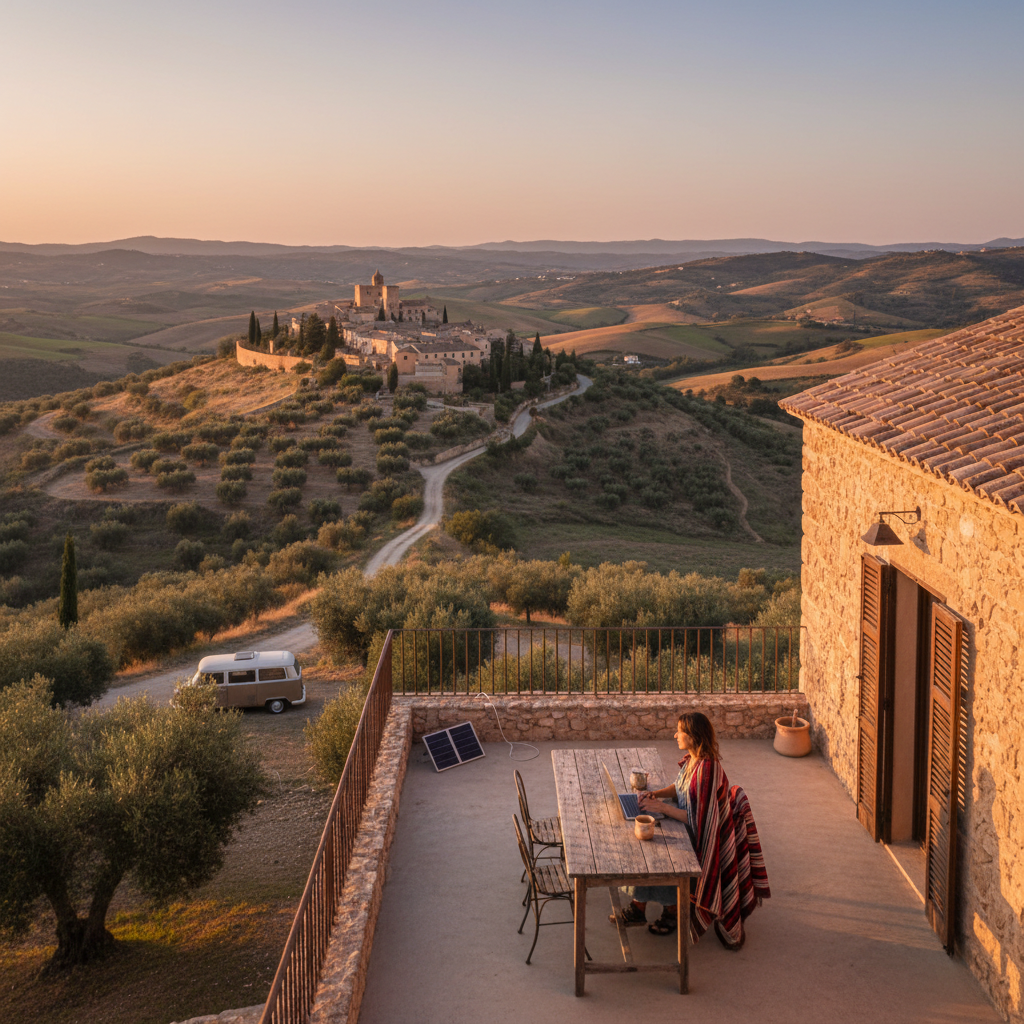
The Ultimate Digital Nomad Guide to Spain (2026)
Spain, a country renowned for its vibrant culture, diverse landscapes, delicious cuisine, and warm climate, has firmly established itself as a top destination for digital nomads. With the introduction of its streamlined Digital Nomad Visa, Spain offers an enticing package of work-life balance, rich experiences, and favorable tax conditions to remote workers seeking a European base. This guide provides an in-depth look at everything you need to know about making Spain your next remote work destination in 2026.
Why Spain for Digital Nomads
Spain’s appeal to digital nomads is multi-faceted. Firstly, its cultural richness is undeniable. From the ancient Roman ruins scattered across the peninsula to the Mudejar architecture of Andalusia and the modernist marvels of Catalonia, Spain offers constant opportunities for exploration and learning. The Spanish lifestyle, characterized by long, social meals, evening strolls (paseos), and a generally relaxed pace, stands in stark contrast to the often frenetic energy of other major global hubs. This emphasis on quality of life is a significant draw.
Geographically, Spain is incredibly diverse. You can find sun-drenched beaches along the Mediterranean and Atlantic coasts, snow-capped mountains in the Pyrenees and Sierra Nevada, lush green valleys in the north, and arid plains in the south. This means outdoor enthusiasts can indulge in surfing, hiking, skiing, and cycling, often within short distances from major cities.
The cost of living, while varying significantly between cities, remains competitive compared to other Western European countries. Many daily expenses, from groceries to public transport and dining out, are more affordable than in places like France, Germany, or the UK, allowing nomads to stretch their budgets further without compromising on quality of life.
Crucially, Spain's warm weather is a huge bonus. While summers can be hot, especially inland, the country generally boasts a mild climate with abundant sunshine for most of the year. This makes outdoor activities enjoyable for longer periods and contributes to a perceived higher quality of life. The food culture is another major highlight, with fresh, local ingredients, traditional tapas, world-class wines, and regional specialties making every meal an experience.
Lastly, Spain's Digital Nomad Visa, launched in early 2023 as part of its 'Start-up Law', is specifically designed to attract international talent. It comes with an incredibly beneficial tax regime under the 'Beckham Law' (now modified for digital nomads), which applies a flat 15% income tax rate on Spanish-sourced income up to 600,000 EUR for the first five years, a substantially lower rate than standard progressive income tax.
Visa Options & Eligibility
For non-EU/EEA citizens, the primary and most attractive option is the Spain Digital Nomad Visa (Visa for Teleworkers of an International Character). This visa allows individuals to reside and work remotely in Spain for up to 12 months initially, which can then be extended for up to five years (total of three years with two subsequent two-year extensions) as a residence permit.
Eligibility Requirements (as of 2026):
- Nationality: Non-EU/EEA/Swiss citizen.
- Employment Status: Employed by a company located outside Spain or self-employed with multiple clients, provided at least 80% of your income is from outside Spain. If self-employed, you cannot have more than 20% of your income derived from a single Spanish company. You also cannot work for a company in a group that has more than 20% of its billing to a Spanish company.
- Income Proof: Demonstrate a minimum monthly income of at least 200% of the national minimum wage (SMI). As of 2026, with the SMI at approximately €1,400 EUR/month, this translates to roughly €2,800 EUR (approx. $2,950 USD) gross per month for a single applicant. This amount increases by 75% for the first dependent (spouse/unmarried partner) and 25% for each additional dependent.
- Work Experience/Education: Proof of at least 3 years of work experience in your field or a university degree/vocational training certificate relevant to your role.
- Clean Criminal Record: A criminal record certificate from countries of residence for the past two years.
- Health Insurance: Private health insurance valid in Spain, covering all risks, with no co-pays or deductibles.
- Funds Proof: Bank statements showing consistent income over the last 3-6 months. You'll likely need to show sufficient savings to cover initial months (e.g., three times the monthly income requirement).
- Contract/Company Docs: Contract(s) with your foreign employer(s) or agreements with clients, business registration for self-employed individuals, and a letter from your company authorizing remote work.
The application process is handled either at a Spanish Consulate in your home country (for the initial 1-year visa) or directly in Spain at the 'Unidad de Grandes Empresas y Colectivos Estratégicos' (UGE-CE) for those already legally in Spain (e.g., on a tourist visa). Applying within Spain will grant you a TIE (Tarjeta de Identidad de Extranjero) residence permit directly, rather than a visa stamp.
Cost of Living Breakdown
The cost of living in Spain for a digital nomad varies greatly depending on the city and your lifestyle choices. Major cities like Barcelona and Madrid are the most expensive, while Valencia, Malaga, Seville, and smaller towns offer a more budget-friendly experience. Here's an estimated monthly breakdown for a single digital nomad in 2026, assuming a moderate lifestyle:
| Category | Smaller Cities (e.g., Valencia, Granada) | Major Cities (e.g., Barcelona, Madrid) |
|---|---|---|
| Accommodation | ||
| 1-bed apartment rent | $750 - $1,200 | $1,200 - $2,000 |
| Utilities (estimate) | $100 - $150 | $120 - $180 |
| Food & Groceries | ||
| Groceries | $250 - $350 | $300 - $400 |
| Eating out (mid-range) | $200 - $400 | $300 - $600 |
| Transportation | ||
| Public transport pass | $35 - $60 | $40 - $75 |
| Occasional taxi/rides | $30 - $70 | $50 - $100 |
| Internet & Mobile | ||
| Home internet | $40 - $60 | $45 - $70 |
| Mobile data plan | $20 - $30 | $25 - $40 |
| Health Insurance | $60 - $120 | $70 - $150 |
| Co-working/Leisure | ||
| Co-working space | $100 - $200 | $150 - $300 |
| Leisure/entertainment | $150 - $350 | $200 - $500 |
| Total Estimated Monthly Cost | $1,965 - $3,040 USD | $2,600 - $4,315 USD |
General average monthly cost for a single person: $2,200 USD. This does not include once-off visa application fees, flight tickets, or extensive travel. These figures are estimates for 2026 and can fluctuate with inflation.
Best Cities & Neighborhoods
Spain offers a diverse range of cities, each with its unique charm and appeal to digital nomads.
- Barcelona: A perennial favorite, Barcelona offers a cosmopolitan vibe, stunning architecture (Gaudi's Sagrada Familia), beautiful beaches, and a thriving startup scene. Neighborhoods like Gràcia (bohemian, village-like), El Born (historic, lively), and Poblenou (tech hub, beach access) are popular with nomads. It's the most expensive city but offers unparalleled culture and connectivity.
- Madrid: The bustling capital, Madrid is a vibrant metropolis with world-class museums, incredible nightlife, and a central location for exploring Spain. It's more traditionally Spanish than Barcelona. Popular areas include Malasaña (hipster, nightlife), La Latina (historic, tapas), and Chueca (LGBTQ+ friendly, central). Its connectivity makes it a great European hub.
- Valencia: Often cited as one of the best cities for quality of life and affordability, Valencia boasts beautiful parks, a historic Old Town, futuristic architecture (City of Arts and Sciences), and excellent beaches. Neighborhoods like Ruzafa (trendy, cafes), El Carmen (historic, lively), and areas near the Malvarrosa beach are highly sought after.
- Malaga: The capital of the Costa del Sol, Malaga offers reliable sunshine, a burgeoning tech scene, fantastic food, and easy access to the Mediterranean. It's more relaxed than the bigger cities but still has plenty to offer. Soho (arts district), Centro Histórico, and Pedregalejo (beachfront, fishing village charm) are great choices.
- Seville: Known for its stunning Moorish architecture, flamenco, and passionate culture, Seville provides an authentic Andalusian experience. It can be very hot in summer, but spring and autumn are glorious. Triana (historic, local feel) and Alameda de Hércules (bohemian, lively square) are popular areas.
- Granada: Nestled at the foot of the Sierra Nevada mountains, Granada combines incredible history (the Alhambra), student-friendly nightlife, and a more bohemian atmosphere. It's relatively affordable and offers easy access to skiing and hiking. Albaicín (historic, stunning views) and Realejo (bohemian, tapas) are highlights.
- Palma de Mallorca: For island lovers, Palma offers a beautiful mix of historic charm, port city vibe, and access to stunning beaches. It's a great option for those seeking a more relaxed island life while still having urban amenities. Areas around the Old Town and Santa Catalina (trendy, food scene) are popular.
Internet, Coworking & Remote-Work Infrastructure
Spain's digital infrastructure is robust and continually improving, making it an excellent base for remote work.
Internet Connectivity: Spain offers high-speed internet, especially in urban and semi-urban areas. Fiber optic (FTTH) broadband is widely available, with average fixed broadband download speeds around 180 Mbps as of 2026. Major providers include Movistar, Vodafone, Orange, and MásMóvil. Mobile internet is also excellent, with widespread 4G and growing 5G coverage across the country. You can expect to pay between €35-€60/month for a reliable fiber optic connection.
Coworking Spaces: The rise of digital nomadism has led to a boom in coworking spaces across Spain. Every major city, and many smaller ones, now boast a variety of options, from minimalist hot-desking setups to elaborate, community-focused hubs. Prices typically range from €100-€300 per month for a dedicated desk or unlimited hot-desking access. Some popular chains and independent spaces include:
- Barcelona: Betahaus, One CoWork, Cloudworks
- Madrid: Impact Hub, Spaces, La Atalaya Coworking
- Valencia: Wayco, Coworking Ruzafa, Vortex Coworking
- Malaga: La Farola, Innovation Campus, Coworking Malaga Central
Many cafes also offer good Wi-Fi and a suitable environment for working, though relying solely on them can be less reliable and sometimes frowned upon during peak hours. Beyond dedicated spaces, Spain has a strong remote work culture. Many businesses and public institutions have adapted to hybrid models, creating a generally accepting environment for independent workers.
Connectivity for Equipment: European standard plugs (Type F, two round pins) are used. Always carry adapters if your devices use different plugs. Electronics are readily available in major retail chains such as El Corte Inglés, MediaMarkt, and specialized computer stores.
Taxes & Legal Considerations
The Spain Digital Nomad Visa comes with one of the most attractive tax advantages in Europe: a special tax regime for 'teleworkers of an international character', which is a modified version of the renowned 'Beckham Law'.
Tax Benefits: If you qualify for the Digital Nomad Visa and opt into this special regime (which you must do within six months of registering with Social Security in Spain), your tax situation will be significantly different from that of a standard Spanish resident. Instead of being taxed under progressive Spanish income tax rates (which can go up to 47% or more for higher earners), you will be taxed as a non-resident for your first five years in Spain. This means:
- A flat income tax rate of 15% on Spanish-source income (up to 600,000 EUR for those covered by the Startup Law criteria). Income above this threshold would be taxed at 24% (non-resident rate).
- You are only taxed on your income generated in Spain. Income generated internationally (e.g., from an employer outside Spain) that is not attributable to a permanent establishment in Spain is often exempt, though professional advice is crucial here. Crucially, for Digital Nomads, your remote work income is generally considered 'Spanish-source income' if you are physically working from Spain, even if paid by a foreign company, and thus is subject to the 15% rate.
- Wealth tax (Impuesto sobre el Patrimonio) is generally not applicable for non-residents, and inheritance/gift tax is also simplified.
Social Security: As a digital nomad, you will be required to register with the Spanish social security system (Seguridad Social). If you are employed by a non-Spanish company, you (or your company) will need to contribute. If you're self-employed, you'll pay a monthly flat fee to the RETA (Régimen Especial de Trabajadores Autónomos) for self-employed workers. This grants you access to Spain's public healthcare system, which is excellent, and contributes towards future pension rights.
NIE Number: Upon arrival, you'll need to obtain a NIE (Número de Identificación de Extranjero), an essential identification number for all official transactions in Spain, including opening a bank account, setting up utilities, and signing rental contracts. This is typically obtained at a police station or through your visa application process.
Legal Advice: Given the complexities of tax and immigration law, it is highly recommended to consult with a specialized lawyer (gestor or asesoría) experienced with the Digital Nomad Visa and the Beckham Law. This will ensure you meet all requirements, understand your tax obligations, and optimize your financial situation.
Lifestyle, Culture & Community
Life as a digital nomad in Spain is an enriching experience, steeped in a vibrant culture and laid-back lifestyle.
Pace of Life: The Spanish pace is generally slower and more relaxed than in many other Western countries. Siestas are less common in big cities but the culture of long lunches and late dinners persists. This emphasis on taking time to enjoy life, good food, and company is infectious.
Socializing & Community: Spaniards are generally warm, friendly, and social. Making local friends can take time, especially if your Spanish isn't fluent, but learning the language opens many doors. Digital nomad communities are thriving in cities like Barcelona, Madrid, and Valencia, with numerous online groups, meetups, and coworking spaces facilitating connections. You'll find a lively expat scene in most major cities as well.
Cuisine: Spanish food is a highlight. Beyond tapas and paella, explore regional specialties, fresh seafood, world-class jamón, and excellent olive oil and wines. Dining out is a social affair and can often be quite affordable, especially for daily 'menu del día' (set lunch menus).
Language: While English is spoken in tourist areas and among younger generations, particularly in major cities, learning Spanish is highly recommended. It will greatly enhance your daily life, make interactions smoother, and deepen your cultural immersion. Even basic phrases will be appreciated.
Healthcare: Spain has an excellent public healthcare system, accessible once you are registered with social security. As part of the DNV requirements, you'll also need private health insurance, offering comprehensive coverage. Pharmacists are highly knowledgeable and can offer advice for minor ailments.
Safety: Spain is a very safe country with low levels of violent crime. However, like any popular tourist destination, petty crime (pickpocketing) can be an issue in crowded areas of major cities. Exercise normal caution, watch your belongings, and be aware of your surroundings.
Leisure & Outdoor Activities: Spain's diverse geography offers endless opportunities for leisure. From hiking in the Pyrenees, skiing in the Sierra Nevada, surfing on the Atlantic coast, cycling through vineyards, to simply relaxing on countless beaches, there's always something to do. Cities are also packed with museums, art galleries, live music venues, and vibrant festivals.
How to Apply: Step-by-Step
Applying for the Spanish Digital Nomad Visa involves several steps, whether you apply from outside or inside Spain.
Option 1: Apply from your home country (Consulate Application)
- Gather Documents: Collect all necessary documents as per the eligibility section (passport, criminal records, work contract, income proof, health insurance, university degree, etc.). Ensure all non-Spanish documents are translated into Spanish by a sworn translator (traductor jurado) and apostilled if required by the Hague Convention.
- Online Application Form & Appointment: Complete the visa application form (EX-23) digitally. Locate your nearest Spanish Consulate and schedule an appointment. Some consulates allow online submission first, others require you to bring everything in person.
- Pay Fees: Pay the visa application fee (approx. $85 USD in 2026) and potentially additional administrative fees.
- Interview & Submission: Attend your appointment, submit all documents, and potentially undergo a brief interview.
- Wait for Decision: Processing time can vary, typically 15-45 days. If approved, you will receive a visa sticker in your passport, valid for 1 year.
- Travel to Spain: Enter Spain with your DNV.
- Apply for TIE: Within 90 days of arriving in Spain, you must apply for your TIE (Tarjeta de Identidad de Extranjero – Foreigner's Identity Card) at the local police station (comisaría de policía) or Oficina de Extranjería. This involves another set of forms (e.g., EX-17) and fingerprints. The TIE will typically be valid for 3 years.
Option 2: Apply within Spain (Direct Residence Permit Application)
If you are already legally in Spain (e.g., on a tourist visa) and meet the requirements, you can apply directly for the residence permit (TIE).
- Gather Documents: Same as above, ensuring all documents are accurate, translated, and legalized.
- Submit Application to UGE-CE: The application is submitted directly to the Unit of Large Companies and Strategic Collectives (UGE-CE) in Madrid. This can be done online through their platform with a digital certificate (which you might need help obtaining as a non-resident initially).
- Pay Fees: Pay the relevant processing fees.
- Wait for Decision: The UGE-CE typically has a statutory processing time of 20 working days. If no response, it is generally considered approved by 'positive administrative silence' (silencio administrativo positivo).
- Apply for TIE: Once approved, within one month, you must apply for your TIE at a local police station, providing fingerprints. The TIE will be valid for 3 years.
Key Considerations:
- Professional Help: Many applicants opt to use a specialized immigration lawyer or gestor (administrative agency) in Spain to assist with the application process, especially for the TIE or dealing with the UGE-CE, as it can be complex and requires navigating Spanish bureaucracy and Spanish language forms.
- Original Documents: Always have original documents available, even if you submit copies. Some consulates or offices may require seeing the originals.
- Appointments: Appointments for TIE applications at police stations can be difficult to get in major cities, requiring diligence or assistance from a gestor.
Common Pitfalls
While Spain is a fantastic destination, there are a few common challenges digital nomads might face:
- Bureaucracy and Language Barrier: Spanish bureaucracy can be slow and complex. Many official forms and interactions are solely in Spanish. Patience and professional assistance (gestor or lawyer) are invaluable.
- Finding Accommodation: Securing long-term rental accommodation, particularly without a local guarantor or prior Spanish rental history, can be challenging in popular cities. Be prepared to pay higher deposits or consider platforms specialized in expat rentals. Starting with a short-term Airbnb or hostel upon arrival is often a good strategy.
- Visa Processing Delays: While the DNV is designed to be efficient, expect potential delays. Plan accordingly and avoid booking irreversible travel plans too far in advance.
- Integration vs. Expat Bubble: While expat communities are welcoming, making an effort to learn Spanish and engage with local culture will significantly enhance your experience and avoid feeling isolated in an 'expat bubble'.
- Understanding Tax Implications Fully: While the Beckham Law is attractive, its application can be nuanced. If you have complex income streams or investments, ensure you fully understand how they are treated under the special regime. Consulting a tax advisor is crucial.
- Finding Appointments: Getting appointments for TIE, NIE, or even health checks can sometimes involve a waiting game. Online booking systems can be frustrating.
- Hot Summers (especially inland): If you're sensitive to heat, be aware that cities like Seville, Madrid, and inland areas can experience intense heat in July and August, sometimes exceeding 40°C (104°F). Coastal areas are generally milder.