Namibia Digital Nomad Visa: My First 90 Days – A Candid Case Study
Join me as I recount the ups and downs of my initial three months in Namibia on the digital nomad visa. From application hurdles to exploring the vast landscapes, discover the real-world experience, costs, and lessons learned about embracing remote work in Southern Africa.
July 11, 2026
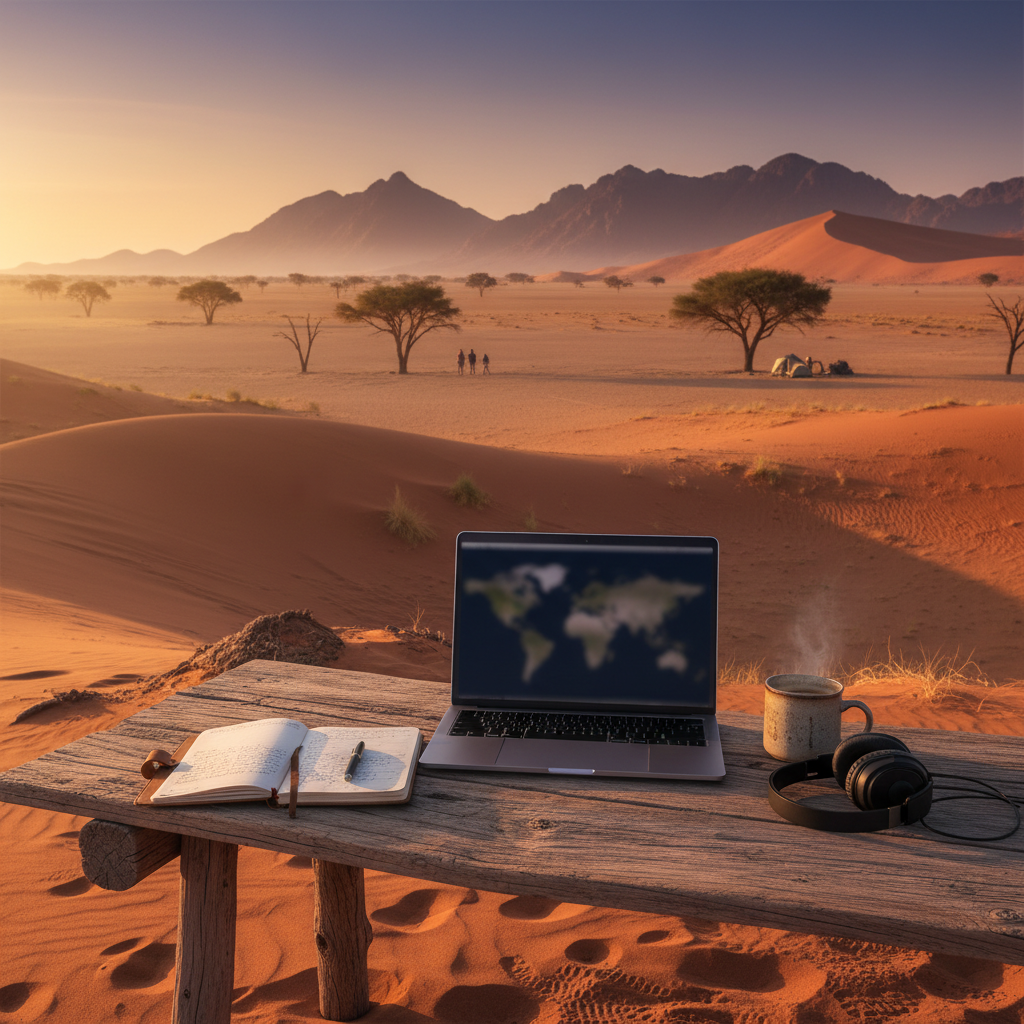
The dusty red earth stretched out before me, an endless canvas under a cerulean sky that held the promise of adventure. As I stepped off the plane at Hosea Kutako International Airport last November, a mix of exhilaration and trepidation washed over me. I’d spent months researching, compiling documents, and navigating bureaucracy for the Namibia digital nomad visa. Now, it was real. My initial impression of Windhoek, the capital, was one of quiet efficiency, a stark contrast to the bustle of my previous bases. I remember thinking, 'This is it. This is where I'll build my remote work sanctuary for the next few months.' My journey wasn't without its stumbles, but those first 90 days were an invaluable lesson in embracing the unexpected and truly living the digital nomad lifestyle in a uniquely captivating corner of the world.
Quick facts
| Row | Detail |
|---|---|
| Income requirement | NAD 60,000 (approx. USD 3,200 / EUR 2,950 at current exchange) per month for main applicant; NAD 30,000 (approx. USD 1,600 / EUR 1,475) per dependent. |
| Visa duration | Up to 6 months initially, extensible to 12 months. |
| Renewable | Yes, for a total stay of 12 months. |
| Application fee | NAD 1,500 (approx. USD 80 / EUR 75) for the visa; NAD 200 (approx. USD 10 / EUR 10) for the permit per person. Additional processing fees apply. |
| Processing time | Typically 2-4 weeks. |
| Tax rate for holders | 0% on foreign-sourced income, subject to DTA agreements. |
| Family members allowed | Yes, spouses and dependent children. |
| Path to residency | Not a direct path. |
What is the Namibia digital nomad visa?
The Namibia digital nomad visa, officially known as the 'Namibia Remote Work Visa,' was launched in 2023 to attract foreign professionals who can work remotely for employers or clients outside Namibia. This visa allows individuals to legally reside and work in Namibia for an initial period of up to six months, with the possibility of extension for another six months, totaling a year. The key differentiator for this visa, compared to a standard tourist visa, is its explicit permission for remote work and the clarity it provides regarding tax obligations for foreign-sourced income. Namibia, long known for its stunning natural beauty – think the towering dunes of Sossusvlei, the wildlife of Etosha, and the dramatic Skeleton Coast – recognized the potential of the digital nomad economy to inject foreign currency and skills into its vibrant economy. For remote workers like myself, it presented a compelling alternative to more crowded or expensive digital nomad hubs, offering an immersive cultural experience alongside practical remote working conditions. The government's goal was clear: to position Namibia as a premier destination for those seeking a unique work-from-anywhere experience, rather than just another vacation spot.
Namibia digital nomad visa requirements
Before I even thought about packing my bags, the first mountain to climb was understanding the eligibility criteria. While seemingly straightforward, the devil, as they say, is in the details.
Income Thresholds
For a single applicant, the primary requirement is proof of a minimum gross income of NAD 60,000 per month (approximately USD 3,200 or EUR 2,950 at 2026 exchange rates). For accompanying dependents (spouse and children), an additional NAD 30,000 per month per dependent is required. Sources of income must be entirely from outside Namibia, and you need to demonstrate a consistent earning history. I provided bank statements for the past six months and my employment contract, which clearly stated my remote work status and salary. Ensure your bank statements are in English or officially translated. This income threshold is designed to ensure you are self-sufficient and won't become a burden on the Namibian state, allowing you to comfortably cover living expenses in a country where costs are generally lower than in many Western nations, but can still add up.
Required Documentation
The list of documents was extensive, but standard for most digital nomad visas:
- Valid Passport: Must be valid for at least six months beyond your intended stay, with at least two blank pages.
- Visa Application Form: Duly completed and signed.
- Passport Photos: Recent, color photos meeting standard specifications.
- Proof of Income: As mentioned, bank statements, employment contracts, client invoices, or financial statements for your online business.
- Proof of Funds: Showing sufficient savings to support your stay, often three to six months' worth of the income requirement.
- Comprehensive Health Insurance: Covering you and any dependents for the entire duration of your stay in Namibia, with a minimum coverage of NAD 1,000,000 (roughly USD 53,000 / EUR 49,000) for medical expenses, hospitalization, and repatriation. This was a critical one for me; I opted for an international health insurance provider that specialized in digital nomads.
- Clean Criminal Record: A police clearance certificate from your country of origin and any country you've resided in for more than six months in the past five years. This often takes the longest to obtain, so plan ahead.
- Return or onward travel ticket: While not always strictly enforced for the application, it's good to have a provisional booking. I just provided a dummy flight reservation initially.
- Motivation Letter: A personal statement outlining your intention to reside in Namibia, your remote work setup, and how you meet the requirements.
- Proof of Accommodation: While not mandatory for the initial application, showing an Airbnb booking or a letter from a local contact confirming accommodation can strengthen your case.
For dependents, you'll also need marriage certificates, birth certificates, and their respective passports, photos, and police clearances.
How to apply for the Namibia digital nomad visa
The application process itself was relatively streamlined, but required diligence. Here's a step-by-step account of my experience.
- Gathering Documents: This was phase one, and it consumed a good two weeks. The police clearance certificate was the bottleneck, taking nearly three weeks to arrive from my home country. I recommend starting this immediately.
- Online Application Submission: Namibia uses an online portal for its visa applications. I uploaded all scanned documents. Ensure everything is in PDF format and clear. There's a section for a motivation letter, which I used to emphasize my skills as a software engineer and my commitment to respecting local culture.
- Paying the Application Fee: The initial application fee of NAD 1,500 (approximately USD 80 / EUR 75) is payable online. Be prepared for potential international transaction fees from your bank. There are also processing fees, which amounted to an additional NAD 300 for me.
- Await Provisional Approval: Within two weeks, I received an email confirming provisional approval. This email included instructions for the next steps.
- In-person Interview/Biometrics (If required): For some nationalities or specific cases, an in-person interview or biometric data collection at a Namibian embassy/consulate might be required. Thankfully, for me, as a UK passport holder, this wasn't necessary. However, it's wise to check the specific requirements for your nationality.
- Final Approval and Visa Stamp: Upon successful review of my submitted documents and meeting all criteria, I received final approval via email. This stated that my visa would be granted upon arrival at Hosea Kutako International Airport. The actual permit fee of NAD 200 (approx. USD 10 / EUR 10) was paid upon arrival at immigration, where the visa sticker was placed in my passport. This was the moment it truly became real. The immigration officer was friendly and efficient, asking a few standard questions about my intentions and showing proof of my insurance.
The entire process, from initial document gathering to getting the stamp in my passport, took just under four weeks. I heard from others that it could range from 2 to 4 weeks depending on the completeness of your application and current demand. Patience is key.
Cost breakdown
Living in Namibia, especially outside of major tourist hubs, can be surprisingly affordable. However, the initial setup costs and visa fees need to be factored in. Here's a breakdown based on my first 90 days:
| Item | Estimated Cost (NAD) | Estimated Cost (USD) | Estimated Cost (EUR) | Notes |
|---|---|---|---|---|
| Visa Application Fee | 1,500 | 80 | 75 | Paid online during application. |
| Visa Permit Fee (upon arrival) | 200 | 10 | 10 | Paid at airport immigration. |
| Comprehensive Health Insurance | 2,500 - 4,000 | 135 - 215 | 125 - 200 | Monthly premium for robust international coverage. |
| Police Clearance Cert (UK) | 900 | 48 | 45 | Varies significantly by country. |
| Flight (London-Windhoek return) | 20,000 - 30,000 | 1,070 - 1,600 | 980 - 1,470 | Highly variable. I booked 3 months in advance. |
| Accommodation (First Month, Windhoek) | 10,000 - 18,000 | 535 - 960 | 490 - 880 | Airbnb for 4-weeks, 1-bedroom apartment. |
| Local SIM Card & Data (3 months) | 1,800 | 96 | 88 | MTC/Paratus, high data package. |
| Transport (Windhoek, 3 months) | 3,000 - 5,000 | 160 - 270 | 145 - 245 | Mix of ride-sharing apps (Locally), taxis, and some rentals. |
| Groceries & Dining Out (3 months) | 9,000 - 15,000 | 480 - 800 | 440 - 735 | Cooking most meals, some restaurant visits. |
| Utility Deposits (if renting long-term) | 5,000 - 10,000 | 270 - 535 | 245 - 490 | Not applicable if sticking to Airbnb. |
| TOTAL ESTIMATED FIRST 90 DAYS | 54,100 - 79,900 | 2,900 - 4,270 | 2,650 - 3,920 | Excluding visa and flight, monthly living costs ~NAD 23,000 (USD 1,230 / EUR 1,130). |
Note: Exchange rates are approximate as of early 2026 (1 USD ≈ NAD 18.7, 1 EUR ≈ NAD 20.4). These figures are based on a comfortable, but not extravagant, lifestyle in Windhoek. This comparison highlights that while the visa itself is inexpensive, the overall cost of setting up shop in a new country, especially with flights, needs careful budgeting. The monthly living costs, once established, were very manageable, significantly less than what I'd spend in a major European city, allowing for more savings or experiential spending.
Taxes for digital nomads in Namibia
This was one of the clearest advantages of the Namibia digital Nomad Visa. Income tax implications are crucial for any remote worker. Namibia operates on a territorial tax system. This means that if your income is sourced entirely from outside Namibia – as required by the visa – you are generally not liable for income tax in Namibia on that foreign-sourced income. This was explicitly confirmed by an immigration official during my permit issuance at the airport, though I always advise consulting a tax professional for personalized advice. I did speak to a local Namibian accountant after I'd settled in, and they confirmed this interpretation. This is a massive draw for many digital nomads, as it simplifies tax planning significantly compared to countries with worldwide taxation. However, it's essential to remember that you remain subject to the tax laws of your country of origin. For me, coming from the UK, I still had obligations there. Local consumption taxes (VAT) are, of course, applicable to goods and services purchased within Namibia, just like for any resident or visitor.
My first 90 days: lessons learned and experiences
My initial three months were a whirlwind of adjusting, exploring, and productivity. Windhoek, with its German colonial architecture, felt surprisingly European in parts, while townships vibrated with distinct African rhythms. My workspace was initially a blend of co-working spaces like The Hub and my apartment's balcony, often visited by local birds.
Connectivity and Productivity
My primary concern was always reliable internet. I opted for a combination of MTC and Paratus SIM cards for my phone and portable hotspot. In Windhoek, LTE+ coverage was generally excellent, though speeds could fluctuate. Outside the capital, especially in more remote conservation areas, connectivity dropped off significantly. This meant careful planning for deep work sessions before heading out on weekend road trips. Power outages, known as 'load shedding,' were infrequent but did occur, so a good power bank and a laptop with solid battery life were essential.
Connectivity Comparison: Windhoek vs. Typical European City
| Feature | Windhoek (MTC/Paratus LTE) | Major European City (e.g., Berlin) |
|---|---|---|
| Average Download Speed | 30-80 Mbps | 80-200 Mbps |
| Average Upload Speed | 10-30 Mbps | 30-100 Mbps |
| Reliability | Good in urban areas, less reliable remotely | Very good urban, usually good rural |
| Cost (per GB) | Higher (approx. 0.8-1.2 USD/GB) | Lower (approx. 0.2-0.5 USD/GB) |
| Power Outages | Less common than some African cities, but possible | Rare |
| Co-working Availability | Limited but growing (e.g., The Hub) | Abundant |
This table illustrates that while Windhoek's connectivity is sufficient for most remote work, it's not quite on par with top-tier European hubs. Adaptability is key.
Living and Social Integration
Namibians are incredibly welcoming. I found it easy to strike up conversations and explore local markets. Weekends were for adventures: a quick flight to Sossusvlei for sunrise over Dune 45, a self-drive safari in Etosha National Park, and exploring the coastal town of Swakopmund. The cost of living is quite reasonable if you live like a local. Public transport is less developed, so having access to a car (rental or ride-sharing) is highly recommended for exploring beyond the city center. I quickly learned the local ride-sharing app, 'Locally,' which was a lifesaver.
Banking and Finances
Opening a local bank account as a temporary resident was challenging. Most banks require a work permit or longer-term residency. I relied on my international debit/credit cards and Wise (formerly TransferWise) for larger transfers. ATMs were readily available in urban centers. It's advisable to carry some cash, especially when traveling to smaller towns. Managing expenses required a bit more foresight than I was used to in more developed financial ecosystems.
Unexpected Challenges and Insights
- Bureaucracy: While the visa application was relatively smooth, local administrative tasks (like trying to set up specific utilities) could be slow. Patience is truly a virtue.
- Healthcare Access: My international insurance was critical. While Windhoek has decent private hospitals, specialized care can be limited. Always know your emergency contacts and closest medical facilities.
- Safety: Like any city, Windhoek has its safe and less safe areas. Basic precautions, like not walking alone at night and being aware of your surroundings, are advised. I always felt secure in my chosen neighborhoods.
- Cultural Immersion: The rich tapestry of Namibian cultures, from Herero to Himba, is fascinating. Engaging with locals and learning a few basic phrases in Afrikaans or Oshiwambo greatly enhanced my experience.
Overall, my first 90 days in Namibia were a profound success. I maintained my productivity, explored an incredible country, and learned valuable lessons about true location independence. It's a destination that rewards adventurous, self-reliant digital nomads looking for something beyond the typical.
For Bangladeshi passport holders
For Bangladeshi citizens considering the Namibia digital nomad visa, the process is largely similar to other nationalities, but with a few critical considerations. The primary challenge often lies in the document verification process and potentially longer processing times due to fewer direct diplomatic ties or previous travel history to Southern Africa. Ensure all documents, especially bank statements and police clearance certificates, are meticulously prepared, officially translated into English, and notarized. Bangladesh's currency controls might also mean extra steps for proving consistent foreign-sourced income, requiring detailed financial disclosures. While the income threshold of NAD 60,000 per month converts to approximately BDT 340,000-350,000 (depending on current exchange rates), this is a significant income level for many Bangladeshi professionals. It's crucial for Bangladeshi applicants to double-check specific requirements with the nearest Namibian High Commission or diplomatic mission, as there might be additional verification steps or embassy-specific form requirements not explicitly stated on the general immigration website. Early application and proactive follow-up are highly recommended to account for any potential delays in the bureaucratic pipeline.
Frequently asked questions
What is the Namibia digital nomad visa?
The Namibia digital nomad visa, or Remote Work Visa, allows non-citizens to live and work remotely in Namibia for up to six months, with a possible six-month extension. It's designed for individuals whose income is sourced entirely from outside Namibia, contributing to the local economy while enjoying the country's unique landscapes and culture.
Who is eligible for the Namibia digital nomad visa?
Eligible individuals must earn at least NAD 60,000 (approx. USD 3,200) per month from foreign sources. Applicants need a valid passport, comprehensive health insurance, proof of remote work or business, and a clean criminal record. Dependents are allowed with an additional income requirement per person.
How much does the Namibia digital nomad visa cost?
The initial application fee is NAD 1,500 (approx. USD 80 / EUR 75). An additional permit fee of NAD 200 (approx. USD 10 / EUR 10) is paid upon arrival. Other costs include robust health insurance, police clearance certificates, and travel expenses, along with regular living costs.
How long does Namibia digital nomad visa processing take?
Processing time for the Namibia digital nomad visa typically ranges from 2 to 4 weeks from the submission of a complete application. It's advisable to apply well in advance of your intended travel date to account for any unforeseen delays or requests for additional documentation.
Can I bring my family on the Namibia digital nomad visa?
Yes, the Namibia digital nomad visa permits main applicants to bring their spouses and dependent children. An additional income requirement of NAD 30,000 (approx. USD 1,600 / EUR 1,475) per month per dependent must be demonstrated, and all family members must meet individual documentation requirements.
Do I pay tax in Namibia on the digital nomad visa?
No, generally you do not pay income tax in Namibia on income earned from foreign sources while on the digital nomad visa. Namibia operates on a territorial tax system, meaning only income sourced within Namibia is subject to local income tax. You remain accountable to your country of origin's tax laws.
Can Bangladeshi citizens get the Namibia digital nomad visa?
Yes, Bangladeshi citizens are eligible for the Namibia digital nomad visa, provided they meet all the standard income and documentation requirements. They should pay particular attention to official translation and notarization of documents, and verify specific requirements with the nearest Namibian diplomatic mission for any additional steps.
Sources
- Namibia Ministry of Home Affairs, Immigration, Safety and Security - Official Namibia Remote Work Visa Guidelines (consult the country's official immigration website)
- Bank of Namibia - Latest Exchange Rates (consult the country's official central bank website)
- MTC & Paratus Namibia - Internet Service Provider Information
- Local taxation advisories within Namibia.
Compare with: South Africa, Mauritius, Seychelles
Interested in applying for the Namibia visa?
Tell us a bit about yourself and we'll send tailored guidance on eligibility, paperwork, and next steps.