Unleash Your Financial Freedom: Banking and Money Transfer Hacks for Global Remote Workers
Navigating the global financial landscape as a digital nomad can be daunting. This deep dive unravels the complexities of banking and money transfers, offering strategic hacks and comparisons for remote workers seeking financial freedom and efficiency abroad.
July 9, 2026

Unleash Your Financial Freedom: Banking and Money Transfer Hacks for Global Remote Workers
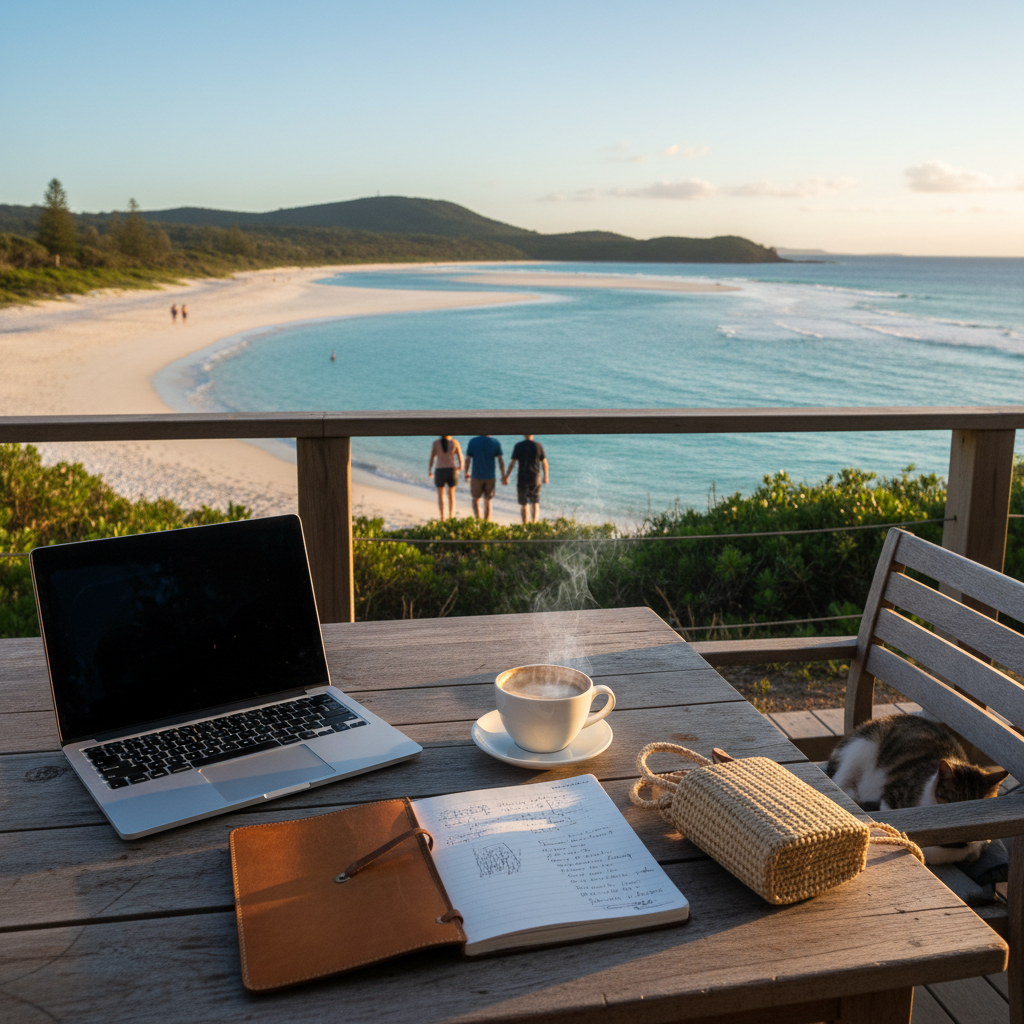
The sun dips below the horizon, painting the sky in a riot of colours over a tranquil Balinese beach. You've just wrapped up a productive day, your laptop cooling beside you, and a fresh coconut in hand. This is the dream, isn't it? The freedom to work from anywhere, unbound by arbitrary nine-to-five schedules or geographical limitations. Yet, beneath this idyllic veneer lies a crucial, often overlooked reality: managing your finances across borders. For the burgeoning army of digital nomads, understanding international banking and money transfer mechanisms is not just a convenience; it's the bedrock of a sustainable, stress-free remote work lifestyle. Forget the days of predatory bank fees, abysmal exchange rates, and weeks-long waits for payments. In 2026, the financial landscape has evolved, offering sophisticated tools designed to empower the global remote worker. This comprehensive guide will arm you with the knowledge to navigate this brave new financial world, keeping more of your hard-earned cash in your pocket and less in the hands of intermediaries.
The Cross-Border Conundrum: Why Traditional Banking Fails Digital Nomads
Traditional brick-and-mortar banks, bless their antiquated hearts, are simply not built for the kinetic reality of a digital nomad. Imagine trying to open a new current account in Spain while your primary residence is officially in Canada, and your income streams from clients based in the US, UK, and Australia. The bureaucracy alone is enough to send shivers down your spine. Then there are the fees. Oh, the fees! International wire transfers can cost upwards of $25-$50 per transaction, not to mention the hidden currency exchange markups that can silently siphon off 3-5% of your total transfer value. For someone living paycheck to paycheck (or rather, invoice to invoice), these percentages quickly add up, eroding your income and your peace of mind. Moreover, the inability to swiftly move funds or access banking services without physical presence becomes a significant logistical hurdle. This is where the new guard of fintech solutions steps in, offering agility, transparency, and cost-effectiveness tailored for a globalised workforce.
Essential Banking Solutions for the Modern Digital Nomad
The financial toolkit of a successful digital nomad in 2026 is multifaceted, combining traditional stability with cutting-edge convenience. You'll likely need a combination of accounts:
- Your Home Country Bank Account: This is your anchor, for recurring bills, handling local taxes, and receiving large, infrequent payments from established clients. Don't close it, even if you're gone for years.
- A Borderless Digital Bank Account: This is your daily driver. Think Revolut, Wise (formerly TransferWise), N26 (European focus), or Starling Bank (UK focus). These platforms offer multi-currency accounts, allowing you to hold, send, and receive money in various currencies with minimal fees and excellent exchange rates. They typically come with a debit card accepted worldwide, often with generous limits on free ATM withdrawals.
- A Local Bank Account (If Settling for Longer): If you plan to stay in one country for more than 3-6 months, a local bank account might become necessary for rent payments, utility bills, or accessing local credit services. However, due to stricter KYC (Know Your Customer) regulations, opening one often requires proof of a local address, a visa, and sometimes even a local tax ID. This is where patience and good research paying off; some banks are more nomad-friendly than others.
The Rise of Multi-Currency Accounts
These are arguably the most transformative tool for digital nomads. Instead of converting every time you receive or spend in a different currency, you can hold balances in USD, EUR, GBP, AUD, etc., often with dedicated local bank details for receiving payments. This means your US client can pay you via ACH to a US account number provided by Wise, and you can then spend those USD in Europe at the mid-market rate, or convert to EUR when the rate is favourable.
Traditional Banks vs. Digital Banks: A Head-to-Head
| Feature | Traditional Banks (e.g., Citibank, HSBC) | Digital Banks (e.g., Revolut, Wise) |
|---|---|---|
| Account Opening | Often requires physical presence, proof of address, complex documents. | Online, relatively quick, fewer documents. |
| Fees | High international transfer fees, hidden FX markups, maintenance fees. | Low/transparent transfer fees, mid-market FX rates, often no monthly fees. |
| Multi-currency | Limited options, often with poor FX. | Core offering, holds many currencies, local account details. |
| Debit Card | Standard, may have high foreign transaction fees. | Global acceptance, low/no foreign transaction fees, free ATM limits. |
| Customer Service | Branch support, phone lines (limited hours). | App-based chat, email, 24/7 (often automated first). |
| Trust/Security | Established, often government-insured. | Regulated like banks in respective regions; good security, but newer. |
| Credit Services | Extensive credit cards, loans, mortgages. | Limited to none, primarily debit/prepaid. |
| Suitability | Anchor account, large savings, complex credit needs. | Daily spending, international transfers, managing multiple currencies. |
Decoding Money Transfer Services: Speed, Cost, and Exchange Rates
Once your banking ecosystem is set up, the next critical piece is efficient money transfer. You'll need to move money between your own accounts in different currencies, pay international suppliers, or receive payments from clients. The market is saturated with options, but not all are created equal. Focus on three key metrics: fees, exchange rates, and transfer speed.
Top Contenders for International Money Transfers:
- Wise (formerly TransferWise): Arguably the gold standard for digital nomads. They use the real mid-market exchange rate and charge a small, transparent upfront fee (e.g., 0.35% for USD to EUR). Transfers are often near-instant or within 24 hours. Excellent for sending money to bank accounts and for receiving international payments into your multi-currency account.
- Revolut: More than just a transfer service, Revolut is a full digital bank with excellent multi-currency capabilities. Transfers are free between Revolut users and competitive for bank transfers, especially during weekdays, using interbank rates. Weekends often incur a small markup. Their Metal plan offers higher limits and perks.
- Remitly & Xoom (by PayPal): Good for sending money directly to recipients, often offering cash pickup options, which can be useful for supporting family abroad (e.g., in Bangladesh). Fees vary by corridor and speed. Exchange rates are generally better than traditional banks but may have a slight markup compared to Wise.
- OFX: Known for larger transfers and dedicated account managers. They offer competitive rates and lower fees for substantial sums, making them suitable for business owners or those moving significant capital.
A Real-World Scenario: Sarah's Journey from Dhaka to Lisbon
Let's imagine Sarah, a freelance graphic designer from Dhaka, Bangladesh. She secures a long-term contract with a US-based tech startup, earning $4,000 USD per month, and decides to move to Lisbon, Portugal, on a digital nomad visa. Her financial setup would likely look like this:
- Home Base: Continues to maintain her bank account with a reputable Bangladeshi bank (e.g., Brac Bank or Eastern Bank Limited) for receiving local freelance payments, managing her parents' bills, and maintaining her local tax records. She uses it for receiving smaller remittances to support her family back home, often via services like Remitly which have good reach in Bangladesh.
- Receiving Income: She sets up a Wise multi-currency account. Her US client pays her $4,000 USD monthly directly into the US account details provided by Wise. This payment incurs no receiving fee from Wise.
- Daily Spending in Portugal: Sarah primarily uses her Wise debit card for daily expenses in Lisbon. When she spends in EUR, Wise automatically converts from her USD balance at the live mid-market rate, charging a negligible conversion fee (e.g., 0.41%). She can withdraw up to €200 per month from ATMs without Wise fees.
- Monthly Rent: Her rent is €800. She can set up a recurring payment from her Wise EUR balance directly to her landlord's Portuguese bank account. If she needs to top up her EUR balance, she converts USD to EUR within Wise when the exchange rate is favorable, leveraging their rate alerts.
- Sending Money to Bangladesh: To send $300 USD (approx. ৳33,000 BDT) back home to her family, she initiates a transfer from her Wise USD balance to her mother's Bangladeshi bank account (e.g., Dutch-Bangla Bank). Wise's fee for this might be around $4-5 USD, and the funds arrive within hours, sometimes minutes. Compared to a traditional bank wire that might cost $40 and take several days with a poorer exchange rate, Wise saves her significant time and money.
Sarah's strategic use of these platforms means she maximizes her earnings, minimizes friction, and enjoys true financial flexibility regardless of her location.
The Nitty-Gritty: Fees, Exchange Rates, and Hidden Costs
Understanding the actual cost of cross-border transactions is paramount. It’s not just the explicit fee; the exchange rate is where many services make their money.
- Interbank Rate (Mid-Market Rate): This is the true exchange rate, the midpoint between the buy and sell rates on the global financial markets. It's the rate you see on Google or Reuters. Wise consistently offers this rate.
- Exchange Rate Markup: Most traditional banks and some transfer services add a percentage on top of the interbank rate. This isn't a fee; it's a less favorable rate for you. A 2-3% markup on a $1,000 transfer means you're effectively paying $20-$30 extra without seeing an explicit fee.
- Hidden Fees: Look out for 'recipient fees' or 'correspondent bank fees' which are levied by intermediary banks during a wire transfer, often outside the control of your sending bank. Digital services typically bypass these.
- ATM Withdrawal Fees: While your digital bank might offer 'free' ATM withdrawals up to a certain limit, local ATM operators may still charge a fee. Always check the machine's display before confirming a withdrawal.
Comparison of Transfer Costs (Illustrative for $1,000 USD to EUR)
| Service | Exchange Rate Used (Illustrative) | Explicit Fee (Illustrative) | Total Cost (excluding initial USD) | Delivery Time |
|---|---|---|---|---|
| Wise | Mid-market (1 USD = 0.92 EUR) | $4.50 | €915.50 | < 24 hours |
| Revolut (Weekday) | Mid-market (1 USD = 0.92 EUR) | $0 (Premium accounts) | €920.00 | Instant-24 hours |
| Traditional Bank | Bank Rate (1 USD = 0.90 EUR) | $30 | €870.00 | 3-5 Business Days |
| PayPal (Xoom) | Markup Rate (1 USD = 0.91 EUR) | $5 | €905.00 | Minutes-Hours |
Note: Rates and fees are illustrative and subject to change. Always verify current rates and fees with the specific service. (Figures as of early 2026 for comparison purposes).
Tax Implications and Financial Compliance
This is where things get complex, and a universal solution is elusive. Your tax residency status as a digital nomad is determined by various factors, including the number of days you spend in one country, your 'centre of vital interests,' and specific tax treaties. While many digital nomad visas offer tax incentives (e.g., lower flat rates or exemptions on foreign-earned income for a period), you generally remain liable for taxes in your 'home' country or where you establish tax residency.
- Reporting Foreign Income: Most countries require their citizens and tax residents to declare worldwide income. Failing to do so can lead to severe penalties.
- FATCA/CRS: The Foreign Account Tax Compliance Act (FATCA) and Common Reporting Standard (CRS) mean that financial institutions globally share information about account holders with their respective tax authorities. Your days of flying under the radar are firmly over. Transparency is key.
- Local Tax IDs: If you establish tax residency in a new country, you'll need to obtain a local tax identification number (like Portugal's NIF) to operate legally, particularly if you plan to open local bank accounts or conduct business locally.
Recommendation: Always consult with a qualified tax advisor specializing in international taxation for digital nomads. This is not an area for DIY guesswork. A few hundred dollars spent on professional advice can save you thousands in potential fines and headaches.
For Bangladeshi Passport Holders: Specific Considerations
Bangladeshi digital nomads face some unique challenges and opportunities in the global financial landscape. While the freedom to work remotely is liberating, adhering to Bangladesh Bank (BB) regulations on foreign exchange earnings and remittances is crucial.
- Foreign Exchange Retention: Bangladeshi individuals earning foreign currency are typically allowed to retain a portion of it in Foreign Currency Accounts (FCAs) within Bangladesh. However, regulations on how much can be held, for how long, and for what purposes can be intricate. Understanding these rules is vital for compliance.
- Remittance Channels: For sending money back to Bangladesh, legal channels are essential. Services like Wise, Remitly, Xoom, and Western Union are popular and generally compliant. Avoid informal channels (Hundi/Hawala) as they are illegal and risky.
- Proof of Income: When applying for digital nomad visas or opening accounts abroad, you might need robust proof of income translated and notarized. Bank statements from your Bangladeshi accounts demonstrating consistent foreign earnings are often required.
- Investment Restrictions: Be aware of any capital control regulations that might affect your ability to move substantial sums of money out of Bangladesh for investment purposes or setting up foreign businesses. These are generally strict but may have legal avenues for approved investments.
- Bangladeshi Credit Cards Abroad: While international credit cards issued by Bangladeshi banks work abroad, they often come with less favorable exchange rates and potentially higher foreign transaction fees compared to cards issued by digital banks like Revolut or Wise. Using a combination is often the best approach.
Navigating these specific requirements ensures a smoother financial journey for Bangladeshi remote workers.
Frequently Asked Questions
What are the best banking options for digital nomads?
The best options include a robust home country bank for your primary affairs, combined with a borderless digital bank like Wise or Revolut for international transactions and daily spending. A local bank account may be beneficial if you plan an extended stay in one country.
How can I minimize fees on international money transfers?
To minimize fees, use services that offer the mid-market exchange rate and transparent, low fees, such as Wise. Avoid traditional bank wire transfers for smaller amounts, and be mindful of weekend markups with some digital banks.
Do I need a separate business bank account as a digital nomad?
If you operate as a freelancer or run an online business, opening a separate business account (even with a digital bank like Revolut Business or Wise Business) is highly recommended. It simplifies accounting, tax calculations, and provides a clearer financial picture for your business.
How do exchange rates affect my income as a remote worker?
Exchange rates directly impact the value of your foreign-earned income when converted to your spending currency. Favorable rates mean more purchasing power, while unfavorable rates erode your earnings. Always aim for services offering the mid-market rate.
Can Bangladeshi citizens easily access international banking services?
Bangladeshi citizens can access international banking services, but they must comply with Bangladesh Bank regulations regarding foreign exchange. Opening borderless digital bank accounts is generally straightforward, but opening traditional foreign bank accounts may require a valid visa and proof of address.
What is FATCA/CRS and how does it impact digital nomads?
FATCA (Foreign Account Tax Compliance Act) and CRS (Common Reporting Standard) are international agreements for financial institutions to share client financial information with tax authorities. This means your foreign bank accounts and income are increasingly transparent to your home country's tax authorities.
Conclusion: Your Passport to Financial Agility
Navigating the financial labyrinth as a digital nomad doesn't have to be a source of stress. By embracing the innovative solutions offered by digital banks and specialized money transfer services, you gain unparalleled control, transparency, and cost efficiency. Ditch the legacy systems, understand the nuances of exchange rates, and always prioritize compliance with tax regulations. With the right financial toolkit, your focus can remain squarely on your work, your adventures, and the boundless freedom that defines the digital nomad lifestyle. The world is your office; ensure your money works as hard and as smartly as you do, wherever you are.
Sources
- Wise (formerly TransferWise) Official Website: [Consult the country's official immigration website]
- Revolut Official Website: [Consult the country's official immigration website]
- N26 Official Website: [Consult the country's official immigration website]
- Bangladeshi Bank Regulatory Information: Bangladesh Bank, Foreign Exchange Policy Department Circulars [Consult the country's official immigration website]
- Financial Action Task Force (FATF) on money laundering and terrorist financing: [Consult the country's official immigration website]
- OECD Common Reporting Standard (CRS) Information: [Consult the country's official immigration website]
- International Tax Advisors specializing in digital nomads (various external firms) [Consult the country's official immigration website]
Compare with: Portugal | Spain | Mexico
Interested in applying?
Tell us a bit about yourself and we'll send tailored guidance on eligibility, paperwork, and next steps.