Namibia's Remote Frontier: Unpacking the True Costs of Its Digital Nomad Visa & Living in 2026
Dreaming of remote work against the stunning backdrop of Namibia's deserts and coastlines? This guide breaks down the precise costs of the Namibia digital nomad visa for 2026, alongside a detailed look at the real cost of living, from accommodation to internet, helping you budget for an unparalleled African adventure.
October 5, 2026
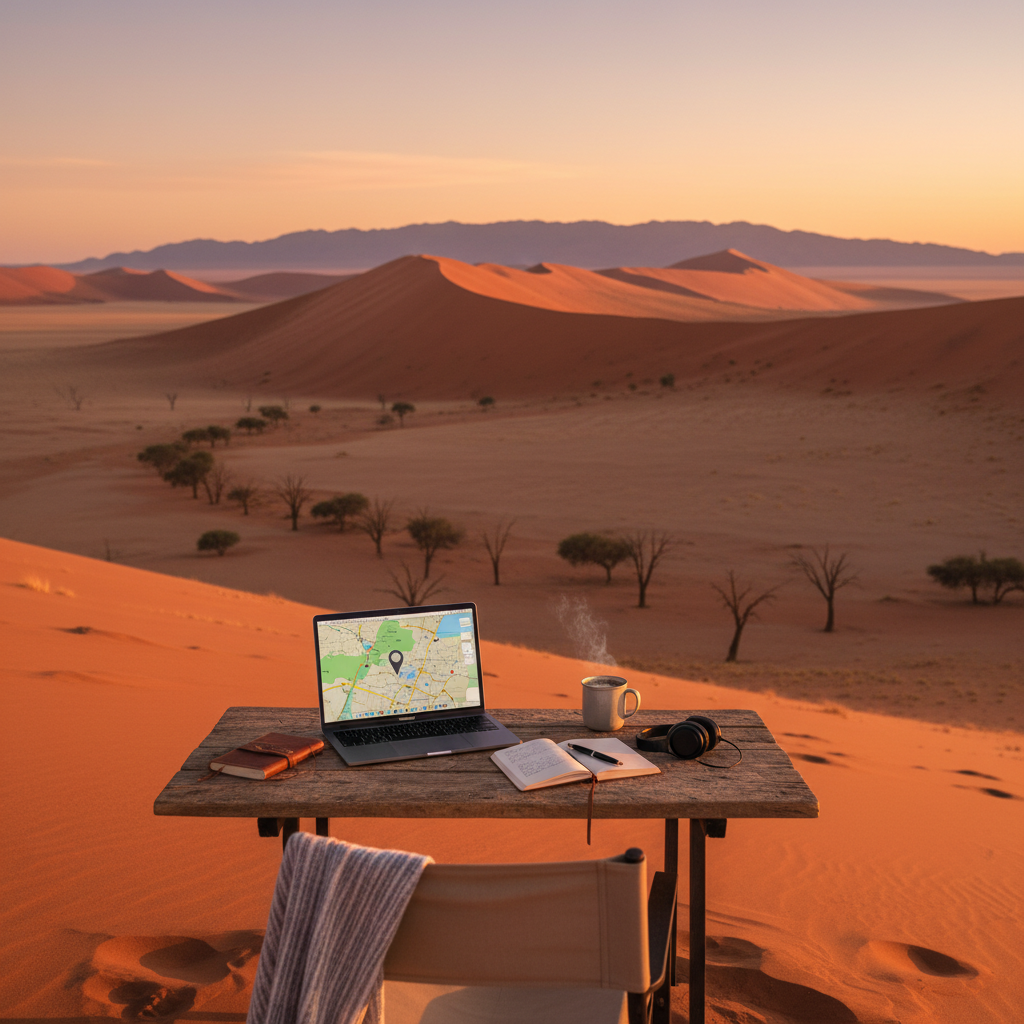
Imagine waking up to the vast, open plains of Namibia, the air crisp and clean, a gentle breeze rustling through ancient acacia trees. The sun, a soft orange, begins its ascent, casting long shadows across a landscape that feels both timeless and untouched. You grab your laptop, find a spot with a decent signal – perhaps a dedicated coworking space in Windhoek or a cozy lodge verandah overlooking a watering hole – and begin your workday, knowing that your afternoon might involve sandboarding down colossal dunes or exploring a ghost town reclaimed by the desert. This isn't just a fantasy; for remote professionals and digital entrepreneurs, Namibia's digital nomad visa, launched in late 2023, has opened the door to this extraordinary digital nomad lifestyle. But what's the real financial commitment behind this dream? Beyond the allure of adventure, understanding the precise costs, from the visa application itself to daily living expenses, is crucial for any digital nomad considering this Southern African gem in 2026.
Quick facts: Namibia Digital Nomad Visa
| Row | Detail |
|---|---|
| Income requirement | NAD 2,000 (approx. USD 105) per month for main applicant; NAD 1,000 (approx. USD 52) per dependant |
| Visa duration | 6 months |
| Renewable | Not directly renewable as a DNV; requires re-application or other visa type |
| Application fee | NAD 2,000 (approx. USD 105) |
| Processing time | 4-6 weeks |
| Tax rate for holders | 0% on foreign income |
| Family members allowed | Yes, dependants |
| Path to residency | No direct path; may require transition to other visa |
What is the Namibia digital nomad visa?
The Namibia digital nomad visa is a relatively new and exciting opportunity for remote work professionals, freelancers, and entrepreneurs to live and work in Namibia for up to six months. Introduced by the Namibian government as part of its efforts to attract foreign investment and skills, this visa specifically targets individuals whose income is derived from sources outside Namibia. It's designed for those who can perform their job duties remotely, offering them the chance to immerse themselves in the country's unique culture and breathtaking natural beauty without disrupting their global work commitments. Unlike traditional work visas, the digital nomad visa simplifies the entry process for location independent lifestyle seekers, recognizing the growing trend of work from anywhere.
This initiative places Namibia among a growing list of nations embracing the global shift towards remote employment. The visa aims to boost local tourism, infuse foreign capital into the economy, and potentially foster knowledge exchange. For eligible applicants, it's an invitation to experience an authentic African adventure while maintaining a productive and fulfilling professional life. The terms are straightforward, focusing on financial self-sufficiency and a genuine intent to work remotely without entering the local job market.
Namibia digital nomad visa requirements
To qualify for the Namibia digital nomad visa, applicants must meet several key criteria, primarily centered around financial independence, remote work capability, and general eligibility. These requirements ensure that visa holders are self-sufficient and pose no burden on the Namibian economy or job market. All documents should be in English or officially translated.
Main applicant requirements:
- Valid Passport: Your passport must be valid for at least six months beyond your intended stay and have at least two blank pages.
- Proof of Income: You must demonstrate a consistent monthly income of at least NAD 2,000 (approximately USD 105 or EUR 95, as of early 2026 exchange rates) from outside Namibia. This typically requires recent bank statements (last 3-6 months), employment contracts, or client invoices if you're a freelancer or digital entrepreneur. The income threshold is quite accessible, making it appealing for a broad range of remote workers.
- Remote Employment/Business: Proof of remote employment or self-employment (e.g., employment contract specifying remote work, company registration documents for your own business, client contracts for freelancers).
- Medical Insurance: Comprehensive travel or medical insurance valid for the entire duration of your stay in Namibia, covering medical emergencies, hospitalization, and repatriation.
- Accommodation Proof: While not always strictly required at the application stage, having proof of intended accommodation (e.g., hotel booking, rental agreement) for at least your initial weeks can strengthen your application.
- No Criminal Record: A police clearance certificate from your country of residence, not older than six months.
- Return Ticket: Proof of a return or onward ticket may be requested, though not always mandatory for the initial application.
Dependant requirements:
Family members (spouses and minor children) can accompany the main applicant. Each dependant must also demonstrate financial self-sufficiency of NAD 1,000 (approximately USD 52 or EUR 48) per month. Required documents for dependants generally include:
- Valid passports.
- Proof of relationship (marriage certificate for spouse, birth certificates for children).
- Proof of medical insurance.
- Police clearance certificates for dependants over 18.
It's vital to gather all necessary documentation meticulously to avoid delays or rejection of your Namibia digital nomad visa application.
How to apply for the Namibia digital nomad visa
The application process for the Namibia digital nomad visa is designed to be relatively straightforward, primarily handled through an online portal managed by the Ministry of Home Affairs, Immigration, Safety and Security. While the exact steps might see minor adjustments, the core process remains consistent for 2026.
- Gather Documents: Collect all required documents as listed in the 'Requirements' section. Ensure all financial proofs, insurance, and other certificates are up-to-date and correctly formatted (e.g., scanned PDFs).
- Access the Online Portal: Visit the official Namibian immigration website (consult the country's official immigration website) and locate the section for the digital nomad visa application. You'll typically need to register an account first.
- Complete the Online Application Form: Fill out the application form accurately and completely. Provide details about your personal information, remote work, income, and intended stay.
- Upload Supporting Documents: Attach scanned copies of all your supporting documents. Pay close attention to file types and size limits specified by the portal.
- Pay the Application Fee: The application fee of NAD 2,000 (approx. USD 105) must be paid online, typically via credit/debit card. Keep a record of your payment confirmation.
- Submit and Await Processing: Once all sections are complete and payment is made, submit your application. You will usually receive a confirmation email with an application reference number. Processing times are generally between 4 to 6 weeks, though it can sometimes be quicker or extend depending on the volume of applications and specific circumstances.
- Visa Issuance: If approved, you will receive an approval letter, often electronically. Upon arrival in Namibia, you will present this letter and your passport to immigration officials, who will then issue the visa stamp in your passport.
Important Considerations:
- Apply from Outside Namibia: It's highly recommended to apply for the visa from your home country or country of residence before traveling to Namibia.
- Accuracy: Double-check all information before submission. Errors can lead to delays or refusal.
- Communication: Monitor your email (including spam folder) for any communication from the immigration authorities regarding your application.
Cost breakdown
Understanding the financial commitment goes beyond just the visa fee. This section details the initial visa costs and then delves into the comprehensive cost of living in Namibia, providing a realistic budget for a digital nomad.
Visa-related costs (one-time):
| Item | Cost (NAD) | Cost (USD) | Cost (EUR) |
|---|---|---|---|
| Application Fee | 2,000 | 105 | 95 |
| Police Clearance | Varies* | 20-100 | 18-90 |
| Medical Insurance | Varies* | 300-600 | 280-550 |
| Document Translation | Varies* | 50-150 | 45-140 |
| Total (Approx.) | 2,000+ | 475+ | 433+ |
- Police clearance costs depend on your country of origin. Medical insurance is an estimate for a 6-month comprehensive plan. Document translation is only required if your documents are not in English.
Monthly cost of living scenarios (2026)
Namibia offers a diverse range of living experiences, from the more developed capital city of Windhoek to coastal towns like Swakopmund or Walvis Bay. Your cost of living will significantly depend on your chosen location and lifestyle. We'll outline two common scenarios:
Scenario 1: Moderate Budget (Comfortable living in Windhoek/Swakopmund)
This scenario assumes a comfortable standard of living, including a decent apartment, regular dining out, and some leisure activities.
| Item | Estimated Monthly Cost (NAD) | Estimated Monthly Cost (USD) | Estimated Monthly Cost (EUR) |
|---|---|---|---|
| Accommodation | |||
| 1-bedroom apartment (city) | 7,000 - 10,000 | 368 - 526 | 335 - 478 |
| Utilities | |||
| Electricity, Water, Gas | 1,000 - 1,500 | 53 - 79 | 48 - 72 |
| Internet | |||
| Unlimited Home WiFi (fast) | 600 - 900 | 32 - 47 | 29 - 43 |
| Mobile Data (50GB+) | 300 - 500 | 16 - 26 | 14 - 24 |
| Food & Groceries | |||
| Groceries (cooking at home) | 3,000 - 4,500 | 158 - 237 | 144 - 215 |
| Dining Out (4-6 times/month) | 1,000 - 2,000 | 53 - 105 | 48 - 96 |
| Transportation | |||
| Public Transport/Taxi | 500 - 1,000 | 26 - 53 | 24 - 48 |
| Car Rental (monthly, small car) | 6,000 - 10,000 | 316 - 526 | 287 - 478 |
| Fuel (if renting/owning) | 1,000 - 2,000 | 53 - 105 | 48 - 96 |
| Leisure & Entertainment | |||
| Gym Membership | 400 - 700 | 21 - 37 | 19 - 33 |
| Excursions/Activities | 1,000 - 3,000 | 53 - 158 | 48 - 144 |
| Miscellaneous | |||
| Personal care, unforeseen | 500 - 1,000 | 26 - 53 | 24 - 48 |
| TOTAL MONTHLY (Approx.) | 22,300 - 35,600 | 1,174 - 1,874 | 1,068 - 1,706 |
Scenario 2: Budget-Conscious (Shared accommodation, less dining out)
This scenario aims for more frugal living, ideal for those looking to stretch their budget further.
| Item | Estimated Monthly Cost (NAD) | Estimated Monthly Cost (USD) | Estimated Monthly Cost (EUR) |
|---|---|---|---|
| Accommodation | |||
| Room in shared apartment | 4,000 - 6,000 | 210 - 316 | 191 - 287 |
| Utilities | |||
| Electricity, Water, Gas | 700 - 1,000 | 37 - 53 | 33 - 48 |
| Internet | |||
| Unlimited Home WiFi (fast) | 600 - 900 | 32 - 47 | 29 - 43 |
| Mobile Data (50GB+) | 300 - 500 | 16 - 26 | 14 - 24 |
| Food & Groceries | |||
| Groceries (cooking at home) | 2,500 - 3,500 | 132 - 184 | 120 - 167 |
| Dining Out (1-2 times/month) | 400 - 800 | 21 - 42 | 19 - 38 |
| Transportation | |||
| Public Transport/Taxi | 300 - 600 | 16 - 32 | 14 - 29 |
| Leisure & Entertainment | |||
| Frugal Activities | 500 - 1,000 | 26 - 53 | 24 - 48 |
| Miscellaneous | |||
| Personal care, unforeseen | 300 - 700 | 16 - 37 | 14 - 33 |
| TOTAL MONTHLY (Approx.) | 9,100 - 15,000 | 479 - 789 | 435 - 719 |
Note: Exchange rates used: 1 USD = 19 NAD; 1 EUR = 20.8 NAD (approximate rates as of early 2026 for illustrative purposes). Real estate prices can vary significantly depending on location, amenities, and whether you rent directly from an owner or through an agency. Internet speeds are generally good in urban centers like Windhoek, but can be slower or less reliable in remote areas.
Taxes for digital nomads in Namibia
One of the most attractive aspects of the Namibia digital nomad visa for digital entrepreneurship and remote work is the tax treatment of income. For the duration of your visa (up to six months), if your income is exclusively derived from sources outside Namibia, you will generally not be subject to Namibian income tax on that foreign-sourced income. This means your remote earnings, whether from digital nomad jobs or your online business, remain tax-free in Namibia.
However, it's crucial to understand a few caveats:
- Foreign-Sourced Income: This tax exemption strictly applies to income earned from clients or employers outside of Namibia. If you were to start working for a Namibian company or clients while on this visa, that income would likely be taxable under Namibian law.
- Tax Residency: The six-month duration of the visa often means you won't establish tax residency in Namibia under most international tax treaties, preventing double taxation. However, you remain liable for taxes in your home country or country of tax residence based on its tax laws regarding foreign income and residency rules. Always consult with a tax professional regarding your specific situation and home country's regulations.
- Local Purchases: You will still pay Value Added Tax (VAT) on goods and services purchased within Namibia, as is standard for all consumers.
- Longer Stays: If you intend to stay in Namibia for a longer period beyond the six-month digital nomad visa (e.g., by transitioning to another long-term visa type), your tax obligations could change significantly. Exceeding 183 days in a tax year typically triggers tax residency.
For many location independent lifestyle enthusiasts, the zero-tax burden on foreign income is a major draw, enhancing the overall affordability of living and working in Namibia.
Potential pitfalls and tips for a successful stay
While Namibia offers an incredible experience, prospective digital nomads should be aware of a few potential challenges and useful tips:
- Internet Connectivity: While major cities offer reliable fiber optic and LTE services, connectivity can be spotty or non-existent in more remote, breathtaking areas. Always check coverage if you plan to work from an off-the-beaten-path lodge.
- Transportation: Namibia is vast. Public transport is limited outside major towns. Renting a 4x4 is highly recommended for exploring, but it adds to the cost and requires comfortable driving on gravel roads.
- Renewability: The digital nomad visa is typically for a single six-month duration. There isn't a direct 'renewal' pathway under the same visa type; you would likely need to reapply or explore other long-term visa options if you wish to stay longer. Plan your long-term intentions carefully.
- Healthcare: While private healthcare facilities in Windhoek are excellent, comprehensive medical insurance is non-negotiable. Public facilities, especially in rural areas, may not meet international standards.
- Safety: Namibia is generally safe, but like any country, petty crime can occur, especially in urban areas. Exercise caution, secure your belongings, and avoid walking alone at night.
- Cost Management: While overall affordable, imported goods can be expensive. Prioritize local produce and services to manage your budget effectively.
- Cultural Nuances: Namibians are generally welcoming, but understanding local customs and traditions can enhance your experience. English is an official language, but learning a few phrases in local languages (like Afrikaans or Oshiwambo) is appreciated.
For Bangladeshi passport holders
For Bangladeshi citizens considering the Namibia digital nomad visa, the general requirements and application process remain the same as for other nationalities. Namibia does not typically offer visa-free entry for Bangladeshi passport holders, so applying for the digital nomad visa beforehand is essential. The income thresholds, application fees, and documentation requirements will apply universally.
One specific consideration for digital nomad Bangladesh applicants might be obtaining the police clearance certificate, which should be sourced from the relevant authorities in Bangladesh. Additionally, ensuring all documents are translated into English by an authorized translator, if not originally in English, is paramount. The processing time of 4-6 weeks should be factored into travel plans, and applicants should ensure their passports have sufficient validity. The zero-tax on foreign income provides a significant financial advantage, especially for those in freelancing Bangladesh or with remote work Bangladesh connections, as it helps maximize their earnings in a new environment.
Frequently asked questions
What is the Namibia digital nomad visa?
The Namibia digital nomad visa allows remote workers, freelancers, and entrepreneurs to live and work in Namibia for up to six months. Applicants must earn income from sources outside Namibia, typically used for work from anywhere and a location independent lifestyle.
Who is eligible for the Namibia digital nomad visa?
Eligible individuals must hold a valid passport, prove a monthly income of at least NAD 2,000 (NAD 1,000 per dependant) from foreign sources, have remote employment/business proof, and hold comprehensive medical insurance.
How much does the Namibia digital nomad visa cost?
The primary application fee for the Namibia digital nomad visa is NAD 2,000 (approx. USD 105 or EUR 95). Additional costs include medical insurance, police clearance, and potential document translation, bringing the total initial outlay to around USD 475 or EUR 433.
How long does Namibia digital nomad visa processing take?
Processing for the Namibia digital nomad visa typically takes 4 to 6 weeks from the time of submission. It is advisable to apply well in advance of your intended travel date to accommodate any potential delays.
Can I bring my family on the Namibia digital nomad visa?
Yes, you can bring dependants (spouse and minor children) on the Namibia digital nomad visa. Each dependant must also meet a separate monthly income requirement of NAD 1,000 and provide necessary documents like proof of relationship and medical insurance.
Do I pay tax in Namibia on the digital nomad visa?
No, holders of the Namibia digital nomad visa generally do not pay Namibian income tax on income earned from foreign sources for the duration of their six-month stay. This only applies to income not derived from Namibian clients or employers.
Can Bangladeshi citizens get the Namibia digital nomad visa?
Yes, Bangladeshi citizens are eligible to apply for the Namibia digital nomad visa, provided they meet all the standard requirements, including income, remote work proof, and comprehensive medical insurance. The application process and fees are the same.
Sources
- Ministry of Home Affairs, Immigration, Safety and Security, Namibia (consult the country's official immigration website)
- Namibia Tourism Board (consult the country's official tourism website)
- Local cost of living data compiled from various online expat forums and real estate portals (2026 estimates)
Compare with South Africa, Mauritius, Kenya
Interested in applying for the Namibia visa?
Tell us a bit about yourself and we'll send tailored guidance on eligibility, paperwork, and next steps.