Aotearoa Bound: Your Definitive 2026 Guide to the New Zealand Digital Nomad Visa
New Zealand offers a highly sought-after digital nomad visa in 2026, combining stunning natural beauty with a robust economy, but it comes with strict requirements and a significant financial commitment. This comprehensive guide outlines everything prospective digital nomads need to know, from eligibility and application costs to tax implications and the step-by-step process for securing your place in Aotearoa.
October 2, 2026
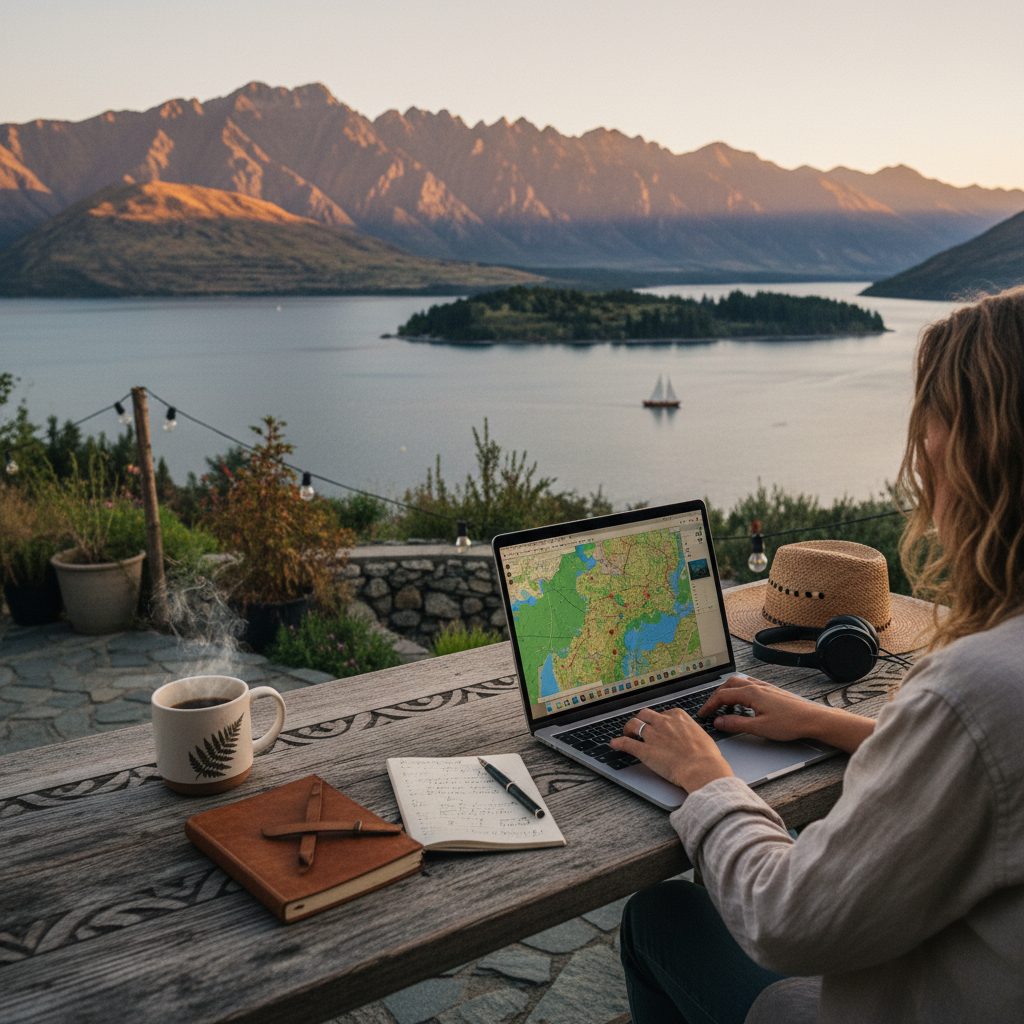
New Zealand presents a compelling, albeit exclusive, opportunity for digital nomads in 2026, offering a unique blend of high quality of life, breathtaking landscapes, and a stable, modern economy. This definitive guide will equip you with the precise details, figures, and procedural knowledge required to navigate the application for the New Zealand digital nomad visa, ensuring a clear understanding of its stringent requirements and the unparalleled benefits of remote work in Aotearoa.
The New Zealand digital nomad visa, officially known as the 'Special Category Visitor Visa for Remote Workers,' was introduced to attract high-earning, location-independent professionals. Its structured framework aims to ensure that successful applicants contribute meaningfully to the local economy while enjoying an extended stay. Securing this visa is not merely about fulfilling a checklist; it requires demonstrating a genuine commitment to remote work and a substantial income stream from sources outside New Zealand. Potential applicants should prepare for a meticulous process, but the reward is access to one of the world's most pristine and welcoming environments.
Quick facts
| Feature | Details |
|---|---|
| Income requirement | NZD 9,000 per month (NZD 108,000 annually) |
| Visa duration | 12 months |
| Renewable | Yes, for another 12 months |
| Application fee | NZD 420 (approx. USD 255 / EUR 240) |
| Processing time | 4-8 weeks |
| Tax rate for holders | Tax resident if present 183+ days; non-resident on foreign income under specific conditions |
| Family members allowed | Yes, immediate family included |
| Path to residency | No direct path; may qualify for other skilled visas |
What is the New Zealand digital nomad visa?
The New Zealand digital nomad visa, formally titled the 'Special Category Visitor Visa for Remote Workers,' is a tailored immigration pathway designed for individuals who earn their living online through remote work and desire to reside in New Zealand for an extended period. Launched in late 2024 and fully operational by 2025, this visa aims to attract global talent and digital entrepreneurs without competing for local employment opportunities. Unlike traditional work visas, it explicitly permits holders to perform their work for clients or employers located outside of New Zealand, ensuring their income is generated externally. The visa initially grants a stay of 12 months, with the possibility of renewal for an additional 12 months, contingent on continued eligibility and adherence to visa conditions. It is specifically structured to cater to the growing global trend of location independent lifestyle, offering a legal and stable framework for remote professionals seeking to immerse themselves in New Zealand's unique culture and pristine natural environment.
New Zealand digital nomad visa requirements
Eligibility for the New Zealand digital nomad visa is stringent, reflecting the country's high standards. Applicants must meet specific criteria to demonstrate their capacity for remote work and financial self-sufficiency. As of 2026, the primary requirements include:
- Nationality: Open to citizens of most countries, with specific exemptions for countries subject to New Zealand's visa waiver agreements (though a special visa is still required for longer stays).
- Remote Work Status: Proof of employment by a company registered outside of New Zealand, or self-employment with clients predominantly based outside New Zealand. This includes freelancers, consultants, and digital entrepreneurs whose work can be performed entirely remotely using telecommunications technology.
- Minimum Income Threshold: Applicants must demonstrate a stable gross monthly income of at least NZD 9,000 (approximately USD 5,470 / EUR 5,160 as of Q1 2026, subject to exchange rate fluctuations) for the past 12 months. This equates to an annual income of NZD 108,000. Evidence must include bank statements, employment contracts, client invoices, and tax returns.
- Health Insurance: Comprehensive travel and health insurance coverage valid for the entire duration of the intended stay in New Zealand is mandatory. The policy must cover medical emergencies, hospitalization, and repatriation.
- Clean Criminal Record: Applicants and any accompanying family members must provide a police certificate from their country of citizenship and any country where they have lived for more than 12 months in the past 10 years, demonstrating good character.
- Passport Validity: A passport valid for at least three months beyond the intended departure date from New Zealand.
- Genuine Intentions: A statement outlining the applicant's intent to reside temporarily, contribute positively to the community (e.g., through local spending), and depart New Zealand at the end of their authorized stay.
- Age: Applicants must be 18 years of age or older.
Documentation Checklist
To streamline your application, prepare the following documents:
- Completed application form (online).
- High-resolution digital passport photo.
- Scanned copy of your passport bio-data page.
- Proof of remote work (employment contract, client agreements, company registration documents).
- Bank statements for the past 12 months showing income.
- Tax returns from your country of residence for the last two years.
- Comprehensive health and travel insurance policy details.
- Police certificates.
- Academic qualifications (optional, but can support professional credibility).
- Curriculum Vitae (CV) or resume.
- Cover letter detailing your digital nomad lifestyle and intentions for New Zealand.
How to apply for the New Zealand digital nomad visa
The application process for the New Zealand digital nomad visa is conducted entirely online through the official New Zealand Immigration website. This digital-first approach ensures efficiency and accessibility for global applicants.
- Gather Documentation: Before starting, ensure all required documents (as listed above) are scanned, translated into English if necessary by a certified translator, and ready for upload. Incomplete applications are the leading cause of delays.
- Create an Immigration Online Account: Visit the official New Zealand Immigration website and create a personal account. This will be your portal for the entire application process.
- Complete the Application Form: Fill out the 'Special Category Visitor Visa for Remote Workers' form accurately. Be prepared to provide detailed personal information, travel history, and specifics about your remote work and income.
- Upload Supporting Documents: Attach all scanned documents. Ensure each file meets the specified format and size requirements. Double-check that every required document has been uploaded.
- Pay the Application Fee: The non-refundable application fee of NZD 420 must be paid online via credit or debit card. This fee is standard for individual applicants; additional fees may apply for accompanying family members.
- Submit Application: Once all sections are complete and the fee is paid, submit your application. You will receive an acknowledgment email with a unique reference number.
- Await Processing: Immigration New Zealand will review your application. During this period, they may request additional information or an interview. It is crucial to respond promptly to any such requests.
- Receive Decision: You will be notified of the decision via email. If approved, you will receive your visa electronically, which will be linked to your passport.
Processing times can vary, but generally, applicants can expect a decision within 4 to 8 weeks. However, complex cases or periods of high application volume may extend this timeframe. It is advisable to apply well in advance of your desired arrival date.
Cost breakdown
Understanding the financial commitments associated with the New Zealand digital nomad visa extends beyond the application fee. Prospective applicants should budget for a range of expenses, both initial and ongoing.
| Expense Category | Estimated Cost (NZD) | Estimated Cost (USD) | Estimated Cost (EUR) |
|---|---|---|---|
| Visa Application Fee | 420 | 255 | 240 |
| Police Certificates | 50 - 200 (per country) | 30 - 120 | 28 - 115 |
| Health Insurance (Annual) | 1,500 - 3,000 | 900 - 1,800 | 860 - 1,720 |
| Document Translation | 100 - 500 | 60 - 300 | 57 - 285 |
| Medical Examination (if required) | 200 - 400 | 120 - 240 | 115 - 230 |
| Initial Settlement Costs | 5,000 - 10,000 (deposit, first month rent, utilities, furniture) | 3,000 - 6,000 | 2,870 - 5,740 |
| Monthly Living Expenses (Single) | 3,000 - 5,000 | 1,800 - 3,000 | 1,720 - 2,870 |
Note: Exchange rates are approximate as of Q1 2026. Living expenses vary significantly based on location (e.g., Auckland vs. smaller cities) and lifestyle choices. Initial settlement costs are highly variable.
New Zealand is known for its relatively high cost of living, particularly in major cities like Auckland and Wellington. Rent, groceries, and transportation can be significant expenditures. It is crucial for digital nomads to maintain a robust financial buffer beyond the minimum income requirement to comfortably enjoy their stay.
Taxes for digital nomads in New Zealand
Taxation for digital nomads in New Zealand is a critical aspect that requires careful understanding. New Zealand operates a residency-based tax system. If you are deemed a New Zealand tax resident, you will be taxed on your worldwide income. Conversely, non-residents are generally only taxed on income sourced from New Zealand.
Determining Tax Residency
As a digital nomad on a 'Special Category Visitor Visa for Remote Workers,' your tax residency status will primarily depend on the number of days you spend in New Zealand and your 'permanent place of abode' (PPOA) test.
- 183-day rule: If you are physically present in New Zealand for more than 183 days in any 12-month period, you are likely to be considered a New Zealand tax resident from the first day of that period. As a resident, you would be liable for tax on all your income, including that earned from your remote work clients outside New Zealand.
- Permanent Place of Abode (PPOA): Even if you spend less than 183 days, you could be deemed a resident if you have a PPOA in New Zealand (e.g., owning property or having significant family/economic ties) and no PPOA in another country. However, for most digital nomads on this visa, the 183-day rule is the primary determinant.
Tax Obligations for Residents
If you become a tax resident, your remote income will be subject to New Zealand's progressive income tax rates, which for 2026 are:
- Up to NZD 14,000: 10.5%
- NZD 14,001 to NZD 48,000: 17.5%
- NZD 48,001 to NZD 70,000: 30%
- NZD 70,001 to NZD 180,000: 33%
- Above NZD 180,000: 39%
Digital nomads who become tax residents will need to register with the Inland Revenue Department (IRD) and file annual income tax returns. It is advisable to consult with a New Zealand tax professional to understand your specific obligations, especially concerning double taxation agreements (DTAs) between New Zealand and your country of origin. DTAs can prevent you from being taxed twice on the same income.
Goods and Services Tax (GST)
New Zealand has a Goods and Services Tax (GST) of 15% on most goods and services. As a consumer, you will pay this on purchases. If you provide services to New Zealand clients (which the visa generally restricts, but may happen if you transition to a different visa), you might need to register for GST if your annual turnover from New Zealand sources exceeds NZD 60,000.
Family members and renewals
New Zealand's digital nomad visa is inclusive of immediate family members, allowing for a truly shared experience of Aotearoa. This typically includes spouses, de facto partners, and dependent children (under 18 years of age or under 24 if full-time students and financially dependent). Each family member must apply concurrently with the primary applicant or separately as a subsequent applicant, providing all necessary documentation, including their own passport details, police certificates, and health insurance. There will be additional application fees for each family member, though typically at a reduced rate compared to the primary applicant. Family members are granted the same visa duration as the primary applicant.
Visa Renewal
The New Zealand digital nomad visa is renewable for an additional 12 months, bringing the total potential stay to two years. To renew, applicants must demonstrate they continue to meet the original eligibility criteria:
- Continued Remote Income: Proof of maintaining the minimum monthly income of NZD 9,000 from external sources for the duration of the first visa term and projected for the renewal period.
- Valid Health Insurance: Continued comprehensive health and travel insurance coverage.
- Good Character and Health: No changes in character or health status that would make them ineligible.
- Adherence to Visa Conditions: Proof of having complied with all visa conditions during the initial stay, including not undertaking local employment (unless expressly permitted by another visa).
The renewal application process is similar to the initial application, submitted online through the Immigration New Zealand portal. It is recommended to apply for renewal at least 2-3 months before your current visa expires to allow for processing time.
Pitfalls and considerations for digital nomads in New Zealand
While New Zealand offers an enticing prospect for location independent lifestyle, several factors warrant careful consideration:
- High Cost of Living: As detailed, New Zealand, particularly its major cities, can be expensive. Accommodation, groceries, and transportation costs are significant. Digital nomads must have robust financial planning.
- Internet Connectivity: While generally excellent in urban areas, connectivity can be patchy in remote, scenic regions that often attract digital nomads. For those reliant on high-speed internet, careful location scouting is essential.
- Isolation: New Zealand is geographically isolated. While this contributes to its unique charm and pristine environment, it also means longer, more expensive travel to other major global hubs. This can impact work collaboration across different time zones or family visits.
- Limited Social Interaction (Initially): Building a social network can take time. While New Zealanders are friendly, establishing deep connections might require proactive effort, such as joining coworking spaces or local community groups.
- No Direct Path to Permanent Residency: The digital nomad visa does not offer a direct pathway to permanent residency. For those wishing to settle long-term, this visa serves as an exploratory option, after which they would need to qualify for other skilled migration visas based on their skills and contribution to the New Zealand economy.
- Time Zone Challenges: Working with clients in Europe or North America can mean working unconventional hours due to the significant time difference. This requires discipline and flexible scheduling.
For Bangladeshi passport holders
Bangladeshi citizens interested in the New Zealand digital nomad visa face the same application requirements and processes as other eligible nationalities. There are no specific additional requirements or restrictions based on Bangladeshi nationality for this visa category, other than standard immigration checks. However, Bangladeshi applicants should pay particular attention to:
- Document Authentication: Ensure all official documents (e.g., police certificates, birth certificates, marriage certificates) are properly authenticated and translated by certified translators. New Zealand Immigration has strict standards for document verification.
- Financial Proof: Providing clear, verifiable proof of the NZD 9,000 monthly income (NZD 108,000 annually) for the past 12 months is crucial. Bank statements and official tax documents from Bangladesh will be key. If income is earned in BDT, applicants must clearly show the equivalent in NZD at the time of income receipt or conversion.
- Interview Preparedness: While not always required, Bangladeshi applicants might be asked for an interview to clarify aspects of their application, especially regarding their remote work setup and financial stability. Being prepared to articulate your remote career and demonstrate your legitimate digital entrepreneurship is vital.
- English Language Proficiency: Although not explicitly a requirement for the visa, good English communication skills are beneficial for the application process and for living in New Zealand. All documents must be in English or officially translated.
New Zealand's immigration authorities evaluate each application on its individual merits, ensuring fairness regardless of country of origin. Bangladeshi digital nomads who meet the rigorous income, remote work, and character requirements have an equal opportunity to secure this visa.
Frequently asked questions
What is the New Zealand digital nomad visa?
It is a 'Special Category Visitor Visa for Remote Workers' allowing individuals who earn income remotely from outside New Zealand to live and work in the country for up to 12 months, with a possible 12-month renewal.
Who is eligible for the New Zealand digital nomad visa?
Eligible individuals are remote workers, freelancers, or digital entrepreneurs earning at least NZD 9,000 gross per month from non-NZ sources, aged 18+, with a clean record and valid health insurance.
How much does the New Zealand digital nomad visa cost?
The application fee is NZD 420 (approx. USD 255 / EUR 240). Additional costs include health insurance, police certificates, document translations, and initial settlement expenses.
How long does New Zealand digital nomad visa processing take?
Processing typically takes between 4 to 8 weeks. However, this timeframe can extend depending on the completeness of the application, volume of submissions, and individual case complexities.
Can I bring my family on the New Zealand digital nomad visa?
Yes, immediate family members (spouse, de facto partner, dependent children) can be included in the application, subject to their own documentation requirements and additional fees.
Do I pay tax in New Zealand on the digital nomad visa?
If you spend more than 183 days in New Zealand within a 12-month period, you generally become a tax resident and are liable for New Zealand tax on your worldwide income.
Can Bangladeshi citizens get the New Zealand digital nomad visa?
Yes, Bangladeshi citizens are eligible to apply for the New Zealand digital nomad visa, provided they meet all the standard eligibility criteria, including income, remote work proof, and character requirements.
Compare with
Australia, Portugal, Spain
Interested in applying for the New Zealand visa?
Tell us a bit about yourself and we'll send tailored guidance on eligibility, paperwork, and next steps.