My First 90 Days in Montserrat: A Digital Nomad's Caribbean Case Study
Often overlooked, Montserrat offers a unique Caribbean digital nomad experience. This case study details the first 90 days, from application to settling in, offering a first-person account of the Montserrat digital nomad visa journey, complete with costs, local insights, and lessons learned.
October 3, 2026
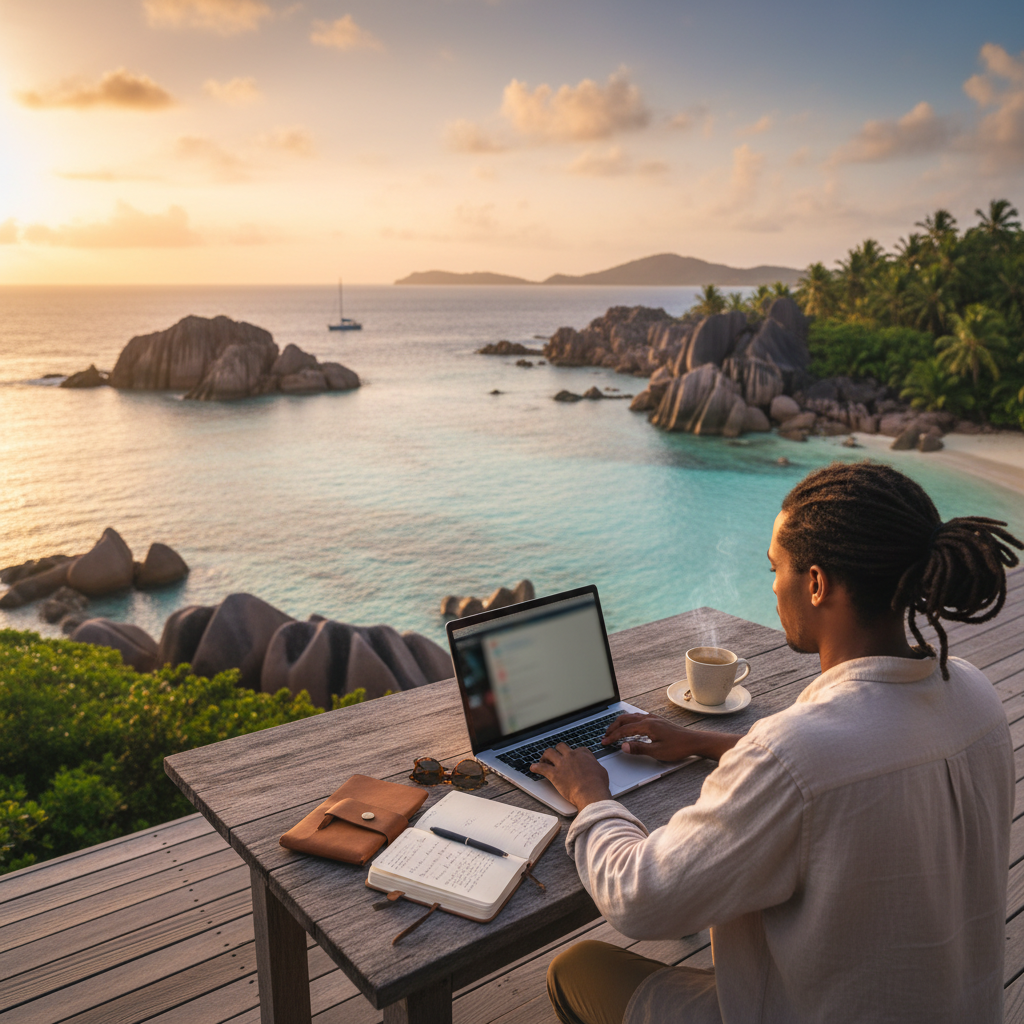
Many aspiring digital nomads dream of white sand beaches and turquoise waters, often conjuring images of popular Caribbean hotspots. However, few consider Montserrat, a true hidden gem. Before I embarked on my journey, the prevailing misconception was that Montserrat was still largely uninhabitable, an island perpetually scarred by its volcanic past. I’m here to tell you, as a digital nomad who just completed my first 90 days here in 2026, that this couldn't be further from the truth. Montserrat is very much alive, vibrant, and welcoming, offering a unique, tranquil, and incredibly productive remote work environment. The Montserrat digital nomad visa, officially known as the Montserrat Remote Worker Stamp, has opened up this remarkable opportunity for global professionals seeking a different pace of life.
My decision to choose Montserrat wasn't impulsive. As a seasoned digital entrepreneurship professional, I was looking for a destination that combined affordability, a unique cultural experience, and a strong sense of community, away from the typical digital nomad travel circuits. The island's promise of an ‘Emerald Isle of the Caribbean’ experience, coupled with a straightforward visa process, truly sealed the deal.
Quick facts
| Row | Value |
|---|---|
| Income requirement | US$70,000 per year (individual) |
| Visa duration | 12 months |
| Renewable | Yes, for an additional 12 months |
| Application fee | US$500 (individual) |
| Processing time | 7-14 working days |
| Tax rate for holders | 0% on foreign-earned income |
| Family members allowed | Yes, additional fees apply |
| Path to residency | No direct path to permanent residency |
What is the Montserrat digital nomad visa?
The Montserrat Remote Worker Stamp is an initiative designed to attract individuals who can work remotely using digital technology, contributing to the local economy and culture. Launched in 2020, it allows location independent lifestyle professionals to live and work from the island for up to 12 months, with the possibility of renewal. The core idea is to diversify Montserrat’s economy and bring in new skills and perspectives, while offering an idyllic, distraction-free environment for those engaged in online business or remote career paths. Unlike some more populous work from anywhere destinations, Montserrat offers a quiet, community-focused experience, ideal for deep work and genuine local immersion.
From the moment I landed, the warmth of the Montserratian people was palpable. The visa isn't just a travel document; it's an invitation to become part of a small, resilient community. My first week involved getting accustomed to the pace of life – slower, certainly, than the bustling city I'd left behind, but incredibly efficient once you learn the rhythm. Internet connectivity, a crucial aspect of any digital nomad existence, proved reliable, with fibre optic options available, supporting my need for seamless video calls and large file transfers for my freelancing projects.
Montserrat digital nomad visa requirements
Meeting the eligibility criteria was the most crucial first step in my application. The Montserrat digital nomad visa requirements are relatively straightforward, focusing on financial stability, remote employment, and a clean background. Here’s what I needed to provide:
- Proof of Employment: I had to demonstrate I was employed by a company registered outside of Montserrat or was self-employed with clients based outside the island. For self-employed individuals like myself, this meant providing client contracts and business registration documents.
- Minimum Income: A key requirement is proof of an annual income of at least US$70,000 for an individual. For families, this increases to US$80,000 for a couple, and an additional US$10,000 per child, up to four children. I supplied bank statements, tax returns from the previous year, and client invoices to prove my income met this threshold. This financial stability ensures that applicants can support themselves without seeking local employment.
- Valid Passport: My passport needed to be valid for at least six months beyond my intended stay.
- Clean Criminal Record: A police certificate from my country of origin (and any country where I had resided for more than six months in the last three years) was required.
- Health Insurance: Proof of comprehensive health insurance covering medical care, hospitalization, and repatriation for the entire duration of my stay in Montserrat was mandatory. This is non-negotiable for my peace of mind and compliance.
- Relationship Proof (for dependents): Though I traveled solo, families would need marriage certificates for spouses and birth certificates for children.
The application portal was clear about these requirements, leaving little room for ambiguity. The clarity was a welcome change compared to some other visa applications I've researched.
How to apply for the Montserrat digital nomad visa
The application process for the Montserrat digital nomad visa was surprisingly efficient. Here’s a step-by-step breakdown of my journey:
- Gather Documents: Before starting the online application, I meticulously gathered all required documents, scanning them into clear, high-resolution PDFs. This included my passport, police certificate, proof of income (bank statements, tax returns, client contracts), and health insurance policy.
- Online Application: I accessed the official Montserrat government website and navigated to the Remote Worker Stamp application portal. The form was intuitive, asking for personal details, employment information, and my proposed stay duration.
- Upload Documents: I uploaded each document to the corresponding section of the online form. It’s crucial here to ensure all files are correctly named and easily identifiable.
- Pay Application Fee: The application fee of US$500 (approximately XCD 1,350) for a single applicant was paid securely online using a credit card. For a couple, the fee is US$750, and for a family of up to three children, it's US$1,000.
- Submission and Confirmation: After reviewing all details, I submitted my application. I immediately received an email confirmation with a reference number, which was helpful for tracking.
- Processing and Interview: My application was processed remarkably quickly. Within 10 working days, I received an email inviting me for a short virtual interview with an immigration officer. This was a friendly chat to confirm my intentions, clarify any details, and discuss my digital nomad lifestyle plans on the island. It lasted about 15 minutes.
- Approval and Visa Issuance: Just three days after the interview, I received my official approval letter and the Remote Worker Stamp via email. This document served as my entry permit.
The entire process, from initial submission to receiving the approval, took exactly 13 working days. This speed was incredibly reassuring and allowed me to finalize travel plans without undue stress.
Cost breakdown
Beyond the application fee, I quickly learned that the true cost of living involves more than just rent. Here’s a comparison of my monthly expenses during my first 90 days in Montserrat versus what I might spend in a more commonly chosen digital nomad hub or even back home in Dhaka, Bangladesh (for context):
| Expense Category | Montserrat (USD/month) | Lisbon (USD/month) | Dhaka (USD/month) |
|---|---|---|---|
| Visa Application Fee | US$41.67 (amortized) | US$50 (amortized) | N/A |
| Accommodation (1BR apt) | US$800 - US$1,200 | US$1,200 - US$2,000 | US$300 - US$700 |
| Utilities (incl. Wi-Fi) | US$150 - US$250 | US$150 - US$250 | US$100 - US$200 |
| Groceries | US$400 - US$600 | US$300 - US$500 | US$200 - US$400 |
| Transportation (car rental/gas) | US$300 - US$500 | US$50 - US$150 | US$50 - US$100 |
| Eating Out (moderate) | US$150 - US$300 | US$400 - US$700 | US$150 - US$300 |
| Health Insurance | US$100 - US$200 | US$100 - US$200 | US$50 - US$100 |
| Miscellaneous | US$100 - US$200 | US$150 - US$300 | US$50 - US$100 |
| Total Estimated | US$2,000 - US$3,000 | US$2,400 - US$4,100 | US$900 - US$1,900 |
Note: Accommodation costs are highly variable based on location and amenities. Car rental is almost essential in Montserrat.
My primary accommodation was a charming one-bedroom apartment with an ocean view in the south of the island, costing US$950 per month. Renting a car was crucial for mobility; public transport is limited, and the island's terrain can be challenging for walking. This added a significant but necessary cost (averaging US$400/month including gas). Groceries were slightly higher than I expected, as many items are imported, but fresh local produce (like breadfruit, mangoes, and callaloo) was affordable and delicious. Overall, my average monthly spend was around US$2,500, allowing for a comfortable work from anywhere lifestyle and occasional dining out.
Taxes for digital nomads in Montserrat
One of the most attractive aspects of the Montserrat Remote Worker Stamp is the tax regime for digital nomads. As a holder of this visa, I am not subject to Montserrat income tax on earnings derived from sources outside the island. This means my income generated from my remote jobs and online business activities for clients outside Montserrat remains tax-free within Montserrat. This was a significant financial benefit that directly influenced my decision. I am still, of course, liable for taxes in my home country (where I maintain tax residency) based on its specific tax laws. It's essential for any digital nomad to consult a tax professional regarding their specific tax obligations in their home country and any other jurisdictions where they may have tax ties. The clarity on foreign-earned income being untaxed locally makes Montserrat a very appealing option for maximizing my earnings as a digital entrepreneurship professional.
Pitfalls and lessons learned in the first 90 days
My first three months weren't without their learning curves. The first major lesson was the reliance on a car. While the island is small, its hilly terrain and lack of extensive public transport mean that a car is almost a necessity. I initially thought I could rely on taxis, but the cost quickly added up. Renting a car long-term proved more economical.
Another pitfall to be aware of is the availability of certain goods. As an island, some imported items might be more expensive or harder to find. Learning to adapt my shopping habits and embrace local produce was key. Patience is also a virtue here – things operate on 'island time', which can be frustrating if you're used to a fast-paced environment. However, I learned to embrace it, realizing it contributed to the relaxed atmosphere crucial for my productivity for digital nomads.
Finally, the community is small and tight-knit. While this is a huge positive, it also means that discretion and respect for local customs are paramount. Integrating into the community involved actively participating in local events, supporting local businesses, and generally being a good neighbour, which enhanced my overall experience significantly. I joined a local hiking group and found a coworking space (though small, it was well-equipped) that helped me connect with other professionals.
For Bangladeshi passport holders
For Bangladeshi passport holders considering the Montserrat digital nomad visa, the process is largely the same, focusing on the universal requirements of income, remote employment, and clean background. There are no specific additional hurdles or different fee structures for Bangladeshi citizens. The main difference would be the practical aspects of travel and understanding the cultural nuances upon arrival. Direct flights from Bangladesh to the Caribbean are uncommon, requiring multiple layovers, typically via Europe or North America, which can add to travel time and cost. Ensure your passport has sufficient validity and that you have all necessary transit visas if required for your journey. The financial requirement of US$70,000 per year is a significant amount, especially when considering the average income landscape in Bangladesh. However, for a freelancing Bangladesh professional with international clients or a remote work Bangladesh entrepreneur with a strong online business, this is an achievable target. The tax exemption on foreign-earned income in Montserrat is particularly advantageous, as it allows Bangladesh digital nomad guide readers to retain more of their income while enjoying a high quality of life.
Frequently asked questions
What is the Montserrat digital nomad visa?
The Montserrat digital nomad visa, or Remote Worker Stamp, allows remote professionals to live and work on the island for up to 12 months. It's designed for individuals earning income from outside Montserrat, seeking a peaceful Caribbean base for their digital nomad lifestyle.
Who is eligible for the Montserrat digital nomad visa?
Eligible applicants must prove remote employment or self-employment outside Montserrat, with a minimum annual income of US$70,000. They also need a valid passport, clean criminal record, and comprehensive health insurance.
How much does the Montserrat digital nomad visa cost?
The application fee is US$500 for an individual. For a couple, it's US$750, and for a family (up to 3 children), it's US$1,000. These fees are non-refundable.
How long does Montserrat digital nomad visa processing take?
Processing typically takes between 7 to 14 working days from the submission of a complete application. This includes a potential virtual interview with immigration authorities.
Can I bring my family on the Montserrat digital nomad visa?
Yes, family members, including spouses and dependent children, can be included in the application. Additional fees apply for couples and families, and proof of relationship is required.
Do I pay tax in Montserrat on the digital nomad visa?
No, holders of the Montserrat digital nomad visa are exempt from paying local income tax on earnings derived from sources outside Montserrat. You remain liable for taxes in your country of tax residency.
Can Bangladeshi citizens get the Montserrat digital nomad visa?
Yes, Bangladeshi citizens are eligible to apply for the Montserrat digital nomad visa, provided they meet all the standard income, employment, and background requirements. The application process and fees are the same.
Sources
- Montserrat Government Official Immigration Website (consult the country's official immigration website)
- Montserrat Tourism Division (consult the country's official tourism website)
- Caribbean Council Resources (consult relevant regional economic bodies)
Compare with
Barbados, Anguilla, Dominica
Interested in applying for the Montserrat visa?
Tell us a bit about yourself and we'll send tailored guidance on eligibility, paperwork, and next steps.