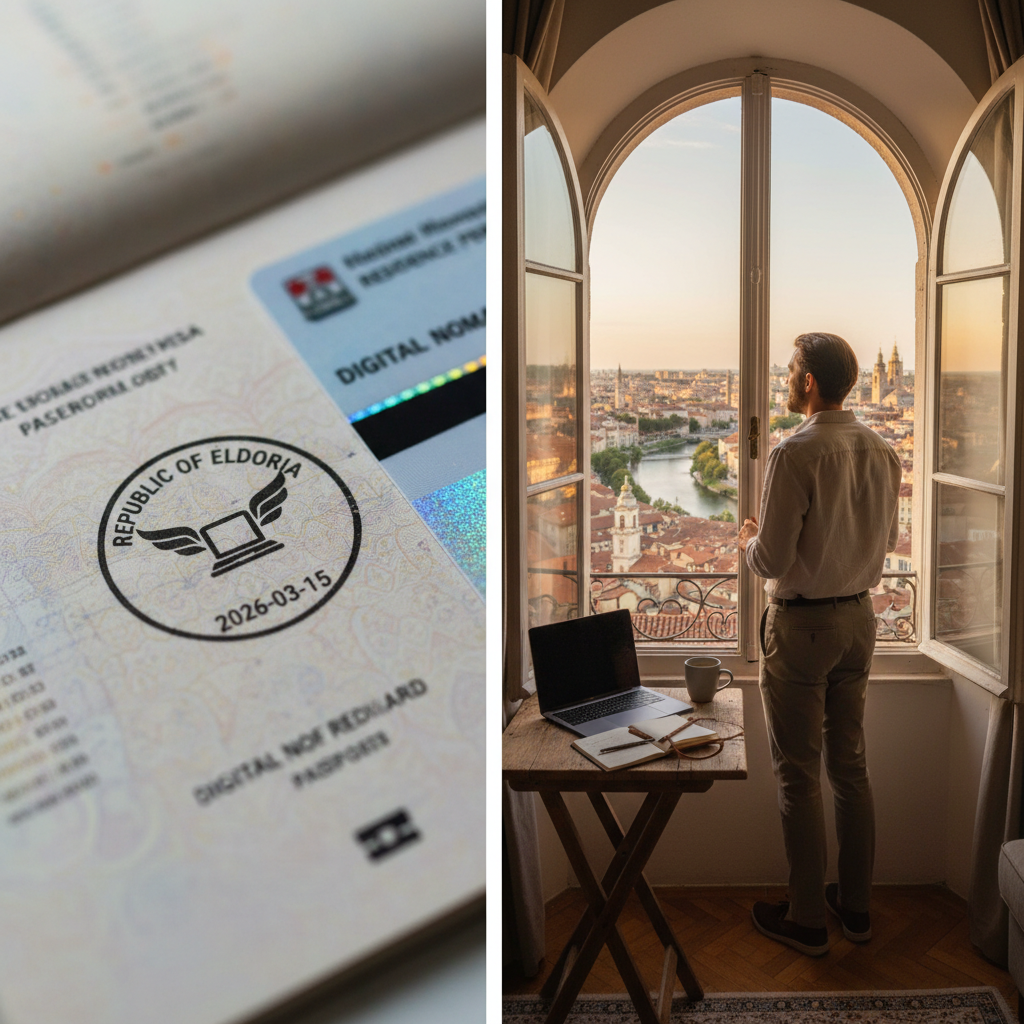
My First 90 Days in Berlin: A German Digital Nomad Visa Case Study
Join me as I recount my initial three months navigating Germany with its digital nomad visa. From the application hurdles to the unique tax landscape and daily life in Berlin, learn from my firsthand experience to better prepare for your own remote work journey in Europe's economic powerhouse.
August 27, 2026
“Bitte warten Sie!”
That’s what the stern-faced official at the Ausländerbehörde (Foreigners' Office) said to me, moments after she’d rifled through my meticulously organised stack of documents, seemingly unimpressed. I'd been prepping for this moment for months, dreaming of exchanging my dreary home office for Berlin's vibrant streets. It was September 2025, and after years of working remotely, the thought of truly embracing the digital nomad lifestyle in Germany felt both exhilarating and terrifying. The Germany digital nomad visa was my golden ticket, but securing it, and then truly settling in, proved to be a masterclass in German bureaucracy and perseverance. If you're considering this path, let my first 90 days be your blueprint – and your cautionary tale.
Quick facts
| Feature | Detail |
|---|---|
| Income requirement | €3,800/month (approx. $4,100 USD) pre-tax or proof of sufficient funds |
| Visa duration | 6 months to 1 year (initial); renewable up to 3 years |
| Renewable | Yes |
| Application fee | €100 (approximately $108 USD) |
| Processing time | 2-4 weeks (at local Ausländerbehörde) after arrival in Germany |
| Tax rate for holders | Progressive income tax, starting from 14% to 45% (if tax resident) |
| Family members allowed | No, it's a single-applicant visa. Family must apply separately. |
| Path to residency | Possible after 5 years, under specific conditions (e.g., permanent residence permit) |
What is the Germany digital nomad visa?
The Germany digital nomad visa (officially 'Visa for self-employment or freelance work' - Visum zur Ausübung einer selbständigen oder freiberuflichen Tätigkeit) is specifically designed for individuals who can demonstrate the ability to earn a living independently, primarily through remote work or freelance contracts, without being employed by a German company. Unlike many other digital nomad visas that target foreign employers, Germany's version is geared towards freelancers or entrepreneurs providing services predominantly to non-German clients, or at least having a clear business plan that does not interfere with the local job market. It's a testament to Germany's forward-thinking approach to attract skilled individuals who can contribute to its economy and cultural fabric, even if their workspace is a laptop and a strong Wi-Fi connection. The visa initially grants a stay of up to one year, which can be extended, providing a significant runway for those pursuing a location independent lifestyle.
My initial confusion, like many, stemmed from the distinction between 'self-employment' (selbständig) and 'freelance' (freiberuflich). The Freiberufler category applies to professions like artists, scientists, doctors, lawyers, and journalists. Most digital nomads fall under selbständig or might qualify as Freiberufler if their work aligns. The key is proving the viability of your business idea and financial independence. This isn't just about showing you have money; it's about showing you have a sustainable way to make money while living in Germany.
Germany digital nomad visa requirements
Navigating the requirements was like assembling an IKEA furniture piece without instructions – possible, but with plenty of head-scratching. The list is extensive, but each item serves a purpose in proving your intent and financial stability.
Firstly, you need a valid passport. Standard stuff. The real challenge comes with proving your self-employment or freelance status and financial means. Here's what I needed, and what you’ll likely need too:
- Valid Passport: Must be valid for at least six months beyond your intended stay.
- Biometric Photos: Recent, passport-sized biometric photos.
- Application Form: Two completed copies of the national visa application form.
- Proof of Financial Means: This is critical. I provided bank statements showing sufficient funds to cover my living expenses for at least the first year, which I calculated to be around €3,800 per month, totalling about €45,600 annually. This wasn't a strict 'income requirement' in the traditional sense, but rather a demonstration of financial self-sufficiency. If you have active contracts, letters from clients outlining projected earnings are excellent. For me, it was a mix of savings and recent freelance invoices.
- Health Insurance: Comprehensive travel or private health insurance valid for the duration of your stay. German authorities are very strict about this. It needs to cover at least €30,000 in medical expenses and include repatriation. I opted for a private German health insurance plan once I arrived, which was a necessary step for the longer-term permit.
- Proof of Accommodation: A rental agreement or confirmation of temporary housing. I booked an Airbnb for the first month and later showed my long-term rental contract for my apartment in Berlin.
- Detailed Business Plan: This is where the 'self-employment' aspect really comes into play. You need to articulate what you do, who your clients are (especially non-German ones), how you generate income, and your projected earnings. The more specific, the better.
- Proof of Professional Qualifications: Diplomas, certificates, or a portfolio demonstrating your skills in your chosen field. As a content strategist, my online portfolio and past client testimonials were crucial.
- Letters of Intent/Client Contracts: Evidence that there's a demand for your services. I presented two contracts with international clients, showcasing my ability to work from anywhere.
- CV: A comprehensive curriculum vitae.
- Proof of local connection (if applicable): If you plan to work with German clients or have professional networks, it strengthens your application. This isn't mandatory but helps show integration potential. I had joined a few German remote work forums and planned to visit some coworking spaces, which I mentioned.
For dependants, it's important to note that the Germany digital nomad visa is primarily for single applicants. Family members generally cannot be included on this specific visa and must apply for their own separate visas (e.g., family reunion visa), with their own set of stringent requirements, including proof of sufficient funds and comprehensive health insurance.
How to apply for the Germany digital nomad visa
The application process for the Germany digital nomad visa is a two-step dance, unlike many other countries where you apply from abroad. I flew into Germany on a standard Schengen tourist visa (which many nationalities can get for 90 days), with the explicit intention of applying for the self-employment visa after my arrival. This is a crucial distinction.
Step 1: Arrive in Germany (on a tourist visa, if eligible)
I landed in Berlin, secured my initial accommodation, and immediately started gathering my final documents. This period was intense, balancing settling in with visa prep.
Step 2: Apply at the local Ausländerbehörde
This is where the magic (or the bureaucracy) happens. You must apply for the residence permit at the Foreigners' Office in the city where you register your address (Anmeldung). For me, this was the Ausländerbehörde in Berlin.
Here’s my step-by-step breakdown:
- Register your address (Anmeldung): Within two weeks of moving into my long-term apartment, I registered my address at the local Bürgeramt. This is essential to get your registration certificate (Meldebescheinigung), which is required for almost everything else.
- Gather all documents: Double-check every item on the list. I had digital copies, photocopies, and originals. Germany is meticulous.
- Book an appointment: This was the trickiest part. Appointments at the Berlin Ausländerbehörde are notoriously difficult to secure. I had to wake up early for several days, refreshing their online portal until a slot opened up. It's often easier to get one if you are flexible with timing.
- Attend the interview: My appointment was on a chilly November morning. I arrived early, passport in hand, business plan ready. The official reviewed everything, asked about my work, my clients, and my financial projections. Having a clear, concise explanation of my digital nomad journey and how I intended to contribute (even indirectly) to the German economy was key.
- Pay the fee: The application fee for the residence permit was €100. I paid by EC card at the counter.
- Wait for approval: After a seemingly endless wait, I received a letter about three weeks later, inviting me back to pick up my electronic residence permit (eAT card). The feeling of holding that card, valid for one year, was immense relief.
Processing time: From my initial appointment to receiving the card, it took just under four weeks. However, securing the appointment itself can take several weeks or even months in popular cities like Berlin.
Cost breakdown
The financial commitment goes beyond just the visa fee. Here’s a breakdown of my initial costs, which are crucial for any remote worker planning their budget:
| Item | Estimated Cost (EUR) | Estimated Cost (USD - as of 2026, approx. 1 EUR = 1.08 USD) |
|---|---|---|
| Visa Application Fee | €100 | $108 |
| Health Insurance (initial 3 months) | €250 - €450 | $270 - $486 |
| Travel to Germany | €300 - €1,000 | $324 - $1,080 |
| Initial Accommodation (1 month) | €800 - €1,500 | $864 - $1,620 |
| Rental Deposit (2-3 months rent) | €1,600 - €4,500 | $1,728 - $4,860 |
| Monthly Rent (Berlin) | €800 - €1,500 | $864 - $1,620 |
| Groceries/Utilities (monthly) | €300 - €500 | $324 - $540 |
| Public Transport (monthly pass) | €49 | $53 |
| Initial setup costs (e.g., furniture, internet installation) | €500 - €1,500 | $540 - $1,620 |
| Total Initial Outlay (estimate) | €4,600 - €11,000 | $4,968 - $11,880 |
Note: These figures are estimates and can vary significantly based on city, lifestyle, and individual choices. My actual initial outlay was closer to the higher end due to securing a nicer apartment and comprehensive health insurance.
Taxes for digital nomads in Germany
This is where things get really interesting, and potentially complex, for digital entrepreneurs and freelancers. Germany's tax system is comprehensive, and as a digital nomad, you will likely become a tax resident if you stay longer than six months (or if you establish your centre of vital interests here from day one). This means your worldwide income could be subject to German taxation.
Upon receiving my residence permit, I had to register with the tax office (Finanzamt) and obtain a tax ID (Steuernummer). As a freelancer, I was then responsible for paying income tax (Einkommensteuer), solidarity surcharge (Solidaritätszuschlag), and potentially church tax (Kirchensteuer) if I registered a religious affiliation. The income tax rate is progressive, starting from 14% and going up to 45% for high earners. I also had to register for VAT (Umsatzsteuer) as my services were provided to EU clients, even if based outside Germany.
For digital nomads, especially those with clients outside Germany, understanding double taxation agreements (DTAs) between Germany and your home country is crucial. These agreements prevent you from being taxed twice on the same income. Consulting a German tax advisor (Steuerberater) is not just recommended; it's practically a necessity for anyone navigating this complex landscape. I hired one within my first month, and it was money well spent.
For Bangladeshi passport holders
For Bangladeshi passport holders considering the Germany digital nomad visa, the initial steps are slightly different, though the requirements for the self-employment permit remain largely the same. Instead of entering on a visa-free Schengen tourist visa, you would typically need to apply for a national visa (D-Visa) at the German Embassy or Consulate in Dhaka specifically for the purpose of 'seeking employment' or 'freelance activity' before you travel. This D-Visa allows you to enter Germany and then apply for the residence permit at the local Ausländerbehörde.
The documents required at the embassy will mirror those for the Ausländerbehörde application (business plan, financial proof, health insurance, etc.), sometimes with additional requirements like legalisation of documents. The processing time for a D-Visa from Bangladesh can take several weeks or even months, so planning significantly ahead is paramount. Ensure all your documents are translated into German by a certified translator and legalised as required. The income requirement will be strictly scrutinised, so robust financial proof and clear client contracts are absolutely essential for a successful application.
Renewing the Germany Digital Nomad Visa
My initial permit was valid for one year. As my first year approaches its end, I'm already planning for the renewal. The process is similar to the initial application but typically smoother, as you've already established yourself. I'll need to demonstrate continued financial viability, usually by showing a track record of consistent income, renewed contracts, and proof of tax payments in Germany. It’s also crucial to have maintained comprehensive health insurance.
The good news is that if you've been consistently paying taxes and successfully integrated, renewals are generally granted, often for up to two additional years, bringing the total potential stay to three years. After five years of continuous legal residence in Germany, it's possible to apply for a permanent residence permit (Niederlassungserlaubnis) if you meet further integration and financial stability criteria. This offers a clear long-term path for those who truly fall in love with the digital nomad lifestyle in Germany.
Lessons Learned in My First 90 Days
My initial three months in Germany were a whirlwind of administrative tasks, cultural immersion, and discovering incredible street art in Berlin. Here are my biggest takeaways for fellow remote workers:
- Embrace Bureaucracy: It’s not malicious; it's just how things are done. Patience and meticulous organisation are your best friends. Always bring more copies of documents than you think you need.
- Learn Basic German: While many Germans, especially in Berlin, speak English, making an effort to learn the language opens doors – both culturally and administratively. Even simple phrases like "Ich hätte gerne..." (I would like...) go a long way.
- Networking is Key: Even as a solo entrepreneur, connecting with other digital nomads, freelancers, and locals made a huge difference. Coworking spaces like Factory Berlin or St. Oberholz were invaluable for community and productivity. I found my first German-speaking friend there, which significantly eased my cultural adjustment.
- Financial Planning: Overestimate your initial costs. The rental deposit alone can be a significant chunk, and setting up a new life always has unexpected expenses. Having a solid financial buffer is non-negotiable for a stress-free transition.
- Tax Advisor: Do not skimp on this. The German tax system is complex, and getting it right from the beginning will save you headaches (and money) in the long run.
My first 90 days were challenging but incredibly rewarding. Germany, with its robust infrastructure, rich culture, and central European location, offers an unparalleled base for a digital nomad lifestyle. The Germany digital nomad visa is a solid option for those willing to put in the administrative legwork.
Frequently asked questions
What is the Germany digital nomad visa? The Germany digital nomad visa, officially for self-employment or freelance work, allows remote professionals to live and work in Germany for up to one year, with potential renewals. It targets individuals who earn income from clients outside of Germany or have a viable business plan not competing with the local job market.
Who is eligible for the Germany digital nomad visa? Eligibility requires proof of self-employment or freelance status, sufficient financial means (around €3,800/month), comprehensive health insurance, a detailed business plan, and professional qualifications. Applicants must demonstrate the ability to sustain themselves without local employment.
How much does the Germany digital nomad visa cost? The application fee for the residence permit in Germany is €100 (approximately $108 USD). Beyond this, applicants must account for health insurance, living expenses, rent deposits, and initial setup costs, potentially totalling €4,600 to €11,000 for the first few months.
How long does Germany digital nomad visa processing take? Once your appointment at the local Ausländerbehörde is secured, processing typically takes 2-4 weeks. However, booking the appointment itself, especially in popular cities like Berlin, can take several weeks or even months due to high demand.
Can I bring my family on the Germany digital nomad visa? No, the Germany digital nomad visa is primarily a single-applicant visa. Family members cannot be included. They must apply for their own separate visas, such as a family reunion visa, requiring individual applications, financial proofs, and health insurance coverage.
Do I pay tax in Germany on the digital nomad visa? Yes, if you establish tax residency in Germany (typically after 6 months or immediately if your centre of vital interests is there), your worldwide income will be subject to German income tax, solidarity surcharge, and potentially church tax. Consulting a tax advisor is highly recommended.
Can Bangladeshi citizens get the Germany digital nomad visa? Yes, Bangladeshi citizens can apply. They must first secure a national D-Visa from the German Embassy in Dhaka for 'freelance activity' before traveling to Germany. This process requires all standard documents, often with legalisation and certified German translations, and typically involves longer processing times.
Sources
- Federal Foreign Office (Auswärtiges Amt): Consult the country's official immigration website
- Federal Office for Migration and Refugees (BAMF): Consult the country's official immigration website
- Berlin Foreigners' Office (Landesamt für Einwanderung): Consult the country's official immigration website
- German Tax Law for Freelancers: Consult the country's official immigration website
Compare with: Portugal, Spain, Netherlands
Interested in applying for the Germany visa?
Tell us a bit about yourself and we'll send tailored guidance on eligibility, paperwork, and next steps.