Antigua & Barbuda's Nomad Program: The 2026 Policy Overhaul Explained
Discover the pivotal changes to Antigua and Barbuda's digital nomad visa in 2026, from altered income thresholds to new application procedures. This guide breaks down the policy overhaul and its implications for remote workers seeking Caribbean shores.
October 8, 2026
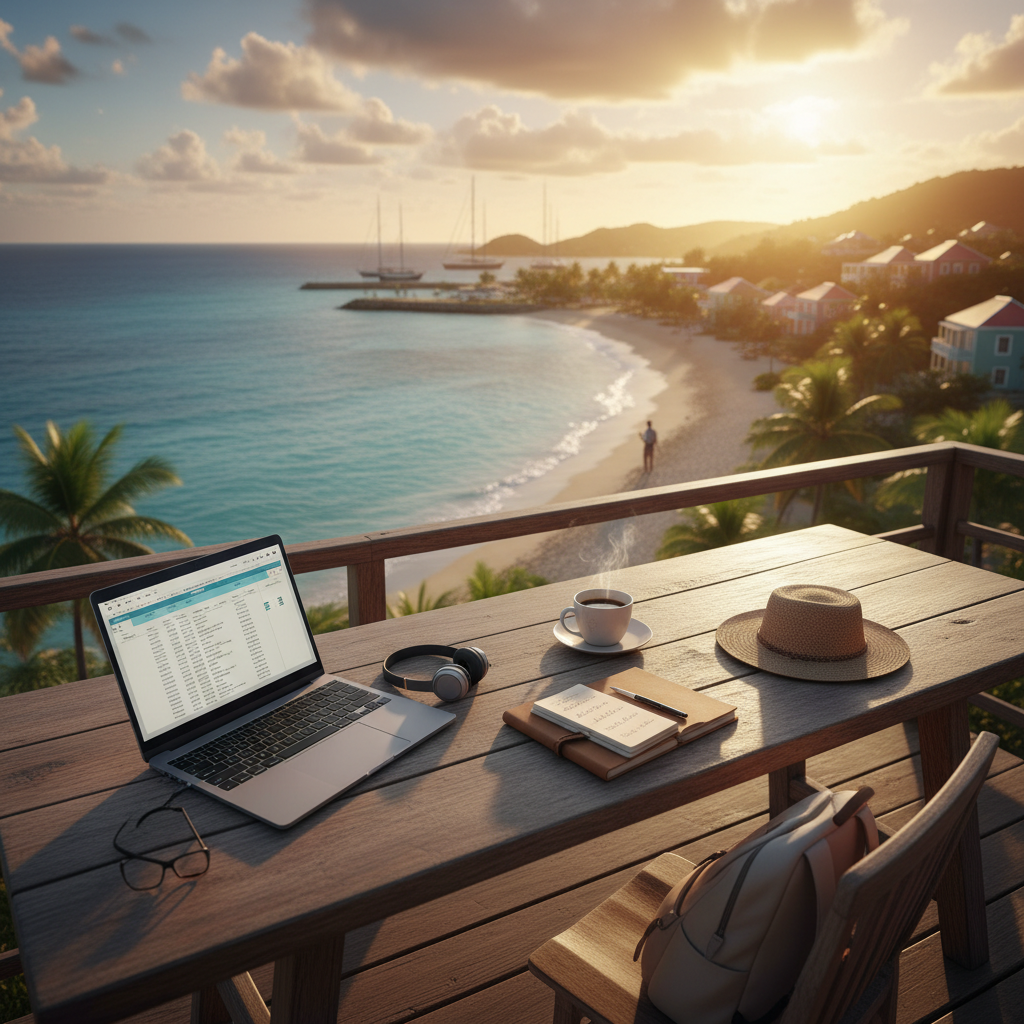
“Remember 2024, when the Antigua Barbuda Nomad Digital Residence (ABNDR) program seemed so straightforward?” mused Aisha, a freelance UX designer, to her partner over video call. “Just hit the $50,000 threshold and you were golden. Now, with the 2026 update, I’m practically an immigration lawyer just trying to decipher these new tiers.” Her frustration was palpable, echoing the sentiments of many digital nomads eyeing the sun-drenched shores of Antigua and Barbuda. The start of 2026 brought a significant overhaul to the island nation's popular Antigua and Barbuda digital nomad visa, introducing a new multi-tiered income structure, revised fees, and a sharpened focus on specific professional profiles. What once was a relatively simple application has evolved, demanding closer attention to detail from those seeking a year or more of location independent lifestyle in the Caribbean. This guide will walk you through these pivotal changes, ensuring your journey to remote work paradise remains on course.
Quick facts:
| Row | Detail |
|---|---|
| Income requirement | US$75,000 (Tier 1), US$120,000 (Tier 2), US$200,000 (Tier 3) |
| Visa duration | 12 months, renewable |
| Renewable | Yes, for an additional 12 months |
| Application fee | US$2,000 (Individual), US$3,000 (Couple), US$4,500 (Family of 3+) |
| Processing time | 5-7 business days |
| Tax rate for holders | 0% on foreign-earned income |
| Family members allowed | Yes (Spouse, dependent children under 18, financially dependent parents) |
| Path to residency | No direct path to permanent residency |
What is the Antigua and Barbuda digital nomad visa?
The Antigua and Barbuda digital nomad visa, officially known as the Nomad Digital Residence (ABNDR) program, was initially launched in 2020 as a response to the global shift towards remote work and the economic impact of the pandemic. It allowed eligible individuals and their families to live and work remotely from the twin-island nation for up to two years. The program was designed to attract high-earning, self-sufficient professionals who contribute to the local economy through their spending, without directly competing for local jobs. Its appeal lay in the promise of a year-round tropical climate, stunning beaches, and a vibrant culture, coupled with a tax-friendly regime for foreign-earned income. It quickly became a popular choice for those seeking a more relaxed pace of life while maintaining their digital entrepreneurship endeavors.
The 2026 Policy Overhaul: What Changed?
The most significant changes introduced in 2026 centered around the financial requirements and an emphasis on professional experience. The government, noting an increase in applications and a desire to attract higher-net-worth individuals, revised the income structure from a flat rate to a tiered system. This aimed to better align the program with the nation's long-term economic development goals and ensure applicants could comfortably support themselves without burdening local infrastructure. Furthermore, a renewed focus on specific industries and verifiable professional experience was subtly integrated into the assessment criteria, moving beyond merely income verification.
Antigua and Barbuda digital nomad visa requirements
To qualify for the ABNDR program in 2026, applicants must meet a comprehensive set of criteria. The most critical update relates to the income thresholds, which are now tiered:
- Tier 1: Annual income of at least US$75,000 for individuals, or US$100,000 for couples.
- Tier 2: Annual income of at least US$120,000 for individuals, or US$150,000 for couples.
- Tier 3: Annual income of at least US$200,000 for individuals, or US$250,000 for couples.
These tiers correspond to different application fee structures and, implicitly, a slightly faster processing time for higher tiers. Crucially, applicants must demonstrate that this income is derived from sources outside Antigua and Barbuda, typically from digital nomad jobs, remote jobs, or online business activities. Employment contracts, client agreements, and bank statements are vital for proof.
Additional requirements include:
- Employment outside Antigua and Barbuda: You must be employed by a company or be self-employed (e.g., a freelancer, business owner) with clients or operations based outside the country.
- Valid Passport: Must be valid for at least six months beyond your intended stay.
- Health Insurance: Proof of comprehensive health insurance coverage for the entire duration of your stay in Antigua and Barbuda for all applicants.
- Clean Criminal Record: A police certificate from your country of origin and any country you have resided in for more than six months in the past year.
- Dependents: Spouses, financially dependent children under 18, and financially dependent parents can be included in the application. Evidence of dependency (marriage certificates, birth certificates, financial statements) is required.
Old vs. New: Income Requirements Comparison (2024 vs. 2026)
To illustrate the changes, here’s a comparison of the key income requirements from the original 2024 program to the revised 2026 structure:
| Requirement | 2024 Program | 2026 Program (Tier 1) |
|---|---|---|
| Individual Annual Income | US$50,000 | US$75,000 |
| Couple Annual Income | US$70,000 | US$100,000 |
| Family Annual Income (3+) | US$70,000 + US$15,000 per additional dependent over 2 | US$100,000 + US$20,000 per additional dependent over 2 |
This table clearly shows the upward adjustment in financial eligibility, signaling a strategic move to attract higher-earning individuals and ensure a more substantial economic contribution from each program participant. The new tiered system also implicitly encourages applicants with greater financial means to apply under higher tiers, streamlining their processing.
How to apply for the Antigua and Barbuda digital nomad visa
The application process for the ABNDR program, while updated, remains primarily online and designed for efficiency. Here’s a step-by-step guide:
- Gather Required Documents: Collect all necessary documents, including passport copies, birth certificates, marriage certificates (if applicable), police certificates, proof of income (bank statements, employment contracts, business registration), and health insurance policies. Ensure all documents are translated into English and notarized if necessary.
- Complete the Online Application Form: Access the official ABNDR portal on the government’s immigration website. Fill out the application form meticulously, providing accurate personal and financial details. The 2026 form includes specific sections to indicate which income tier you are applying under.
- Upload Supporting Documents: Digitize and upload all your prepared documents to the online portal. Pay close attention to file formats and size limits specified on the portal. Missing or improperly formatted documents are the primary cause of delays.
- Pay the Application Fee: Once your application and documents are submitted, you will be prompted to pay the non-refundable application fee. Payments are typically processed via credit card or bank transfer. The fee structure also saw changes in 2026, which are detailed in the next section.
- Await Processing and Approval: The processing time is typically 5-7 business days from the submission of a complete application and payment. Higher tiers may experience marginally faster processing. You will receive email notifications regarding the status of your application. Upon approval, an official letter will be issued.
- Travel to Antigua and Barbuda: With your approval letter, you can travel to Antigua and Barbuda. Present your letter, passport, and any other requested documents to immigration officials upon arrival. You will then be issued your official Nomad Digital Residence permit.
Cost breakdown
The cost of securing your Antigua and Barbuda digital nomad visa is a significant consideration, especially with the 2026 revisions. The application fees are structured to reflect the new tiered income system, although the base fees remain consistent across tiers.
- Individual Applicant: US$2,000 (EC$5,400)
- Couple (Applicant + Spouse): US$3,000 (EC$8,100)
- Family (Applicant + 2 Dependents): US$4,500 (EC$12,150). For each additional dependent beyond two, an extra US$1,000 (EC$2,700) is charged.
These fees are non-refundable, regardless of the application outcome. Beyond the application fee, applicants must budget for:
- Health Insurance: Costs vary widely based on age, coverage, and provider, but expect to pay between US$100-US$400 per month per person for comprehensive international coverage.
- Police Certificates: Varies by country, typically US$20-US$100.
- Document Notarization/Translation: If required, these costs can range from US$50 to several hundred dollars depending on the number of documents and location.
- Travel Costs: Flights to Antigua, initial accommodation, and living expenses upon arrival.
It's also prudent to factor in the cost of living. While not an application fee, the financial requirements reflect the expectation that applicants can sustain a comfortable lifestyle. A single individual might budget US$2,500-US$4,000 per month for basic living expenses (rent, utilities, food, transport), while a family could easily exceed US$5,000-US$7,000, depending on lifestyle choices and chosen accommodation. Consider this as part of your digital nomad travel planning.
Taxes for digital nomads in Antigua and Barbuda
One of the most attractive features of the ABNDR program for remote work professionals is its favorable tax regime. Antigua and Barbuda digital nomad visa holders are not subject to local income tax on income earned outside the country. This means that if your income is derived from your digital nomad jobs or online business operating internationally, you will not be taxed on it by the Antiguan government. This zero-tax status on foreign-earned income remains unchanged in 2026 and is a significant draw for individuals and businesses seeking to optimize their tax liabilities.
However, it's crucial to understand that this applies only to foreign-sourced income. If you were to earn income from local sources within Antigua and Barbuda (e.g., by providing services to a local Antiguan company or individual), that income would be subject to local tax laws. Additionally, while you won't pay income tax on your remote earnings, you will still be subject to other local taxes, such as Value Added Tax (VAT) on goods and services, and potentially property taxes if you choose to purchase real estate.
It is always advisable to consult with a tax professional who specializes in international taxation to understand your specific obligations in both Antigua and Barbuda and your country of citizenship or tax residency. The complexities of tax residency can be nuanced, especially for those pursuing a truly work from anywhere lifestyle.
Antigua and Barbuda-specific pitfalls for digital nomads in 2026
While Antigua and Barbuda offers an idyllic backdrop for the digital nomad lifestyle, applicants and current permit holders should be aware of several potential pitfalls, particularly with the 2026 policy changes:
- Rising Cost of Living: As the program attracts more affluent individuals, the demand for premium rental properties and services has increased, driving up the cost of living. Budgeting accurately is more critical than ever.
- Infrastructure Limitations: While internet connectivity is generally reliable in urban and tourist areas, it can be less consistent in more remote parts of the islands. Power outages, though infrequent, can occur. For those reliant on seamless connectivity for remote career or freelancing, this can be a minor inconvenience.
- Hurricane Season: The Atlantic hurricane season (June to November) is a real consideration. While the islands have robust disaster preparedness, disruptions to travel, power, and services are possible during this period. Comprehensive travel insurance is essential.
- Limited Public Transport: Public transport options are limited outside the main towns. Renting a car is often necessary for mobility, adding to monthly expenses.
- Bureaucracy: While the ABNDR application process is streamlined, interacting with local services (e.g., utility companies, banks) can sometimes be slower than what some nomads are accustomed to.
- Tier Confusion: The new tiered income system, while beneficial for the government, might cause initial confusion for applicants regarding which tier to apply under and the exact documentation required for each. Double-check the latest guidelines.
For Bangladeshi passport holders
For Bangladeshi digital nomads considering the Antigua and Barbuda digital nomad visa, the application process and requirements are largely the same as for other nationalities. The primary considerations will be proving the required income threshold, obtaining an international police clearance certificate, and securing comprehensive health insurance. As Bangladesh is not part of any specific economic bloc with Antigua and Barbuda, there are no special concessions or additional hurdles other than the standard requirements. The financial documentation is critical; ensuring clear and verifiable income from remote work Bangladesh activities or an online business is paramount. Prospective applicants from Bangladesh should ensure their financial records, employment contracts, or business registration documents are meticulously prepared and translated into English, as required. The time zone difference might also be a factor for collaborative remote jobs.
Frequently asked questions
What is the Antigua and Barbuda digital nomad visa?
The Antigua and Barbuda digital nomad visa (ABNDR) allows eligible foreign remote workers and their families to live and work remotely from the twin-island nation for 12 months, with the possibility of renewal. It was updated in 2026 with new income tiers.
Who is eligible for the Antigua and Barbuda digital nomad visa?
Eligible individuals are those employed by a company outside Antigua and Barbuda or who are self-employed with foreign-sourced income. As of 2026, minimum annual income thresholds are US$75,000 for individuals, increasing for couples and families.
How much does the Antigua and Barbuda digital nomad visa cost?
The application fee in 2026 is US$2,000 for an individual, US$3,000 for a couple, and US$4,500 for a family of up to three. Additional dependents cost US$1,000 each. These fees are non-refundable.
How long does Antigua and Barbuda digital nomad visa processing take?
Processing typically takes 5-7 business days from the submission of a complete application and payment. In some cases, minor delays may occur if additional documentation or clarification is required by the authorities.
Can I bring my family on the Antigua and Barbuda digital nomad visa?
Yes, the visa allows you to include your spouse, financially dependent children under 18, and financially dependent parents. Each family member must meet eligibility criteria and be included in the application.
Do I pay tax in Antigua and Barbuda on the digital nomad visa?
No, as an ABNDR holder, you are not subject to local income tax on income earned from sources outside Antigua and Barbuda. You will, however, be subject to local VAT on goods and services.
Can Bangladeshi citizens get the Antigua and Barbuda digital nomad visa?
Yes, Bangladeshi citizens are eligible to apply for the Antigua and Barbuda digital nomad visa, provided they meet all the standard eligibility criteria, including income, employment status, and clean criminal record.
Sources
- Official Government of Antigua and Barbuda Immigration Website (consult for the latest policy documents)
- Antigua and Barbuda Inland Revenue Department (for tax information)
- Various reputable international immigration news portals (for 2026 policy updates analysis)
Compare with: Barbados, Montserrat, Grenada
Interested in applying for the Antigua and Barbuda visa?
Tell us a bit about yourself and we'll send tailored guidance on eligibility, paperwork, and next steps.