Down Under & Dialed In: My First 90 Days on the Australia Digital Nomad Visa – A Case Study
Join me as I recount my exhilarating and challenging first 90 days living and working remotely in Australia on their digital nomad visa. From application hurdles to surfing on my lunch break, discover the real-world experience, costs, and critical lessons learned.
October 6, 2026
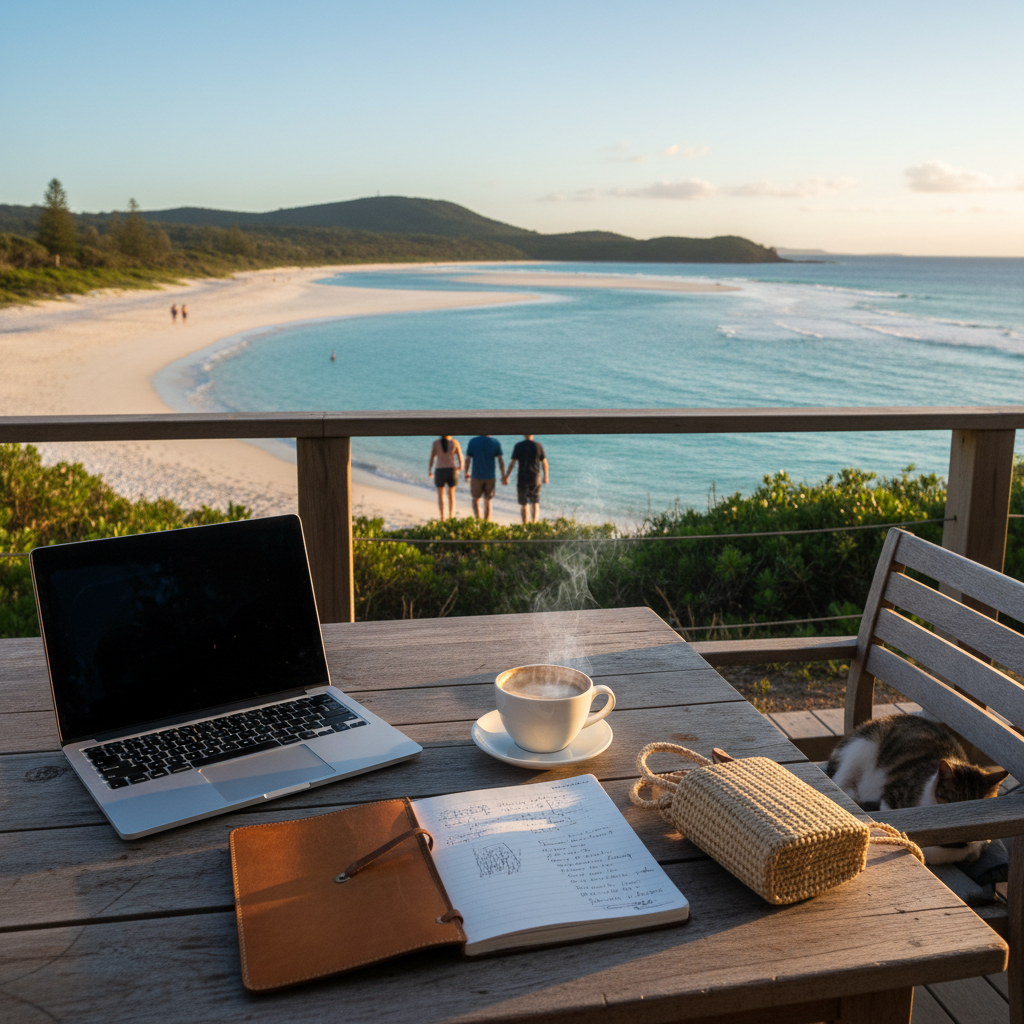
The salty breeze hit me the moment I stepped out of Sydney Airport, carrying the scent of the Pacific and a thrilling promise of adventure. It was late January 2026, and after months of anticipation, I had finally arrived in Australia on the Australia digital nomad visa. My laptop was nestled safely in my backpack, my passport stamped, and my mind buzzing with plans for remote work and coastal exploration. This wasn't just a trip; it was the beginning of a new chapter, a deliberate step into a digital nomad lifestyle that I'd meticulously planned. But as any seasoned traveler knows, planning can only take you so far. The real story unfolds in the first 90 days, a whirlwind of settling in, navigating bureaucracy, and truly experiencing life Down Under. This is my story, a detailed account of the triumphs, challenges, and lessons learned during my initial three months as a remote worker in Australia.
Quick facts about the Australia digital nomad visa
| Feature | Details |
|---|---|
| Income requirement | AUD 70,000 (approx. USD 47,000 / EUR 43,000) per year gross minimum, proven for past 12 months |
| Visa duration | Initially 12 months, renewable |
| Renewable | Yes, for another 12 months |
| Application fee | AUD 650 (approx. USD 440 / EUR 400) for primary applicant, AUD 325 for dependants (2026 figures) |
| Processing time | 4-8 weeks (expedited processing available for additional fee) |
| Tax rate for holders | Tax resident after 183 days, subject to Australian income tax rates (progressive, starting at 19%) |
| Family members allowed | Yes, spouse/de facto partner and dependent children |
| Path to residency | No direct path to permanent residency from this visa; requires switching to another visa stream |
What is the Australia digital nomad visa?
The Australia digital nomad visa, officially known as the Temporary Work (Skilled) visa (subclass 482) with a specific digital nomad stream, was launched to attract skilled remote workers and digital entrepreneurs who contribute to Australia's economy and enrich its diverse culture. It's designed for individuals who earn income from outside Australia, working for overseas clients or companies, or running their own online businesses. Unlike some traditional work visas, it doesn't require a local employer sponsorship, offering immense flexibility. This visa was my golden ticket to living my location independent lifestyle dream in a country renowned for its quality of life, stunning natural beauty, and vibrant cities. The premise is simple: bring your remote work to Australia, pay your way, and enjoy everything the country has to offer. It's a testament to Australia's forward-thinking approach to global talent, embracing the growing trend of work from anywhere professionals.
Australia digital nomad visa requirements
Meeting the requirements for the Australia digital nomad visa was a meticulous process. Here's a breakdown of what I had to gather:
- Nationality: You must hold a passport from an eligible country. My US passport qualified, but it's crucial to check the official list as it can be updated.
- Age: Be at least 18 years old.
- Income: This was the big one. I needed to demonstrate a minimum gross income of AUD 70,000 (approximately USD 47,000 / EUR 43,000) for the past 12 months. I provided bank statements, tax returns from my home country, and contracts from my primary clients for freelancing work to prove consistent earnings. They looked for stability here.
- Occupation: My work as a freelance content strategist and online course creator fit perfectly into the 'skilled remote worker' category. The government prioritizes roles that can genuinely be performed remotely and do not directly compete with local employment opportunities. Think digital nomad jobs like software development, digital marketing, graphic design, online consulting, and virtual assistance.
- Health Insurance: Mandatory! I secured comprehensive private health insurance that covered me for the entire duration of my intended stay. This is non-negotiable, and they will ask for proof.
- Good Character: A police clearance certificate from any country I had lived in for more than 12 months in the past 10 years was required. This process can take time, so start early.
- Genuine Intention: I had to write a statement outlining my genuine intention to abide by visa conditions, engage in remote work, and explain my ties to my home country to assure them I wasn't trying to overstay.
- No local employment: A key clause is that you cannot be employed by an Australian company. Your income must originate from outside Australia. This was fine for me, as all my clients are international.
How to apply for the Australia digital nomad visa
Applying for the visa was a structured, online process. Here are the steps I followed:
- Gather Documents: Before even starting the online application, I compiled all necessary documents: passport copy, birth certificate, marriage certificate (for my partner's dependant application), income proof (bank statements, tax returns, client contracts), health insurance policy, police clearance certificates, a detailed CV, and my personal statement.
- Create an ImmiAccount: This is the Australian Department of Home Affairs' online portal. I created an account and initiated a new application for the 'Temporary Work (Skilled) visa (subclass 482) - Digital Nomad Stream'.
- Complete the Application Form: The online form is comprehensive, covering personal details, travel history, employment history, and declarations. It's critical to be thorough and accurate. Any discrepancies can lead to delays or rejection.
- Attach Documents: I uploaded all my supporting documents as high-quality PDFs. It's advisable to name files clearly (e.g., 'Passport_JohnDoe.pdf', 'BankStatement_Dec2025.pdf').
- Pay the Application Fee: The fee for the primary applicant was AUD 650. For my partner, it was an additional AUD 325. This payment is made online via credit card.
- Biometrics and Health Checks: After submission, I received instructions to undergo biometrics (fingerprints and a photo) at a designated collection center in my home country. I also had to complete a medical examination with an approved panel physician, which involved a general health check and sometimes a chest X-ray.
- Wait for Decision: This was the hardest part. I submitted my application on October 15th, 2025. The processing time stated was 4-8 weeks. Mine took exactly 6 weeks, and I received my grant notification on November 26th, 2025. The visa specified my entry date and the duration of my stay.
Pro-tip: Double-check everything. The smallest error can cause significant delays. I meticulously reviewed each section before hitting submit.
Cost breakdown
The financial commitment for getting set up in Australia goes beyond just the visa fee. Here’s a breakdown of what I spent in the lead-up to and during my first 90 days (all figures approximate and based on 2026 rates):
| Item | Cost (AUD) | Cost (USD approx.) | Cost (EUR approx.) | Notes |
|---|---|---|---|---|
| Visa Application Fee (Primary) | 650 | 440 | 400 | Non-refundable |
| Visa Application Fee (Dependant) | 325 | 220 | 200 | For spouse/partner |
| Medical Examination | 300 | 200 | 185 | Varies by clinic/country |
| Police Clearance Certificates | 100 | 70 | 60 | Varies by country of issue |
| Comprehensive Health Insurance | 2,400 | 1,600 | 1,470 | Annual premium for one person; can be paid monthly |
| Flights (one-way to Sydney) | 1,500 | 1,000 | 920 | From US East Coast, can vary widely |
| Pre-Arrival Total | 5,275 | 3,530 | 3,235 | |
| First 90 Days Living Costs (Sydney) | ||||
| Accommodation (3 months rent) | 7,200 | 4,800 | 4,400 | 1-bed apartment, inner-city suburb (AUD 600/week) |
| Rental Bond (4 weeks rent) | 2,400 | 1,600 | 1,470 | Refundable deposit, held by state authority |
| Utilities (internet, electricity) | 450 | 300 | 275 | 3 months |
| Groceries (3 months) | 1,800 | 1,200 | 1,100 | Approx. AUD 150/week, moderate eating habits |
| Transportation (3 months) | 360 | 240 | 220 | Opal card, public transport |
| Eating Out/Entertainment (3 months) | 1,500 | 1,000 | 920 | Moderate, incl. coffees, occasional restaurant |
| Coworking Space (3 months) | 1,200 | 800 | 735 | Approx. AUD 400/month for dedicated desk |
| Phone Plan (3 months) | 75 | 50 | 45 | SIM-only, generous data plan |
| Miscellaneous/Emergencies | 1,000 | 670 | 615 | Initial setup items, unexpected costs |
| Initial 90 Days Living Total | 15,985 | 10,660 | 9,780 | |
| Grand Total (Visa to 90 Days) | 21,260 | 14,190 | 13,015 | This is a significant upfront investment! |
This table gives a clear picture of the substantial financial outlay required. The rental bond was a surprise for its size, but it's standard practice. I found a great coworking space in Surry Hills, which became my second home, boosting my productivity for digital nomads immensely.
Taxes for digital nomads in Australia
This was one of the more complex aspects I had to understand. Australia operates on a progressive tax system, and the key is determining your tax residency status. As a holder of the Australia digital nomad visa, you generally become an Australian tax resident if you reside in the country for more than 183 days in a financial year (which runs from July 1st to June 30th).
During my first 90 days, I was not yet an Australian tax resident, meaning my global income was not subject to Australian tax. However, once I pass the 183-day mark, all my income – including my overseas remote jobs earnings – will become assessable for Australian income tax. Australia has tax treaties with many countries to prevent double taxation, which is crucial. I immediately sought advice from a local tax accountant specialising in international taxation to ensure compliance. They advised me to open an Australian bank account, get a Tax File Number (TFN), and diligently track all my income and expenses from day one. Failing to understand your tax obligations here can lead to serious legal and financial headaches. It’s an area where cutting corners is simply not an option for any digital entrepreneur operating here.
Finding community and productivity
Beyond the paperwork and financial planning, my first 90 days were about building a life. I chose Sydney for its vibrant energy and established digital nomad travel infrastructure. The coworking spaces were fantastic, offering not just desks but also networking events and a sense of community. This was vital for my mental well-being and provided a professional environment to focus on my online business. I joined local meetups for remote workers, went to beach clean-ups, and even took up surfing lessons, fulfilling that classic Aussie dream. The balance between intense work and exploring the incredible surroundings was exhilarating. I quickly learned that while the location independent lifestyle offers freedom, intentional effort is needed to build connections and maintain a routine.
For Bangladeshi passport holders
For citizens holding a Bangladeshi passport interested in the Australia digital nomad visa, the application process is largely similar in terms of documentation and income requirements. However, there are a few additional considerations:
- Visa Application Centre (VAC): Bangladeshi applicants will typically submit their biometrics and may need to attend interviews at an Australian Visa Application Centre (VAC) in Dhaka or other designated cities. Ensure you check the latest requirements and locations on the Australian Department of Home Affairs website.
- Processing Times: While the general processing time is 4-8 weeks, applications from certain regions can sometimes take longer due to higher scrutiny or volume. It’s wise to allow for extra time. My friend from Bangladesh who applied around the same time experienced a 10-week processing period.
- Proof of Funds and Ties: Strong, clear documentation of income and financial stability is paramount. Additionally, demonstrating significant ties to Bangladesh (family, property, bank accounts) can help assure immigration authorities of your intent to comply with the temporary nature of the visa. This is particularly relevant for dispelling any concerns about potential overstaying, which can be a greater focus for applicants from some countries. Given the growing freelancing Bangladesh market, many remote workers will meet the income criteria, but ensuring all financial documentation is transparent and verifiable is key.
- Health Checks: Specific health checks might be required, which must be performed by panel physicians approved by the Australian government in Bangladesh. Do not use unapproved doctors.
The opportunity for remote work Bangladesh citizens now have to explore such visas is immense, but diligence in preparation is critical. Consult the country's official immigration website for the most current, specific requirements for Bangladeshi passport holders. The experience of living and working in Australia on this visa can be transformative for a Digital Nomad Bangladesh citizen, offering exposure to new markets, skills, and a world-class lifestyle.
Lessons learned and looking forward
My first 90 days were a crash course in adapting to a new country while maintaining my digital entrepreneurship. Here are my key takeaways:
- Bureaucracy takes time: Even with everything online, expect waiting periods for visa grants, TFNs, and rental agreements. Patience is your best friend.
- Cost of living is high, but quality of life matches: Sydney is expensive, particularly rent. But the access to nature, safety, excellent public services, and vibrant culture justified the expense for me. My income requirements for the Australia digital nomad visa were adequate to support my lifestyle.
- Community is crucial: Don't underestimate the need for social connection. Seek out coworking spaces, online groups, and local activities to build your network.
- Tax advice is a must: This isn't something to DIY. Invest in professional tax advice early to understand your obligations.
- Embrace the adventure: From surfing before work to weekend hikes in the Blue Mountains, Australia offers an incredible backdrop for the digital nomad lifestyle. Make time to explore!
As my first 90 days concluded, I felt firmly settled. My remote career was thriving, I had a growing network of friends, and I was deeply enamored with the Australian way of life. The Australia digital nomad visa has truly unlocked a remarkable experience, allowing me to blend my professional aspirations with an incredible personal journey. I'm already planning my next 90 days, which will involve exploring Melbourne and its renowned coffee scene, all while continuing my work from anywhere adventure.
Frequently asked questions
Q: What is the Australia digital nomad visa? A: The Australia digital nomad visa (a stream of the Temporary Work Skilled visa subclass 482) allows eligible foreign remote workers and digital entrepreneurs to live and work in Australia for up to 12 months, earning income from overseas clients or businesses.
Q: Who is eligible for the Australia digital nomad visa? A: Eligibility requires being at least 18, holding a passport from an approved country, demonstrating an annual gross income of at least AUD 70,000, having comprehensive health insurance, and passing character and health checks.
Q: How much does the Australia digital nomad visa cost? A: The application fee for the primary applicant is AUD 650. Dependant applications cost AUD 325. Additional costs include medical exams, police checks, and mandatory private health insurance, totaling around AUD 5,275 before arrival.
Q: How long does Australia digital nomad visa processing take? A: Processing typically takes 4-8 weeks. However, individual circumstances, the completeness of the application, and the applicant's country of origin can influence the exact timeframe.
Q: Can I bring my family on the Australia digital nomad visa? A: Yes, you can include eligible family members, such as your spouse or de facto partner and dependent children, in your visa application. Each dependant will incur an additional application fee.
Q: Do I pay tax in Australia on the digital nomad visa? A: You generally become an Australian tax resident if you reside in Australia for 183 days or more within a financial year, at which point your global income becomes subject to Australian income tax. Seek professional tax advice.
Q: Can Bangladeshi citizens get the Australia digital nomad visa? A: Yes, Bangladeshi citizens are eligible, provided they meet all the standard requirements. They may have specific procedures for biometrics and interviews at a Visa Application Centre in Bangladesh and should prepare thoroughly.
Sources
- Australian Department of Home Affairs: Consult the country's official immigration website.
- Australian Taxation Office (ATO): Consult the country's official immigration website.
- Various Australian private health insurance providers.
Compare with
New Zealand, Canada, United Kingdom
Interested in applying for the Australia visa?
Tell us a bit about yourself and we'll send tailored guidance on eligibility, paperwork, and next steps.