The Ultimate Digital Nomad Guide to Antigua and Barbuda (2026)
Dreaming of working from a sun-drenched Caribbean island, where turquoise waters and soft sands replace grey cityscapes? Antigua and Barbuda, a twin-island nation in the heart of the Lesser Antilles, offers just that. With its welcoming Nomad Digital Residence (NDR) Programme, this slice of paradise has become an increasingly attractive destination for remote professionals seeking a vibrant, laid-back lifestyle combined with efficient connectivity. This guide, updated for 2026, will cover everything you need to know to make Antigua and Barbuda your next digital nomad home.
Why Antigua and Barbuda for Digital Nomads
Antigua and Barbuda presents a compelling package for digital nomads. Firstly, the Nomad Digital Residence (NDR) Programme, established in 2020, is straightforward and designed specifically for remote workers. It offers a generous two-year stay, allowing ample time to immerse yourself in the local culture without the constant worry of visa renewals.
The islands boast a phenomenal natural environment, with 365 beaches – one for every day of the year – offering endless opportunities for relaxation, water sports, and exploration. Imagine finishing your workday and immediately stepping onto a pristine beach for a sunset swim or sailing adventure. The pace of life is relaxed, fostering a sense of calm and reducing stress, which is a significant draw for many. English is the official language, making communication easy for most international nomads.
Economically, the country benefits from a stable, tourism-driven economy and a pro-business environment. For NDR visa holders, the significant perk is the exemption from local income tax on foreign-earned income, making it a tax-efficient base for many. While not as bustling as some larger expat hubs, there's a growing community of remote workers and yachting professionals, particularly around hotspots like English Harbour and Jolly Harbour. The weather is consistently warm and sunny, tempered by gentle trade winds, making it an ideal year-round destination. Combine all this with rich history, vibrant local culture, and delicious cuisine, and you have a truly unique digital nomad experience.
Visa Options & Eligibility
Antigua and Barbuda's primary visa for digital nomads is the Nomad Digital Residence (NDR) Programme. This program is open to individuals who can demonstrate that they are employed by a company or operate an independent business outside of Antigua and Barbuda, and whose work can be performed remotely.
Key Eligibility Requirements for the NDR Programme (2026):
- Employment Status: Must be employed by a company located outside Antigua and Barbuda, or be a self-employed individual/business owner whose primary work is conducted remotely.
- Income Requirement: Applicants must prove an annual income of at least $50,000 USD for the duration of their 2-year stay. This equates to approximately $4,167 USD per month. This income must be verifiable through bank statements, employment contracts, or business financial records.
- Health Insurance: Proof of valid, comprehensive health insurance coverage for the entire duration of stay in Antigua and Barbuda is mandatory.
- Clean Criminal Record: Applicants must provide a police certificate or equivalent from their country of residence, demonstrating a clean criminal record.
- Dependents: The program allows for dependents (spouses, dependent children). Additional fees apply per dependent.
Visa Duration: The NDR visa grants a stay of up to 24 months (2 years).
Application Fees (2026):
- Single Applicant: $1,500 USD
- Couple: $2,000 USD
- Family (3 or more dependents): $3,000 USD
(Note: These fees are non-refundable and cover government processing. They do not include any potential legal or administrative assistance you might seek.)
Processing Time: Typically, applications are processed within 5-7 business days once all required documentation is submitted correctly.
Cost of Living Breakdown
Antigua and Barbuda is a Caribbean island, and like many islands, the cost of living can be higher than in some mainland countries, particularly for imported goods. However, with careful budgeting, it's possible to live comfortably. Here’s an estimated monthly breakdown for a single digital nomad in 2026:
| Category | Low Estimate (USD) | Mid-Range Estimate (USD) | High Estimate (USD) | Notes |
|---|---|---|---|---|
| Accommodation | $800 | $1,500 | $3,000+ | Studio/1BR apartment outside St. John's to beachfront luxury villa. Expect higher near popular areas. |
| Utilities | $150 | $250 | $400 | Electricity can be expensive due to AC usage. Includes water, gas, internet. |
| Internet | $60 | $90 | $120 | Dedicated fiber optic plan. Some accommodation bundles it. |
| Groceries | $300 | $500 | $800 | Local produce and fish are cheaper; imported goods are costly. |
| Dining Out | $150 | $350 | $800+ | Local eateries (roti shops) are affordable; tourist restaurants can be very pricey. |
| Transportation | $100 | $200 | $500 | Public buses are cheap. Taxis add up. Car rental ($500-800/month) offers freedom. |
| Cell Phone Plan | $30 | $50 | $80 | Prepaid plans with data are common. |
| Health Insurance | $100 | $200 | $300 | Varies widely based on coverage and provider. Mandatory for NDR. |
| Miscellaneous | $100 | $200 | $500 | Unexpected costs, personal care, occasional shopping. |
| TOTAL MONTHLY | $2,800 | $3,790 | $9,500+ | Average for comfortable living: $3,500 - $4,500 USD. |
Estimated monthly cost for a single person: $2,800 - $4,500 USD. This does not include the initial visa application fee or flights. A couple could expect to double the housing, groceries, and dining out costs, with some savings on utilities and internet.
Best Cities & Neighborhoods
Antigua is the larger and more populated of the two islands, offering most of the amenities and community. Barbuda is far less developed and appeals to those seeking extreme tranquility. Here are some top picks on Antigua:
- St. John's: The capital city is the most bustling hub. It offers the widest range of amenities, including supermarkets, hospitals, banks, and local markets. It’s ideal for those who prefer urban convenience and immediate access to services. While not directly on a major beach, it’s a short drive to several. Accommodation can be found in more residential areas just outside the immediate city center.
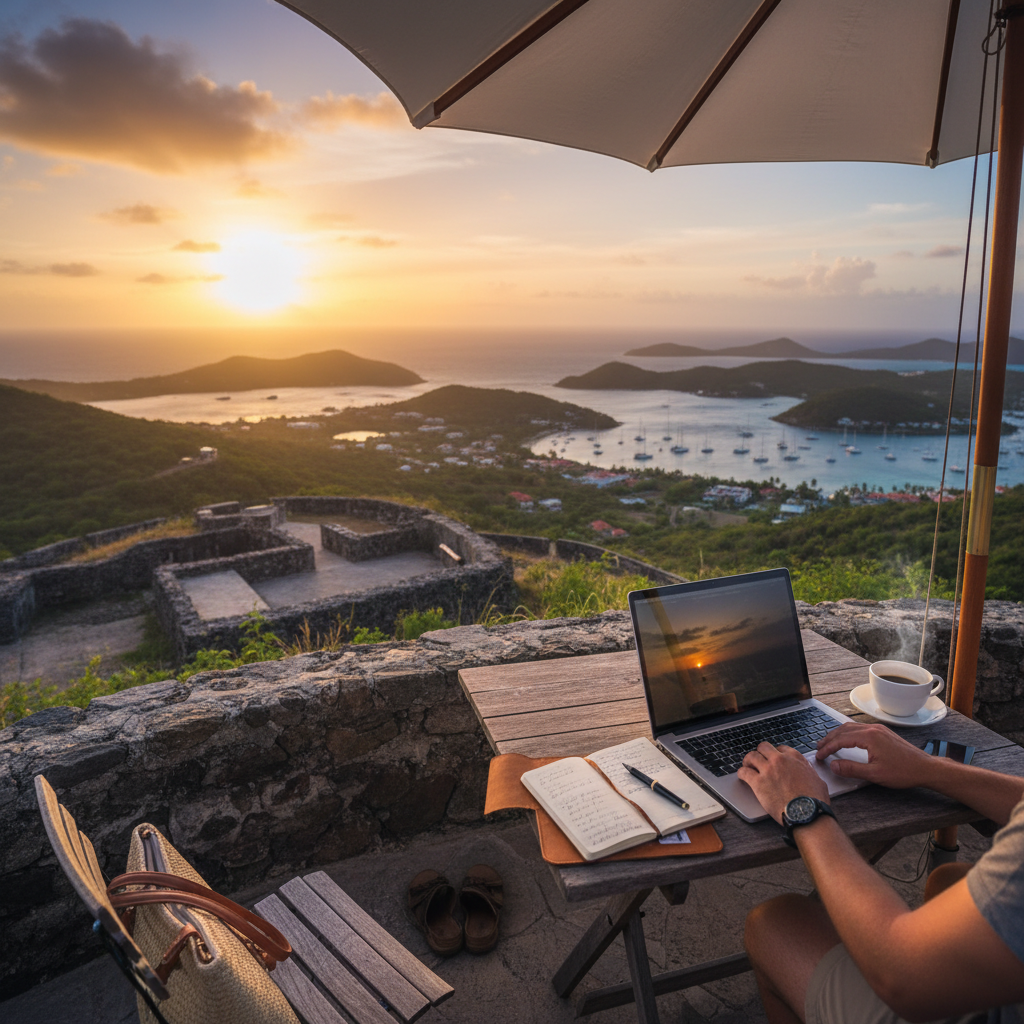
- English Harbour: Located on the south coast, this area is historic and vibrant, particularly during sailing season. It’s home to Nelson's Dockyard National Park, a UNESCO World Heritage site, and offers a lively atmosphere with numerous restaurants, bars, and a significant expat/yachting community. It's not the cheapest, but the charm and social scene are a big draw. Shirley Heights Lookout offers breathtaking panoramic views and a popular Sunday night party.
- Jolly Harbour: A large resort and marina complex on the west coast, Jolly Harbour offers a more established expat community, villas with private docks, a comprehensive supermarket, restaurants, and beautiful beaches. It's a self-contained community, offering convenience and a relaxed, resort-like lifestyle. It’s also close to many of Antigua’s best west coast beaches.
- Dickenson Bay: Located north of St. John's, Dickenson Bay is famous for its long, beautiful white sand beach and calm waters. It’s dotted with hotels and resorts, but also offers private villa and apartment rentals. It’s a good choice for those who prioritize immediate beach access and water sports, with a slightly more tourist-centric vibe than other areas.
- Falmouth Harbour: Adjacent to English Harbour, Falmouth offers a similar yachting scene but often with slightly more residential options and perhaps a slightly less touristy feel, though still very popular.
Internet, Coworking & Remote-Work Infrastructure
Reliable internet is crucial for digital nomads, and Antigua and Barbuda generally delivers, especially in populated areas.
- Internet Providers: The main providers are APUA Inet (government-owned) and FLOW (a regional giant). Both offer fiber-optic service in most developed areas, guaranteeing decent speeds.
- Speeds: You can typically expect speeds ranging from 50 Mbps to 100 Mbps for residential fiber plans, suitable for video calls, streaming, and large file transfers. Some providers offer packages up to 200 Mbps or even higher in select locations. Ensure your chosen accommodation has a strong, dedicated internet connection.
- Mobile Connectivity: Both APUA and FLOW offer strong 4G LTE coverage across most of Antigua, with some 5G rollout in key areas. Prepaid SIM cards are readily available and affordable, offering competitive data packages. This is excellent for backup internet or working on the go.
- Coworking Spaces: While not as abundant as in larger digital nomad hubs, there are a few options. The Hub in St. John's is a notable coworking space offering desks, private offices, and meeting rooms. Some hotels and cafes also offer reliable Wi-Fi, making them suitable for short work sessions.
- Power Outages: While less frequent than in the past, occasional power outages can occur, especially during heavy rains or storms. Many accommodations, particularly larger villas or businesses, have backup generators. It's wise to consider a portable power bank for your devices.
Taxes & Legal Considerations
This is where Antigua and Barbuda shines for many international remote workers.
- Income Tax: For holders of the Nomad Digital Residence (NDR) visa, foreign-earned income is exempt from local income tax in Antigua and Barbuda. This is a significant advantage, as you will not be double-taxed on your remote work income by the Antiguan government. You will, however, remain subject to the tax laws of your home country or country of origin, depending on your tax residency status there.
- Sales Tax (ABST): Antigua and Barbuda levies an Antigua and Barbuda Sales Tax (ABST), which is essentially a VAT, typically around 15% on goods and services. This will be added to your purchases, from groceries to restaurant meals and utility bills.
- Property Tax: If you decide to purchase property, you will be subject to property taxes, though most digital nomads will rent.
- Customs Duties: Be aware that imported goods can be subject to significant customs duties, which contributes to their higher cost locally.
- Business Registration: If you are self-employed and plan to engage in any local business activities (beyond your remote work for international clients), you would need to explore local business registration requirements. However, for remote work exclusively for foreign clients, this is generally not necessary under the NDR program.
- Local Laws: Familiarize yourself with local laws and customs. Drug laws are strict. Ensure you respect local traditions and the environment, especially around protected areas and marine life.
It is always advisable to consult with a tax professional, both in Antigua and Barbuda and in your home country, to understand your full tax obligations based on your specific circumstances.
Lifestyle, Culture & Community
Life in Antigua and Barbuda is defined by its vibrant Caribbean rhythm and warmth.
- Culture: The culture is a mix of African, British, and local influences. Antiguans are generally friendly, welcoming, and hospitable. Music (calypso, soca, reggae) and dance are central to daily life. Cricket is the national sport, passionately followed. Local festivals, especially Carnival, are spectacular displays of color, music, and energy, deeply rooted in the islands' history and identity.
- Community: While not a massive digital nomad hub like Lisbon or Chiang Mai, there is a growing and supportive community of expats and remote workers, particularly around English Harbour, Jolly Harbour, and St. John's. Socializing often revolves around beach activities, sailing, dining, and local events. Facebook groups (e.g., 'Antigua Expats') are excellent resources for connecting with others.
- Safety: Antigua and Barbuda is generally safe, particularly in tourist-heavy areas. However, like anywhere, petty crime (purse snatching, opportunistic theft) can occur. It's advisable to take standard precautions: don't leave valuables unattended on the beach, lock doors, avoid walking alone in poorly lit areas at night, and be aware of your surroundings. Serious crime against tourists is rare.
- Food: The local cuisine is delicious, featuring fresh seafood, seasoned meats, and tropical fruits. Staples include fungee (cornmeal porridge) and pepperpot (a rich stew). You'll find a range of dining options from casual beach shacks and roti shops to upscale international restaurants, especially in tourist areas. Be ready for 'island time' service – it’s part of the relaxed pace.
- Activities: The 365 beaches provide endless opportunities for swimming, snorkeling, and sunbathing. Sailing and yachting are hugely popular, with major regattas like Antigua Sailing Week drawing international crowds. Exploring historical sites like Nelson's Dockyard, hiking trails in the rainforest, diving shipwrecks, and day trips to Barbuda (known for its frigate bird sanctuary and pink sand beaches) are must-dos.
Embracing 'island time' and understanding that things might operate at a slower pace is key to enjoying your experience. Politeness and respect for local customs go a long way.
How to Apply: Step-by-Step
The application process for the Nomad Digital Residence (NDR) Programme is designed to be efficient.
-
Gather Documents: Prepare all necessary documents. This typically includes:
- Completed application form.
- Biodata page of a valid passport (valid for at least 6 months beyond your intended stay).
- Passport-sized digital photograph.
- Proof of employment or self-employment (e.g., employment contract, letter from employer, business registration documents, client contracts).
- Proof of annual income of at least $50,000 USD (e.g., bank statements from the last 12 months, audited financial statements). If applying as a couple/family, combined income can be considered, but proof for each earning adult may be required.
- Proof of comprehensive health insurance for the entire 24-month period covering Antigua and Barbuda.
- Police certificate/criminal record check from your country of residence (and any country you've resided in for the last 6-12 months).
- Birth certificates (for dependents).
- Marriage certificate (if applying with spouse).
-
Complete Online Application: Access the official application portal on the Antigua and Barbuda Ministry of Tourism website (search for 'Antigua and Barbuda Nomad Digital Residence'). Fill out the form thoroughly and accurately.
-
Upload Documents: Upload clear, high-resolution scans of all required documents to the online portal.
-
Pay Application Fee: Pay the non-refundable application fee ($1,500 for single, $2,000 for couple, $3,000 for family) via the online payment system.
-
Submit Application: Double-check all information and submit your application.
-
Await Approval: The processing time is typically 5-7 business days. You will be notified via email of the decision.
-
Receive NDR Visa: Upon approval, you will receive an official approval letter or digital visa document. This is what you will present upon arrival in Antigua and Barbuda.
It is strongly recommended to begin this process well in advance of your intended travel date to ensure all documents are in order and to account for any unexpected delays.
Common Pitfalls
While Antigua and Barbuda offers a fantastic digital nomad experience, being aware of potential challenges can help you prepare.