The Real Cost of Living: South Africa's Digital Nomad Visa Expensce Breakdown 2026
Dreaming of remote work against the backdrop of Table Mountain? This guide breaks down the true financial commitment for South Africa's digital nomad visa in 2026, from application fees to your monthly budget, including a regional perspective for Bangladeshi nomads.
July 6, 2026
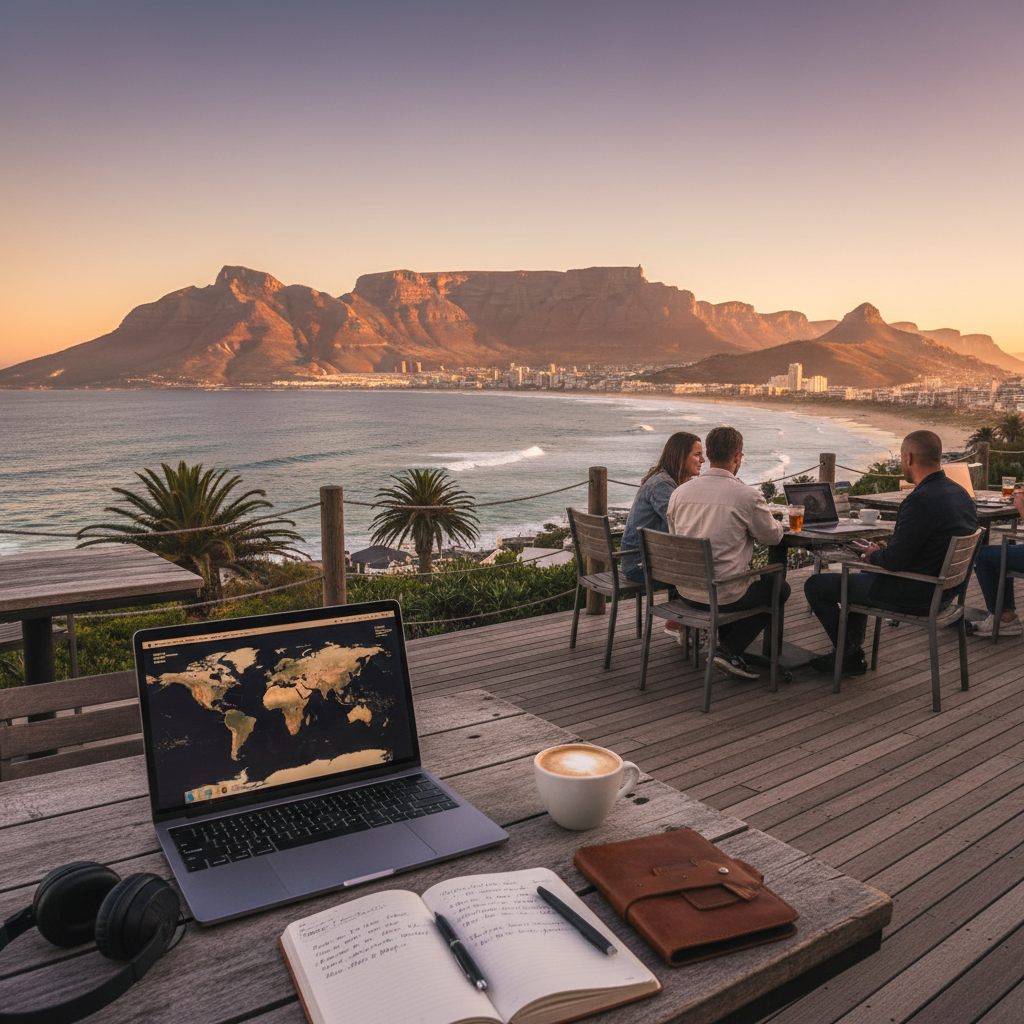
Maria, a freelance graphic designer from Berlin, scrolled through images of Cape Town. The vibrant culture, stunning landscapes, and favorable exchange rate seemed to call her name. But the fear of the unknown – specifically, the financial unknown – held her back. "Is it truly affordable?" she wondered, "Or am I just romanticizing the idea?" This is a common dilemma for countless digital nomads eyeing South Africa. The promise of an exciting remote work destination is alluring, but understanding the actual financial commitment, from visa costs to daily groceries, is paramount. This comprehensive guide aims to demystify the real cost of pursuing the South Africa digital nomad visa in 2026, providing a detailed breakdown for anyone considering this vibrant nation as their next remote work hub.
Quick facts
| Row | Details |
|---|---|
| Income requirement | R50,000 per month (approx. $2,700 USD / €2,500 EUR as of late 2025/early 2026 exchange rates), proven for at least 6 months |
| Visa duration | Up to 12 months, renewable |
| Renewable | Yes, for a further 12 months |
| Application fee | R1,500 (approx. $80 USD / €75 EUR) for the visa application itself, plus various administrative and VFS Global fees |
| Processing time | Typically 4-8 weeks, but can extend to 12 weeks or more during peak periods |
| Tax rate for holders | 0% on foreign-sourced income for the first 183 days, then standard progressive South African income tax rates if exceeding. Crucially, non-residents are only taxed on South African sourced income |
| Family members allowed | Yes, dependents (spouse/partner, dependent children) can apply for accompanying visas |
| Path to residency | The digital nomad visa does not directly lead to permanent residency. |
What is the South Africa digital nomad visa?
South Africa officially launched its Digital Nomad Visa (DNV) in late 2024, responding to the global shift towards remote work and aiming to attract high-earning, location-independent professionals. The South Africa digital nomad visa is specifically designed for foreign nationals who earn their income from sources outside of South Africa and wish to reside in the country for an extended period, contributing to the local economy without competing for local jobs. It allows successful applicants to live and work remotely in South Africa for up to 12 months, with the possibility of renewal. This initiative is part of a broader strategy to boost tourism, invigorate local businesses, and inject foreign currency into the nation's economy. The visa streamlines the previous, more complex, and often unsuitable temporary residence permit categories like the general work visa, which required local employers and specific skills matching. The DNV explicitly acknowledges the unique nature of digital nomad work, offering a legal framework for remote workers to enjoy South Africa's diverse offerings, from its bustling cities and rich cultural heritage to its breathtaking natural wonders.
South Africa digital nomad visa requirements
To be eligible for the South Africa digital nomad visa, applicants must meet several key criteria set forth by the Department of Home Affairs. These requirements are primarily designed to ensure that applicants are genuinely digital nomads, self-sufficient, and will not become a burden on the state.
- Valid Passport: A passport valid for at least six months beyond the intended period of stay in South Africa.
- Proof of Remote Work: Documentation demonstrating that you are employed by a company registered outside South Africa, or that you are a freelancer/self-employed individual with clients predominantly outside South Africa. This can include employment contracts, letters from employers, client agreements, or portfolio evidence.
- Income Requirement: You must provide proof of a consistent gross income of at least R50,000 per month (approximately $2,700 USD or €2,500 EUR, subject to exchange rate fluctuations) for at least the past six months. This is a crucial requirement, and authorities will look for bank statements, pay stubs, or audited financial statements to verify this. The intention is that this income is sufficient to sustain yourself and any accompanying dependents without engaging in local employment.
- Health Insurance: Comprehensive medical insurance valid for the entire duration of your stay in South Africa. This insurance must cover hospitalization, medical treatment, and repatriation.
- Clean Criminal Record: A police clearance certificate from your country of origin and any country you have resided in for more than 12 months in the past five years.
- Accommodation Proof: While not strictly mandatory for the initial application, evidence of intended accommodation (e.g., hotel booking, Airbnb, rental agreement for a short period) is often requested or highly recommended to demonstrate your plans for settling. A long-term rental agreement will likely be necessary for renewal.
- Return Ticket/Financial Means: Proof of a return or onward ticket, or sufficient funds to purchase one.
- No Criminal Background: A declaration affirming you have no criminal convictions.
- Dependents (if applicable): If bringing family, separate applications will be required for them, accompanied by marital/birth certificates and additional proof of funds to support them.
Meeting these requirements is fundamental to a successful application. Any discrepancies or lack of evidence in these areas can lead to delays or outright rejection.
How to apply for the South Africa digital nomad visa
The application process for the South Africa digital nomad visa is managed by the Department of Home Affairs (DHA), with many applicants utilizing VFS Global service centers for submission. Here's a step-by-step guide:
- Gather Required Documents: Compile all the documents listed above, ensuring they are current, correctly formatted, and officially translated into English if necessary. This painstaking preliminary step is vital.
- Complete the Application Form: Download and accurately fill out the Temporary Residence Visa application form (Form DHA-1738) from the Department of Home Affairs website. Incorrect or incomplete forms are a common reason for delays.
- Schedule an Appointment: Visit the VFS Global website for your country of residence to schedule an appointment for document submission and biometrics. In some regions, direct submission to the South African consulate or embassy might be an option, but VFS Global is the primary service provider.
- Pay Application Fees: Pay the required visa application fee and VFS Global service fee online or at the time of your appointment. (See 'Cost Breakdown' section for details).
- Attend Your Appointment: On the scheduled date, submit your application package, provide biometric data (fingerprints and photograph), and attend a brief interview if required. Ensure you have all original documents as well as notarized copies.
- Await Processing: After submission, your application will be processed by the Department of Home Affairs. You can typically track the status of your application online through the VFS Global portal.
- Visa Collection: Once approved, you will be notified to collect your passport with the affixed digital nomad visa vignette from the VFS Global center or consular office.
Processing Time: While official estimates suggest 4-8 weeks, anecdotal evidence indicates that processing times can vary significantly depending on the application volume, the completeness of your submission, and the specific embassy or consulate. It's prudent to allow for up to 12 weeks, especially during peak travel seasons, and to submit your application well in advance of your planned travel date.
Cost breakdown
Understanding the financial outlay for the South Africa digital nomad visa involves both upfront application costs and ongoing living expenses. Here's a detailed breakdown:
Upfront Visa-Related Costs
| Item | Estimated Cost (ZAR) | Estimated Cost (USD) | Estimated Cost (EUR) | Notes |
|---|---|---|---|---|
| Visa Application Fee | R1,500 | $80 | €75 | Payable to the Department of Home Affairs. |
| VFS Global Service Fee | R800 | $45 | €40 | Varies slightly by country; this is an average. |
| Police Clearance Certificate | Varies significantly | $20 - $100+ | €18 - €90+ | Depends on country of origin and any other countries of residence. May require courier fees if apostille is needed. |
| Medical Insurance | R5,000 - R15,000 p.a. | $270 - $800 p.a. | €250 - €750 p.a. | Comprehensive international health insurance is mandatory. Costs fluctuate based on age, coverage, and provider. |
| Document Translation/Notarization | R500 - R2,000 | $27 - $100 | €25 - €90 | If documents are not in English or require official certification. |
| Total Upfront Costs | R8,800 - R19,300 | $472 - $1,035 | €440 - €965 | This is a one-time cost for the visa application process and mandatory insurance for the first year. |
Exchange rates used: 1 USD = R18.5, 1 EUR = R20 (approximate as of late 2025/early 2026, subject to fluctuation)
Monthly Cost of Living in South Africa (Single Individual)
South Africa offers a diverse range of living costs, heavily dependent on your chosen city and lifestyle. Major cities like Cape Town and Johannesburg will naturally be more expensive than smaller towns. Here's an estimated monthly budget, contrasting a moderate lifestyle with a budget-conscious one, centered around Cape Town – a popular choice for digital nomads.
| Item | Budget-Conscious (ZAR) | Moderate (ZAR) | Budget-Conscious (USD) | Moderate (USD) | Budget-Conscious (EUR) | Moderate (EUR) |
|---|---|---|---|---|---|---|
| Accommodation | ||||||
| 1-bed apt. (utilities excl.) | R8,000 - R12,000 | R12,000 - R18,000 | $430 - $650 | $650 - $970 | €400 - €600 | €600 - €900 |
| Utilities (Electricity, Water, Internet, Gas) | R1,500 - R2,500 | R2,500 - R4,000 | $80 - $135 | $135 - $215 | €75 - €125 | €125 - €200 |
| Groceries | R3,000 - R4,500 | R4,500 - R6,000 | $160 - $240 | $240 - $325 | €150 - €225 | €225 - €300 |
| Transportation | R500 - R1,500 | R1,500 - R3,000 | $27 - $80 | $80 - $160 | €25 - €75 | €75 - €150 |
| Dining Out | R1,000 - R2,500 | R2,500 - R5,000 | $55 - $135 | $135 - $270 | €50 - €125 | €125 - €250 |
| Entertainment/Leisure | R800 - R2,000 | R2,000 - R4,000 | $43 - $108 | $108 - $215 | €40 - €100 | €100 - €200 |
| Miscellaneous (Co-working, personal care, etc.) | R1,000 - R2,000 | R2,000 - R3,500 | $55 - $108 | $108 - $190 | €50 - €100 | €100 - €175 |
| Total Monthly | R15,800 - R28,500 | R29,500 - R43,500 | $850 - $1,540 | $1,590 - $2,350 | €790 - €1,425 | €1,475 - €2,175 |
Minimum Income Requirement vs. Real Costs: The R50,000 monthly income requirement (approx. $2,700 USD) is certainly achievable given the above cost estimates. However, it's vital to remember that this is a gross income requirement. After taxes in your home country, and considering the need for savings and unforeseen expenses, living comfortably on the minimum might require closer adherence to the 'budget-conscious' side. A buffer in funds is always advisable.
South Africa-Specific Pitfalls to Budget For:
- Load Shedding (Scheduled Power Outages): While improving, this is still a reality. Budget for portable power stations (inverters/batteries) or co-working spaces with reliable backup power. A good UPS for your internet router is highly recommended for uninterrupted work. Cost: R2,000 - R10,000 (one-time if buying quality equipment).
- Transport Safety: While major cities have ride-sharing apps, personal safety, especially at night, is a concern. Factor in the cost of reliable private transport or ride-shares, rather than relying solely on public transport in all areas. A small car rental can be R4,000-R8,000 per month.
- Security Deposits: Expect to pay up to 2-3 months' rent as a security deposit for long-term rentals, which isn't included in the monthly budget.
- Travel and Exploration: South Africa is vast. You'll want to explore, and domestic flights, car rentals, and tour packages for safaris or wine routes can add up quickly. Budget R4,000 - R10,000+ per month if you plan to travel extensively.
Taxes for digital nomads in South Africa
Navigating tax obligations is a critical aspect for any digital nomad, and South Africa has specific rules. For holders of the South Africa digital nomad visa, the primary principle is that you are generally not taxed on your foreign-sourced income by the South African Revenue Service (SARS) unless you become a tax resident. Becoming a tax resident is determined by either:
- Ordinarily Resident Test: You intend to make South Africa your permanent home and meet certain subjective criteria.
- Physical Presence Test: You are physically present in South Africa for more than 90 days in the current tax year, plus more than 90 days in each of the five preceding tax years, and more than 915 days in aggregate over those five preceding years, and more than 183 days in the current tax year.
For most digital nomads on a 12-month visa, especially those who do not renew for multiple years, the physical presence test is the most relevant. If you spend less than 183 days in South Africa during a specific tax year (which runs from 1 March to 28/29 February), you are unlikely to be considered a tax resident for that year. In this scenario, your foreign-sourced income is not taxable in South Africa.
However, if you stay for longer periods and trigger the physical presence test (i.e., more than 183 days in the tax year, and other conditions are met), you would then be considered a tax resident. As a tax resident, South Africa generally taxes worldwide income. However, many double taxation agreements exist between South Africa and other countries, which could prevent you from being taxed twice on the same income. It's crucial to consult with a tax professional specializing in international tax law, both in South Africa and your country of origin, to understand your precise obligations and optimize your tax situation. The digital nomad visa in itself does not grant automatic tax residency but staying beyond certain thresholds can trigger it.
For Bangladeshi passport holders
For Bangladeshi citizens considering the South Africa digital nomad visa, the application process and requirements are fundamentally the same as for other nationalities. However, there are a few country-specific nuances and practical considerations to keep in mind:
- Visa Application Centre: Bangladeshi applicants will typically submit their applications through a VFS Global service center in Dhaka, Bangladesh, which acts as an authorized intermediary for the South African Department of Home Affairs.
- Document Verification: Be prepared for stringent document verification. Ensure all educational and financial documents are properly attested and translated by certified authorities if not originally in English. Bank statements demonstrating the R50,000 monthly income must be clear and readily verifiable.
- Processing Times: While official estimates are universal, processing times for applications originating from certain regions, including South Asia, can sometimes be extended due to administrative backlogs or additional security checks. It is highly advisable to apply well in advance of your intended travel date, perhaps allowing for 3-4 months.
- Financial Transfer & Exchange Rates: When proving financial stability, ensure your funds are easily transferable and that the exchange rate between Bangladeshi Taka (BDT) and South African Rand (ZAR) is factored into your calculations. Fluctuations can impact the equivalent of your R50,000 income requirement. Many Bangladeshi remote workers and freelancers may already manage international payments, but it's essential to present a clear, consistent income stream in a readily convertible currency.
- Cultural Adjustment: South Africa's culture, climate, and cost of living will represent a significant change from Bangladesh. While the cost of living can be favorable compared to Western Europe or North America, it's generally higher than in Dhaka. Factor in costs related to adapting, such as local SIM cards, initial transportation, and understanding local customs.
- Safety Advice: As with any South African city, awareness of local safety conditions is important. Research specific neighborhoods, follow local advice, and take appropriate precautions.
Bangladeshi digital nomads often leverage strong English language skills in remote roles, making the transition to an English-speaking country like South Africa smoother. The key is thorough preparation and a clear understanding of the financial and logistical demands.
Frequently asked questions
What is the South Africa digital nomad visa?
The South Africa digital nomad visa is a temporary residence permit allowing foreign nationals who work remotely for foreign companies or clients to live in South Africa for up to 12 months, with the possibility of renewal. It supports an extended stay for location-independent professionals.
Who is eligible for the South Africa digital nomad visa?
Eligible individuals must earn at least R50,000 per month from foreign sources, hold a valid passport, possess comprehensive health insurance, and have a clean criminal record. Proof of remote work and financial stability are key requirements.
How much does the South Africa digital nomad visa cost?
The visa application fee itself is R1,500 ($80 USD) plus a VFS Global service fee of around R800 ($45 USD). Additional costs include mandatory health insurance (R5,000-R15,000 p.a.) and police clearance certificates, totaling $472 - $1,035 USD upfront.
How long does South Africa digital nomad visa processing take?
Processing typically takes between 4 to 8 weeks, but depending on the volume of applications and the specific consulate or embassy, it can extend to 12 weeks or more. It is advisable to apply well in advance.
Can I bring my family on the South Africa digital nomad visa?
Yes, dependents such as spouses/partners and dependent children can apply for accompanying visas. They will need to meet their own set of requirements, including proof of relationship and sufficient funds to support them.
Do I pay tax in South Africa on the digital nomad visa?
Income earned from foreign sources is generally not taxed in South Africa for digital nomads unless they become a tax resident, typically by spending more than 183 days in the country within a tax year and meeting other criteria. Consulting a tax professional is recommended.
Can Bangladeshi citizens get the South Africa digital nomad visa?
Yes, Bangladeshi citizens are eligible to apply for the South Africa digital nomad visa, provided they meet all the standard requirements. Applications are typically processed through VFS Global centers in Bangladesh.
Sources
- South African Department of Home Affairs official website (consult the country's official immigration website)
- VFS Global South Africa Visa Application Centre (consult the country's official immigration website)
- South African Revenue Service (SARS) official website (consult the country's official immigration website)
- Numbeo Cost of Living Index for South African cities. (www.numbeo.com)
Compare with: Mauritius, Namibia, Kenya
Interested in applying for the South Africa visa?
Tell us a bit about yourself and we'll send tailored guidance on eligibility, paperwork, and next steps.