Peru's Digital Nomad Visa: A Deep Dive into Tax & Residency for Remote Workers in 2026
Navigating Peru's digital nomad visa requires understanding its unique tax and residency implications. This guide breaks down the financial and legal landscape for remote workers.
July 4, 2026
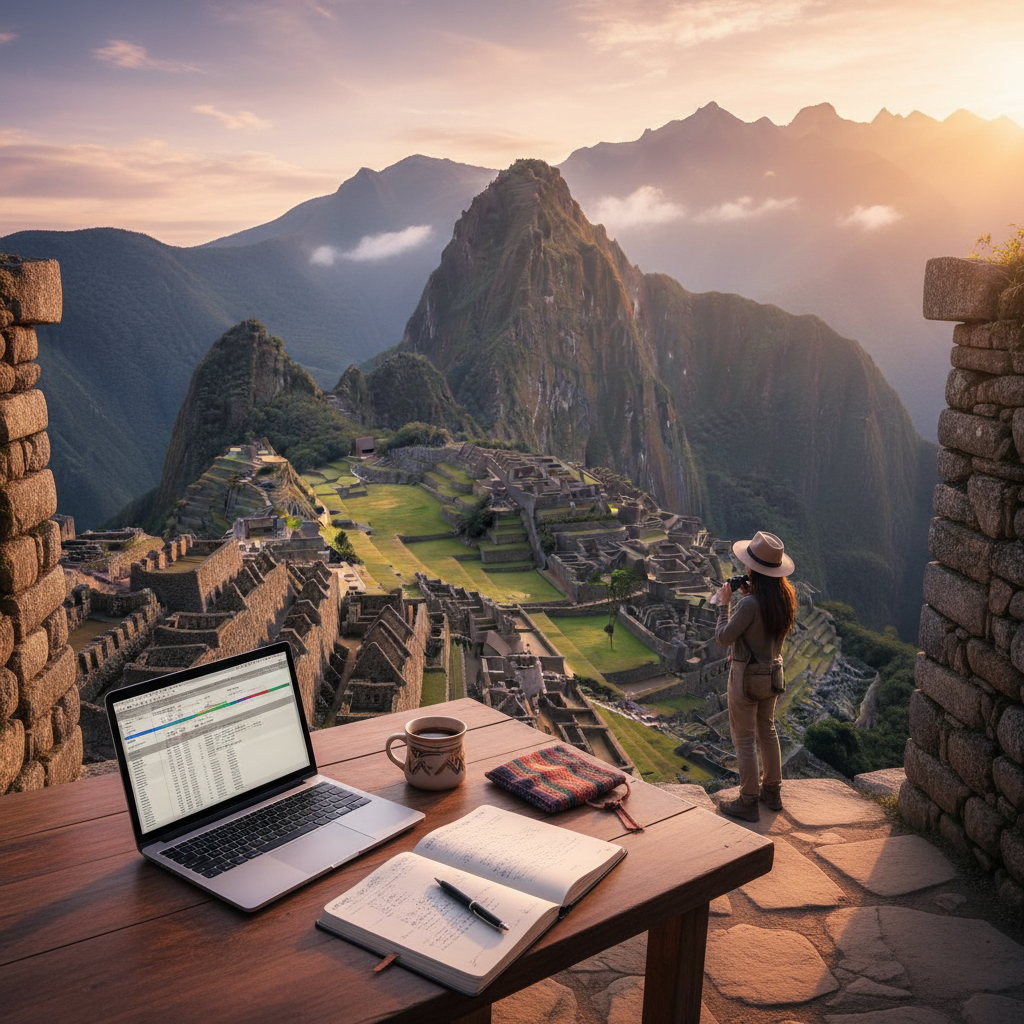
“I’ve always dreamed of hiking the Inca Trail,” Sarah, a software engineer from Houston, told me over a video call, her voice tinged with both excitement and a hint of trepidation. “But the thought of unraveling Peruvian tax laws from a foreign country? That’s more intimidating than high-altitude sickness!” Her concern is not unique. For many aspiring digital nomads, the allure of a new locale is often tempered by the complex reality of international tax obligations and residency rules. Peru, with its rich history, vibrant culture, and burgeoning remote work scene, has become an increasingly attractive option for those seeking a unique blend of adventure and productivity. However, making the move successfully hinges on a clear understanding of its digital nomad visa, particularly its intricate tax and residency provisions. This article cuts through the jargon, offering a comprehensive, analytical guide to the Peru digital nomad visa in 2026, with a special focus on the fiscal and residency deep dive that will enable you to make informed decisions and truly embrace the remote work from anywhere lifestyle. If you're considering Peru, understanding these nuances is crucial for a smooth and compliant stay. Without this clarity, the dream of working remotely by the Andes could quickly turn into a bureaucratic nightmare. The Peru digital nomad visa, officially known as the 'Visa de Teletrabajo' (Telework Visa), offers a fantastic opportunity for non-Peruvian citizens to reside and work remotely in this beautiful Andean nation for an extended period, contributing to their income from sources outside Peruvian territory. This visa directly caters to the growing global trend of location independent lifestyle, attracting individuals who wish to merge their professional aspirations with cultural immersion and adventure.
Quick facts
| Feature | Details |
|---|---|
| Income requirement | USD 1,000 / month (or equivalent in PEN) |
| Visa duration | Up to 1 year |
| Renewable | Yes, for up to 1 year at a time |
| Application fee | S/ 30.00 (approx. USD 8.00) for visa application; S/ 162.50 (approx. USD 44.00) for migratory card |
| Processing time | 30-90 days |
| Tax rate for holders | Generally 0% on foreign-sourced income for non-tax residents |
| Family members allowed | Yes, dependents can apply for dependent visas |
| Path to residency | Not a direct path; requires 2 years of continuous, legal residency to apply for permanent residency |
What is the Peru digital nomad visa?
The Peru digital nomad visa, formally known as the Visa de Teletrabajo, was introduced to welcome remote workers and digital entrepreneurs who earn their income from sources outside Peru. This initiative reflects Peru's commitment to diversifying its tourism and economy by attracting individuals who contribute to the local economy through their spending, without competing for local jobs. It’s designed for individuals engaged in digital nomad jobs, freelancing, or running an online business, allowing them to legally reside in Peru for up to one year, with the possibility of renewal. Unlike a standard tourist visa, which often restricts any form of remunerated activity, the digital nomad visa explicitly permits remote work, providing peace of mind and legal standing for your remote career.
This visa is a boon for those seeking a location independent lifestyle, offering a chance to deeply explore Peru's diverse landscapes, from the Amazon rainforest to the bustling streets of Lima, all while maintaining their international professional commitments. It solidifies Peru’s position as a player in the global remote work movement, providing a clear legal framework for those who wish to call Peru their temporary home.
Peru digital nomad visa requirements
To be eligible for the Visa de Teletrabajo, applicants must meet several key criteria. These requirements are in place to ensure that applicants are genuinely remote workers with sufficient financial stability and no intention of seeking local employment.
Eligibility Criteria:
- Nationality: Non-Peruvian citizen.
- Employment: Be employed by a company registered outside Peru, or operate an independent business registered outside Peru, or provide services to clients based outside Peru. The core principle is that all income must be generated from sources outside Peru.
- Income Proof: Demonstrate a stable monthly income of at least USD 1,000 (or its equivalent in Peruvian Soles, PEN). This can be proven through bank statements, employment contracts, or valid service agreements. For applicants bringing dependents, an additional USD 500 per month per dependent is generally required. This ensures financial self-sufficiency and prevents reliance on the Peruvian public purse. While the official minimum is USD 1,000, presenting a higher income can strengthen your application.
- Health Insurance: Possess valid international health insurance that covers medical emergencies, hospitalization, and repatriation for the entire duration of your stay in Peru.
- Clean Criminal Record: Provide a police clearance certificate from your country of origin and any country where you have resided for more than six months in the last five years.
- Passport Validity: Hold a passport valid for at least six months beyond your intended stay in Peru.
- No Prior Negative Immigration History: Applicants with a history of overstaying visas or other immigration infractions in Peru or other countries might face rejection.
Required Documents:
- Completed visa application form.
- Original passport and photocopy of all relevant pages.
- Two recent passport-sized color photographs.
- Proof of employment or self-employment from a non-Peruvian entity (e.g., employment contract, company registration documents, client contracts).
- Bank statements from the last six months showing the required minimum income.
- International health insurance policy certificate.
- Police clearance certificate(s) apostilled or legalized.
- A sworn declaration stating that your economic activity will be conducted remotely and exclusively for entities or clients outside Peru, and that you will not seek employment within Peru.
- Proof of accommodation in Peru (e.g., hotel booking, rental agreement – though often only required for the initial entry).
How to apply for the Peru digital nomad visa
The application process for the Peru digital nomad visa can be initiated either from your country of origin at a Peruvian consulate or embassy, or, in some cases, directly in Peru through the Superintendencia Nacional de Migraciones (National Superintendency of Migration), known as Migraciones. It is generally advisable to apply from your home country to avoid potential issues upon entry, particularly regarding the purpose of your stay.
Step-by-Step Application Process:
- Gather Documents: Thoroughly collect all required documents as listed above. Ensure all foreign documents are apostilled or legalized by the Peruvian consulate in your country of residence, and translated into Spanish by an official public translator if not originally in Spanish.
- Contact Peruvian Consulate/Embassy: Schedule an appointment with the nearest Peruvian consulate or embassy in your country of residence. Inquire about their specific local requirements and preferred application method, as procedures can vary slightly by location.
- Submit Application: Attend your appointment, submit all documents, and pay the initial application fee (S/ 30.00). You will likely undergo a short interview where you may be asked about your remote work, financial stability, and intentions in Peru.
- Await Processing: The consulate will forward your application to Migraciones in Peru for evaluation. This stage typically takes between 30 to 90 days. During this period, you might be contacted for additional information.
- Visa Notification and Stamping: If approved, you will be notified by the consulate. You will then need to return to the consulate for your visa to be stamped into your passport.
- Entry to Peru and Migratory Card: Upon arrival in Peru, present your digital nomad visa at immigration. You will then need to apply for your Carné de Extranjería (Foreigner's Card) within 30 days of entry. This is a crucial step that officially registers your residency status in Peru.
- To obtain the Carné de Extranjería, you generally need to make an appointment with Migraciones, submit a copy of your visa, passport, the form 'F-007' (Solicitud de cambio de calidad migratoria / visa), and pay the migratory card fee (S/ 162.50). You may also be required to provide a recent biometric photograph.
Application Tips:
- Start early: The processing time can be substantial. Begin your application several months before your intended travel date.
- Double-check translations: Ensure all translations are certified and accurate to avoid delays.
- Communicate clearly: Be prepared to articulate your remote work setup and financial independence during any interviews.
Cost breakdown
Understanding the financial outlay is crucial when planning your digital nomad journey to Peru. Beyond the application fees, consider the cost of living and potential professional services.
| Item | Peruvian Soles (S/) | Approximate USD Equivalent (as of early 2026) |
|---|---|---|
| Visa Application Fee | S/ 30.00 | USD 8.00 |
| Migratory Card (Carné) Fee | S/ 162.50 | USD 44.00 |
| Police Clearance (Apostille/Legalization) | Varies, contact local authorities | USD 20 - USD 100+ (per document) |
| Certified Translations (per page) | S/ 50 - S/ 150 | USD 13 - USD 40 (per page) |
| International Health Insurance | Varies, monthly | USD 40 - USD 150+ (depending on coverage) |
| Total Initial Fees (approx.) | S/ 250 - S/ 500+ | USD 67 - USD 150+ (excluding insurance/translations) |
Note: Exchange rates are subject to fluctuation. Always check current rates.
Additional Potential Costs:
- Legal Assistance: While not mandatory, engaging a local immigration lawyer can streamline the process, especially if you foresee complexities. Costs can range from USD 500 to USD 2,000.
- Travel to Consulate: Depending on your location, you may incur travel expenses to attend consulate appointments.
- Cost of Living: Peru offers a relatively affordable cost of living compared to North America or Europe. A comfortable lifestyle in cities like Lima, Cusco, or Arequipa can be achieved on USD 1,000 - USD 1,800 per month, covering rent, food, transportation, and leisure. Of course, this varies greatly depending on individual spending habits and location preferences.
Taxes for digital nomads in Peru
This is where the "deep dive" truly begins. Peru's tax system, like many others, operates on the principle of residency. For digital nomads, understanding whether you are considered a tax resident or a non-tax resident is paramount, as it dictates your tax obligations. The general rule is that you are considered a tax resident in Peru if you reside in the country for more than 183 days within a 12-month period, regardless of whether these days are consecutive. However, for digital nomad visa holders, the specific tax implications can be more nuanced due to the source of income.
Non-Tax Resident Status (Less than 183 days or Specific DNV Interpretation)
If you reside in Peru for less than 183 days in a 12-month period, you are generally considered a non-tax resident. As a non-tax resident, Peru's tax authority (SUNAT) will only tax your Peru-sourced income. Since the Peru digital nomad visa explicitly requires your income to be from foreign sources and for work performed for non-Peruvian entities/clients, under this status, you would typically not be liable for income tax on your remote earnings in Peru. Your foreign-sourced income remains taxable in your home country, subject to its tax laws and any applicable tax treaties.
Tax Resident Status (More than 183 days)
If you stay in Peru for 183 days or more in a 12-month period, you will generally be deemed a tax resident. As a tax resident, Peru's tax laws typically dictate that you are liable for income tax on your worldwide income. This is the critical point of consideration for digital nomads.
However, the Visa de Teletrabajo by its very nature is designed for individuals earning foreign income. While the tax residency rule is clear, the practical application for digital nomads, especially those from countries with which Peru has Double Taxation Agreements (DTAs), requires careful analysis. Peru currently has very few comprehensive DTAs (e.g., with countries like Chile, Brazil, and Korea). For most nationalities, a DTA may not be in place.
Double Taxation Agreements (DTAs)
If you are from a country that has a DTA with Peru, the agreement's provisions on "Permanent Establishment" and "Residence" will determine where your income is primarily taxed. Most DTAs aim to prevent individuals from being taxed twice on the same income. Typically, if you do not establish a "permanent establishment" (e.g., an office, fixed place of business) in Peru and your employer/clients are outside Peru, your income might still be primarily taxable in your home country, even if you are a tax resident in Peru. This is a complex area and professional tax advice is highly recommended.
Income Tax Rates for Residents (if applicable):
If your foreign income were to be deemed taxable in Peru as a resident (e.g., due to specific interpretations or lack of DTA protection), the income tax rates in Peru are progressive:
| Annual Income (in PEN) | Tax Rate |
|---|---|
| Up to 7 UIT (S/ 36,050) | 8% |
| 7 to 23 UIT (S/ 36,050 - S/ 118,450) | 14% |
| 23 to 45 UIT (S/ 118,450 - S/ 232,050) | 17% |
| 45 to 170 UIT (S/ 232,050 - S/ 875,500) | 20% |
| Over 170 UIT (S/ 875,500) | 30% |
Note: UIT (Unidad Impositiva Tributaria) is a tax unit indexed annually. For 2026, the UIT is estimated at approximately S/ 5,150. Values are illustrative and subject to change by SUNAT.
Value Added Tax (IGV - Impuesto General a las Ventas)
Digital nomads will pay IGV on most goods and services purchased in Peru, which is currently 18%. This is a consumption tax and applies to everyone, regardless of tax residency status.
Recommendations for Tax Planning:
- Seek Professional Advice: This is the most crucial recommendation. Consult with a Peruvian tax advisor who specializes in international taxation and digital nomads. They can provide personalized advice based on your specific situation, nationality, and income sources.
- Understand DTA Implications: If your home country has a DTA with Peru, study it carefully with your advisor. This will determine where your primary tax liability lies.
- Maintain Clear Records: Keep meticulous records of all income, expenses, and travel dates to substantiate your tax residency status.
- Home Country Obligations: Remember, even if you are not taxed on foreign income in Peru, you may still have tax obligations in your home country. Many countries tax their citizens on worldwide income regardless of where they reside for short periods unless specific expatriate rules apply.
For Bangladeshi passport holders
For Bangladeshi citizens considering the Peru digital nomad visa, the general requirements and application process are the same as for other nationalities. However, there are a few specific points to note:
- Visa Application from Abroad: As Peru does not have a diplomatic mission in Bangladesh, applicants will need to apply through a Peruvian embassy or consulate in a neighboring country (e.g., India or Thailand) or another country where they hold legal residency. This adds a logistical layer and potential travel costs to the application process.
- Document Legalization: All Bangladeshi documents (e.g., police clearance, bank statements) will likely need to be legalized by the Ministry of Foreign Affairs in Bangladesh, and then further legalized by the Peruvian consulate where you apply. Ensure these steps are thoroughly completed to avoid delays.
- Financial Proof: Presenting clear and robust proof of financial stability at USD 1,000 per month will be paramount. Given potential scrutiny for non-traditional visa applicants, exceeding the minimum can be beneficial.
- No DTA with Bangladesh: Currently, there is no Double Taxation Agreement between Peru and Bangladesh. This means that if you are deemed a tax resident in Peru, the possibility of double taxation on your worldwide income could arise. This underscores the need for expert tax advice to structure your affairs optimally and understand the implications of Peruvian tax residency compared to your tax obligations as a Bangladeshi citizen working remotely.
- Connectivity and Infrastructure: While major cities like Lima offer decent internet connectivity and coworking spaces, infrastructure in more remote or rural areas of Peru might be less developed. Bangladeshi digital nomads should assess their specific remote work needs against Peru's capabilities.
Family members allowed
The Peru digital nomad visa allows for family reunification. Spouses, children under 18 (or older if dependent due to disability), and dependent parents can apply for a dependent visa corresponding to the primary applicant's Visa de Teletrabajo. Each dependent will need to meet similar document requirements, including a valid passport, police clearance (for adults), and proof of relationship (marriage certificate, birth certificates). As mentioned, the primary applicant must demonstrate an additional USD 500 in monthly income for each dependent to ensure their financial stability throughout their stay in Peru.
Renewals and path to residency
The Peru digital nomad visa is typically issued for up to one year. It can be renewed for an additional year, provided the applicant continues to meet the initial eligibility criteria, particularly the income requirement and proof of international health insurance. The renewal process involves submitting an application to Migraciones in Peru before your current visa expires, along with updated documentation.
It is important to note that the Visa de Teletrabajo is not a direct path to permanent residency in Peru. To apply for permanent residency, individuals generally need to have resided legally and continuously in Peru for at least two years under a more long-term resident visa category (e.g., work visa with a local employer, investor visa, or family unification visa). While the digital nomad visa offers an extended stay, transitioning to permanent residency typically requires a change in your immigration status and a different set of criteria. If long-term residency is your ultimate goal, explore other visa categories after your digital nomad experience.
Peru-specific pitfalls
While Peru offers an incredible experience, digital nomads should be aware of certain pitfalls to ensure a smooth stay:
- Bureaucracy and Patience: The Peruvian bureaucratic system, especially with Migraciones, can be slow and require significant patience. Documents may be requested multiple times, and processes might not always be straightforward. Plan for potential delays and maintain a flexible attitude.
- Language Barrier: While English is spoken in tourist areas, a basic to intermediate grasp of Spanish is highly beneficial for navigating daily life, official processes, and fully integrating into the culture. Many official forms and communications will be exclusively in Spanish.
- Safety Concerns: Like any country, Peru has its safety concerns, particularly in large cities. Digital nomads should exercise caution, be aware of their surroundings, avoid displaying expensive electronics unnecessarily, and stay informed about local safety advisories.
- Healthcare System: While private healthcare in major cities is good, it can be costly, emphasizing the need for comprehensive international health insurance. Public healthcare services may not meet the standards many expatriates are accustomed to.
- Internet Reliability: While major cities have decent internet, reliability can vary, and outages are not uncommon, especially outside of central areas. Always have a backup plan (e.g., a local SIM card with mobile data) for critical work.
- Altitude Sickness: If you plan to work from high-altitude locations like Cusco or Arequipa, be prepared for potential altitude sickness. Acclimatize slowly and consult a doctor if necessary.
By being informed and prepared for these specific challenges, digital nomads can mitigate risks and fully enjoy their time working remotely in Peru.
Frequently asked questions
What is the Peru digital nomad visa?
The Peru digital nomad visa, officially the 'Visa de Teletrabajo,' allows non-Peruvian citizens to legally reside and work remotely from within Peru for up to one year. It is designed for individuals earning income from sources outside Peru, promoting a location-independent lifestyle.
Who is eligible for the Peru digital nomad visa?
Eligible applicants must be non-Peruvian, earn a minimum of USD 1,000 monthly from foreign sources, hold international health insurance, and have a clean criminal record. They must prove their remote employment or self-employment for non-Peruvian entities.
How much does the Peru digital nomad visa cost?
The initial application fee is S/ 30.00 (approx. USD 8.00). An additional S/ 162.50 (approx. USD 44.00) is required for the migratory card upon arrival. Total costs depend on document legalization, translations, and health insurance.
How long does Peru digital nomad visa processing take?
Processing typically takes between 30 to 90 days after submitting the complete application to the Peruvian consulate or embassy. It's advisable to apply several months before your intended travel date.
Can I bring my family on the Peru digital nomad visa?
Yes, dependent family members, including spouses and children, can apply for corresponding dependent visas. The primary applicant must demonstrate an additional monthly income of USD 500 for each dependent.
Do I pay tax in Peru on the digital nomad visa?
Generally, no. As long as your income is foreign-sourced and you are considered a non-tax resident (less than 183 days), you are not liable for income tax on your remote earnings in Peru. If you become a tax resident, worldwide income might be taxable, requiring expert tax advice.
Can Bangladeshi citizens get the Peru digital nomad visa?
Yes, Bangladeshi citizens are eligible. However, they must apply through a Peruvian embassy or consulate in another country, as there is no diplomatic mission in Bangladesh. Document legalization and financial proof are key for a successful application.
Sources
- Superintendencia Nacional de Migraciones (Migraciones Peru): [Consult the country's official immigration website]
- Peruvian Ministry of Foreign Affairs (Ministerio de Relaciones Exteriores del Perú): [Consult the country's official immigration website]
- SUNAT (Superintendencia Nacional de Aduanas y de Administración Tributaria): [Consult the country's official immigration website]
- Respective Peruvian Embassies and Consulates worldwide: [Consult the country's official immigration website]
Compare with: Colombia, Ecuador, Brazil
Interested in applying for the Peru visa?
Tell us a bit about yourself and we'll send tailored guidance on eligibility, paperwork, and next steps.