My First 90 Days in Paradise: A New Zealand Digital Nomad's Story
Join me as I recount my firsthand experience navigating the New Zealand digital nomad visa program, detailing the triumphs, challenges, and 'must-knows' from my initial three months living and working remotely amidst spectacular landscapes.
July 8, 2026
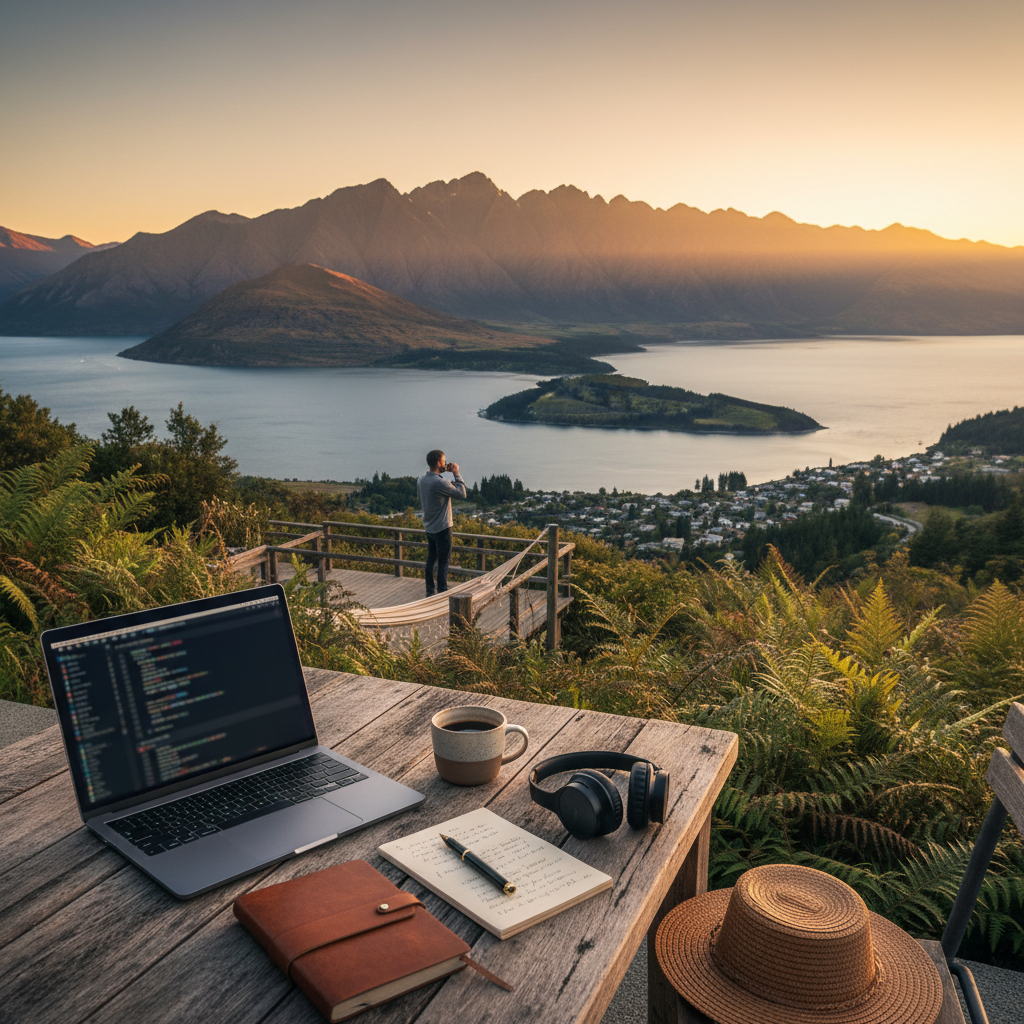
The crisp bite of the Tasman Sea air hit me as I stepped off the plane in Auckland, sunlight glinting off the distant Hauraki Gulf. After months of planning, paperwork, and nervous anticipation, I had finally arrived. This wasn't just another travel adventure; this was the beginning of my digital nomad life in New Zealand, powered by their newly streamlined digital nomad visa. My first 90 days here have been a whirlwind of awe-inspiring landscapes, friendly faces, and a healthy dose of reality checks about what it truly means to work remotely from one of the world's most desired destinations. This isn't just a guide; it's my personal narrative, lessons learned, and pragmatic advice for anyone considering following in my footsteps.
Quick Facts
| Row | Detail |
|---|---|
| Income requirement | NZD 5,000 per month (approx. USD 3,000 / EUR 2,750) |
| Visa duration | 12 months |
| Renewable | Yes, for another 12 months |
| Application fee | NZD 420 (approx. USD 250 / EUR 230) |
| Processing time | Varies, typically 2-6 weeks |
| Tax rate for holders | Income earned outside NZ is generally exempt for the first 48 months (subject to DTA) |
| Family members allowed | Yes, spouse/partner and dependent children |
| Path to residency | No direct path via this visa |
What is the New Zealand digital nomad visa?
Before I delve into my experiences, let's set the stage. The New Zealand digital nomad visa, officially known as the 'Remote Worker Visa,' was introduced to attract high-value, location-independent professionals to the country. It's designed for individuals who can perform their job remotely, generate income from outside New Zealand, and contribute to the local economy without competing directly for local jobs. For me, a freelance content strategist working with clients primarily in North America and Europe, it was a perfect fit. It allows you to live in New Zealand for up to 12 months, with the possibility of renewal, truly embracing a location independent lifestyle in a stunning environment.
My initial motivation was simple: to combine my professional aspirations with my passion for the outdoors. New Zealand, with its reputation for breathtaking scenery, seemed like the ultimate destination for a digital nomad. The visa provides the legal framework to enjoy this without the stress of constant border runs or navigating complex short-stay regulations.
New Zealand digital nomad visa requirements
Meeting the eligibility criteria was my first hurdle. I meticulously gathered all the necessary documentation. Here's what was required:
- Proof of remote work: This was crucial. I provided contracts with my international clients, bank statements showing regular payments from them, and letters from my clients confirming my remote employment/contractor status. The key is to demonstrate that your work can be performed entirely remotely and that your income originates from outside New Zealand.
- Minimum income: The requirement is NZD 5,000 per month, which at the time of my application was approximately USD 3,000 or EUR 2,750. You need to show consistent earnings at or above this threshold for at least the past six months. I submitted six months of bank statements and invoices to prove this. It's a significant figure, but achievable for many in digital entrepreneurship and specialized remote career paths.
- Valid passport: Standard requirement, with at least three months validity beyond your intended stay.
- Good health and character: I underwent a medical examination and provided police certificates from any country where I had lived for more than 12 months in the past 10 years. This involved a bit of lead time, so plan accordingly.
- Health insurance: Mandatory for the entire duration of your stay. I opted for a comprehensive international plan that specifically covered me in New Zealand, which cost me around USD 120 per month.
- Return ticket or sufficient funds: You need to show you either have a return ticket or enough funds to purchase one. I had a flexible one-way ticket and demonstrated sufficient savings.
- Genuine intention: You must genuinely intend to perform remote work and not seek employment within New Zealand. This is usually inferred from your remote work documentation.
I also had to ensure my professional background aligned with the type of work they sought. As a digital marketer and content strategist, my skills weren't likely to strain the local job market, which was a plus. The immigration website (consult the country's official immigration website) has an excellent checklist that I highly recommend following to the letter.
How to apply for the New Zealand digital nomad visa
The application process, while comprehensive, was relatively straightforward once all documents were in hand. I applied online through the official New Zealand immigration portal.
- Create an account: Register on the Immigration New Zealand website.
- Complete the application form: It's a detailed form requiring personal information, travel history, and specifics about your remote work.
- Upload supporting documents: This is where all the efforts of gathering proof come into play. Clear, scanned copies of everything were uploaded.
- Pay the application fee: The fee was NZD 420. I paid this online using a credit card. At the time, this converted to roughly USD 250 or EUR 230, depending on exchange rates.
- Submit and wait: Once submitted, I received a confirmation email. The waiting period was the hardest part.
My application processing time was approximately four weeks. This was faster than some estimates I'd read (which ranged up to eight weeks), perhaps due to the completeness of my application. I received email updates during the process, including a request for a minor clarification regarding one of my client contracts, which I promptly supplied. Transparency and prompt responses are key.
Cost breakdown
Beyond the visa application fee, I quickly learned that living in New Zealand, especially during my first 90 days, involved several upfront and ongoing costs. Here's a breakdown of what I encountered:
- Visa Application Fee: NZD 420 (approx. USD 250 / EUR 230)
- International Health Insurance: USD 120/month (for a premium plan)
- Flights: My one-way flight from Europe cost around EUR 1,200
- Accommodation (first month): Staying in an Airbnb in Auckland cost me NZD 2,500 (approx. USD 1,500 / EUR 1,375). I later found more affordable long-term rentals.
- Transportation: Roughly NZD 300/month (public transport, some Ubers). I rented a car for a week for a road trip, which added NZD 600.
- Food & Groceries: NZD 800-1,000/month. Eating out can be expensive, but cooking at home was manageable.
- Co-working space (optional): NZD 350/month for a desk in a central Auckland co-working space. Essential for my productivity for digital nomads early on.
- Mobile Plan & Internet: NZD 80/month for a generous data plan and home internet setup.
- Miscellaneous (activities, coffee, etc.): Highly variable, but I budgeted NZD 500-700/month.
My initial setup costs (flights, first month's rent, insurance deposit) were significant, easily exceeding NZD 4,000 (USD 2,400 / EUR 2,200) before even factoring in daily expenses. It's vital to have a solid financial buffer. My experience underscored the importance of securing a stable remote career before embarking on this journey.
Here’s a comparison table illustrating typical monthly expenses I faced in Auckland versus what I might have spent in a major European city like Lisbon, where I previously lived for a short stint as a digital entrepreneur:
| Expense Category | Auckland (NZD) | Lisbon (EUR) |
|---|---|---|
| Rent (1-bed apt) | 2,200 - 2,800 | 1,000 - 1,500 |
| Groceries | 800 - 1,000 | 400 - 600 |
| Utilities (incl. internet) | 200 - 300 | 100 - 150 |
| Public Transport Pass | 150 - 200 | 40 - 60 |
| Co-working Space | 350 - 450 | 150 - 250 |
| Restaurant Meal (mid-range) | 30 - 50 | 15 - 25 |
| Total Estimated (approx.) | 3,700 - 4,800 | 1,705 - 2,585 |
Note: Amounts are approximate and vary based on lifestyle and location within each city.
The cost of living in New Zealand is definitely higher, which reinforced my need to maintain a strong income from my digital nomad jobs. This comparison was a constant reminder to manage my budget closely, especially coming from a relatively lower-cost European base.
Taxes for digital nomads in New Zealand
Understanding the tax implications was a key concern for me. New Zealand has a distinct approach for new residents. Generally, for individuals entering on a digital nomad visa and establishing tax residency, New Zealand operates on a worldwide income basis. However, there's a significant advantage for those who qualify as 'transitional tax residents.'
As a transitional tax resident, which I qualified for, I am generally exempt from paying New Zealand income tax on foreign-sourced income for the first 48 months (four years) from the date I became a New Zealand tax resident. This was a massive benefit, allowing me to focus on growing my online business and enjoying my new surroundings without immediate concerns about a new tax regime on my international earnings. It's crucial to understand that this exemption usually does not apply to income from employment, services, or businesses carried on in New Zealand.
I consulted with a New Zealand tax advisor during my second month to ensure I was fully compliant and understood all nuances, especially regarding my specific client contracts. This financial planning is an essential aspect of a successful location independent lifestyle. For those earning from Freelancing Bangladesh or similar regional markets, this transitional tax residency can offer a significant reprieve, however, always verify with a local tax professional.
For Bangladeshi passport holders
As a global citizen, I'm often asked about visa accessibility for various nationalities. While I hold a European passport, I always investigate regional implications. For Bangladeshi passport holders, the general requirements for the New Zealand digital nomad visa remain the same, including the income threshold and remote work stipulations. The primary differences might lie in the processing times and additional verification steps that Immigration New Zealand might require. Ensuring all documentation is perfectly in order, and providing comprehensive financial proof, is even more critical. It's advisable to apply well in advance of your intended travel date, as administrative checks can sometimes take longer for certain nationalities. Always consult the country's official immigration website for the most up-to-date and specific guidance for Bangladeshi citizens, as policies can evolve.
My 90-Day Experience: Hits and Misses
The 'Hits': Embracing the Kia Ora Lifestyle
- The Scenery: From the moment I drove along the coastal roads, past lush rolling hills and into vibrant cities, I was constantly reminded why I chose New Zealand. Weekends were spent exploring national parks, hiking volcanic trails, or relaxing on pristine beaches.
- The People: Kiwis are genuinely friendly. The 'Kia Ora' greeting, a Maori phrase meaning 'hello' or 'be well,' became a warm daily affirmation. I found it easy to strike up conversations and felt welcomed in local communities.
- Work-Life Balance: The outdoor culture is infectious. It's easy to step away from the laptop for a walk by the sea, a quick trail run, or an afternoon coffee with a view. This significantly boosted my productivity for digital nomads, allowing for focused work sprints followed by rejuvenating breaks.
- Connectivity: Internet speeds were excellent, even in more remote towns, making my remote work seamless. Auckland's coworking spaces were vibrant and well-equipped, fostering a sense of community among other professionals.
The 'Misses': Navigating the Realities
- Cost of Living: As noted in the comparison table, New Zealand is expensive. While my income met the visa requirements, I still had to be mindful of my spending, especially on groceries and dining out. Budgeting becomes paramount.
- Distance: Friends and family are a long flight away. This amplified the need for scheduled video calls and managing time zones, which can be challenging for those with significant personal ties in other parts of the world.
- Limited Social Circles (Initially): While Kiwis are friendly, breaking into established social circles takes time. The co-working space was invaluable for meeting like-minded people, but you need to actively seek out groups and activities.
- Bureaucracy: Setting up banking, getting a local SIM, and navigating initial administrative tasks, though relatively smooth, still take time and patience.
My first 90 days were a profound learning experience. I discovered that a location independent lifestyle is about more than just working from anywhere; it's about adapting, embracing new cultures, and finding a sustainable rhythm. New Zealand has offered a magnificent backdrop for this journey, pushing me to evolve both personally and professionally. The investment in securing the visa and managing the upfront costs has, so far, been well worth it. New Zealand truly offers a unique flavour for the digital entrepreneur seeking both adventure and stability.
Frequently asked questions
What is the New Zealand digital nomad visa? The New Zealand digital nomad visa, or 'Remote Worker Visa,' allows eligible foreign nationals to live and work remotely in New Zealand for up to 12 months, earning income from outside the country. It caters to those with a location independent lifestyle.
Who is eligible for the New Zealand digital nomad visa? Eligibility requires demonstrating sufficient remote income (NZD 5,000/month), proof of remote employment/contracts, good health and character, comprehensive health insurance, and a valid passport. Your work must not compete with the local job market.
How much does the New Zealand digital nomad visa cost? The application fee for the New Zealand digital nomad visa is NZD 420. This converts to approximately USD 250 or EUR 230, depending on current exchange rates. Additional costs include health insurance and living expenses.
How long does New Zealand digital nomad visa processing take? Processing times for the New Zealand digital nomad visa typically range from 2 to 6 weeks, though this can vary based on the completeness of the application and individual circumstances. It is advisable to apply in advance.
Can I bring my family on the New Zealand digital nomad visa? Yes, the New Zealand digital nomad visa allows for the inclusion of immediate family members, including your spouse/partner and dependent children. They must meet the health and character requirements.
Do I pay tax in New Zealand on the digital nomad visa? New Zealand offers a transitional tax residency status. For qualifying digital nomads, foreign-sourced income is generally exempt from New Zealand income tax for the first 48 months, provided it's not earned from work performed in New Zealand.
Can Bangladeshi citizens get the New Zealand digital nomad visa? Yes, Bangladeshi citizens are eligible to apply for the New Zealand digital nomad visa, provided they meet all the standard requirements for remote work, income, health, and character. Specific processing times may vary.
Sources
- Immigration New Zealand official website (consult the country's official immigration website)
- New Zealand Inland Revenue Department official website (consult the country's official immigration website)
- Various international health insurance providers for current plan details
- Cost of living data comparison websites (e.g., Numbeo)
Compare with: Australia, Fiji, Vanuatu
Interested in applying for the New Zealand visa?
Tell us a bit about yourself and we'll send tailored guidance on eligibility, paperwork, and next steps.