Montenegro's Digital Nomad Visa: What Changed in 2026?
Debunking common misconceptions and detailing the significant changes to Montenegro's Digital Nomad Visa in 2026, this article provides an essential guide for remote workers planning to relocate.
August 9, 2026
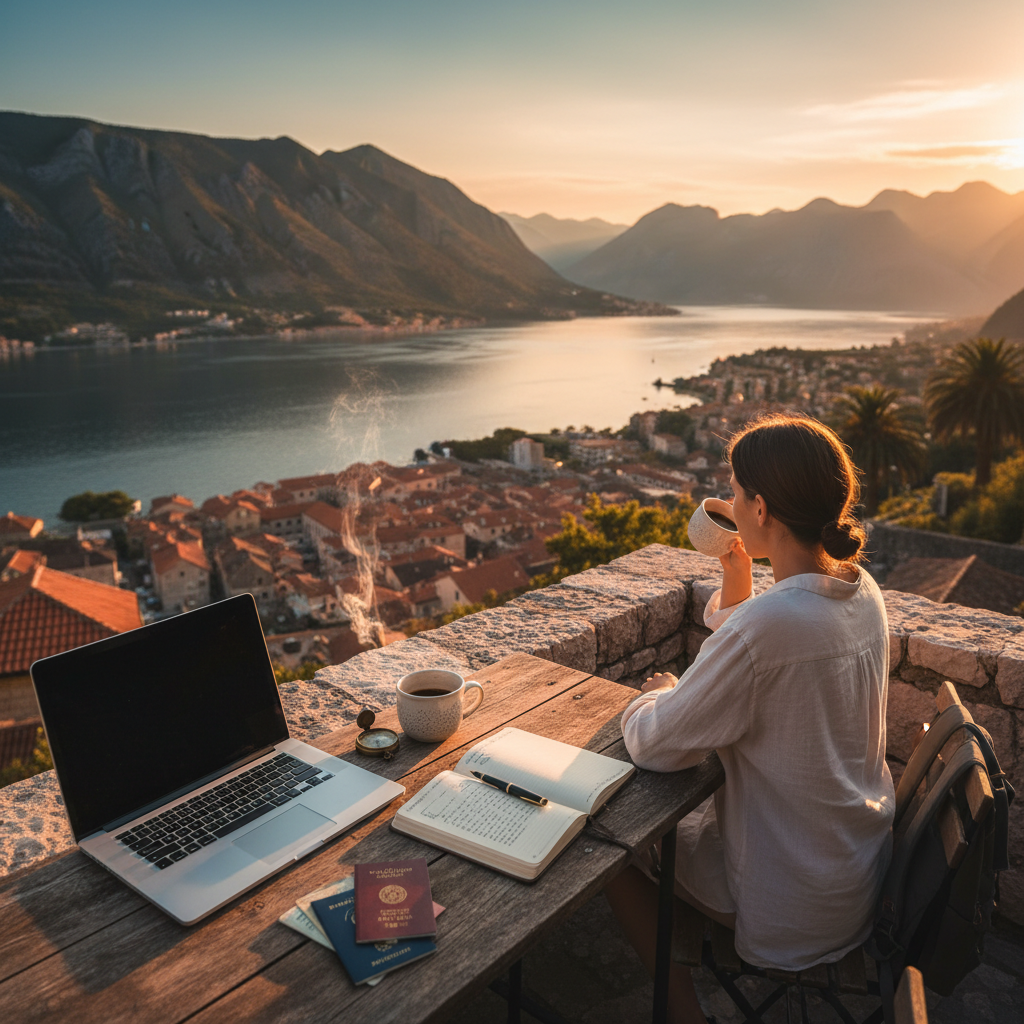
The world of Digital Nomad visas is constantly evolving, and Montenegro is no exception. A common misconception circulating in remote work circles is that Montenegro's highly anticipated Digital Nomad Visa, first announced with much fanfare, has remained stagnant or even stalled. This couldn't be further from the truth. While the initial rollout faced some bureaucratic hurdles and a slower-than-expected implementation, 2026 has brought significant clarity and concrete changes, making the Montenegro digital nomad visa a much more streamlined and attractive option for those seeking a Location Independent Lifestyle in the heart of the Balkans.
After years of anticipation, the regulatory framework has solidified, offering a clearer path for Remote Work enthusiasts. This article will delve into what exactly changed in 2026, offering a comprehensive look at the updated requirements, application process, and vital considerations for any digital nomad or Digital Entrepreneurship professional considering Montenegro as their next base.
Quick facts
| Feature | Details |
|---|---|
| Income requirement | €1,300/month (main applicant), +30% for first dependent, +20% for each additional dependent |
| Visa duration | Up to 1 year, extendable for a total of 2 years |
| Renewable | Yes, for an additional year |
| Application fee | €60 (permit fee) + €30 (processing fee) + potential embassy fees |
| Processing time | 15-30 days |
| Tax rate for holders | 0% for the first 12 months, then progressive rates (9%-15%) |
| Family members allowed | Yes, dependents can apply |
| Path to residency | No direct path, but options exist after 2 years |
What is the Montenegro digital nomad visa?
The Montenegro digital nomad visa is a special temporary residence permit designed to attract foreign citizens who can perform their work remotely, independent of their physical location. Officially known as the 'Temporary Residence Permit for Digital Nomads', it allows individuals to reside in Montenegro for an extended period while working for an employer or clients outside of Montenegro. The program was first conceptualized in 2021, but its official decree and practical implementation faced delays. The year 2026 marks a crucial turning point, with refined legislation and a more transparent application procedure coming into effect, finally moving beyond its provisional status.
The core intent behind Montenegro's offering is to diversify its tourism-reliant economy, bringing in skilled foreign workers who contribute economically through consumption and, eventually, through local tax revenues if they choose to stay longer. It's a strategic move to position Montenegro as a vibrant hub for Work From Anywhere professionals, leveraging its stunning natural beauty, affordable cost of living (compared to Western Europe), and burgeoning internet infrastructure.
Montenegro digital nomad visa requirements
The most significant updates in 2026 revolve around clarified eligibility criteria. Previously, some aspects were open to interpretation, leading to uncertainty for applicants. The revised regulations are much more explicit. To be eligible for the Montenegro digital nomad visa, applicants must satisfy the following key requirements:
- Nationality: You must be a non-EU/EEA/Swiss citizen. Citizens of EU/EEA/Switzerland generally have different, often simpler, routes for long-term stay.
- Remote Work: You must be employed by a company registered outside of Montenegro or be self-employed (freelancer or business owner) with clients based outside of Montenegro. Crucially, you cannot work for any Montenegrin entity or individual while on this visa. This is a non-negotiable aspect clarified in 2026.
- Proof of Income: This is where 2026 saw a notable adjustment. The minimum monthly income requirement is now €1,300 for the main applicant. This figure must be proven through bank statements, employment contracts, or client invoices covering the past six to twelve months. For dependants, the requirement increases: an additional 30% (€390) for the first dependant, and 20% (€260) for each subsequent dependant. So, a couple would need €1,690/month, and a family of three would need €1,950/month. This is a slight increase from the initially proposed figures, reflecting inflation and a desire to attract higher-earning Digital Nomad Jobs candidates.
- Valid Passport: Your passport must be valid for at least three months beyond your intended stay.
- Health Insurance: Comprehensive international health insurance covering your entire stay in Montenegro is mandatory. The policy must cover at least €30,000 in medical expenses.
- Accommodation: Proof of accommodation in Montenegro, such as a rental agreement or property ownership, for at least three months is required. This can be a short-term rental initially, but a longer-term lease will be needed for the full duration of the visa.
- Clean Criminal Record: A police clearance certificate from your country of origin and any country you have resided in for the past five years is necessary. This certificate must be apostilled or super-legalized, depending on the issuing country.
- No Prior Visa Violations: Applicants must not have any prior visa or immigration violations in Montenegro or the Schengen Area.
How to apply for the Montenegro digital nomad visa
Applying for the Montenegro digital nomad visa in 2026 is a multi-step process, now more clearly defined than in previous years. It typically involves an initial visa application (if required for your nationality) and then a temporary residence permit application upon arrival.
-
Gather Documents: Begin by compiling all necessary documents. This includes your passport, proof of income (bank statements, employment contracts, client invoices), comprehensive health insurance, proof of accommodation, police clearance certificates, and a completed application form. Ensure all foreign documents are translated into Montenegrin by a sworn court interpreter and apostilled or legalized.
-
Visa Application (if applicable): Depending on your nationality, you might need to apply for a D-visa (long-stay visa) at a Montenegrin embassy or consulate in your home country before traveling. Many nationalities can enter Montenegro visa-free for up to 90 days, during which they can apply for the residence permit directly. Consult the country's official immigration website for specific requirements based on your nationality.
-
Enter Montenegro and Register: Upon arrival in Montenegro, you must register your stay with the local police (Ministry of Interior, Department for Foreigners) within 24 hours. Your accommodation provider (hotel, landlord) can often assist with this. This is a crucial step for almost all foreign visitors, not just digital nomads.
-
Apply for Temporary Residence Permit: Within your initial 90-day visa-free period (if applicable) or after arriving on your D-visa, you will submit your application for the temporary residence permit for digital nomads at the local Ministry of Interior, Department for Foreigners. This is the main application for the digital nomad status. You will undergo an interview and submit all your prepared documents.
-
Biometrics and Interview: You will typically be required to provide biometric data (fingerprints, photograph) and attend an interview to clarify aspects of your application and remote work status.
-
Processing and Decision: The processing time for the temporary residence permit is generally 15-30 days. During this period, you are legally allowed to remain in Montenegro. Once approved, you will receive your residence permit card.
Comparison: Before & After 2026 Policy Changes
| Feature | Pre-2026 Policy (Ambiguous/Proposed) | 2026 Policy (Clarified/Implemented) |
|---|---|---|
| Income Requirement | 'Sufficient funds' (often rumored ~€1,000) | €1,300/month (main applicant), scaled for dependents |
| Application Fee | Not clearly defined/varied by embassy | €60 permit fee + €30 processing fee (Montenegro-based) |
| Processing Time | Highly variable, often >60 days | Consistent 15-30 days |
| Tax Treatment | Unclear, potential for immediate taxation | 0% tax for first 12 months, then progressive |
| Dependant Eligibility | Vague or implied | Explicitly allowed, with clear income add-ons |
| Work Restrictions | Some ambiguity on local engagement | Strictly no work for Montenegrin entities/clients |
| Renewal Process | Unspecified | Clearly defined for an additional year (total 2 years) |
Cost breakdown
The financial aspects of securing the Montenegro digital nomad visa have become much clearer in 2026. Here's a breakdown of the typical costs you can expect:
- Application Fee for Temporary Residence Permit: €60 for the permit itself, plus €30 for administrative processing. This totals €90 paid to the Montenegrin Ministry of Interior.
- Visa D Fee (if applicable): This varies by nationality and the embassy/consulate. Expect anywhere from €60 to €120.
- Document Translation & Apostille/Legalization: This can be a significant cost. Translating all required documents (e.g., criminal record, bank statements, employment contract) into Montenegrin by a sworn translator can cost €20-€50 per page. Apostille/legalization fees vary by country, but budget €50-€150 per document.
- Health Insurance: A comprehensive international health insurance policy for a year typically costs between €400-€800, depending on age, coverage, and provider.
- Proof of Accommodation: While not a direct fee, you will need to secure accommodation. Rental costs vary widely. A basic one-bedroom apartment in a smaller city like Nikšić might be €250-€400/month, while in Podgorica or coastal towns like Budva or Kotor, it could be €500-€800+/month. Budget for at least three months' rent as initial proof.
- Proof of Funds: You need to demonstrate the €1,300 (or more for dependents) monthly income. While not a direct fee, ensure you have these funds readily available in your bank account as proof.
- Legal Assistance (Optional): Many digital nomads choose to hire local lawyers or agencies to navigate the application process, especially with document preparation and communication. This can cost anywhere from €500 to €1,500, but can significantly reduce stress and potential errors.
Total estimated initial costs (excluding rent and ongoing living expenses) could range from €700 to €1,500+, depending on your specific needs and whether you opt for professional assistance.
Taxes for digital nomads in Montenegro
One of the most attractive changes in the 2026 policy for the Montenegro digital nomad visa holders is the clarified tax regime. Previously, there was ambiguity, with some fearing immediate taxation on global income. The updated law provides a significant incentive:
- First 12 Months: For the first 12 months of holding the temporary residence permit, digital nomads are exempt from paying Montenegrin income tax on their foreign-sourced income. This is a huge benefit, allowing nomads to save and settle in without immediate tax burdens.
- After 12 Months: If you extend your stay beyond the initial 12 months (i.e., for the second year of the permit), you will become a tax resident of Montenegro. At this point, your global income will be subject to Montenegrin progressive income tax rates, which generally range from 9% to 15%. There are also social security contributions, which can add another 10-15% on top of the income tax, depending on your income level and employment status. It's crucial to consult with a Montenegrin tax advisor closer to the end of your first year to understand your specific obligations.
This tiered tax approach makes Montenegro highly competitive for initial entry compared to many other digital nomad programs that impose immediate taxation. It's a strategic move to attract talent and encourage longer stays.
For Bangladeshi passport holders
For Bangladeshi digital nomad hopefuls eyeing Montenegro, the 2026 updates offer a more predictable, albeit still somewhat complex, pathway. Bangladesh citizens are required to obtain a visa to enter Montenegro, even for short stays. Therefore, the D-visa (long-stay visa) application at a Montenegrin embassy or consulate will be a mandatory first step before traveling to Montenegro to apply for the temporary residence permit.
Key considerations for Bangladeshi applicants:
- Embassy/Consulate: Since Montenegro does not have an embassy in Bangladesh, applicants will typically need to apply at the Montenegrin Embassy in New Delhi, India, or another accredited embassy/consulate in a nearby country. This adds travel and logistical considerations to the application process.
- Document Legalization: All Bangladeshi documents (e.g., police clearance, bank statements) will need to be apostilled or, more likely, super-legalized. This involves certification by the Bangladeshi Ministry of Foreign Affairs, followed by legalization by the Montenegrin embassy/consulate responsible for Bangladesh. This process can be time-consuming and requires careful planning.
- Proof of Funds: The €1,300 monthly income requirement (and higher for dependents) must be demonstrably met. For Freelancing Bangladesh professionals or those in Remote Work Bangladesh roles, ensuring clear bank statements that show consistent foreign-sourced income will be paramount.
- Health Insurance: Obtaining an international health insurance policy that meets Montenegrin requirements from Bangladesh should be straightforward, but ensure the provider is reputable and the coverage is sufficient.
While the path requires more preparatory steps than for some other nationalities, the clarified 2026 policies make the process more transparent. With careful planning and attention to detail, the Montenegro Digital Nomad Guide for Bangladeshi citizens can lead to a rewarding experience.
Renewing your Montenegro digital nomad visa
The 2026 regulations clearly outline the renewal process, a welcome change from previous uncertainty. The initial temporary residence permit is valid for up to one year. It can be renewed once for an additional one-year period, bringing the total possible stay on the digital nomad visa to two years.
To renew, you must:
- Apply within 30 days before expiry: Submit your renewal application to the Ministry of Interior, Department for Foreigners, at least 30 days before your current permit expires.
- Continue meeting criteria: You must still satisfy all original eligibility requirements, including the income threshold and remote work status.
- Show continued ties outside Montenegro: Demonstrate that your work remains for foreign entities and you have not engaged in local employment.
- Proof of financial stability: Provide updated bank statements or employment contracts to show continued fulfillment of the income requirement.
- Updated health insurance and accommodation: Provide proof of valid health insurance and accommodation for the renewed period.
It's important to note that the digital nomad visa is generally not considered a direct path to permanent residency or citizenship in Montenegro. After a maximum of two years on this permit, you would typically need to explore other residence categories (e.g., employment, business formation, real estate ownership) if you wish to remain in Montenegro long-term.
Potential pitfalls for digital nomads in Montenegro
While Montenegro offers a beautiful backdrop for a Digital Nomad Lifestyle, several potential pitfalls need to be considered:
- Bureaucracy: Despite 2026's improvements, Montenegrin bureaucracy can still be slow and require patience. Documents often need multiple copies, translations, and specific stamps. Be prepared for potential delays and multiple visits to government offices.
- Language Barrier: While many people in tourist areas speak English, outside these zones, Montenegrin is the primary language. Learning basic phrases or having a translation app/local contact can be invaluable.
- Internet Connectivity: While major cities and coastal areas have good internet (fiber optic and 4G/5G), more rural or mountainous regions can have spotty or slower connections. Always verify internet speeds if reliable connectivity is crucial for your Remote Career.
- Banking: Opening a local bank account can sometimes be challenging for non-residents. Some banks have stricter requirements than others. Researching options before arrival or relying on international digital banking solutions might be necessary initially.
- Real Estate Market: The rental market, especially in popular coastal towns, can be seasonal and competitive, with prices fluctuating significantly. Securing a long-term, fairly priced rental can require persistence.
- Limited Public Transport: Outside of main city routes, public transport can be less comprehensive. Renting a car or relying on taxis might be necessary for exploring or living in less urbanized areas. This could be a consideration for Digital Nomad Travel budgets.
By being aware of these potential challenges, Digital Nomad applicants can better prepare for a smooth transition to life in Montenegro.
Frequently asked questions
What is the Montenegro digital nomad visa?
The Montenegro digital nomad visa is a temporary residence permit allowing non-EU/EEA/Swiss citizens to live and work remotely in Montenegro for foreign employers or clients. It offers a structured pathway for up to two years.
Who is eligible for the Montenegro digital nomad visa?
Eligible individuals are non-EU/EEA/Swiss citizens working remotely for non-Montenegrin entities, earning at least €1,300 per month, with valid health insurance, accommodation, and a clean criminal record.
How much does the Montenegro digital nomad visa cost?
The official application fees are €90 (residence permit). Additional costs include visa fees (if applicable), document translation/legalization (€200-€500+), and health insurance (€400-€800 annually).
How long does Montenegro digital nomad visa processing take?
Processing for the temporary residence permit typically takes between 15 to 30 days after submitting all required documents at the local Ministry of Interior office in Montenegro.
Can I bring my family on the Montenegro digital nomad visa?
Yes, you can bring family members (spouse, dependent children). Each dependent requires an additional income threshold: +30% for the first and +20% for each subsequent dependent.
Do I pay tax in Montenegro on the digital nomad visa?
For the first 12 months, digital nomad visa holders are exempt from Montenegrin income tax on foreign-sourced income. After 12 months, you become a tax resident and pay progressive rates (9%-15%) on global income.
Can Bangladeshi citizens get the Montenegro digital nomad visa?
Yes, Bangladeshi citizens can apply. They will first need to obtain a D-visa from a Montenegrin embassy abroad (e.g., New Delhi) before entering Montenegro to apply for the temporary residence permit.
Sources
- Ministry of Interior of Montenegro – Department for Foreigners (Official Immigration Website)
- Official Gazette of Montenegro – Law on Foreigners (Revised 2026 amendments)
- Montenegro Tax Administration (Updated tax guidelines for non-residents)
- Discussions with Montenegrin immigration lawyers (2026 policy clarifications)
Compare with: Albania, Croatia, Georgia
Interested in applying for the Montenegro visa?
Tell us a bit about yourself and we'll send tailored guidance on eligibility, paperwork, and next steps.