Mauritius: Is its Remote-Work Infrastructure Ready for Your Digital Nomad Lifestyle?
Dreaming of remote work from a tropical paradise? Mauritius offers its Premium Travel Visa to digital nomads, but how does its internet, coworking scene, and time zone align with a productive, location-independent lifestyle? This review dives deep.
August 7, 2026
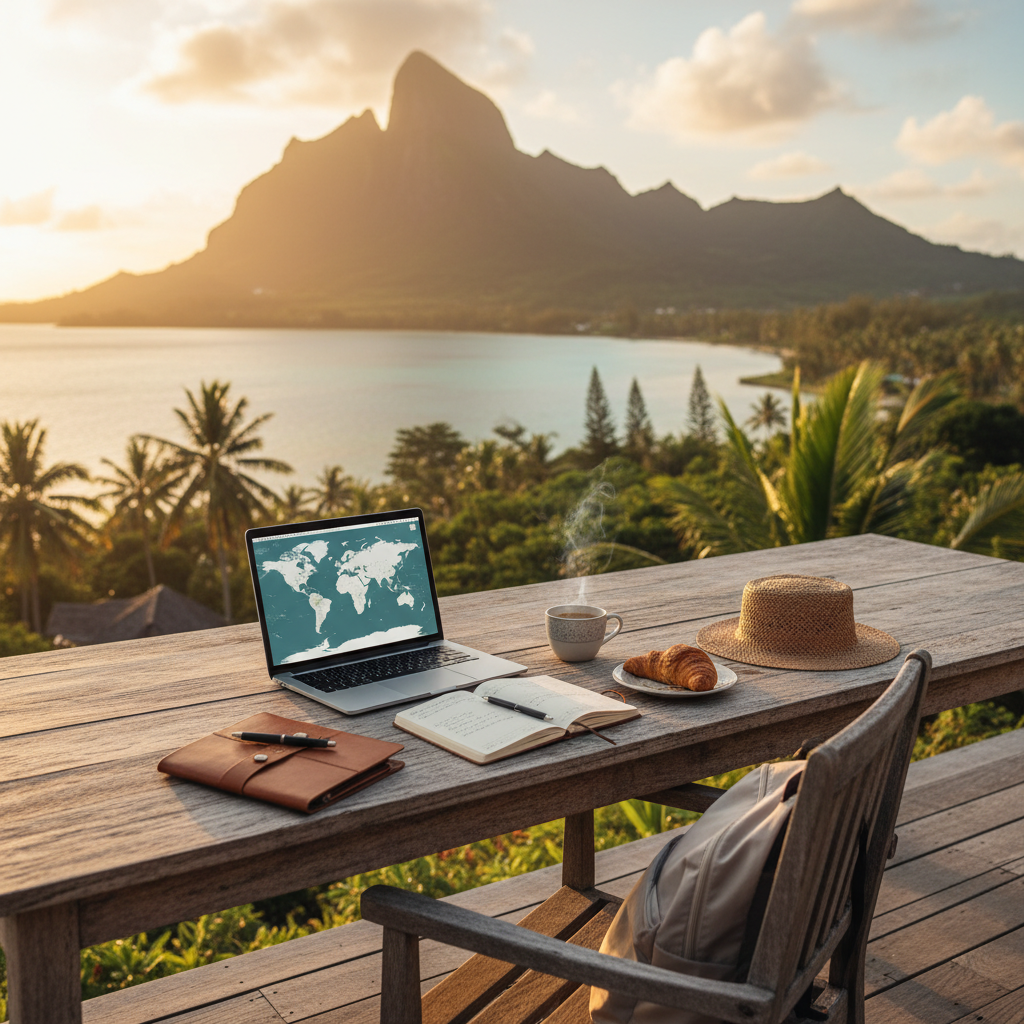
The gentle hum of the air conditioner, the scent of frangipani wafting through an open window, and the soft crash of waves just beyond your balcony. This isn't a vacation fantasy; for many digital nomads, it's the daily reality promised by destinations like Mauritius. The island nation, known for its pristine beaches and lush landscapes, has rolled out its Premium Travel Visa, actively courting remote workers. But beyond the postcard aesthetics, how does Mauritius truly stack up as a functional, productive base for a location-independent lifestyle? In this comprehensive review, we'll dissect its remote-work infrastructure, from internet speeds to coworking culture, to help you decide if this Indian Ocean gem is truly the right fit for your digital nomad journey in 2026.
Quick facts
| Row | Detail |
|---|---|
| Income requirement | MUR 100,000 per month (approx. USD 2,250 / EUR 2,100) or MUR 1.2 million annually (approx. USD 27,000 / EUR 25,200) |
| Visa duration | 1 year |
| Renewable | Yes, as long as eligibility criteria are met |
| Application fee | Free (no government fee) |
| Processing time | Typically 48 hours to 5 business days |
| Tax rate for holders | 0% on foreign-earned income, potential local taxes if income is sourced from Mauritius |
| Family members allowed | Yes, spouse/partner and dependents up to 24 years old |
| Path to residency | No direct path to permanent residency via this visa alone; other investment/work schemes exist |
What is the Mauritius digital nomad visa?
The Mauritius digital nomad visa, officially known as the Premium Travel Visa, is a special permit introduced by the Mauritian government to allow non-citizens to stay and work remotely from the island for an extended period. Launched in response to the global shift towards remote work and to stimulate the tourism sector, it targets professionals, digital nomads, and retirees seeking a change of scenery. The core principle is straightforward: applicants must derive their income from outside Mauritius and not enter the local labor market. This visa is designed for individuals who can demonstrate a verifiable source of income from international clients or employers, allowing them to fully embrace the digital nomad lifestyle on this tropical island.
The visa is initially granted for a period of one year, with the possibility of renewal, provided the holder continues to meet the eligibility criteria. It's a non-immigrant visa, meaning it does not automatically lead to permanent residency or citizenship. However, it offers a fantastic opportunity to experience living and working in a unique environment, benefiting from a favorable time zone for many international markets, and enjoying a high quality of life with competitive living costs compared to many Western countries.
Mauritius digital nomad visa requirements
To successfully apply for the Mauritius Premium Travel Visa, applicants must satisfy several key criteria. These requirements are in place to ensure that visa holders are genuinely remote workers who will not impact the local job market and have sufficient financial means to support themselves and any accompanying family members during their stay.
Eligibility Criteria:
- Nationality: Must hold a valid passport from an eligible country. Mauritius generally extends this to most nationalities, but it's always best to consult the country's official immigration website for an up-to-date list.
- Remote Work Proof: You must provide evidence that your primary place of business and source of income are outside Mauritius. This typically includes employment contracts with foreign companies, proof of self-employment with international clients, or registration documents for an online business operating outside Mauritius.
- Financial Means: A crucial requirement is demonstrating sufficient and stable financial resources. Applicants must prove a minimum monthly income of MUR 100,000 (approximately USD 2,250 or EUR 2,100 as of early 2026) or an annual income of MUR 1.2 million (approximately USD 27,000 or EUR 25,200). This can be shown through bank statements, pay slips, or client contracts over the last six to twelve months.
- Health Insurance: Comprehensive travel and health insurance valid for the entire duration of your stay in Mauritius is mandatory. This insurance must cover medical emergencies, hospitalization, and repatriation.
- Accommodation: While not strictly required at the time of initial application, you will need to provide proof of confirmed accommodation for at least your initial stay in Mauritius. This could be a hotel booking, a lease agreement, or an invitation from a host.
- Return Ticket: Proof of a return air ticket or onward travel ticket is generally required, although this can sometimes be waived if sufficient funds are demonstrated.
- No Local Employment: A strict condition is that you must not seek employment in the Mauritian labor market during your stay. All work must be conducted remotely for clients or employers outside Mauritius.
Required Documents:
- Completed application form.
- Passport-sized photographs.
- Color scan of your valid passport (bio-data page).
- Proof of financial means (bank statements, employment contract, client invoices).
- Proof of comprehensive travel and health insurance.
- Confirmed accommodation details for your initial stay.
- A clear, concise letter of intent stating your purpose for visiting Mauritius and confirming your remote work status.
- For accompanying family members: birth certificates for children, marriage certificate for spouse, and their valid passports and health insurance.
How to apply for the Mauritius digital nomad visa
The application process for the Mauritius Premium Travel Visa is designed to be straightforward and largely digital, reflecting the government's desire to attract remote workers efficiently. Here’s a step-by-step guide:
Step 1: Gather Your Documents
Before initiating the online application, ensure you have all the necessary documents scanned and ready. This includes your passport, proof of income, health insurance, accommodation details, and any supporting documents for dependents. Make sure all scans are clear and legible.
Step 2: Complete the Online Application Form
Visit the official Economic Development Board (EDB) Mauritius website (consult the country's official immigration website) which handles the Premium Travel Visa applications. Navigate to the application portal and fill out the online form accurately. This form will ask for personal details, passport information, details of your remote work, and financial situation.
Step 3: Upload Supporting Documents
Attach all your scanned documents to the online application. Double-check that every required document is uploaded in the correct format and is clearly visible. Missing or unreadable documents are the most common cause of delays.
Step 4: Submit Your Application
Once you’ve reviewed all the information and uploaded the documents, submit your application. There is no application fee for the Mauritius Premium Travel Visa, making it an attractive option compared to many other digital nomad programs.
Step 5: Await Approval
After submission, the EDB will review your application. The stated processing time is typically 48 hours to 5 business days. You will receive an email notification regarding the status of your application. If approved, you will receive an Approval in Principle letter via email.
Step 6: Arrival in Mauritius and Final Issuance
Upon your arrival at Sir Seewoosagur Ramgoolam International Airport in Mauritius, present your Approval in Principle letter, passport, and any other requested documents to immigration officials. They will then formally issue your Premium Travel Visa, which will be stamped in your passport or provided as a separate document. It’s always advisable to carry physical copies of all your documents, even if you’ve applied online.
Cost breakdown
One of the most appealing aspects of the Mauritius Premium Travel Visa is the absence of a government application fee. However, digital nomads should budget for other essential costs associated with the move and their stay. Here's a breakdown:
| Item | Estimated Cost (MUR) | Estimated Cost (USD) | Notes |
|---|---|---|---|
| Visa Application Fee | 0 | 0 | No government fee. |
| Health/Travel Insurance (Annual) | 20,000 - 60,000 | 450 - 1,350 | Varies significantly based on coverage, age, and provider. Mandatory. |
| Flight Tickets (One-way) | 25,000 - 70,000+ | 560 - 1,570+ | Highly variable depending on origin, airline, and booking time. |
| Initial Accommodation (1 month) | 25,000 - 60,000 | 560 - 1,350 | Rent for a decent apartment or short-term rental. Can be higher for beachfront or luxury. |
| Utilities (Monthly) | 3,000 - 7,000 | 65 - 160 | Electricity, water, internet. Will vary with usage. |
| Local SIM Card & Data (Monthly) | 500 - 1,500 | 11 - 35 | Essential for connectivity. |
| Groceries (Monthly, single person) | 8,000 - 15,000 | 180 - 340 | Depends on dietary habits and if you cook at home. |
| Transportation (Monthly) | 2,000 - 5,000 | 45 - 110 | Public transport, ride-sharing, or scooter rental. Car rental is significantly higher. |
| Coworking Space (Monthly) | 5,000 - 10,000 | 110 - 225 | For dedicated desk access, often includes amenities. Optional but recommended for infrastructure. |
| Estimated Initial Setup Cost (excluding flights) | ~58,500 - 149,000 | ~1,315 - 3,355 | This is a rough estimate for your first month's expenses including insurance. |
| Estimated Monthly Living Cost | ~38,500 - 89,000 | ~865 - 2,000 | After initial setup, a reasonable monthly budget. |
Note: All USD/EUR conversions are approximate as of early 2026 and subject to exchange rate fluctuations. 1 USD ≈ 44.5 MUR, 1 EUR ≈ 47.6 MUR.
Taxes for digital nomads in Mauritius
Understanding your tax obligations is critical for any digital nomad. For holders of the Mauritius Premium Travel Visa, the tax situation is generally favorable, but it's important to differentiate between foreign-sourced income and any potential local income.
Foreign-Sourced Income: The primary benefit for Premium Travel Visa holders is that income earned from sources outside Mauritius, while living on the island, is generally not subject to Mauritian income tax. This is a significant draw for many remote workers and aligns with the visa's condition that your primary source of income must be external.
Local Income: If, for any reason, a digital nomad earns income from a Mauritian source (e.g., local consulting, selling goods or services to Mauritian residents or businesses), that income will be subject to Mauritian tax laws. The Mauritian income tax system is progressive, with rates typically ranging from 0% to 15% for individuals. However, the intent of the Premium Travel Visa is for income to be solely foreign-sourced, so this scenario should be rare for compliant visa holders.
Tax Residency: While the Premium Travel Visa allows you to reside in Mauritius for up to a year (renewable), it doesn't automatically confer tax residency status if your primary tax home remains elsewhere. However, spending more than 183 days in Mauritius within a tax year could make you a tax resident under certain conditions, even if your income is foreign-sourced. It is highly advisable to consult with a Mauritian tax advisor to fully understand your specific tax obligations, especially if you plan an extended stay or if your financial situation is complex. This will help ensure compliance with both Mauritian and your home country's tax regulations.
Remote-Work Infrastructure Review: The Mauritian Advantage (and Disadvantage)
Mauritius has made strides in its digital infrastructure, but how does it truly fare under the demands of a full-time digital nomad lifestyle? This section breaks down the critical elements.
Internet Connectivity: Speed, Reliability, and Coverage
Mauritius boasts a surprisingly robust internet infrastructure, especially in urban and popular coastal areas. The island is connected by multiple submarine fiber optic cables (such as the SAFE and LION cables), which translates to generally high speeds and good reliability. Providers like MyT (Mauritius Telecom) and Emtel offer both fiber-to-the-home (FTTH) and mobile data services.
- Fiber Optic (FTTH): In major towns like Port Louis, Ebene, Quatre Bornes, and even many residential areas, FTTH is widely available. Speeds of 100 Mbps, 500 Mbps, and even 1 Gbps are common for residential packages. Expect to pay around MUR 1,200 - 2,500 (USD 27-56) per month for high-speed fiber.
- Mobile Data: 4G LTE coverage is extensive across the island, with 5G rollout in progress in key areas. Mobile data packages are affordable, and speeds are generally sufficient for most remote work tasks, including video calls, though home fiber is always preferred for consistent heavy use. A typical 30-day, 20GB mobile data plan might cost MUR 500-800 (USD 11-18).
- Reliability: While generally good, occasional power outages can occur, especially during cyclone season (November to May). It's advisable to have a reliable mobile hotspot as a backup and consider a UPS (Uninterruptible Power Supply) for your critical equipment.
The Verdict: Overall, Mauritius offers a strong internet backbone, competitive with many developed nations. For most digital nomads, connectivity will not be a bottleneck. However, having a backup plan for power and mobile data is prudent.
Coworking Spaces and Community
The coworking scene in Mauritius is growing, albeit not as densely populated as major digital nomad hubs in Europe or Southeast Asia. Most dedicated spaces are concentrated in the central business district of Ebene Cybercity and around Port Louis.
- Ebene Cybercity: This is the tech and financial hub of Mauritius and hosts several professional coworking spaces like The Hive and workspaces offered by international chains. These typically provide dedicated desks, private offices, meeting rooms, high-speed internet, and networking opportunities. A dedicated desk membership can range from MUR 5,000 - 10,000 (USD 110-225) per month.
- Other Areas: Smaller, more boutique coworking options are emerging in popular residential and tourist areas like Grand Baie and Tamarin, often integrated into business centers or boutique hotels. These might offer a more relaxed atmosphere.
- Community: While a formal, large-scale digital nomad community isn't as established as in Lisbon or Bali, there are active Facebook groups and meetups, particularly in the larger expat strongholds. These are good places to connect, share tips, and find collaboration opportunities.
The Verdict: Sufficient options exist, particularly for those who value a professional office environment. The community is present but requires a bit more proactive effort to engage with than in more mature digital nomad ecosystems.
Time Zones: A Strategic Advantage?
Mauritius operates on Mauritius Time (MUT), which is GMT+4. This time zone offers a unique advantage for digital nomads working with clients or teams across various global markets.
- Europe: A 2-3 hour difference from Western and Central European time zones allows for significant overlap during standard working hours. This is highly beneficial for real-time collaboration.
- Asia: A 4-6 hour difference from major Asian hubs like Singapore (GMT+8) and Hong Kong (GMT+8) also provides ample overlap, especially for morning meetings in Asia and afternoon work in Mauritius.
- North America: This is where the time difference becomes more pronounced, with a 8-10 hour difference from Eastern Standard Time (EST) and Pacific Standard Time (PST). This typically means a morning in Mauritius is late night/early morning in North America, requiring flexibility or asynchronous work strategies for US-based clients.
The Verdict: Mauritius's GMT+4 time zone is an excellent sweet spot for those working with European and Asian markets, facilitating synchronous work. For North American engagements, it demands adaptation but is certainly manageable for those accustomed to remote work across time zones.
Power Infrastructure and Reliability
As mentioned, power outages can occur, particularly during adverse weather conditions. While generally short-lived, they can disrupt workflow. Investing in a power bank for your laptop and mobile devices, and ideally a small UPS for your router and monitor, is a wise precaution. Most modern accommodations are equipped with surge protectors.
Comparison: Remote-Work Readiness
| Feature | Mauritius | Bali (Indonesia) | Lisbon (Portugal) |
|---|---|---|---|
| Internet Speed | High-speed fiber (100 Mbps - 1 Gbps) widely available in urban/coastal areas. Strong 4G/5G mobile. | Decent fiber in popular areas (Ubud, Canggu), often 50-100 Mbps. Can be inconsistent in rural spots. Good 4G. | Excellent, reliable fiber (100 Mbps - 1 Gbps) across cities. Strong 4G/5G. EU-leading infrastructure. |
| Internet Reliability | Generally good, but susceptible to power cuts during cyclone season. Backup needed. | Can be prone to outages, especially in less developed areas. Power surges common. | Highly reliable, minimal outages. Stable power supply. |
| Coworking Spaces | Growing, focused in Ebene Cybercity and main expat areas. Professional setups. | Abundant, diverse, highly community-focused. Many trendy, vibrant options. | Extremely well-established, wide range from corporate to casual. Strong international community. |
| Time Zone (GMT) | +4 (Good overlap with Europe/Asia, challenging for N. America) | +8 (Good for Asia, challenging for Europe/N. America) | +0 (Excellent for Europe, reasonable for N. America, challenging for Asia) |
| Tech Support | Local providers are responsive but limited English-speaking staff for some issues. | Can be variable, often relies on local shop knowledge. | High standard, accessible, English widely spoken in tech support. |
For Bangladeshi passport holders
Bangladeshi citizens are welcome to apply for the Mauritius Premium Travel Visa. The application process and requirements remain the same as outlined above. However, there are a few specific considerations for Bangladeshi passport holders:
- Visa-on-arrival (for short stays): For tourist purposes, Bangladeshi citizens typically require a visa in advance for Mauritius. However, the Premium Travel Visa offers a longer-term solution for remote workers. Ensure your application is for the Premium Travel Visa, not a standard tourist visa, to avoid complications.
- Financial Documentation: It's critical for Bangladeshi applicants to provide clear and verifiable proof of their foreign-earned income in a stable currency. Bank statements showing consistent international transfers or earnings from overseas clients are paramount. The income threshold of MUR 100,000 per month or MUR 1.2 million annually is a firm requirement. For many Bangladeshi freelancers or remote employees, this income level might be considered substantial, highlighting the need for robust financial evidence.
- Healthcare Considerations: While health insurance is mandatory for all applicants, Bangladeshi citizens should ensure their chosen policy offers comprehensive international coverage that is recognized and accepted in Mauritius. Familiarize yourself with the Mauritian healthcare system, which includes both public and private options. For long-term stays, it might be worth exploring local private healthcare providers for routine needs, even with international insurance.
- Cultural Adaptation: While Mauritius is a multicultural society, adapting to local customs and social norms will be part of the experience. The local Creole language is widely spoken alongside English and French. The vibrant Bangladeshi digital nomad community can offer support and networking opportunities for those considering Mauritius as a remote work base.
Frequently asked questions
What is the Mauritius digital nomad visa?
The Mauritius digital nomad visa, officially the Premium Travel Visa, allows remote workers to live and work from Mauritius for up to one year, with the possibility of renewal. Applicants must earn their income from outside Mauritius and not enter the local job market. It's designed to attract foreign professionals seeking a tropical remote work environment.
Who is eligible for the Mauritius digital nomad visa?
Eligible applicants include remote workers, freelancers, digital entrepreneurs, and retirees who can prove a stable, foreign-sourced income of at least MUR 100,000 per month (or MUR 1.2 million annually). They must also have comprehensive health insurance and a valid passport.
How much does the Mauritius digital nomad visa cost?
There is no government application fee for the Mauritius digital nomad visa. However, applicants must budget for mandatory health insurance (estimated MUR 20,000-60,000 annually) and living expenses, including accommodation, utilities, and daily necessities.
How long does Mauritius digital nomad visa processing take?
Processing time for the Mauritius digital nomad visa is typically very quick, often within 48 hours to 5 business days after submitting a complete online application. This efficiency makes it an attractive option for those looking to relocate quickly.
Can I bring my family on the Mauritius digital nomad visa?
Yes, the Mauritius Premium Travel Visa allows for accompanying family members. This includes a spouse or partner and dependent children up to 24 years old. Each family member must also have valid health insurance for their stay.
Do I pay tax in Mauritius on the digital nomad visa?
No, income earned from sources outside Mauritius is generally exempt from Mauritian income tax for Premium Travel Visa holders. However, any income earned from a Mauritian source would be subject to local taxes. Consult a tax advisor for specific guidance.
Can Bangladeshi citizens get the Mauritius digital nomad visa?
Yes, Bangladeshi citizens are eligible to apply for the Mauritius Premium Travel Visa. They must meet all the standard requirements, including the income threshold and providing comprehensive documentation for their foreign-sourced earnings and health insurance.
Sources
- Economic Development Board (EDB) Mauritius: [Consult the country's official immigration website]
- Mauritius Immigration: [Consult the country's official immigration website]
- Mauritius Telecom (MyT) and Emtel official websites for internet package details.
- Various online expat forums and digital nomad community discussions regarding local infrastructure and coworking spaces.
Compare with: Portugal, Spain, Croatia
Interested in applying for the Mauritius visa?
Tell us a bit about yourself and we'll send tailored guidance on eligibility, paperwork, and next steps.