Malta Nomad Residence Permit: A Deep Dive into Tax & Residency for Digital Nomads in 2026
Considering Malta for your digital nomad journey in 2026? This comprehensive guide dissects the Malta Nomad Residence Permit, focusing on critical tax implications and residency rules for remote workers, ensuring you navigate the Maltese financial landscape with clarity.
August 31, 2026
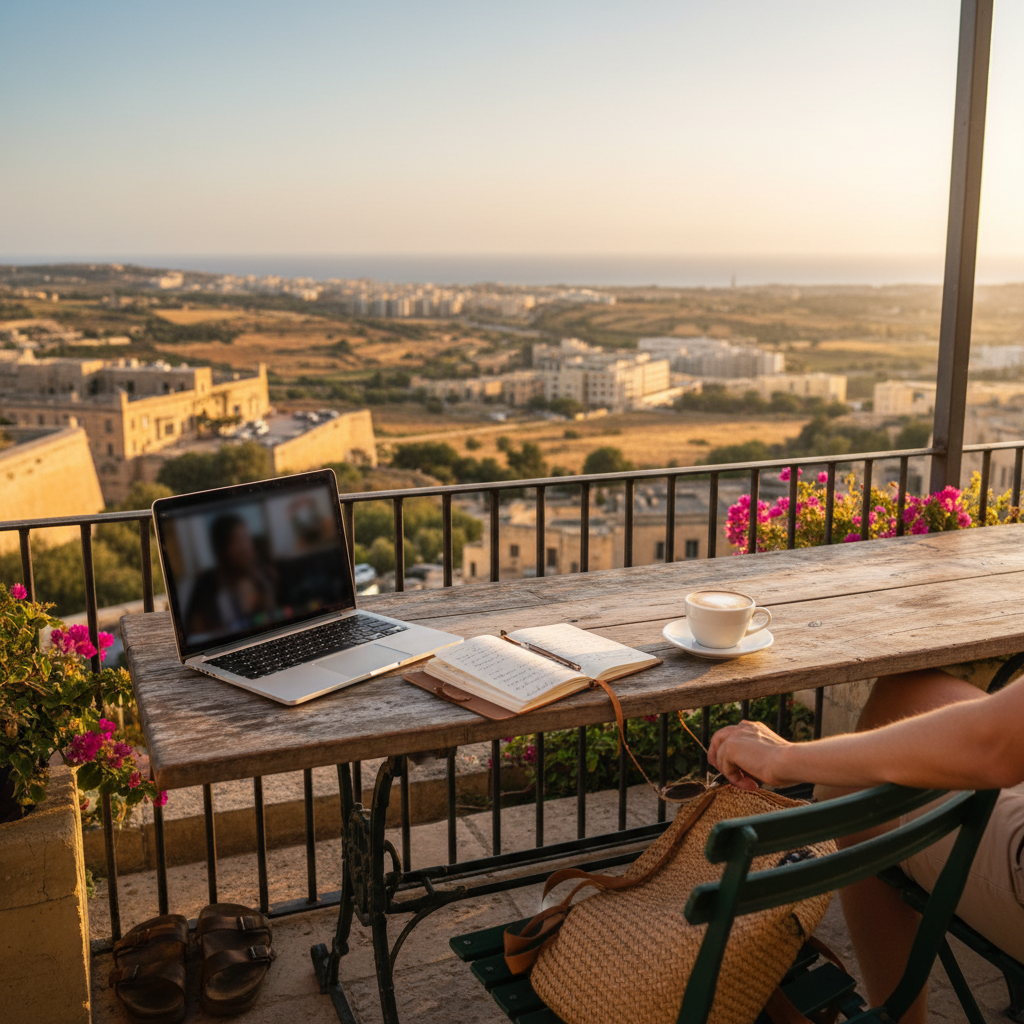
Malta Nomad Residence Permit: A Deep Dive into Tax & Residency for Digital Nomads in 2026
Imagine the golden hour casting long shadows over Valletta's honey-coloured bastions, the scent of the Mediterranean sea salt on the breeze, and the gentle hum of activity from a bustling café. You've just wrapped up your workday, a productive session fueled by reliable internet and a strong espresso, all while your business thrives thousands of miles away. This isn't a fantasy; it's the daily reality for a growing number of digital nomads choosing Malta as their remote work base. But beyond the picturesque scenes and strategic location, the decision to relocate to Malta on its digital nomad visa – officially known as the Nomad Residence Permit – hinges significantly on understanding its unique tax and residency implications. In 2026, Malta continues to position itself as a prime destination for the location independent lifestyle, but the fiscal fine print is where savvy digital entrepreneurs truly find their advantage.
Quick facts about the Malta Nomad Residence Permit (2026)
| Feature | Details |
|---|---|
| Income requirement | €2,700 net per month (or equivalent) |
| Visa duration | 1 year, renewable |
| Renewable | Yes, for up to 3 years total |
| Application fee | €300 per applicant |
| Processing time | 30 days (initial), up to 3 months (full approval) |
| Tax rate for holders | 0% on foreign-sourced income if non-domiciled and non-resident |
| Family members allowed | Yes, dependents and spouses |
| Path to residency | Not a direct path to permanent residency or citizenship |
What is the Malta digital nomad visa?
The Malta digital nomad visa, officially termed the Nomad Residence Permit (NRP), is a scheme designed to attract non-EU/EEA/Swiss nationals who can work remotely using telecommunications technology. Launched in 2021, it has quickly become a popular option for individuals seeking a Mediterranean base with excellent connectivity, a European time zone, and favourable tax treatment for foreign-sourced income. Managed by Residency Malta Agency, the NRP allows holders to legally reside in Malta for up to one year, with the possibility of renewal for up to three years total, without needing a traditional work permit from a Maltese employer. This permit is specifically for individuals engaged in remote work for a company registered outside Malta, running their own online business, or providing freelance services to clients primarily located outside Malta. It’s a direct response to the global rise of the digital nomad lifestyle and the increasing demand for flexible, international work arrangements.
Malta digital nomad visa requirements
To be eligible for the Malta Nomad Residence Permit in 2026, applicants must meet several key criteria. These requirements ensure that only genuine digital nomads with sufficient means to support themselves are granted the permit, preserving the integrity of the program and benefiting the local economy indirectly.
- Nationality: You must be a non-EU, non-EEA, and non-Swiss national.
- Remote Work Eligibility: You must fall into one of the following categories:
- Work for an employer registered in a foreign country and have a contract of employment.
- Conduct business activity for a company registered in a foreign country and be a partner or shareholder.
- Offer freelance or consulting services to clients whose permanent establishments are in a foreign country.
- Income Threshold: A crucial requirement is demonstrating a minimum gross monthly income of €2,700 (approximately $2,950 USD or £2,350 GBP as of early 2026, though exchange rates fluctuate). This must be proven through bank statements and employment contracts or service agreements. An additional 20% of the minimum income is required for a spouse (€540), and 10% for each dependent child (€270). So, for example, a couple would need €3,240 per month.
- Valid Travel Document: A passport valid for at least six months beyond your intended stay is required.
- Accommodation: Proof of stable accommodation in Malta (rental agreement or property purchase agreement).
- Health Insurance: Comprehensive health insurance covering all risks in Malta, with a minimum coverage of €30,000.
- Clean Criminal Record: A clean criminal record certificate from your country of origin and any country you have resided in for more than six months in the last 10 years.
- No Maltese Clients (Primary Source): While not explicitly prohibited, the spirit of the visa is for income to be generated from outside Malta. Having primary clients within Malta might lead to questions during the application process or regarding tax obligations.
How to apply for the Malta digital nomad visa
The application process for the Nomad Residence Permit is managed by Residency Malta Agency and is generally straightforward, though it requires meticulous attention to detail. Here’s a step-by-step guide:
- Initial Enquiry: Begin by contacting Residency Malta Agency via email (nomadresidence.mra@gov.mt) to express your interest. They will provide an application form and a detailed checklist of required documents.
- Gather Documents: Collect all necessary documents as per the checklist. This includes:
- Completed application form.
- Copy of passport (all pages).
- CV/Resume.
- Letter of intent explaining why you want to reside in Malta as a digital nomad.
- Proof of remote work eligibility (employment contract, company registration documents, client contracts).
- Proof of income (bank statements, payslips, invoices).
- Proof of accommodation in Malta (pre-booked for at least the initial period or a signed rental agreement).
- Comprehensive health insurance policy.
- Clean criminal record certificate(s).
- Marriage certificate (if applicable).
- Birth certificates for dependent children (if applicable).
- Submit Application: Submit the complete application package, along with the non-refundable application fee of €300 per applicant, to Residency Malta Agency. This can often be done electronically initially, with originals requested later.
- Initial Vetting: Residency Malta Agency will conduct an initial review of your documents. If all looks good, they will issue a Letter of Approval in Principle.
- Visa Application (if required): If you are from a country that requires a Schengen visa to enter Malta, you will then need to apply for a D-visa (long-stay national visa) based on the Approval in Principle letter. This step is processed by the Maltese embassy or consulate in your home country or country of residence.
- Travel to Malta: Once your D-visa is granted (or if you are visa-exempt for short stays), you can travel to Malta.
- Final Formalities: Upon arrival in Malta, you will need to attend an appointment with Residency Malta Agency to submit biometric data (fingerprints and photo) and finalise your residency application. This is also when you'll provide any original documents requested. You will then be issued your Nomad Residence Permit card.
Processing times can vary. The initial approval in principle typically takes around 30 days. The subsequent D-visa application (if needed) and final permit issuance can add another 1-2 months, making the total processing time up to 3 months from initial submission to receiving your physical card.
Cost breakdown
Understanding the financial commitments is essential for a smooth transition to the digital nomad lifestyle in Malta. Here’s a breakdown of the typical costs you can expect:
| Item | Cost (EUR) | Notes |
|---|---|---|
| Application Fee | €300 per applicant | Non-refundable, payable to Residency Malta Agency. |
| Health Insurance | €300 - €800 per year | Varies based on age, coverage level, and provider. |
| Criminal Record Check | €20 - €100 | Varies by country of origin, often includes apostille/legalisation. |
| Document Translations | €50 - €200 | If documents are not in English. |
| Accommodation (first month) | €800 - €1,500+ | Rent for a 1-bedroom apartment in a decent area. |
| Accommodation Deposit | €800 - €1,500+ | Typically one month's rent. |
| Flights | Varies | Depending on origin and time of travel. |
| Living Expenses (first month) | €500 - €800+ | Groceries, transport, utilities, dining out. |
| Estimated Initial Total | €2,800 - €5,200+ | This does not include flight costs. |
Remember, these are initial costs. Your ongoing monthly expenses will largely depend on your lifestyle, but Malta offers a generally affordable European standard of living compared to major Western European cities.
Taxes for digital nomads in Malta
This is where Malta truly shines for many digital nomads, offering a potentially significant advantage, especially concerning foreign-sourced income. However, it's crucial to understand the nuances of Malta's tax residency rules and its remittance basis of taxation.
Malta operates on a domicile and residence basis for income tax. For most digital nomads on the NRP, the goal is to be considered resident but not domiciled in Malta. Here's what that means:
- Residence: Generally, if you spend more than 183 days in Malta in a calendar year, you are considered tax resident for that year. As the Nomad Residence Permit is for a year or more, you will almost certainly become tax resident in Malta.
- Domicile: Domicile is a more complex concept, usually determined by your country of origin and your long-term intentions. For most digital nomads, your domicile of origin remains your home country, unless you take explicit steps to change it (which is rare for temporary residence permits). Therefore, you are likely to be non-domiciled in Malta.
The Remittance Basis of Taxation
For individuals who are resident but not domiciled in Malta, income tax is applied on:
- Malta-sourced income: Any income generated from activities carried out or services rendered within Malta is taxable in Malta at progressive rates (up to 35%).
- Foreign-sourced income remitted to Malta: This is the key. Foreign income (e.g., your remote work salary, freelance earnings from overseas clients) is only taxable in Malta if it is remitted (brought into) Malta. This means if you earn €5,000 from your foreign employer and only transfer €2,000 to your Maltese bank account to cover living expenses, only that €2,000 becomes potentially taxable in Malta. The remaining €3,000, if held in an overseas bank account, is generally not taxed in Malta.
Crucially, foreign-sourced capital gains are generally not taxable in Malta, even if remitted. This can be particularly beneficial for those with investment portfolios or crypto assets held outside Malta.
Practical Implications for Digital Nomads
- Strategic Banking: Many digital nomads choose to keep a significant portion of their earnings in an offshore or home-country bank account and only remit funds to Malta as needed for living expenses. This is a common strategy to legally minimise your Maltese tax liability on foreign income.
- Double Taxation Treaties: Malta has an extensive network of double taxation treaties with numerous countries. These treaties aim to prevent you from being taxed twice on the same income (once in your home country and once in Malta). However, if you are not taxed in Malta due to the remittance basis, the treaty provisions might not fully apply in the way you expect, as there is no
Interested in applying for the Malta visa?
Tell us a bit about yourself and we'll send tailored guidance on eligibility, paperwork, and next steps.