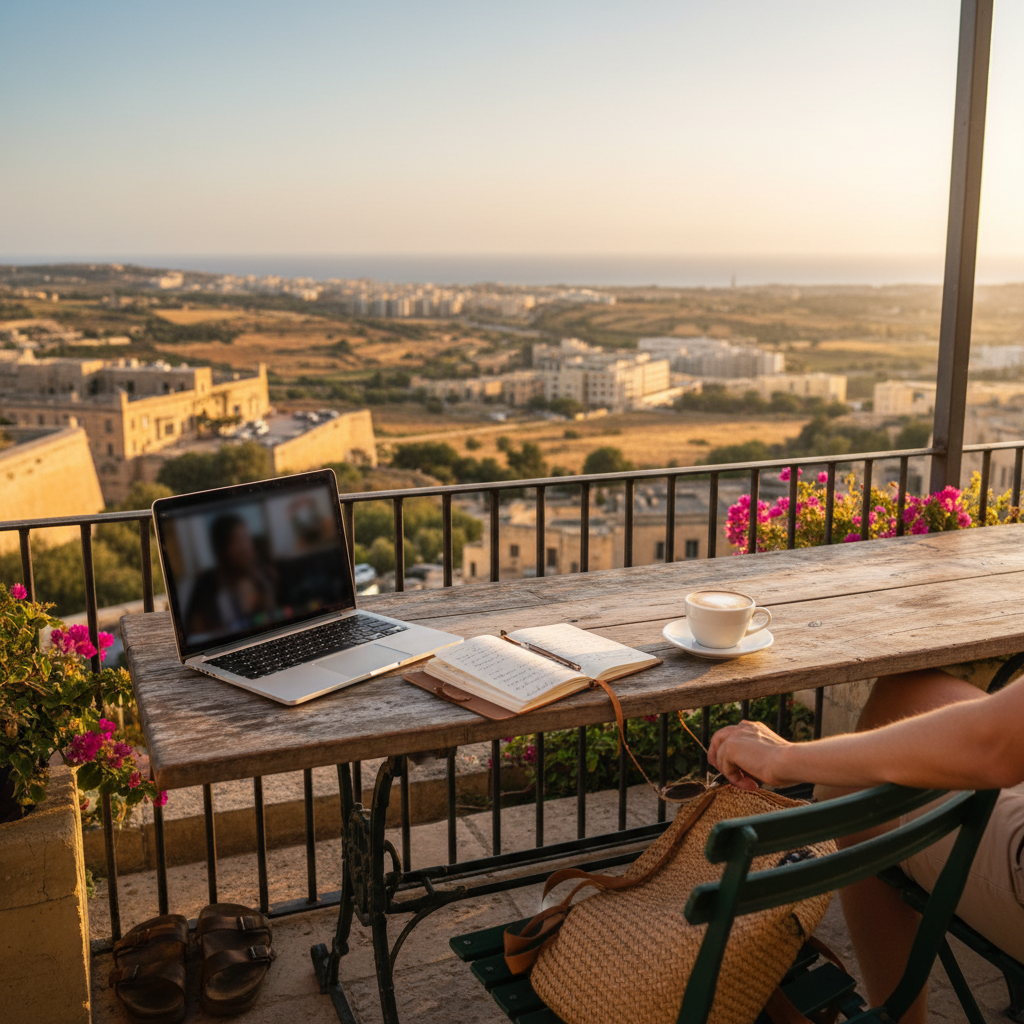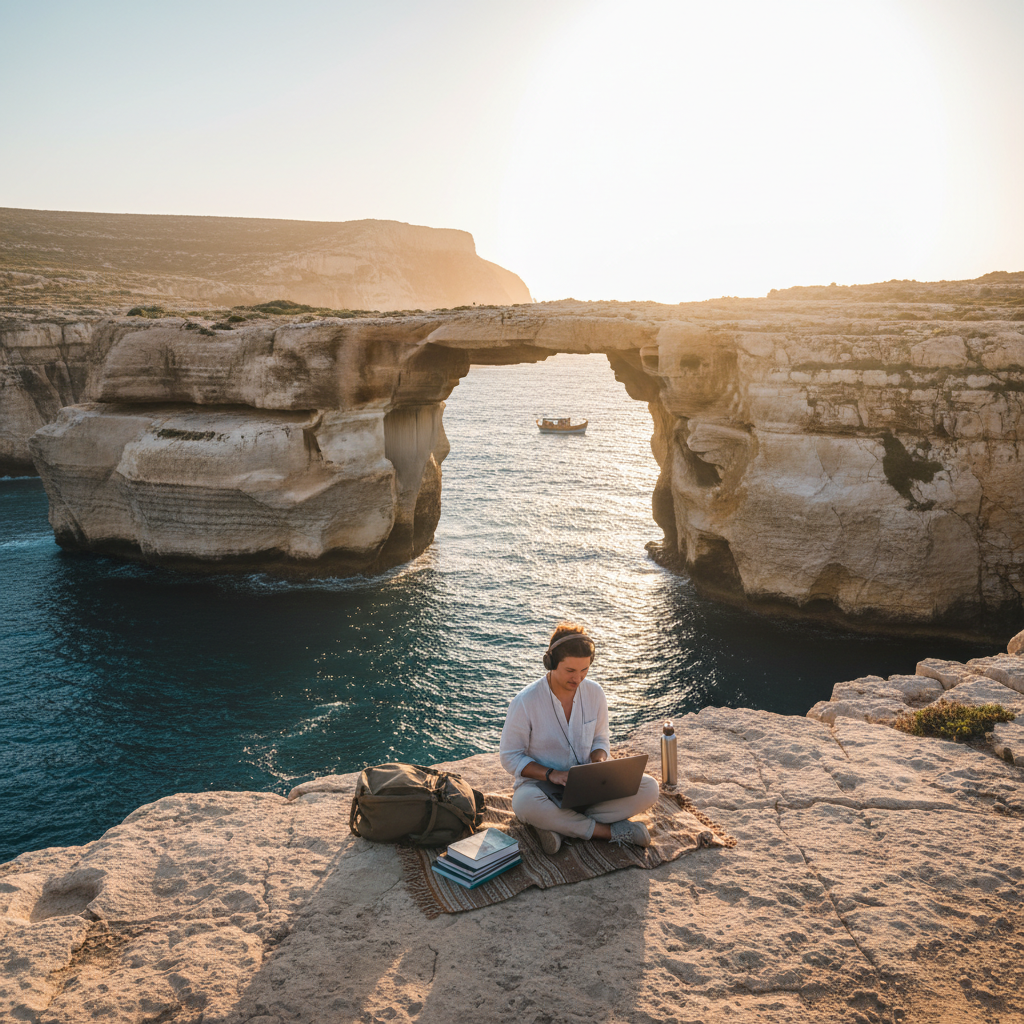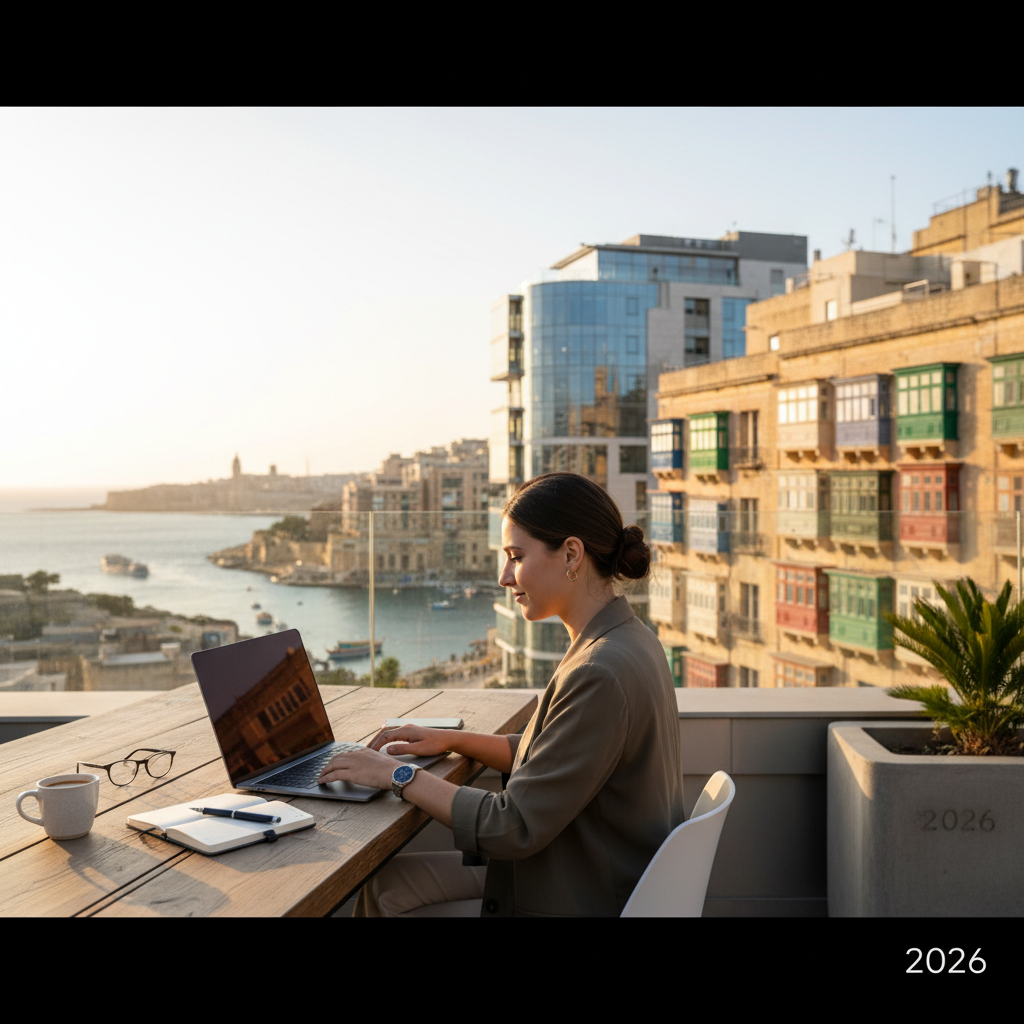
The Ultimate 2026 Digital Nomad Guide to Malta
Malta, a small archipelago in the heart of the Mediterranean, has rapidly become a beacon for digital nomads seeking a unique blend of history, sun, and a thriving remote work ecosystem. With its dedicated Nomad Residence Permit, English as an official language, and a strategic location, it offers a compelling package for those looking to explore a world beyond the traditional office.
Why Malta for Digital Nomads
Malta's appeal for digital nomads is multifaceted. First and foremost, its Nomad Residence Permit (NRP) makes the dream of living and working from this island nation a tangible reality for non-EU/EEA citizens. This forward-thinking visa recognizes the evolving landscape of work and actively courts remote professionals. The benefits extend beyond immigration: Malta boasts over 300 days of sunshine annually, a rich history spanning millennia, and a vibrant cultural scene influenced by various civilizations.
The English-speaking environment is a massive draw. As a former British colony, English is an official language, making daily life, bureaucratic processes, and social interactions incredibly smooth for most international nomads. This contrasts sharply with many other European countries where language barriers can be a significant hurdle.
Malta’s strategic location is another plus. Situated almost equidistant between Europe and North Africa, it offers easy access to a multitude of travel destinations. Low-cost airlines operate numerous routes, making weekend getaways or longer European adventures highly accessible. The island itself is compact, meaning you're never far from a historical site, a stunning beach, or a buzzing town.
The quality of life is generally high. Healthcare facilities are modern, safety is paramount (Malta consistently ranks among the safest countries in Europe), and the local cuisine is a delicious fusion of Mediterranean and North African flavours. There’s a burgeoning expat and digital nomad community, facilitating networking and social integration. The warm climate allows for outdoor activities year-round, from swimming and diving to hiking and exploring ancient ruins.
Finally, Malta's government has been actively investing in its digital infrastructure and promoting itself as a tech and innovation hub. This commitment translates into reliable internet connectivity and a growing number of coworking spaces, catering specifically to the needs of remote workers. The overall business-friendly environment further solidifies Malta's position as a top choice for digital nomads in 2026.
Visa Options & Eligibility
For non-EU/EEA nationals, the Malta Nomad Residence Permit (NRP) is the primary pathway. Launched in 2021 by Residency Malta Agency, it's specifically designed for individuals who can perform their work remotely, independent of location.
Eligibility Criteria for the Nomad Residence Permit (2026):
- Nationality: You must be a non-EU/EEA/Swiss national.
- Employment: You must prove you can work remotely using telecommunications technology.
- Option 1: Be employed by a company registered outside Malta, or
- Option 2: Conduct business activities for a company registered outside Malta, and be a partner or shareholder, or
- Option 3: Offer freelance or consulting services to clients whose permanent establishments are outside Malta.
- Minimum Income: You must demonstrate a gross monthly income of at least €2,700 (approximately $3,000 USD as of early 2026). For dependents, additional income requirements apply, typically €300 per additional adult and €150 per child.
- Health Insurance: You must hold a valid travel and health insurance policy covering risks in Malta.
- Accommodation: You must secure accommodation in Malta shortly after arrival (proof usually needed post-approval).
- Clean Record: You must have a clean criminal record.
- Travel Documents: Hold a valid passport.
Dependents: Spouses/partners and minor children can be included in the application, subject to additional income and documentation requirements.
Duration & Renewal: The initial permit is typically granted for one year, renewable for up to three years, provided you continue to meet the eligibility criteria.
Application Process: The application is submitted online to Residency Malta Agency. The process involves submitting an application form, passport copies, proof of employment/income, health insurance, and paying the fee. Interviews may be conducted remotely.
Cost of Living Breakdown
While Malta might not be as cheap as some Southeast Asian destinations, it offers a good quality of life at a reasonable cost compared to major Western European cities. Here's an estimated monthly breakdown for a single digital nomad in 2026:
| Category | Estimated Monthly Cost (USD) | Notes |
|---|---|---|
| Accommodation | ||
| 1-bedroom apartment | $800 - $1,500 | Sliema/St. Julian's on the higher end, Gozo/south less. Depends on size, amenities, and location. |
| Utilities | $100 - $180 | Electricity, water, gas, internet. Can vary significantly with AC use. |
| Internet | $35 - $60 | High-speed fiber optic packages. |
| Mobile Phone | $20 - $40 | Prepaid or contract, including data. |
| Groceries | $250 - $400 | Cooking at home save significantly. Local markets cheaper than supermarkets. |
| Eating Out | $150 - $350 | Budget for some restaurant meals, coffee, and drinks. A meal can be $15-25; local pastizzi are cheap. |
| Transportation | $30 - $60 | Public transport (Tallinja card) is affordable. Ride-sharing is available but adds up. |
| Health Insurance | $50 - $100 | Mandatory. Cost varies based on coverage and provider. |
| Leisure/Activities | $100 - $250 | Gym membership, cinema, excursions, social events. |
| Miscellaneous | $100 - $200 | Personal care, shopping, unexpected expenses. |
| Total Estimated | $1,745 - $3,040 USD | Average for a comfortable, mid-range lifestyle: ~$2,000 - $2,500 USD |
Note: These figures are estimates for 2026. Prices can fluctuate based on inflation, demand, and personal spending habits. Budgeting closer to $2,500-3,000 will provide more flexibility and comfort, especially in popular areas like Sliema or St. Julian's.
Best Cities & Neighborhoods
Malta, though small, offers diverse living environments. Your ideal spot will depend on your priorities:
- Sliema & St. Julian's: These twin towns are the vibrant heart of expat life and entertainment. They boast abundant shops, restaurants, bars, and cafes. You'll find most coworking spaces here, along with excellent public transport links to Valletta. Accommodation can be pricier, but the convenience and social scene are unmatched.
- Valletta: The historic capital is a UNESCO World Heritage site, a fortified city with stunning architecture, charming narrow streets, and exquisite dining. Living within the city walls offers a unique, historical ambiance, though apartments can be smaller and traditional. It’s quieter in the evenings, but culturally rich.
- Gzira & Msida: Located between Sliema and Valletta, these areas offer slightly more affordable accommodation while still being well-connected and close to amenities. Popular with students and younger professionals.
- Mellieħa: Located in the north, Mellieħa is ideal for those seeking a quieter, family-friendly environment with access to some of Malta's best sandy beaches (like Golden Bay and Mellieħa Bay). It's more suburban and less bustling than the central areas but offers beautiful natural scenery.
- Gozo: Malta's sister island is a tranquil escape for those who prefer a slower pace of life. It’s greener, more rural, and generally more affordable. Perfect for nature lovers, hikers, and anyone seeking profound peace. Connectivity to the main island is via a 25-minute ferry ride, so it requires commitment if you need to be in Malta frequently. Victoria (Rabat) is the capital and largest town on Gozo.
Internet, Coworking & Remote-Work Infrastructure
Malta is well-equipped for remote work, boasting robust internet infrastructure, a growing number of coworking spaces, and a generally tech-savvy environment.
Internet Connectivity: Fixed broadband speeds are excellent, with an average of 180 Mbps download as of late 2025/early 2026. Fiber optic connections are widely available, especially in urban areas, ensuring reliable and fast internet crucial for video calls, large file transfers, and streaming. Major providers include GO and Melita, offering various packages tailored to different needs.
Mobile Connectivity: 4G LTE is prevalent across the islands, with 5G rollout gaining momentum, especially in central areas. Mobile data plans are affordable and provide good coverage, making it easy to stay connected wherever you are.
Coworking Spaces: The coworking scene is thriving, particularly in Sliema and St. Julian's. These spaces offer modern facilities, high-speed internet, meeting rooms, and networking opportunities. Popular options include:
- The Hub Workspace (Sliema/San Gwann): A well-established space with a strong community feel.
- SOHO Offices (Various locations including St. Julian's, Ta' Xbiex, Central): Offering flexible desks, private offices, and state-of-the-art amenities.
- QuickLets & Zanzi Homes Business Center (Sliema): More geared towards real estate, but offers flexible workspaces.
- Other smaller, independent spaces are emerging as demand grows.
Many cafes also offer free Wi-Fi, providing alternative spots for a change of scenery, though reliability might vary.
Overall Remote Work Environment: Malta's small size means everything is accessible. There's a decent ecosystem for entrepreneurs and freelancers, with various networking events and communities. The prevalence of English simplifies professional communication and integration into the local business landscape.
Taxes & Legal Considerations
Navigating taxes is crucial for any digital nomad. For holders of the Malta Nomad Residence Permit, the situation is generally favorable:
Tax Residency: Holders of the Nomad Residence Permit are generally considered non-resident for tax purposes in Malta, provided their permanent home is not in Malta and they do not intend to reside there permanently. As such, they are typically taxed only on income derived from economic activities carried out in Malta or remitted to Malta. Income earned from remote work for foreign clients/employers, where the work is performed from Malta but the source of income is clearly outside Malta, is generally not subject to Maltese income tax, as long as it's not remitted to Malta.
Important Distinction: It's vital not to confuse the immigration status (residency for visa purposes) with tax residency. While you physically reside in Malta, your tax residency status depends on specific rules (e.g., source of income, intent, number of days present). Always seek professional advice from a Maltese tax consultant to confirm your specific tax obligations. This area can be complex and depends heavily on individual circumstances and the interpretation of double taxation agreements (DTAs).
Double Taxation Agreements: Malta has an extensive network of double taxation treaties with over 70 countries. These agreements aim to prevent individuals from being taxed twice on the same income, either in Malta or in their home country. Understanding the relevant DTA can be critical for avoiding tax complications.
Social Security Contributions: As a non-EU/EEA national working remotely for a foreign employer, you generally won't be required to contribute to Malta's social security system, provided you continue contributing in your home country (if applicable) or another jurisdiction. However, this also means you won't be entitled to Maltese social benefits (e.g., state pension, unemployment benefits).
Legal Compliance: Beyond taxes, digital nomads must ensure they comply with local laws and regulations, including tenancy agreements, data protection (GDPR, which Malta adheres to), and any specific permits required for certain business activities if they were to engage with local clients (though the NRP is explicitly for foreign-sourced income).
Lifestyle, Culture & Community
Malta offers a unique and engaging lifestyle for digital nomads, blending Mediterranean charm with a contemporary, expat-friendly vibe. The culture is a fascinating tapestry woven from Phoenician, Roman, Arab, Norman, French, and British influences, most visibly in its architecture, language (Maltese is a Semitic language with strong Romance influences), and cuisine.
Culture & Cuisine: Expect a relaxed pace of life, often described as 'Mediterranean time.' Catholicism is deeply ingrained, reflected in numerous village festas (feasts) with fireworks and processions throughout the summer. Maltese food is hearty and delicious, featuring fresh seafood, rabbit stew (fenkata), pastizzi (flaky pastry filled with ricotta or peas), and ftira (local bread). Dining out, particularly in Valletta and St. Julian's, offers everything from traditional Maltese fare to international fine dining.
Social Life & Community: The digital nomad and expat community in Malta is substantial and growing. Facebook groups, Meetup events, and coworking spaces are excellent avenues for connecting with like-minded individuals. There are regular social gatherings, workshops, and outdoor activities organized within these communities. English being widely spoken greatly facilitates social integration.
Activities & Recreation: The island's small size means adventure is always close by. You can spend weekends exploring ancient temples (such as Ġgantija and Hagar Qim), discovering hidden coves for swimming and snorkeling (Blue Lagoon, St. Peter's Pool), or hiking rugged coastal paths. Diving is also popular due to clear waters and numerous wreck sites. Evening entertainment ranges from jazz clubs and live music venues to bustling bars and nightclubs in Paceville (St. Julian's).
Healthcare: Malta has a good public healthcare system, largely free at the point of use for residents. However, as a digital nomad on the NRP, you're required to have private comprehensive health insurance. There are numerous private clinics and hospitals that offer high standards of care, usually with English-speaking staff.
How to Apply: Step-by-Step
Applying for the Malta Nomad Residence Permit requires careful preparation. Here’s a general step-by-step guide for 2026:
- Check Eligibility: Reconfirm you meet all the criteria, especially the minimum income requirement (€2,700 gross monthly).
- Gather Documents: Prepare all necessary paperwork. This typically includes:
- Application forms (NPP Form, Key Employee Application Form if applicable).
- Passport copy (valid for at least three months beyond your intended stay).
- Curriculum Vitae (CV).
- Letter of intent outlining why you want to live in Malta as a digital nomad.
- Proof of remote work (employment contract, client contracts, company registration documents).
- Proof of income (bank statements, payslips, tax returns for the last 3-6 months).
- Comprehensive health insurance covering Malta for at least one year.
- Clean criminal record certificate from your country of origin and any country you've resided in for over six months in the past year.
- Accommodation proof (e.g., initial Airbnb booking or letter from a landlord, though this is often secondary to initial approval).
- Passport-style photographs.
- Submit Online Application to Residency Malta Agency: The application is typically submitted via email with scanned copies of all documents. The application fee is €300 (approx. $325 USD).
- Await Initial Assessment: Residency Malta will review your application. This processing time can range from 30 to 60 days. They may request additional information or an online interview.
- Receive Letter of Approval in Principle: If successful, you'll receive conditional approval. This letter allows you to travel to Malta (if you require a visa to enter Schengen area, you'll use this letter to apply for a D-visa).
- Travel to Malta & Finalize Documents: Upon arrival in Malta, you'll typically have a period (e.g., 30 days) to finalize your permit. This usually involves:
- Providing original documents for verification.
- Undergoing biometric data collection (fingerprints, photograph).
- Submitting proof of settled accommodation (rental contract for a minimum of 6 months).
- Paying any outstanding fees.
- Receive Nomad Residence Card: Once all steps are completed, your residence card will be issued, allowing you to reside and work remotely in Malta.
Note: The official website of Residency Malta Agency is the most reliable source for up-to-date information and forms. Do not rely on third-party sites for legal processes..
Common Pitfalls
While Malta is an appealing destination, digital nomads should be aware of a few potential challenges:
- Bureaucracy: While English is widely spoken, Maltese bureaucracy can still be slow and sometimes require patience. Be prepared for potential delays in government services, especially when dealing with initial applications or renewals.
- Housing Availability & Cost: In popular areas like Sliema and St. Julian's, finding affordable, good-quality housing can be competitive, especially during peak season. Rental prices have been steadily increasing. Starting your housing search well in advance, even before full approval, is advisable.
- Transportation (Public vs. Private): While public transport (buses) covers most of the island, it can be slow and sometimes unreliable, especially in the summer months or outside major routes. Renting a car can be a good option for exploring, but parking can be challenging in urban centers. Driving is on the left.
- Summer Heat & Crowds: Summers in Malta (July-August) are intensely hot and humid, with temperatures often exceeding 35°C (95°F). This is also peak tourist season, leading to crowded beaches and popular sites. Some find this period overwhelming.