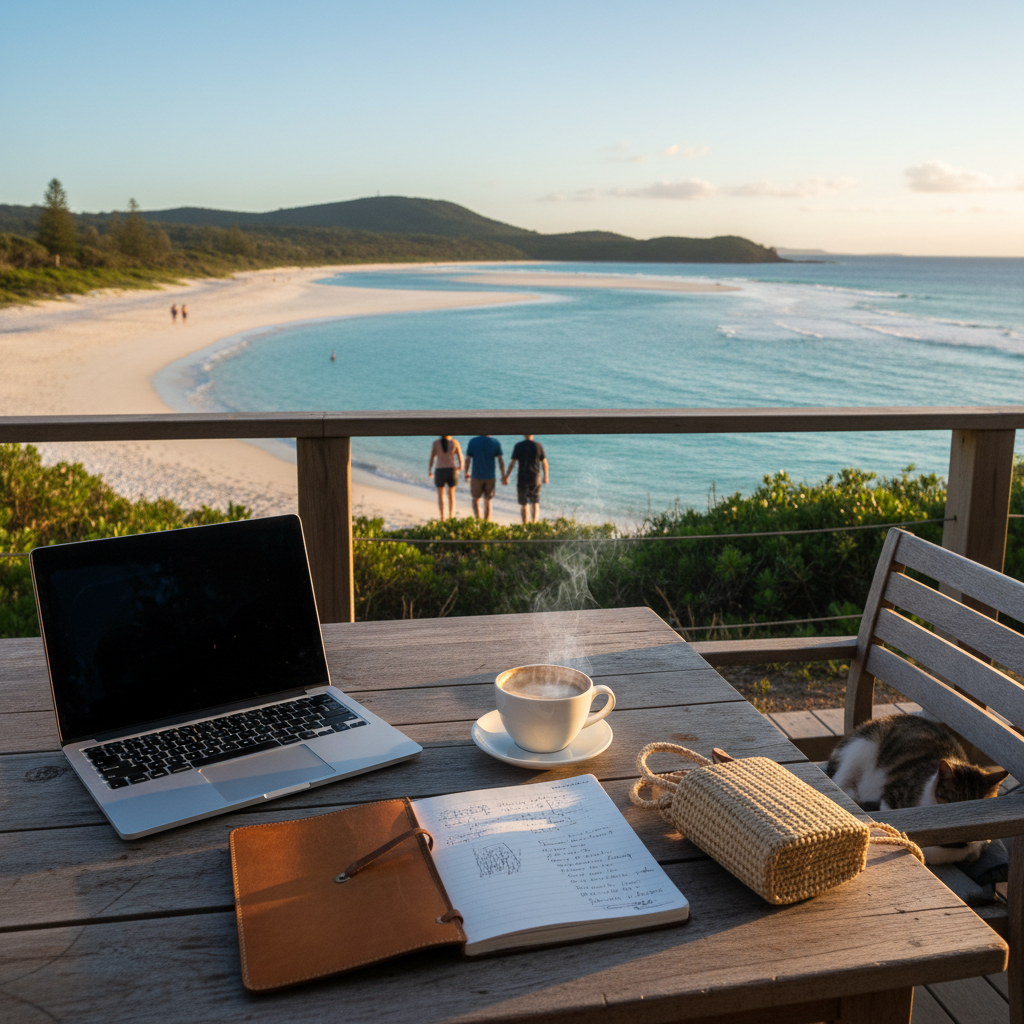
Italy Digital Nomad Visa 2026: A Deep Dive into Tax & Residency for Remote Workers
Navigating Italy's digital nomad visa requires a keen understanding of its tax and residency implications. This 2026 guide breaks down income thresholds, application processes, and crucial tax treaties to optimize your remote work in Italy.
August 22, 2026

Italy's digital nomad visa presents a compelling option for those seeking a blend of rich culture, exquisite cuisine, and a thriving digital nomad lifestyle. However, its true value lies not just in the experience but in understanding its intricate tax and residency framework. My verdict? This visa offers an unparalleled opportunity for remote professionals, provided you meticulously plan your tax strategy to leverage available benefits and avoid double taxation.
Navigating the bureaucratic nuances of Italian immigration and taxation can be daunting, but with the right information, it becomes a strategic advantage for your remote work journey. This comprehensive guide, updated for 2026, will dissect every facet of the Italy digital nomad visa, with a particular emphasis on tax and residency implications, enabling you to make informed decisions for your location independent lifestyle.
Quick facts
| Feature | Detail |
|---|---|
| Income requirement | €28,000 gross annual (approx. $30,000 USD, updated for 2026) |
| Visa duration | 1 year |
| Renewable | Yes, for up to 5 years total, then potential long-term residency |
| Application fee | €116 (consular fee) + €16 stamp duty + additional permit fees |
| Processing time | 15-60 days (Varies by consulate and individual case) |
| Tax rate for holders | Progressive income tax (IRPEF), potential 7% flat tax for new residents |
| Family members allowed | Yes, dependent spouse, minor children |
| Path to residency | Yes, after 5 years of legal residency, can apply for long-term EU residency |
What is the Italy digital nomad visa?
The Italy digital nomad visa, officially known as the "Visa for Self-Employed Workers – Digital Nomads or Remote Workers" (Visto per lavoro autonomo – Nomadi Digitali o Lavoratori da Remoto), was formally introduced with legislative decree 17 March 2023, n. 30 and fully activated by mid-2024. This visa is specifically designed for non-EU/EEA citizens who can perform their professional activities remotely, using technological tools, for a company or client located outside of Italy. It acknowledges the growing global trend of work from anywhere and aims to attract skilled professionals to contribute to the Italian economy and society.
Unlike previous Italian visa categories that often required intricate business plans or specific investment, the digital nomad visa streamlines the process for individuals whose income is primarily generated from outside Italy. Its primary objective is to regulate the presence of remote workers, ensuring they contribute to the local economy through consumption and, crucially, taxes, while benefiting from Italy's infrastructure and cultural richness. The visa allows individuals to legally reside and work in Italy for up to one year, with provisions for renewal, making it a viable option for long-term stays.
Italy digital nomad visa requirements
To successfully apply for the Italy digital nomad visa, applicants must meet a comprehensive set of criteria that demonstrate both their financial stability and their remote work capabilities. These requirements are consistently applied across all Italian consulates and are crucial for eligibility.
- Nationality: Must be a non-EU/EEA citizen. Citizens of EU/EEA countries do not require this visa as they have freedom of movement.
- Remote Work: Applicants must be engaged in remote work for an employer or clients based outside of Italy. This can include being an employee, freelancer, or independent contractor. Crucially, the work cannot be for an Italian entity or client, as this would fall under different work visa categories.
- Income Threshold: A minimum gross annual income of €28,000 (approximately $30,000 USD as of 2026, though currency exchange rates fluctuate) is required. This threshold is set to ensure financial self-sufficiency and the ability to support oneself without relying on Italian public funds. Evidence such as bank statements, contracts, invoices, and tax returns for the past year will be required.
- Health Insurance: Comprehensive health insurance coverage for the entire duration of stay in Italy is mandatory. This insurance must cover all medical expenses, including emergency treatment, hospitalization, and repatriation, with a minimum coverage of €30,000.
- Accommodation: Proof of suitable accommodation in Italy for the initial period of stay (e.g., rental agreement, hotel booking for at least 30 days, or a declaration of hospitality from a resident) is necessary.
- Clean Criminal Record: Applicants must provide a clear criminal record certificate from their home country and any other country where they have resided for more than 12 months in the past five years. This certificate must be apostilled or legalized and translated into Italian.
- Professional Qualifications: While not explicitly stated for all remote roles, evidence of professional skills, experience, or relevant qualifications that support your claimed remote profession may be requested. This could include a CV, diplomas, or professional certifications.
- Employer/Client Relationship: Proof of a stable and verifiable relationship with an employer or clients located outside Italy. This includes employment contracts, service agreements, letters of intent, or a portfolio of work for freelancers and digital entrepreneurship.
How to apply for the Italy digital nomad visa
The application process for the Italy digital nomad visa involves several steps, starting from your home country and concluding upon your arrival in Italy. Diligence and attention to detail are key to a smooth application.
- Gather Documentation: Collect all required documents as listed above. Ensure all foreign documents are translated into Italian by a certified translator and, if necessary, apostilled or legalized.
- Submit Visa Application at Consulate: Apply for the D-type (long-stay) visa for digital nomads at the Italian Embassy or Consulate in your country of residence. You will typically need to book an appointment well in advance. During this appointment, you will submit your documents, attend an interview, and pay the visa application fee.
- Required documents often include (but are not limited to):
- Valid passport (valid for at least three months beyond your intended stay)
- Completed visa application form
- Two passport-sized photographs
- Proof of income (€28,000+ gross annual)
- Comprehensive health insurance
- Proof of accommodation in Italy
- Criminal record certificate(s)
- Employment contract or client agreements
- CV/Professional profile
- Letter of intent explaining your purpose of stay and digital nomad lifestyle plans.
- Required documents often include (but are not limited to):
- Visa Approval and Entry into Italy: If approved, the consulate will affix the D-type visa to your passport. You must enter Italy within the validity period of the visa.
- Apply for a 'Permesso di Soggiorno' (Permit to Stay): Crucially, within 8 working days of your arrival in Italy, you must apply for your Permesso di Soggiorno (Permit to Stay) at a local post office (Sportello Amico). You will fill out an application kit and pay an additional fee. Following this, you will be given an appointment at the Questura (Police Headquarters) for fingerprinting and to submit any remaining documents.
- Registration at the Comune: After receiving your Permesso di Soggiorno, you should register your residency (iscrizione anagrafica) at the Comune (municipal office) of your chosen Italian city. This step is vital for various administrative procedures, including accessing public services and establishing tax residency.
Cost breakdown
The financial commitment for securing the Italy digital nomad visa goes beyond the application fee. It's essential to budget for all associated costs, both pre-arrival and post-arrival. All figures are current for 2026 and subject to minor adjustments.
| Item | Estimated Cost (EUR) | Estimated Cost (USD/GBP, approx.) | Notes |
|---|---|---|---|
| Visa Application Fee (Consular) | €116 | $125 / £105 | Paid at the Italian Consulate |
| Marca da Bollo (Stamp Duty) | €16 | $17 / £15 | For Permesso di Soggiorno application |
| Permesso di Soggiorno Fee | €40 - €50 | $43 - $54 / £36 - £45 | Varies by duration of permit (1 year) |
| Postal Kit Fee | €30.46 | $33 / £27 | For submitting Permesso di Soggiorno application |
| Certified Translations & Apostille/Legalization | €100 - €500 | $108 - $540 / £90 - £450 | Depends on number and length of documents |
| Comprehensive Health Insurance | €400 - €1,000+ | $430 - $1,080+ / £360 - £900+ | Annual premium, varies by provider and coverage |
| Flight to Italy | €150 - €800+ | $160 - $860+ / £135 - £720+ | Varies by origin, season, booking time |
| Initial Accommodation | €500 - €2,000+ | $540 - $2,160+ / £450 - £1,800+ | First month's rent or initial hotel stay |
| Total Estimated Initial Costs | €1,352 - €4,682+ | $1,456 - $5,050+ / £1,218 - £4,217+ | Does not include general living expenses, security deposit, etc. |
These costs are initial outlays. Beyond these, you will need to factor in your monthly living expenses, which can vary significantly depending on your chosen city, lifestyle, and consumption habits. Cities like Milan or Rome will naturally have higher costs of living compared to smaller towns in Sicily or Puglia. For effective digital entrepreneurship budgeting, consider these figures a baseline.
Taxes for digital nomads in Italy
The tax implications are arguably the most complex and critical aspect of the Italy digital nomad visa. Italy has a progressive income tax system (IRPEF – Imposta sul Reddito delle Persone Fisiche), but also offers specific beneficial regimes for new residents that can drastically reduce your tax burden.
Determining Tax Residency
Under Italian law, you become a tax resident if you meet any of the following conditions for more than 183 days (or 184 days in a leap year) in a calendar year:
- You are registered in the Italian population register (Anagrafe).
- You have your habitual abode or primary residence in Italy.
- You have your domicilio (center of vital interests, economic and personal) in Italy.
Since obtaining a Permesso di Soggiorno and registering with the Comune are mandatory steps for the digital nomad visa, you will almost certainly become an Italian tax resident from the date of your registration, or if you spend more than 183 days in the country.
Taxation Regimes for Digital Nomads
Upon becoming an Italian tax resident, your worldwide income becomes subject to Italian taxation, unless a double taxation treaty with your home country states otherwise. However, Italy offers attractive tax incentives for new residents, primarily the "Regime for New Residents" (Regime Impatriati) and the "Flat Tax Regime for Freelancers" (Regime Forfettario).
1. Regime Impatriati (New Residents Regime)
This regime is designed to attract highly qualified individuals to Italy. If you qualify, 70% of your employment/self-employment income generated in Italy is tax-exempt for five years. In certain southern regions (Abruzzo, Molise, Campania, Puglia, Basilicata, Calabria, Sicily, Sardinia), this exemption increases to 90%.
To qualify for the Impatriati regime, you must:
- Have not been an Italian tax resident for the two previous tax periods before transferring your residency to Italy.
- Commit to remaining an Italian tax resident for at least two years.
- Perform your work primarily in Italy.
- Hold high qualifications (e.g., a university degree or specialized professional experience).
For digital nomads, especially those classified as self-employed, this means a significant portion of your income, though earned from abroad, can be considered as 'generated in Italy' if you are physically working from Italy. This reduces your taxable base substantially.
2. Regime Forfettario (Flat Tax Regime for Freelancers)
This regime is suitable for self-employed individuals (freelancers, independent contractors) whose annual revenue does not exceed €85,000 (as of 2026). It offers a simplified tax scheme:
- 5% flat tax for the first five years for new businesses/professionals.
- 15% flat tax thereafter.
Under this regime, your taxable income is calculated as a fixed percentage of your gross revenue, based on your ATECO code (classification of economic activity), typically 78% for professional activities. For example, if your revenue is €40,000 and the coefficient is 78%, your taxable income is €31,200. With a 5% flat tax, your tax would be €1,560.
Key considerations for Regime Forfettario:
- You cannot deduct business expenses (as they are already factored into the fixed percentage).
- You cannot have other employment income (unless it's below €30,000 and not with a former employer).
- You cannot be a partner in certain types of companies.
Comparing Tax Regimes and Double Taxation Treaties
Choosing between the progressive IRPEF with Impatriati benefits and the Forfettario regime depends heavily on your income level, professional classification, and eligibility. Below is a simplified comparison:
| Feature | Standard IRPEF (no regime) | Impatriati Regime (70% exemption) | Forfettario Regime (5%/15% flat tax) |
|---|---|---|---|
| Taxable Base | 100% of worldwide income | 30% of eligible income | Fixed % of gross revenue (e.g., 78%) |
| Tax Rate | Progressive (23-43%+) + regional/municipal | Progressive on 30% of income | 5% (first 5 years) / 15% thereafter |
| Income Limit | None | None (but higher income benefits more) | €85,000 annual revenue limit |
| Professional Type | Employee/Self-Employed | Employee/Self-Employed | Self-Employed/Freelancer only |
| Duration | Ongoing | 5 years (extendable to 10 in some cases) | Ongoing, revenue limited |
| Deductibility | Yes (e.g., health expenses, pension) | Yes (on the 30% taxable base) | No (expenses baked into coefficient) |
Double Taxation Treaties: Italy has extensive double taxation treaties with many countries, including the USA, UK, Canada, Australia, and most EU nations. These treaties aim to prevent you from paying tax on the same income in two countries. Generally, if you become an Italian tax resident, Italy will have primary taxing rights over your worldwide income. However, the treaty will outline how income is treated, for example, by providing tax credits in one country for taxes paid in the other or by exempting certain income types. It is crucial to consult a tax advisor specializing in international taxation and Italian law to understand how these treaties apply to your specific situation and to ensure compliance in both Italy and your home country. For US citizens, FBAR and FATCA reporting obligations will still apply regardless of Italian tax residency.
Family members allowed & Path to Residency
The Italy digital nomad visa is inclusive for families. Digital nomads can bring their dependent family members, which typically includes a spouse or civil partner, and minor children (under 18 years old). Adult dependent children may also be considered if they are studying or have a proven disability.
- Application Process for Family: Family members usually apply for an accompanying family visa (Visto per ricongiungimento familiare) alongside or shortly after the primary applicant. They will also need to meet requirements such as comprehensive health insurance and sufficient financial means to support the family without recourse to public funds. The minimum income requirement for the primary applicant is increased if bringing family members (e.g., 1.5 times the minimum for a spouse, increasing with each child).
- Permit to Stay for Family: Upon arrival, family members will also need to apply for their own Permesso di Soggiorno per motivi familiari within 8 working days.
Path to Long-Term Residency
One of the significant advantages of the Italy digital nomad visa is its potential pathway to long-term residency. After residing legally in Italy for five consecutive years with valid permits (including renewals of your digital nomad permit), you can apply for an EU long-term residency permit (Permesso di Soggiorno UE per Soggiornanti di lungo periodo). This permit grants you indefinite residency in Italy and allows for greater mobility within the Schengen Area. After 10 years of legal residency, you may even be eligible to apply for Italian citizenship, provided you meet other requirements such as Italian language proficiency and integration into society.
For Bangladeshi passport holders
For citizens holding a Bangladeshi passport, the process for the Italy digital nomad visa follows the general guidelines but with specific considerations. Bangladeshi citizens will apply at the Italian Embassy in Dhaka, or the consulate responsible for their current country of residence if they are residing abroad. Due to specific geopolitical factors and existing immigration relationships, processing times might be on the longer side, and scrutiny of documents can be particularly stringent. It is essential to ensure all documents, especially financial proofs and criminal record certificates, are impeccably prepared, legalized by the Ministry of Foreign Affairs in Bangladesh, and translated into Italian by accredited translators.
- Income Verification: Proving the €28,000 gross annual income might require more comprehensive documentation, including detailed bank statements, verified contracts, and tax filings that clearly demonstrate the origin and consistency of remote income from non-Italian sources. Freelancers from Bangladesh, often engaged in online business for international clients, should prepare a robust portfolio and client testimonials.
- Health Insurance: Ensure the health insurance policy is internationally recognized and explicitly covers Italy for the required duration and medical expenses. Local Bangladeshi insurance policies might not be sufficient unless they have international partners and meet EU standards.
- Consular Interview: Be prepared for a thorough interview at the embassy, where you may be asked to elaborate on your remote work, financial situation, and intentions in Italy. A clear understanding of your digital nomad lifestyle and future plans is beneficial.
Bangladesh's burgeoning freelancing and remote work Bangladesh sectors mean many professionals meet the skills and income requirements. However, meticulous preparation is non-negotiable. Consulting with an immigration lawyer specializing in Italian visas, particularly one with experience in South Asian applications, could prove invaluable.
Renewing your Italy Digital Nomad Visa
To continue your digital nomad lifestyle in Italy beyond the initial year, you'll need to renew your Permesso di Soggiorno. The renewal process typically requires you to demonstrate that you continue to meet the original visa requirements, including:
- Continued Income: You must still meet the minimum annual income threshold of €28,000. Provide updated proof of income for the preceding year.
- Valid Health Insurance: Maintain comprehensive health insurance coverage.
- Accommodation: Proof of continued suitable accommodation in Italy.
- No Criminal Record: Demonstrate continued good conduct.
- Tax Compliance: Evidence of having filed Italian tax returns and paid any due taxes for the previous year(s) is crucial for renewal, underscoring the importance of understanding the tax implications from day one.
The renewal application is submitted at the Questura (Police Headquarters) generally 60-90 days before your current Permesso di Soggiorno expires. It is advisable to start gathering documents well in advance. Renewals can typically extend your stay for additional one-year periods, up to a maximum of five years in total under this visa type, before you would transition to long-term EU residency options.
Maximising your digital nomad experience in Italy
Beyond the bureaucratic aspects, making the most of your work from anywhere experience in Italy involves integrating into the local community and optimizing your productivity. Italy boasts numerous vibrant cities with growing coworking spaces and a strong café culture conducive to remote work. From the artistic hubs of Florence to the bustling streets of Milan, you'll find diverse environments to suit your preferences.
Consider learning basic Italian – it significantly enhances your daily life, from navigating local markets to interacting with government offices. Engaging with local communities, whether through language classes, volunteer work, or local clubs, will enrich your experience beyond just the scenic beauty. For productivity for digital nomads, establishing a routine that balances work with exploring Italy's rich cultural heritage is key. Utilizing digital nomad tools for task management and communication will ensure your remote career thrives while you immerse yourself in the Italian way of life.
Frequently asked questions
What is the Italy digital nomad visa?
The Italy digital nomad visa is a D-type long-stay visa for non-EU citizens who work remotely for non-Italian companies or clients. It allows legal residency and remote work in Italy for up to one year, with renewal options, promoting a location-independent lifestyle.
Who is eligible for the Italy digital nomad visa?
Eligible individuals are non-EU citizens earning at least €28,000 annually from remote work for non-Italian entities, possessing comprehensive health insurance, a clean criminal record, and suitable accommodation in Italy.
How much does the Italy digital nomad visa cost?
The initial costs typically range from €1,352 to €4,682+, covering the consular fee (€116), Permesso di Soggiorno fees (€40-50 + €16 stamp duty + €30.46 postal kit), translations, and mandatory health insurance.
How long does Italy digital nomad visa processing take?
Processing times for the visa can vary, generally taking between 15 to 60 days, depending on the Italian consulate and the completeness of the application. It's advisable to apply well in advance of your planned travel date.
Can I bring my family on the Italy digital nomad visa?
Yes, the Italy digital nomad visa allows you to bring dependent family members, including your spouse/partner and minor children. They will need to apply for an accompanying family visa and meet specific financial and health insurance requirements.
Do I pay tax in Italy on the digital nomad visa?
Yes, if you become an Italian tax resident (typically by staying over 183 days), your worldwide income is subject to Italian tax. However, beneficial tax regimes like Impatriati (70-90% exemption) or Forfettario (5-15% flat tax) may apply.
Can Bangladeshi citizens get the Italy digital nomad visa?
Yes, Bangladeshi citizens are eligible to apply for the Italy digital nomad visa. They must meet all standard requirements, applying through the Italian Embassy in Dhaka, and should prepare for stringent document verification and potentially longer processing times.
Sources
- Italian Ministry of Foreign Affairs and International Cooperation: Consult the country's official immigration website
- Italian Ministry of Economy and Finance: Consult the country's official tax authority website
- Italian Consular Services: Consult the country's official immigration website
- European Union Immigration Portal: Consult the country's official immigration website
Interested in applying for the Italy visa?
Tell us a bit about yourself and we'll send tailored guidance on eligibility, paperwork, and next steps.