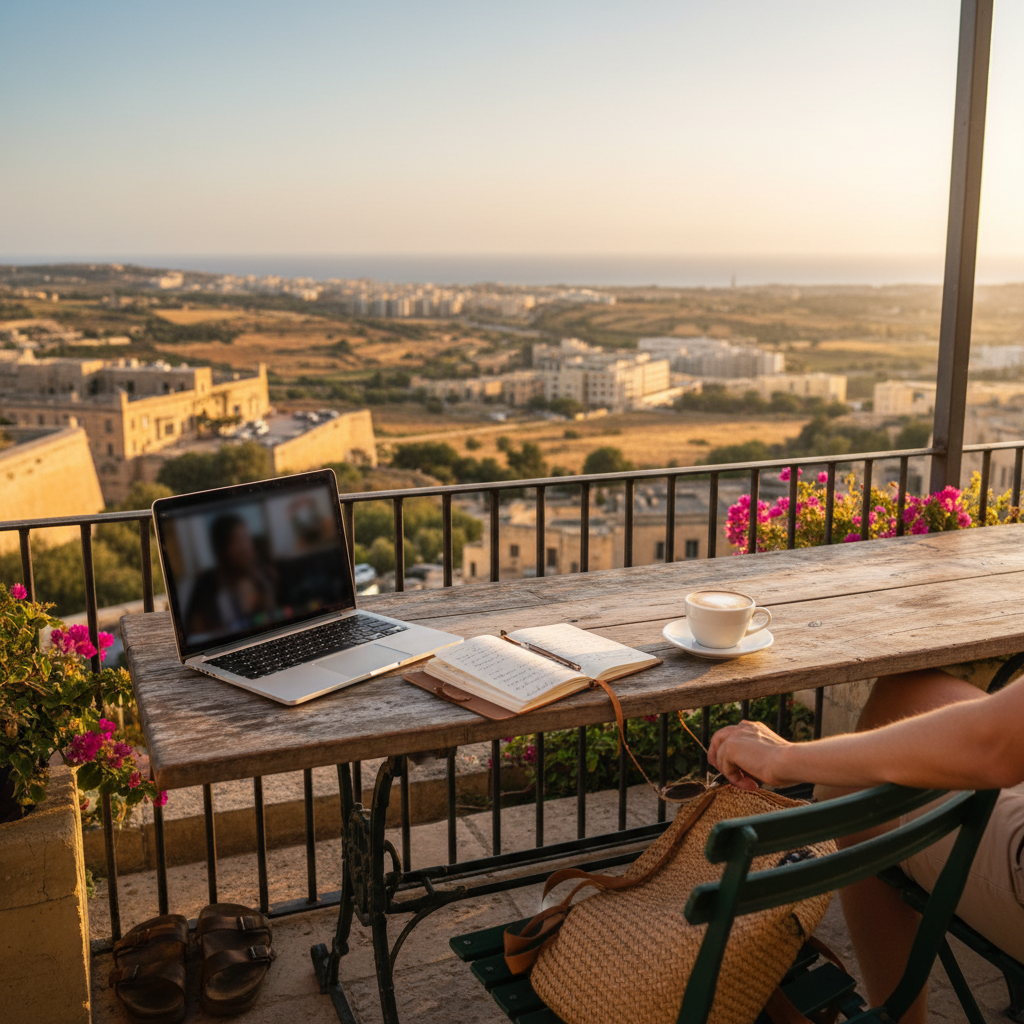
Georgia's Remote Work Retreat: A Nomad's First 90 Days & Beyond
Join me as I recount my exhilarating and insightful first 90 days living and working remotely in Georgia, a country that surprisingly abolished its 'Remotely From Georgia' program in late 2024, yet remains a digital nomad magnet due to its incredibly generous 365-day visa-free stay for over 90 nationalities. Learn from my experiences navigating everyday life, remote work, and understanding the local culture, all while benefiting from its famously low cost of living and unique tax advantages.
June 3, 2026

Georgia's Remote Work Retreat: A Nomad's First 90 Days & Beyond
Barely a year ago, Georgia was making headlines for its 'Remotely From Georgia' program, an initiative that captured the attention of countless digital nomads during the peak of global travel restrictions. Yet, by late 2024, the program was quietly—and officially—discontinued. This surprising statistic, the abolition of a dedicated digital nomad visa scheme, would typically send remote workers scrambling for alternatives. However, Georgia remains an absolute magnet for location-independent professionals like myself, and for one compelling reason: its incredibly generous 365-day visa-free stay for citizens of over 90 countries. This policy allows me, and countless others, to live and work here for an entire year without needing any special permit, essentially making it one of the most accessible long-term remote work destinations on Earth. This is my story, a case study of my first 90 days in this captivating country, packed with lessons learned, unexpected delights, and practical advice for anyone considering a similar move in 2026.
The Allure of Georgia: Why I Chose the Visa-Free Path
My decision to move to Georgia wasn't driven by a formal visa application process, but by the sheer simplicity of its entry requirements and the glowing reviews from fellow nomads regarding its low cost of living, vibrant culture, and burgeoning expat community. I landlocked myself in Tbilisi in early 2026, armed with a backpack, a laptop, and an insatiable curiosity. What initially drew me in was the prospect of a year-long stay, hassle-free. No burdensome paperwork, no lengthy waiting periods for visa approvals, and no specific income thresholds to prove to an immigration officer at the border. This freedom was, and still is, a game-changer.
For those fortunate enough to hold a passport from one of the qualifying countries (including the EU, USA, Canada, UK, Australia, and many others), arriving in Georgia is as simple as any tourist visit. You get a stamp, and you're good for 365 days. No, really. It sounds too good to be true, but it's not. This unique approach, post the 'Remotely From Georgia' program, means the country has effectively streamlined long-term remote work by removing an unnecessary layer of bureaucracy. My 'visa' was simply my passport and a friendly wave from the border agent at Tbilisi International.
Eligibility & 'Application' Process: The Non-Process
Given the visa-free entry for a year for eligible nationalities, there's no formal 'application process' for a digital nomad visa in Georgia in 2026 in the traditional sense. The eligibility criteria are tied directly to your nationality. You simply need to:
- Hold a passport from one of the 90+ visa-exempt countries. Double-check the official Georgian Ministry of Foreign Affairs website for the most up-to-date list, as it can occasionally change.
- Ensure your passport is valid for at least six months beyond your intended stay. While you can technically stay for 365 days, having ample validity is always wise.
- Have proof of onward travel (sometimes requested, but rarely enforced). I wasn't asked for this, but it's good practice to have a flexible ticket in case.
- Possess sufficient funds for your stay. Again, rarely checked at the border, but implicitly expected. More on this in the cost of living section.
There are no specific income thresholds you need to demonstrate for entry under this visa-free regime. This stands in stark contrast to almost every other digital nomad visa program globally, which typically mandate monthly income proof ranging from €2,500 to €4,500. This lack of a financial entry barrier significantly lowers the initial hurdle for many nomads.
Fees: The Cost of... Nothing?
This is where Georgia truly shines. There are no specific application fees for the 365-day visa-free stay. You pay nothing to the Georgian government for the privilege of entering and staying for a year. This is a monumental saving compared to DNVs in other countries, which often incur fees ranging from €150 to €1,000 or more.
My only 'costs' at this stage were those associated with any international travel: my flight ticket, travel insurance, and initial accommodation bookings. This immediate financial relief was a major factor in my first 90 days feeling less stressful and more focused on integration.
My First 90 Days: From Arrival to Integration
My first day in Tbilisi was a whirlwind of new sights, sounds, and smells. The charming, chaotic streets of the Old Town, the dramatic Narikala Fortress overlooking the Mtkvari River, and the unmistakable scent of khachapuri baking in every corner. I had booked a short-term Airbnb for my first week to ease into things.
Week 1-4: Settling In and Bureaucracy (The Fun Kind)
My immediate priorities were typical: finding a long-term apartment, getting a local SIM card, and opening a bank account. Unlike some countries where these can be bureaucratic nightmares, Georgia proved surprisingly efficient.
- Accommodation: I spent my first two weeks exploring various neighborhoods. Tbilisi offers everything from modern high-rises to charming, renovated apartments in historic buildings. Rental prices are astonishingly low compared to Western Europe. I eventually found a comfortable 1-bedroom apartment in the Saburtalo district for approximately 1,500 GEL (around 520 EUR / 560 USD at early 2026 exchange rates) per month, including utilities. This was a fantastic deal for a furnished place with good internet.
- SIM Card: Getting a local SIM from Magti or Geocell was instantaneous and cost less than 10 EUR for a generous data plan. Essential for navigating and staying connected.
- Bank Account: This was a pleasant surprise. Within an hour, I had an account with Bank of Georgia, which is incredibly expat-friendly. All I needed was my passport and a local address. No proof of income needed to open a basic account. This allowed me to easily manage local finances and use local payment apps.
Week 5-8: Navigating Work & Community
My routine quickly settled into a comfortable rhythm. Mornings involved remote work from my apartment or a local co-working space (Nomad Co-working was my go-to, costing about 150 GEL/month for a flexible desk, around 52 EUR / 56 USD). Afternoons were for exploration – hiking up Mtatsminda, wandering through the flea market, or discovering new cafes.
Connectivity: Internet speeds in Georgia are excellent and very reliable, critical for any remote worker. I faced very few outages or slowdowns, even during peak hours.
Community: Tbilisi has a thriving digital nomad and expat community. Facebook groups like 'Expats in Tbilisi' and 'Digital Nomads Georgia' were invaluable for connecting with people, getting recommendations, and finding social events. I quickly made friends through meetups and shared interests, easing the initial loneliness often associated with moving to a new country.
Week 9-12: Cultural Immersion & Early Discoveries
By this point, I felt truly embedded. I started taking basic Georgian language lessons (the alphabet alone is fascinating!), exploring regions outside Tbilisi like the wine region of Kakheti and the mountainous Svaneti, and delving deeper into Georgian cuisine – khinkali, khachapuri, and abundant fresh produce. The warmth and hospitality of Georgians are legendary, and I experienced it firsthand in countless interactions.
One small pitfall I discovered early on: not all remote roles are equally portable to Georgia's time zone. My client base in North America meant I often worked later into the evening, but the trade-off was incredibly vibrant daytime hours for exploring. Being flexible with your work schedule is key.
Tax Treatment: The Golden Goose of Georgian Nomadism
This is perhaps the most compelling aspect for many digital nomads in Georgia. Post-365 days, if you choose to remain in Georgia, you can apply for a tax residency certificate. Crucially, Georgia operates on a territorial tax system. This means that if your income is sourced outside of Georgia and paid into a foreign bank account, it is generally not taxable in Georgia, assuming you do not maintain a permanent establishment or conduct business actively within the country.
For many remote workers whose clients are outside Georgia, this translates to a 0% income tax burden on foreign-sourced earnings. This is a massive advantage that few other countries offer. To properly leverage this, you typically need to prove tax residency elsewhere, or that your income is genuinely foreign-sourced. While there's no official digital nomad visa with specific tax rules, the existing tax laws are incredibly favorable.
- Becoming a Tax Resident: After spending 183 days or more in Georgia within any 12-month period, you can apply for a tax residency certificate. This confirms your status for tax purposes. Even if you're tax resident, if your income is foreign-sourced, it is generally exempt.
- Small Business Status: For those earning exclusively from Georgian clients or wishing to obtain a local income stream, Georgia also offers a 'Small Business Status' with a 1% turnover tax for annual revenue up to 500,000 GEL (approx. 173,000 EUR / 185,000 USD). Above this, it's 3%. This is another testament to Georgia's pro-business, low-tax environment. However, for foreign-sourced income, the 0% rule typically applies, making this less relevant for most classic DNV scenarios.
Crucial Note on Tax: While the general principle of territorial taxation applies, tax laws can be complex and are subject to change. Always consult with a Georgian tax advisor for personalized advice to ensure full compliance with current regulations. This is not financial or legal advice.
Family & Dependants: A Straightforward Approach
Since the 365-day visa-free entry applies to individuals based on their nationality, it extends to all eligible family members. If your spouse and children hold passports from one of the qualifying countries, they can enter Georgia under the same 365-day visa-free regime. There are no additional fees or specific 'dependant visas' required.
This simplicity is another huge draw for families. The low cost of living, combined with the absence of complex family visa applications, makes Georgia an attractive option for nomads with children. Tbilisi offers international schools, parks, and family-friendly activities, making integration easier.
Renewals & Long-Term Stay: The Border Run
After 365 days, your visa-free stay expires. To 'renew' your status, the most common practice for digital nomads is the border run. This involves briefly exiting Georgia and re-entering it, which resets the 365-day clock. Many nomads opt for a quick trip to a neighboring country like Armenia or Turkey for a day or a weekend, then return to Georgia.
While this practice is widely accepted and common, it's essential to understand that it's not a formal 'renewal' process. It's essentially leveraging the visa-free tourist entry repeatedly. There are no official caps on how many times you can do this, but immigration policies can change. It's always advisable to stay updated with official government sources.
For those seeking a more permanent residency, options like starting a local business (even a sole proprietorship) might lead to a different type of residence permit, but this falls outside the scope of the straightforward digital nomad experience.
Georgia-Specific Pitfalls to Be Aware Of
While my first 90 days were largely positive, I encountered a few quirks and potential issues that are worth highlighting:
- Language Barrier: While English is widely spoken in tourist areas and among younger generations in Tbilisi, venturing outside the capital or interacting with older locals can present a significant language barrier. Learning a few basic Georgian phrases (Gamarjoba – hello, Madloba – thank you) goes a long way.
- Infrastructure Outside Tbilisi: While Tbilisi boasts excellent internet and modern amenities, infrastructure outside the capital can be less developed. Road quality, especially to remote mountainous regions, can vary significantly.
- Driving: Traffic in Tbilisi can be chaotic, and driving styles are often aggressive. I opted for ride-sharing apps (Bolt is dominant) or public transport, which are affordable and convenient.
- Cultural Nuances: Georgians are incredibly hospitable, but understanding local customs and etiquette is important. For instance, being invited to a Georgian supra (feast) is an honor, and accepting food and wine graciously is expected.
- Political Landscape: Georgia is a democratic country, but its political landscape is complex and its relationship with Russia is a sensitive topic. While daily life for nomads is generally unaffected, staying informed about local news and geopolitical developments is prudent.
- Air Quality: In winter months, Tbilisi can experience air pollution, particularly from vehicle emissions and heating systems. This is a consideration for those with respiratory sensitivities.
Comparison: Georgia's Visa-Free Paradise vs. Typical DNVs
To put Georgia's offering in perspective, let's compare its visa-free stay framework to a typical, formal digital nomad visa program.
| Feature | Georgia (Visa-Free 365 Days) | Typical Digital Nomad Visa (e.g., in EU) |
|---|---|---|
| Entry Requirement | Passport from eligible country | Specific DNV application, proof of income/funds |
| Initial Stay Duration | 365 Days | 12-24 Months |
| Application Process | None (visa-free entry) | Online application, document submission, interview (sometimes) |
| Application Fees | 0 EUR / 0 USD | 150 - 1000+ EUR / USD |
| Monthly Income Threshold | None | 2,500 - 4,500+ EUR / USD (often net) |
| Tax on Foreign-Sourced Income | Generally 0% (territorial tax, if non-PE) | Varies, often 15-20% flat rate or progressive |
| Dependants Included | Yes, if eligible by nationality (same terms) | Yes, often with additional fees and income requirements |
| Residency Card | No, only passport stamp | Yes, dedicated DNV residence permit |
| Long-Term Renewal | Border run to reset 365 days | Formal renewal process with continued proof of eligibility |
| Healthcare | Private insurance required | Often requires private insurance, sometimes public options |
| EU/Schengen Access | No, not a member of EU/Schengen | Yes, if DNV is from an EU/Schengen country |
This table clearly illustrates why Georgia, despite not having a specific 'DNV', is such a powerful contender. Its generous visa-free policy, combined with an extremely favourable tax regime, offers unparalleled freedom and financial benefits for remote workers.
Conclusion: My Georgian Chapter Continues
My first 90 days in Georgia were transformative. I arrived expecting an interesting cultural experience and affordable living; I found a vibrant, welcoming country with a thriving nomad scene and a legal framework that makes long-term remote work incredibly straightforward and economically advantageous. The 'non-visa' visa, if you will, has proven to be an unexpected blessing.
From the ancient cave cities to the bustling markets of Tbilisi, from the hearty traditional food to the emerging tech and startup scene, Georgia offers a unique blend of history, progress, and accessibility. For anyone seeking an unburdened, culturally rich, and financially shrewd base for their remote work journey in 2026, Georgia should be at the very top of your list. Pack your bags, book a ticket, and prepare for a year of discovery, all without the bureaucratic headaches of a typical digital nomad visa.
FAQ: Your Georgia Digital Nomad Questions Answered
Q1: Do I need a visa to enter Georgia as a digital nomad? A1: No, not if you are a citizen of one of the 90+ countries eligible for Georgia's 365-day visa-free stay. You simply enter as a tourist, and your passport stamp allows you to stay for a full year. There is no specific 'digital nomad visa' application process in 2026.
Q2: What is the income requirement for living as a remote worker in Georgia? A2: For the 365-day visa-free entry, there is no official minimum income threshold you need to prove at the border. You are generally expected to have sufficient funds for your stay, but there's no specific amount mandated. This is a significant advantage over formal DNV programs in other countries.
Q3: How is my foreign-sourced income taxed in Georgia? A3: Georgia operates on a territorial tax system. If your income is earned from clients or sources outside of Georgia and is paid into a foreign bank account, it is generally not taxable in Georgia, even if you are a tax resident, provided you do not have a permanent establishment or actively conduct business within Georgia. Always consult a Georgian tax advisor for definitive guidance.
Q4: Can my family join me in Georgia if I'm working remotely? A4: Yes, absolutely. If your family members (spouse, children) hold passports from countries eligible for the 365-day visa-free stay, they can enter and remain in Georgia under the same terms as you. There are no separate dependant visa applications or additional fees for them under this arrangement.
Q5: What happens after my 365-day visa-free stay expires? A5: The most common method for remote workers to extend their stay is to perform a 'border run.' This involves briefly leaving Georgia (e.g., to Armenia or Turkey) and then re-entering. Upon re-entry, your 365-day visa-free period resets, allowing you to stay for another year. This practice is widely accepted.
Q6: Is healthcare an issue for digital nomads in Georgia? A6: While Georgia has public healthcare, it's generally recommended for digital nomads to secure private international health insurance that covers their stay in Georgia. This ensures access to higher quality medical facilities and services. Costs for private insurance vary based on coverage and age.
Q7: Is it easy to open a bank account in Georgia as a foreigner? A7: Yes, it is remarkably easy. Major banks like Bank of Georgia and TBC Bank are very expat-friendly. You typically only need your passport and a local address to open an account, often within an hour. This is a major convenience for managing local expenses.
Sources
- Georgian Ministry of Foreign Affairs: Consult the country's official immigration website for the most current list of visa-exempt countries and entry requirements. This is your definitive source for official policy.
- Georgian Revenue Service: For detailed information on tax regulations, including territorial taxation and small business status, refer to the official website of the Georgian Revenue Service or consult a local tax professional.
- National Bank of Georgia: For current exchange rates (GEL to EUR/USD) and banking regulations.
- Expat and Digital Nomad Forums and Groups: Online communities such as 'Expats in Tbilisi' and 'Digital Nomads Georgia' on platforms like Facebook provide valuable peer-to-peer advice and current experiences (though always cross-reference with official sources).
- Local Real Estate Agencies/Platforms: For current rental prices and housing information in Tbilisi and other cities.
Interested in applying for the Georgia visa?
Tell us a bit about yourself and we'll send tailored guidance on eligibility, paperwork, and next steps.