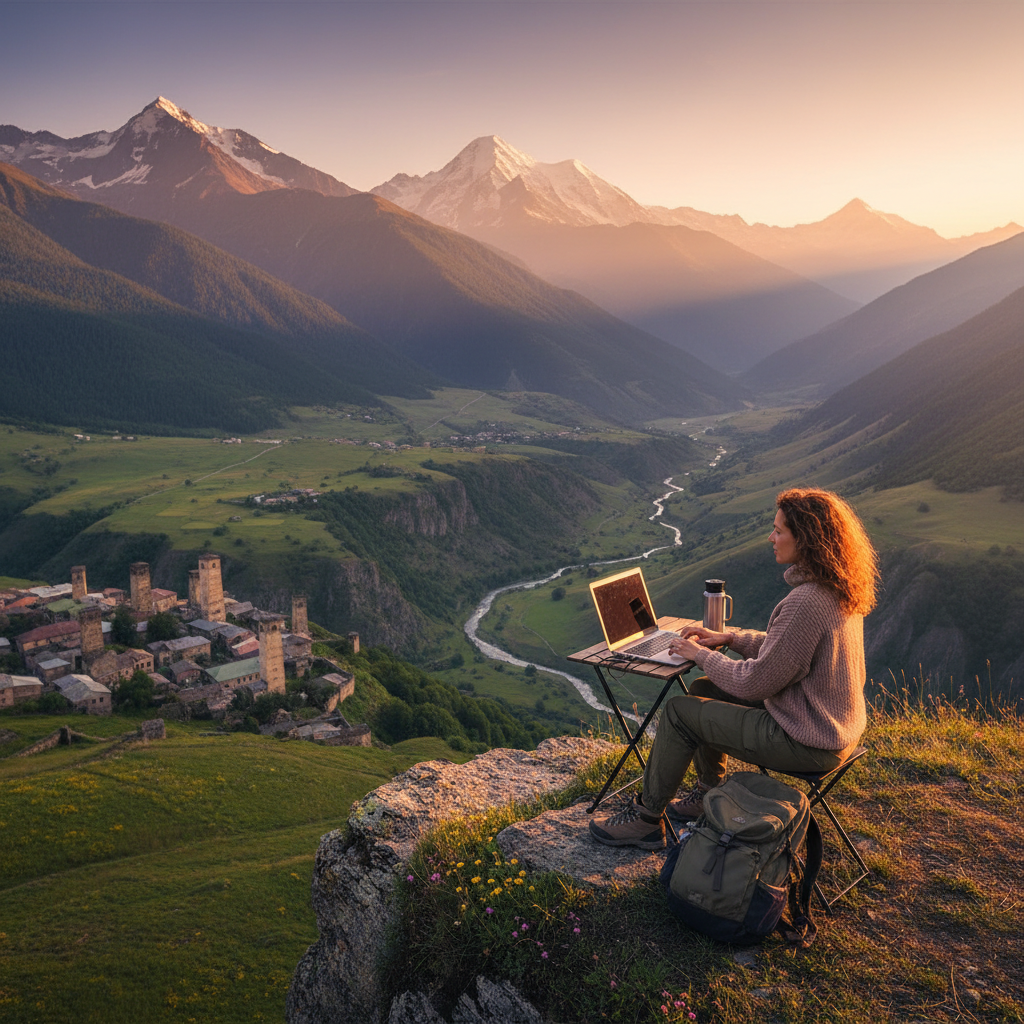
The Ultimate Digital Nomad Guide to Georgia (Europe) in 2026
Georgia (the country, not the state!) has rapidly ascended the ranks as a top-tier destination for digital nomads. Nestled at the crossroads of Europe and Asia, this nation offers a unique blend of ancient history, stunning natural landscapes, delicious cuisine, and a fiercely independent spirit. Add to that a highly favorable tax system, a welcoming atmosphere, and a special program for remote workers, and it's no wonder Georgia continues to attract globetrotting professionals. This comprehensive guide, updated for 2026, will equip you with everything you need to embark on your Georgian adventure.
Why Georgia for Digital Nomads
Georgia’s appeal to digital nomads is multi-faceted. Firstly, its affordability makes it an attractive option for those looking to stretch their budget without sacrificing quality of life. Compared to many Western European or North American cities, your money goes significantly further here. Secondly, the country boasts a genuinely hospitable culture, known for its warmth and generosity – 'supra' (feasting) is a way of life. For long-term visitors, integrating into local life is often easier than in more reserved cultures.
Thirdly, the tax system is incredibly favorable. The 1% Individual Entrepreneur (IE) tax rate for small businesses is a massive draw, making it one of the most attractive places globally for freelancers and solopreneurs to manage their income. The government is also pro-business and has made considerable efforts to simplify bureaucracy.
Geographically, Georgia is stunningly diverse. From the sun-soaked Black Sea coast of Batumi to the snow-capped peaks of the Caucasus Mountains in Svaneti, and the ancient, charming streets of Tbilisi, there's a landscape for every preference. This variety offers endless opportunities for exploration during downtime, whether it's hiking, skiing, wine tasting, or simply soaking in history.
Finally, for many nationalities, Georgia offers a generous long-term visa-free stay (often up to a year). Coupled with the 'Remotely from Georgia' program, it streamlines the entry process for digital nomads, removing a significant hurdle often encountered elsewhere.
Visa Options & Eligibility
Georgia stands out with its incredibly generous visa policies. Citizens of over 90 countries can enter Georgia visa-free and stay for up to one full year. This alone is a huge advantage for digital nomads, as it means many don't need to apply for a specific digital nomad visa to initially experience the country.
However, for those seeking a more formal recognition of their remote work status or whose nationality doesn't benefit from the one-year visa-free stay, Georgia introduced the "Remotely from Georgia" program in 2020. This program is essentially a long-term residence permit tailored for remote workers.
Key Requirements for the 'Remotely from Georgia' Program (as of 2026):
- Nationality: Open to citizens from a list of approved countries (primarily those already eligible for the one-year visa-free stay, but also expands options for some others). Always check the most current official list.
- Income Proof: You must demonstrate a stable monthly income of at least $2,000 USD from an overseas source. This can be verified through bank statements, employment contracts, or client invoices.
- Remote Work Status: You must be employed by a company outside of Georgia or be self-employed/a freelancer with clients outside of Georgia.
- Travel Insurance: Proof of health insurance coverage for your entire intended stay in Georgia is mandatory.
- Clean Criminal Record: A clear criminal background might be required, though often self-declaration is sufficient for many.
- Quarantine/Health Protocols: While the initial program included a mandatory quarantine, by 2026, it's unlikely to be a universal requirement unless global health circumstances change. Always check the very latest entry requirements.
Application Process:
- Online Application: The application is typically submitted online through a dedicated government portal. You'll fill out your personal details, employment information, and upload supporting documents.
- Document Submission: Prepare digital copies of your passport, proof of income (bank statements, employment letters, client contracts), travel insurance, and potentially a letter explaining your remote work status.
- Review and Approval: The Ministry of Foreign Affairs will review your application. Processing time can vary but generally takes around 10-15 business days.
- Entry to Georgia: Upon approval, you receive an email confirmation. You then follow standard entry procedures at the Georgian border. For most nationalities, a visa stamp is not issued; rather, your entry is recorded, and your eligibility to stay under the program is confirmed.
This program primarily formalizes your long-term stay permissions and provides a framework for potential tax advantages. For many, simply entering visa-free for one year is sufficient, making Georgia exceptionally welcoming.
Cost of Living Breakdown
The affordability of Georgia is one of its biggest draws. While Tbilisi is the most expensive city, it remains significantly cheaper than major Western capitals. Here's an estimated monthly breakdown for a comfortable digital nomad lifestyle in Tbilisi in 2026:
| Expense Category | Estimated Monthly Cost (USD) |
|---|---|
| Accommodation | |
| 1-bedroom apartment (city center) | $500 - $800 |
| 1-bedroom apartment (outside center) | $350 - $550 |
| Utilities (electricity, heating, water, internet) | $80 - $150 |
| Internet (fiber optic) | $15 - $25 |
| Groceries | $150 - $250 |
| Dining Out (mix of local & international) | $150 - $300 |
| Transportation (public transit, occasional taxi) | $20 - $50 |
| Coworking Space | $100 - $200 |
| Leisure/Entertainment | $100 - $250 |
| Health Insurance (private) | $40 - $80 |
| Total Estimated Monthly Cost | $1200 - $1880 |
- Accommodation: Rent is the largest variable. You can find modern, furnished 1-bedroom apartments in desirable areas of Tbilisi for $500-$800. Outside the immediate city center or in older buildings, prices can drop significantly. Batumi offers similar pricing, while Kutaisi is notably cheaper, with apartments starting from $250-$400.
- Food: Local Georgian food is incredibly affordable and delicious. A 'khachapuri' (cheese bread) is a staple for a few dollars. A good meal at a local restaurant can be $10-$15 with drinks, while international cuisine will be closer to $20-$30. Groceries from local markets are very fresh and inexpensive.
- Transportation: Public transport in Tbilisi (metro and buses) is very efficient and cheap, using a rechargeable Metromoney card. Taxis via apps like Bolt or Yandex are also very affordable, with average rides within the city costing $2-$5.
- Minimum Income Recommendation: Based on these costs, a minimum income of $2,000 USD per month allows for a comfortable, independent lifestyle, providing a buffer for travel and unexpected expenses.
Best Cities & Neighborhoods
Tbilisi
Tbilisi, the vibrant capital, is the undisputed hub for digital nomads in Georgia. It offers the largest expat community, best infrastructure, and most diverse entertainment options.
- Vake: Upscale, green, and modern. Lots of cafes, restaurants, and parks. Preferred by families and those seeking a quieter, more Westernized vibe. Can be pricier for rent.
- Saburtalo: A large, residential district with more affordable modern apartments. Good transport links, shopping malls, and amenities. A popular choice for long-term stays.
- Vera: Trendy and bohemian, known for its charming streets, boutiques, and lively atmosphere. A good mix of old Tbilisi charm and modern establishments.
- Sololaki/Old Town: Picturesque, historic, full of character. While beautiful, finding modern apartments here can be challenging, and it can be touristy. Many opt to live nearby and frequent the area.
- Avlabari: Historic neighborhood with great views of the old town, close to Trinity Cathedral. More traditional feel, good value, and well-connected.
Batumi
Georgia's second-largest city, located on the Black Sea coast. Batumi offers a distinctly different vibe, with its futuristic architecture, a long boulevard, and a more resort-like feel.
- Around the Boulevard: Modern high-rise apartments, close to the beach, cafes, and restaurants. Great for summer months but can be quieter in winter.
- Old Batumi: Charming, older European architecture, quieter streets, and local eateries. Offers a more authentic Batumi experience.
Kutaisi
Georgia's third-largest city and the capital of the Imereti region. Kutaisi is significantly more affordable than Tbilisi or Batumi and offers a glimpse into traditional Georgian life. It's a good base for exploring Western Georgia's monasteries, caves, and canyons. The digital nomad community is smaller but growing.
Sighnaghi
Known as the 'City of Love,' located in the Kakheti wine region. Sighnaghi is a beautiful, walled town with stunning views of the Alazani Valley and the Caucasus mountains. It's too small for a long-term base but makes an excellent retreat for a few weeks or a popular weekend trip from Tbilisi, especially for wine enthusiasts.
Internet, Coworking & Remote-Work Infrastructure
Georgia, especially its major cities, has surprisingly robust internet infrastructure.
- Internet Speed: Fiber optic internet is widely available and affordable. In Tbilisi and Batumi, average speeds easily reach 100 Mbps, with many providers offering plans up to 300-500 Mbps or even higher. Services like Silknet and Magti are reliable providers.
- Mobile Data: 4G LTE coverage is excellent across most populated areas and even in many rural regions. Magti, Silknet, and Beeline are the main mobile carriers, offering cheap data packages.
- Coworking Spaces: Tbilisi boasts a thriving coworking scene with options ranging from trendy, modern spaces to more laid-back community hubs. Popular options include:
- Impact Hub Tbilisi: Part of the global network, offering a professional environment and community events.
- Terminal: Multiple locations across Tbilisi, modern facilities, and popular with both locals and expats.
- UG Startup Factory: Often hosts events and caters to a tech-oriented crowd.
- Workcafe: Integrates a cafe with coworking facilities, ideal for casual working.
- Fabrika: A funky multi-functional space with a hostel, cafes, bars, and a small coworking corner, known for its creative vibe.
Batumi also has a few coworking spaces, though fewer than Tbilisi, such as Garage and spaces within some modern business centers. Even in smaller cities like Kutaisi, you can often find cafes with reliable Wi-Fi, though dedicated coworking spaces are rare.
- Café Culture: Tbilisi and Batumi have a rich cafe culture, and many establishments are very laptop-friendly, offering good Wi-Fi and a relaxed atmosphere for working.
- Power Outlets: Power outages are rare in major cities but can occasionally happen during extreme weather. It's always wise to have a power bank.
Taxes & Legal Considerations
The Georgian tax system is one of the most compelling reasons for digital nomads to choose the country. While many digital nomads arrive and stay for up to a year without formally registering as a taxpayer, those planning a longer stay or seeking to optimize their finances should consider local registration.
Option 1: Informal Stay (up to 12 months for visa-free entry nations)
If you are from a country that allows a visa-free stay of up to one year, you can enter and work remotely without any formal registration or tax obligations in Georgia, assuming your income is sourced entirely from outside Georgia and you are not becoming a Georgian tax resident. However, this relies on a specific interpretation of tax residency rules. Generally, spending more than 183 days in Georgia within a 12-month period would make you a tax resident.
Option 2: Individual Entrepreneur (IE) - 'Small Business Status'
This is the most popular and advantageous route for many digital nomads.
- Eligibility: To qualify for the 1% tax rate, you must register as an Individual Entrepreneur (IE) and obtain 'Small Business Status.' Your annual turnover must not exceed GEL 500,000 (approximately $185,000 USD as of 2026). Additionally, your type of activity must not be on a specific list of excluded activities (e.g., currency exchange, legal services, accounting, medical services, gambling). Crucially, you generally cannot have salaried employees.
- Tax Rate: A flat 1% tax on your turnover (gross income) up to the GEL 500,000 threshold. Income exceeding this threshold is taxed at 3%.
- How to Register: The process is relatively straightforward and can be done at a Public Service Hall. You will need your passport, a Georgian phone number, and a local address. It's often advisable to use a local lawyer or accountant for assistance, especially for navigating the nuances of activity codes.
- VAT: IEs with Small Business Status are generally exempt from VAT unless their turnover exceeds GEL 100,000 from VAT-taxable activities within any 12-month period, at which point VAT registration becomes mandatory.
- Bank Account: You will need a Georgian bank account (e.g., Bank of Georgia, TBC Bank) to receive income and manage expenses. Opening an account is usually simple with your passport and legal residency documents.
Option 3: Regular Tax Residency (Without IE Status)
If you stay for more than 183 days in any 12-month period and do not qualify for or choose not to use the IE status, you would likely be considered a general tax resident. In this case, income sourced from Georgia would be subject to a flat 20% personal income tax. However, if your remote work income is entirely from foreign sources and paid to foreign bank accounts, you might be able to argue non-taxability in Georgia, but this is a complex area and professional tax advice is essential.
Legal Considerations:
- Property Rental: If renting, ensure you have a clear contract in Georgian and/or English. Most landlords are reputable, but a clear agreement protects both parties.
- Vehicle Ownership/Driving: An international driving permit is recommended if you plan to drive. Local licenses are relatively easy to obtain if you become a long-term resident.
- Healthcare: While public healthcare exists, it's generally recommended for digital nomads to have comprehensive private health insurance, as public services might not meet Western standards.
Disclaimer: Tax laws are complex and can change. This information is for general guidance only and does not constitute tax advice. Always consult with a qualified Georgian tax professional for personalized advice specific to your situation in 2026.
Lifestyle, Culture & Community
Georgian culture is deeply rooted in hospitality, tradition, and a rich history. Foreigners are generally welcomed with open arms.
- Hospitality (Gaumarjos!): Georgians are famous for their hospitality. Expect invitations to Supra (feasts) with abundant food, wine, and passionate toasts. Learning a few Georgian phrases like 'Gamarjoba' (hello), 'Madloba' (thank you), and 'Gaumarjos' (cheers) will go a long way.
- Cuisine: Georgian food is a highlight. Beyond the ubiquitous Khachapuri, savor Khinkali (dumplings), Mtsvadi (shashlik), Lobio (bean stew), and a vast array of unique vegetarian dishes. Kakheti is the famed wine region, producing wine using traditional qvevri (clay vessels) methods for thousands of years.
- Community: Tbilisi has a vibrant and growing international community of digital nomads and expats. Social groups on Facebook ('Expats in Tbilisi,' 'Digital Nomads Georgia') are excellent resources for networking, seeking advice, and finding events. Coworking spaces also foster community connections. Regular meetups, language exchanges, and cultural events are common.
- Language: Georgian is a unique Kartvelian language with its own alphabet. While many younger Georgians, especially in Tbilisi and Batumi, speak English, particularly in tourist-facing roles, learning basic Georgian phrases is appreciated. Russian is also widely spoken among older generations.
- Safety: Georgia is generally very safe, with low crime rates. Tbilisi is safe to walk around even at night. However, like any major city, exercise common sense and be aware of your surroundings, especially in crowded areas.
- Nature & Adventure: Weekends can be spent hiking in the Caucasus Mountains (Kazbegi, Svaneti), exploring ancient cave cities (Uplistsikhe, Vardzia), visiting monasteries, or relaxing on the Black Sea coast. The diversity of landscapes means there’s always an adventure waiting.
How to Apply: Step-by-Step
This guide focuses on the 'Remotely from Georgia' application for those who need or prefer it. If your nationality allows visa-free entry for one year, you simply arrive.
- Check Eligibility: Confirm your nationality is on the approved list for the 'Remotely from Georgia' program and that you meet the income requirements ($2,000 USD/month).
- Gather Documents: Prepare digital copies of the following:
- Valid Passport (with at least 6 months validity).
- Proof of Employment/Contract/Client Invoices: Demonstrating remote work and income source outside Georgia.
- Bank Statements: Showing consistent income deposits meeting the $2,000 USD monthly threshold for the past 6-12 months.
- Health/Travel Insurance: Policy covering your entire intended stay in Georgia (preferably 12 months) with minimum coverage (e.g., €30,000 or equivalent).
- Proof of Accommodation (optional but recommended): A rental agreement or confirmed booking for your initial stay can strengthen your application.
- Complete Online Application: Access the official Georgian government portal (search for 'Remotely from Georgia application' - avoid unofficial sites). Fill out the application form accurately and upload all required documents. There is no application fee for this program.
- Submit and Await Approval: Once submitted, your application will be reviewed by the Ministry of Foreign Affairs. Processing typically takes 10-15 business days. You will receive an email notification regarding the decision.
- Travel to Georgia: Upon approval, you can book your flight. Present your passport and the approval confirmation email to immigration officials upon arrival in Georgia. They will stamp your passport for the permitted duration (up to 1 year).
- Settle In & Consider IE Status: Once in Georgia, settle into your accommodation. If planning a longer stay or seeking tax advantages, consider registering as an Individual Entrepreneur (IE) at a Public Service Hall shortly after arrival. This is a separate process from the 'Remotely from Georgia' program but highly recommended for long-term nomads.
Common Pitfalls
- Assuming English Everywhere: While English is increasingly spoken, especially by younger generations and in tourist areas, outside of Tbilisi and Batumi, or with older locals, communication can be a challenge. Basic Georgian or Russian phrases are helpful.
- Tax Residency Misunderstanding: Simply having the 'Remotely from Georgia' permit or the one-year visa-free stay does not automatically exempt you from Georgian tax residency if you spend more than 183 days in the country. It's crucial to understand the 1% IE tax process if you plan to stay long-term and structure your finances properly.
- Bureaucracy Patience: While Georgia has made strides in simplifying procedures, some administrative tasks (like banking, or even some aspects of IE registration) might still require patience and multiple visits. Hiring a local assistant or lawyer can alleviate this.
- Rental Market Nuances: Apartment hunting can be competitive, especially for good deals. Use reputable real estate agents or trusted online groups. Ensure your contract is clear, especially regarding utilities and move-out terms.
- Public Transport Outside Tbilisi: While Tbilisi has an excellent metro and bus system, public transport in smaller cities can be less developed. Marshrutkas (minibuses) are common but can be less comfortable.
- Health Insurance: Don't skip proper health insurance. While Georgia is safe, accidents or illnesses can happen, and comprehensive private insurance offers peace of mind and access to better facilities.
- Not Exploring Beyond Tbilisi: Many nomads get comfortable in Tbilisi, but Georgia's true charm lies in its diverse regions. Make time for weekend trips to the mountains, wine country, or the coast to truly experience the country.
Georgia offers an exhilarating and rewarding experience for digital nomads in 2026. Its unique blend of ancient tradition and modern ambition, coupled with an incredibly welcoming environment and favorable policies, makes it a destination that's hard to beat.