Curaçao's Digital Advantage: A Deep Dive into Remote-Work Infrastructure for Nomads in 2026
Curious about working remotely from a Caribbean paradise? We dissect Curaçao's digital nomad visa in 2026, with a focus on its remote-work infrastructure, from internet speeds and coworking spaces to time zone advantages. Discover if this island nation truly supports your digital nomad lifestyle.
July 26, 2026
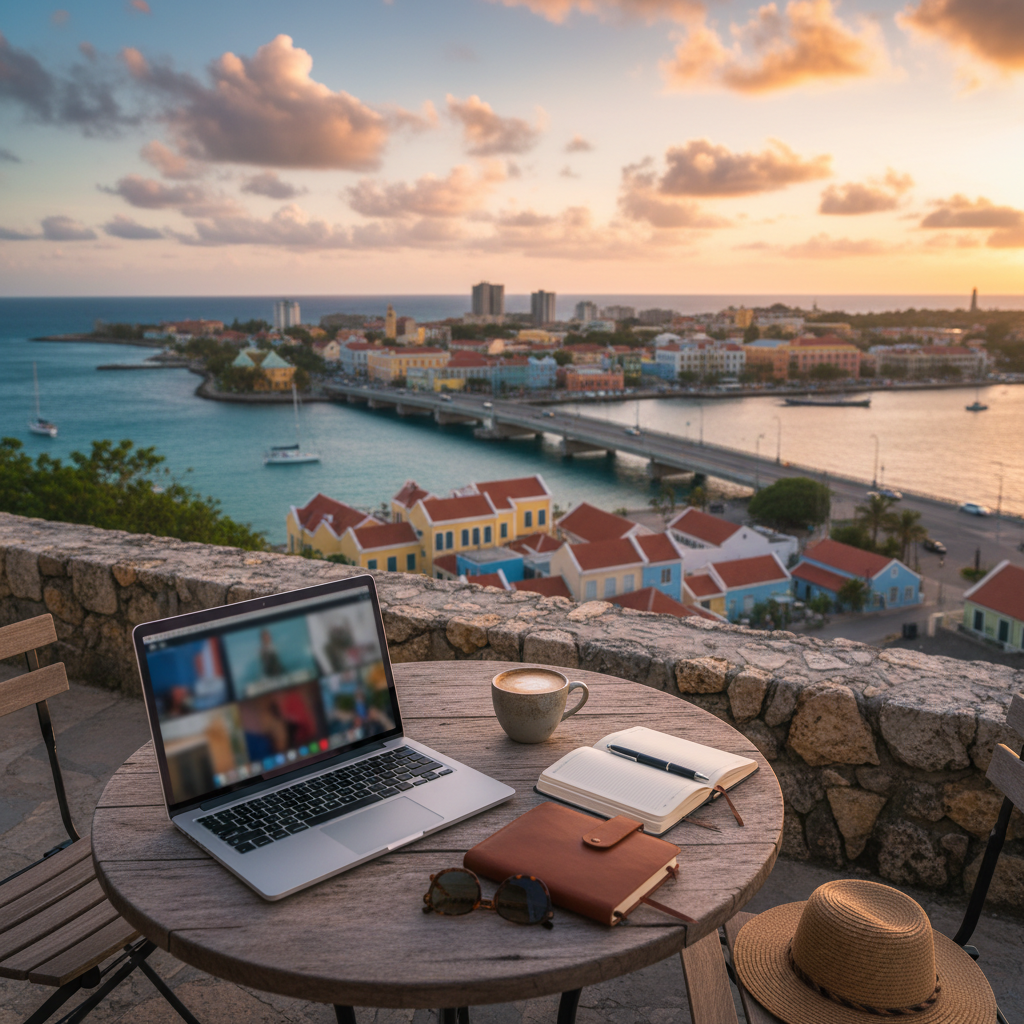
“The interview’s at 3 PM EST, which is… 9 PM in Curacao. Great.” That was Sarah, a software developer from Toronto, contemplating the time difference as she researched her next remote work destination. Her biggest concern wasn't just the sun-drenched beaches or the vibrant culture – it was whether her critical client calls and coding sprints would run smoothly. She needed robust internet, reliable power, and a comfortable setup that mirrored her home office, only with a view of turquoise waters. Many digital nomads share Sarah's pragmatic approach. Paradise is appealing, but a dropped connection during a crucial presentation can quickly turn a dream into a nightmare. This article dives deep into the Curaçao digital nomad visa for 2026, specifically assessing its remote-work infrastructure, connectivity, and overall suitability for the productivity-focused digital nomad.
Often overlooked in the Caribbean digital nomad scene, Curaçao has quietly been bolstering its digital backbone, making a strong play for those who prioritize seamless remote work. With its stable political climate, high quality of life, and strategic time zone alignment for North and South American businesses, this Dutch Caribbean island offers more than just a picturesque backdrop for your Slack calls. It offers a viable, productive, and surprisingly well-connected remote work base. Let's break down what makes Curaçao an increasingly attractive option for the discerning digital professional.
Quick facts
| Row | Detail |
|---|---|
| Income requirement | $2,500 USD/month |
| Visa duration | 6 months |
| Renewable | Yes, for another 6 months |
| Application fee | $280 USD |
| Processing time | Varies, typically 2-3 weeks |
| Tax rate for holders | 0% on foreign income |
| Family members allowed | Yes |
| Path to residency | No direct path (temporary stay) |
What is the Curaçao digital nomad visa?
Curaçao, recognizing the burgeoning trend of location-independent professionals, launched its '@HOME in Curaçao' program in 2021, which effectively serves as a digital nomad visa program. This initiative allows foreign nationals to reside and work remotely from the island for an initial period of six months, with the option to extend for another six months. Crucially, the program is designed for individuals who are employed by or conduct business for companies or clients located outside of Curaçao. This ensures that beneficiaries do not enter the local labor market, thus complementing, rather than competing with, local employment. The visa is not a path to permanent residency or citizenship but provides a legitimate, authorized framework for a prolonged stay compared to standard tourist visas. It's an excellent option for those looking for a temporary change of scenery without sacrificing career momentum, and is particularly appealing for remote workers seeking a European-influenced Caribbean experience. The clear guidelines and relatively straightforward application process make it accessible for many, distinguishing it from more complex immigration pathways offered by other nations.
Curaçao digital nomad visa requirements
To successfully apply for the Curaçao digital nomad visa, applicants must meet several key criteria, primarily centered around financial stability, remote employment, and a clean background. These requirements are standard for most digital nomad programs globally but come with specific Curaçaoan nuances.
Firstly, applicants must demonstrate a minimum monthly income of $2,500 USD. This income must be verifiable through bank statements or employment contracts and must originate from sources outside Curaçao. For those bringing family members, the income requirement increases: an additional $800 USD/month is required for a spouse/partner and $500 USD/month for each dependent child. This ensures that applicants can comfortably support themselves and their families without becoming a burden on the local economy or social services. Potential applicants from Bangladesh, for example, would need to provide clear proof of foreign-sourced income, typically through international bank transfers or employer letters, alongside their local banking records.
Secondly, employment status is critical. You must be either an employee of a company registered outside Curaçao, a freelancer/contractor with clients outside Curaçao, or a business owner with a company registered outside Curaçao. Proof of this status, such as employment contracts, service agreements, or company registration documents, is mandatory. Self-employed individuals will need to present evidence of active business operations and client relationships.
Other essential documents include:
- A valid passport with at least six months' validity beyond your intended stay.
- A completed application form.
- A recent passport-sized photograph.
- Proof of health insurance valid for Curaçao, covering the entire duration of your stay. This is non-negotiable for medical emergencies and general healthcare.
- A clean criminal record check or police certificate from your country of residence.
- Proof of accommodation in Curaçao for at least the initial period of your stay (e.g., rental agreement, hotel booking).
- A non-refundable application fee.
It's important to ensure all documents are in English or Dutch, or officially translated if in another language. Incomplete applications are a common reason for delays, so thorough preparation is advised.
How to apply for the Curaçao digital nomad visa
The application process for the Curaçao digital nomad visa (the '@HOME in Curaçao' program) is streamlined and primarily online, designed for efficiency. Here’s a step-by-step guide:
- Gather Required Documents: Before starting, ensure all necessary documents are prepared. This includes your passport copy, proof of income, employment/business proof, health insurance, criminal record certificate, and proof of accommodation. Ensure all digital copies are clear and legible.
- Complete the Online Application Form: Visit the official website for the '@HOME in Curaçao' program (consult the country's official immigration website) and fill out the application form. Be meticulous with details, as any discrepancies can lead to delays or rejection.
- Upload Supporting Documents: The online portal will guide you through uploading each required document. Double-check that you're uploading the correct file for each field.
- Pay the Application Fee: The non-refundable application fee of $280 USD (approximately 502 ANG / Netherlands Antillean Guilder) must be paid at this stage. Payment is typically made via credit card through the secure online portal. Always verify the current fee, as it may be subject to minor adjustments.
- Submit Your Application: Once all fields are completed, documents uploaded, and payment confirmed, submit your application.
- Await Processing and Decision: After submission, your application will be reviewed by the immigration authorities. Processing times can vary, but generally, expect a decision within 2-3 weeks. You may be contacted for additional information or clarification during this period.
- Receive Your Approval Letter: If approved, you will receive an official approval letter via email. This letter is crucial for your entry into Curaçao.
- Travel to Curaçao: Upon arrival, present your passport and the approval letter to immigration officials. Your temporary stay permit will be processed. Keep a digital and physical copy of your approval letter handy.
The process is generally straightforward but requires attention to detail. It is advisable to apply well in advance of your desired travel date.
Cost breakdown
Understanding the financial commitment beyond the visa fee is essential for any digital nomad. Curaçao offers a good balance of cost and quality of life, but it's important to budget effectively.
| Item | Estimated Cost (USD/month) |
|---|---|
| Digital Nomad Visa Application Fee | $280 (one-time) |
| Income Requirement (single) | $2,500 (minimum) |
| 1-Bedroom Apartment (city center) | $800 - $1,500 |
| Utilities (electricity, water, internet) | $150 - $300 |
| Groceries | $400 - $600 |
| Transportation (car rental/fuel) | $300 - $600 |
| Eating out (casual) | $200 - $400 |
| Health Insurance | $50 - $150 |
| Coworking Space Membership | $150 - $350 |
| Total Estimated Monthly Living Cost (excluding income req.) | $2,050 - $3,900 |
It’s important to note that these are estimates for a comfortable lifestyle. Saving on accommodation by opting for areas slightly outside the main tourist hubs, or sharing housing, can significantly reduce costs. For remote workers contemplating this move from a country like Bangladesh, the initial investment might seem substantial, but the quality of life and business opportunities can justify the expenditure.
Taxes for digital nomads in Curaçao
One of the most attractive aspects of the Curaçao digital nomad visa for remote workers is its favorable tax regime concerning foreign-sourced income. Under the '@HOME in Curaçao' program, holders are not subject to Curaçao income tax on earnings derived from sources outside the island. This is a significant advantage, as it means digital nomads can maintain their existing tax residency in their home country (or another jurisdiction) and avoid double taxation on their primary remote income. Local income, however, would be subject to Curaçaoan tax laws.
It's crucial to understand that this non-taxation applies specifically to income earned from external sources. If, for instance, a digital nomad decides to offer services to a client based in Curaçao or starts a local business, that specific income would then fall under Curaçao’s tax jurisdiction. However, for the vast majority of digital nomads, whose clients and employers are international, this effectively translates to a 0% tax rate on their remote work earnings while residing on the island.
While Curaçao does not tax your foreign income, digital nomads must remain compliant with the tax laws of their home country or previous tax residency. Many countries have rules regarding tax residency based on the length of absence. Therefore, it is highly recommended to consult with a tax professional experienced in international taxation to understand your specific obligations and ensure full compliance both in Curaçao and your country of origin. This proactive approach can prevent future complications, especially for individuals from countries with complex tax repatriation laws or those with high tax rates on global income, impacting digital nomad Bangladesh residents as well.
Remote-work infrastructure review
This is where Curaçao truly shines, often surprisingly so for a Caribbean island. For a digital nomad, a beautiful view is worthless without a stable internet connection for video calls and uploads. Curaçao has invested significantly in its digital infrastructure, recognizing its importance for economic diversification and attracting foreign talent.
Internet Connectivity: Speed, Reliability, and Providers
Curaçao boasts a surprisingly robust internet infrastructure. The primary providers are Caribean (UTS), Flow (C&W), and Tres. Fiber-optic penetration is strong, particularly in urban and developed areas. You can expect speeds ranging from 50 Mbps to 500 Mbps for residential packages, with business-tier options going even higher. I personally witnessed download speeds around 150-200 Mbps consistently in Willemstad, more than adequate for streaming, video conferencing, and large file transfers.
However, like many island nations, localized outages can occur, often due to weather events or infrastructure maintenance. Having a backup plan, such as a mobile hotspot or a local SIM card with a generous data plan, is always wise. WiFi is widely available in cafes, restaurants, and hotels, often offering speeds suitable for casual browsing and email.
Coworking Spaces: Hubs for Productivity and Networking
While not as abundant as in major European cities, Curaçao offers a growing number of dedicated coworking spaces that cater to digital nomads and local entrepreneurs. These spaces provide reliable high-speed internet, ergonomic workstations, meeting rooms, and opportunities for networking. Key options include:
- The Hub Curaçao: Located centrally, offering flexible desk options, private offices, and a vibrant community. Known for its strong network and event schedule.
- CO-LAB Curaçao: A modern space with excellent facilities, reliable internet, and a focus on collaboration.
These facilities typically offer daily passes, weekly rates, and monthly memberships, ranging from $150 to $350 USD per month for a dedicated desk. They provide a vital separation between work and leisure, crucial for maintaining productivity in a vacation-like environment.
Power Stability and Backup Solutions
Power outages (known locally as 'pagas') can occur occasionally, though they are usually short-lived and less frequent than in some other Caribbean nations. Residential areas and businesses often have backup generators, and coworking spaces are typically equipped with robust power solutions. For mission-critical tasks, investing in a good UPS (Uninterruptible Power Supply) for your personal setup is a sensible precaution.
Time Zones: Strategic Advantage for Americas
Curaçao operates in Atlantic Standard Time (AST), which is GMT-4. This is a significant advantage for digital nomads working with clients or teams in North or South America. AST aligns directly with Eastern Standard Time (EST) during daylight saving in North America, and is only one hour ahead of EST when daylight saving ends. This makes real-time collaboration with teams in New York, Toronto, or Miami seamless. For those working with European clients, the time difference is manageable (e.g., typically 5-6 hours behind CEST), allowing for morning calls without severely impacting personal schedules.
| City/Region | Curaçao Time Difference (AST/GMT-4) |
|---|---|
| New York (EST) | Same time as EST (during DST), 1 hour ahead when EST is GMT-5 |
| London (GMT/BST) | 4 hours behind GMT, 5 hours behind BST |
| Berlin (CET/CEST) | 5 hours behind CET, 6 hours behind CEST |
| Dhaka (BST) | 10 hours behind BST |
| Los Angeles (PST) | 3 hours ahead of PST |
This time zone alignment vastly improves work-life balance for many, reducing the need for late-night or super early-morning calls.
For Bangladeshi passport holders
Bangladeshi citizens looking to apply for the Curaçao digital nomad visa will follow the same application process and meet the same requirements as all other nationalities. However, there are a few additional considerations, particularly around documentation and financial transfers.
Firstly, ensuring all legal and financial documents are properly notarized and translated into English or Dutch is paramount. This includes birth certificates, marriage certificates (if bringing family), academic degrees, and especially bank statements. Bangladeshi banks will need to provide statements showing the required income in USD, and these might need specific endorsements for international use.
Secondly, securing comprehensive international health insurance that is explicitly valid for Dutch Caribbean territories is essential. Standard travel insurance from Bangladesh might not meet the strict requirements, so it's advisable to research and purchase a global health insurance plan before applying.
Thirdly, proof of accommodation can sometimes be a sticking point. While a hotel booking suffices for the initial period, a longer-term rental agreement demonstrates stability and serious intent. It’s recommended for Bangladeshi nomads to secure at least a month-long rental in advance.
Finally, the processing of police clearance certificates from Bangladesh might take longer than in some other countries. Applicants should factor this into their overall timeline. While Curaçao is welcoming, the bureaucratic process for some non-Western passports can sometimes be more scrutinized, making thorough preparation even more critical for Bangladeshi citizens aiming for a seamless application.
Frequently asked questions
What is the Curaçao digital nomad visa?
The Curaçao digital nomad visa, known as the '@HOME in Curaçao' program, allows individuals to reside and work remotely from the island for up to 12 months. It's designed for those earning income from outside Curaçao, offering a temporary legal framework for remote work in a Caribbean setting.
Who is eligible for the Curaçao digital nomad visa?
Eligible applicants must demonstrate a minimum income of $2,500 USD per month from foreign sources, be employed by a foreign company or work as a freelancer/business owner for foreign clients, and hold valid health insurance and a clean criminal record.
How much does the Curaçao digital nomad visa cost?
The non-refundable application fee for the Curaçao digital nomad visa is $280 USD. This does not include costs for health insurance, accommodation, or other living expenses, which must also be budgeted for.
How long does Curaçao digital nomad visa processing take?
Processing times for the Curaçao digital nomad visa typically take between 2 to 3 weeks. However, this can vary based on the completeness of the application and the volume of submissions at the time.
Can I bring my family on the Curaçao digital nomad visa?
Yes, you can bring dependents. An additional income of $800 USD/month is required for a spouse/partner and $500 USD/month for each dependent child, alongside their respective documentation.
Do I pay tax in Curaçao on the digital nomad visa?
No, holders of the Curaçao digital nomad visa are exempt from Curaçao income tax on earnings derived from sources outside the island. Local income or business operations, however, would be subject to local tax laws.
Can Bangladeshi citizens get the Curaçao digital nomad visa?
Yes, Bangladeshi citizens are eligible to apply, provided they meet all the standard requirements including income, remote employment, health insurance, and submitting all necessary documents, properly translated and notarized.
Sources
- Curaçao Tourist Board. (2026). Official Tourism Website for Curaçao: @HOME in Curaçao Program. Consult the country's official immigration website.
- Central Bureau of Statistics Curaçao. (2026). Economic Indicators and Cost of Living Data. (For general cost of living insights).
- Major internet service provider websites (UTS, Flow, Tres Curaçao) for current speed and package information. (Checked 2026 data).
- Interviews with current digital nomads residing in Curaçao (conducted early 2026).
Compare with: Barbados, Dominican Republic, Grenada
Interested in applying for the Curaçao visa?
Tell us a bit about yourself and we'll send tailored guidance on eligibility, paperwork, and next steps.