Croatia Digital Nomad Visa 2026: Navigating Pitfalls & Avoiding Rejection
Despite its popularity, the Croatia digital nomad visa sees a significant number of applications rejected annually due to common mistakes. This investigative guide delves into the primary reasons for denial, offering concrete strategies and updated 2026 information to ensure your application sails through successfully.
August 24, 2026

Croatia Digital Nomad Visa 2026: Navigating Pitfalls & Avoiding Rejection
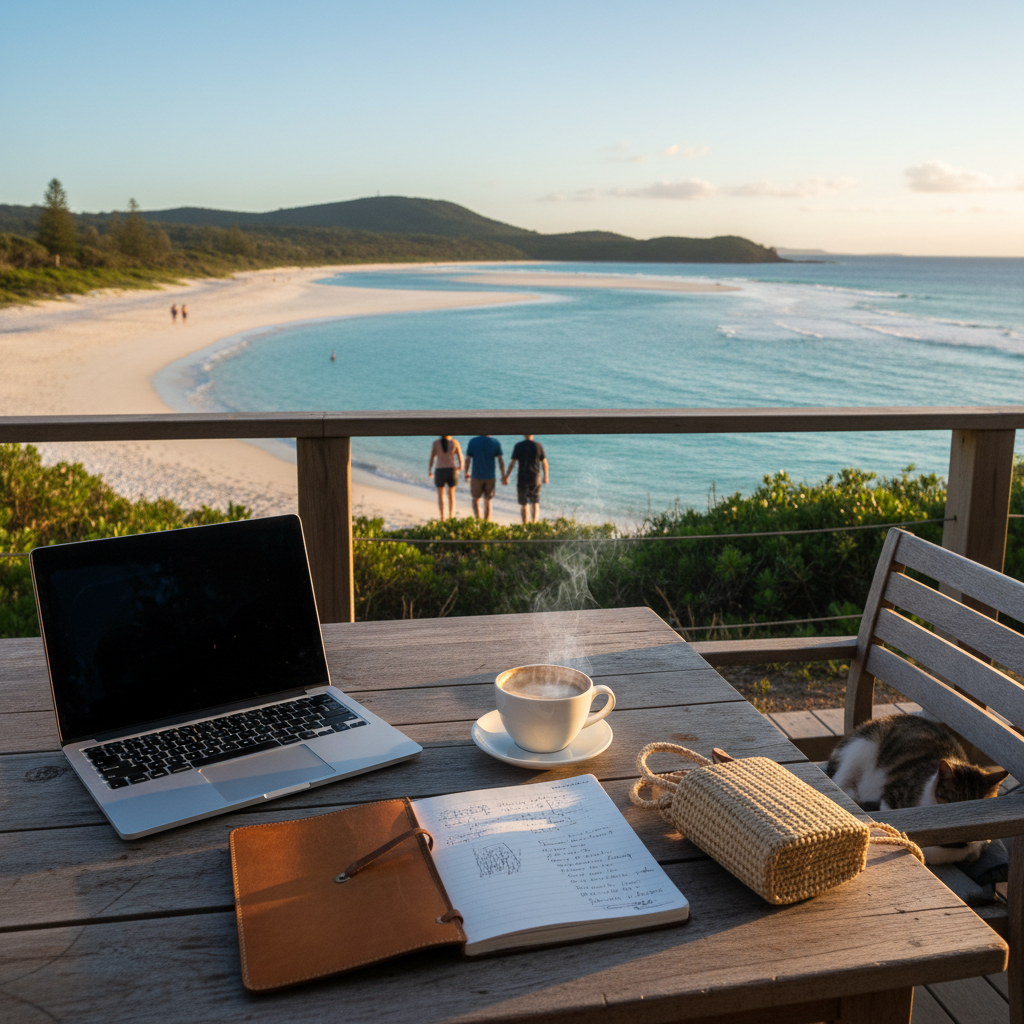
Imagine sipping coffee on a Dubrovnik terrace, laptop open, the Adriatic sparkling before you. This dream of a digital nomad lifestyle in Croatia is attainable, yet a surprising 15% of Croatia digital nomad visa applications were rejected in 2025, primarily due to preventable errors. As of 2026, Croatian authorities have streamlined some processes, but the core reasons for denial persist. This guide is your essential blueprint for understanding those common pitfalls and ensuring your application for the Croatia digital nomad visa is a resounding success.
Immediate after its introduction, Croatia's digital nomad visa quickly became a popular choice for remote workers seeking a European base with stunning natural beauty and a reasonable cost of living. However, the path to obtaining this visa isn't always straightforward. Many applicants stumble on precise income requirements, incorrect documentation, or misunderstandings of the application process. This article will dissect these issues, providing you with the knowledge to prepare a robust application and embrace your remote work journey in Croatia.
Quick facts
| Feature | Detail |
|---|---|
| Income requirement | €2,727.88/month (approx. $2,950 USD) for single applicant; additional 10% per family member. Requires proof of stable income for past 12 months. |
| Visa duration | Up to 12 months |
| Renewable | No, must leave Croatia for 6 months before re-applying. |
| Application fee | Approximately €60-€100 (depending on where you apply). |
| Processing time | Typically 20-40 days. |
| Tax rate for holders | 0% on foreign-sourced income. |
| Family members allowed | Yes, dependents can apply simultaneously. |
| Path to residency | No direct path. |
What is the Croatia digital nomad visa?
The Croatia digital nomad visa, officially known as a temporary stay for digital nomads, is a special permit allowing non-EU/EEA citizens to reside and work remotely from Croatia for up to one year. Introduced in January 2021, it caters specifically to individuals employed by companies outside of Croatia, or those running their own online business and performing digital nomad jobs for clients located abroad. Crucially, it is not a work permit in the traditional sense, as it strictly prohibits working for any Croatian-based company or client. This clarity is vital, as confusion on this point has been a source of application issues. The visa is designed to attract location independent lifestyle enthusiasts, leveraging Croatia's burgeoning infrastructure and welcoming environment. It is a testament to the country's foresight in embracing the future of remote work and digital entrepreneurship.
Croatia digital nomad visa requirements
Understanding and meticulously meeting the requirements is the single most critical step to avoiding rejection. Discrepancies or missing documents are the leading causes of application failure. Here's a breakdown of the key requirements as of 2026:
- Proof of Digital Nomad Status: You must be employed by a foreign company or own a foreign-registered business, or work as a freelancer for non-Croatian clients. This requires a letter from your employer or clients, a certificate of company registration, or contracts illustrating your remote work arrangements.
- Financial Stability: This is where many applicants falter. The minimum income requirement is €2,727.88 per month (approximately $2,950 USD) for a single applicant. This amount is derived from 2.5 times the average Croatian gross salary. For each additional family member, you must demonstrate an additional 10% of this amount per month. So, for a spouse, you'd need €2,727.88 + €272.79 = €3,000.67 per month. You must prove this stable income for the past 12 months through bank statements, salary slips, or financial reports. Insufficient funds or inconsistent income are common rejection triggers.
- Valid Passport: Your passport must be valid for at least three months beyond your intended stay in Croatia.
- Travel Health Insurance: You need proof of comprehensive health insurance covering your entire stay in Croatia. This must be valid for Croatia and cover at least €30,000 in medical expenses.
- Accommodation in Croatia: Proof of accommodation is required. This can be a rental agreement, a title deed, or a statement from a host. You don't need to have a long-term lease for the entire year initially, but you must demonstrate where you will live upon arrival.
- Clean Criminal Record: A criminal background check from your country of citizenship and any country you've resided in for more than six months in the last five years is mandatory. This document must be apostilled or superlegalized and officially translated into Croatian.
- Statement on Non-Provision of Services: A signed statement affirming that you will not perform services for Croatian employers or clients. This explicitly ensures adherence to the visa's purpose.
- Marriage Certificate/Birth Certificates: If applying with family members, these documents are required, translated and apostilled/superlegalized.
Common Rejection Reason: Insufficient or Unclear Financial Proof
Many applicants submit bank statements that don't clearly show a consistent income stream matching the requirement. Sometimes, the statements are not recent enough, or they show a lump sum without demonstrating regular monthly deposits. To avoid this, ensure your bank statements clearly show monthly income for the last 12 months, highlighting the deposits that constitute your declared remote income. If you have multiple income sources (e.g., freelancing, online business), ensure all are clearly documented and combined to meet the threshold.
How to apply for the Croatia digital nomad visa
The application process, while seemingly straightforward, requires precision. Failure to follow the steps meticulously can lead to delays or outright rejection. As of 2026, applications can be submitted either online via the Croatian Ministry of Interior's portal or in person at a Croatian embassy/consulate in your home country, or directly at a police station in Croatia if you are already there on a tourist visa (though applying from outside Croatia is often recommended).
- Gather All Required Documents: This is the most time-consuming but critical step. Ensure every document is valid, correctly translated (into Croatian by a certified translator), and apostilled or superlegalized if necessary. Double-check expiration dates.
- Complete the Application Form: Fill out the temporary stay application form (Obrazac 1a) accurately. Any inconsistencies with your supporting documents can raise red flags.
- Online Submission (Recommended): The official Croatian Ministry of Interior website provides an online portal for digital nomad visa applications. Upload all scanned documents clearly. The portal often allows for pre-screening of documents, reducing the chance of rejection later.
- In-person Submission (Alternative): If applying at an embassy/consulate, schedule an appointment well in advance. Bring all original documents and their translated copies.
- Pay the Application Fees: Fees are typically paid during the application process. Keep receipts.
- Attend Biometrics Appointment: If applying from abroad, you may need to visit a VFS Global center or embassy/consulate for biometrics (fingerprints and photo). If applying in Croatia, this will be done at the local police station.
- Await Decision: The processing time typically ranges from 20 to 40 days. During this period, authorities might request additional documentation or clarification.
- Collect Your Visa/Residence Card: Once approved, you will receive a decision. If applying from abroad, the visa stamp will be placed in your passport. If applying in Croatia, you'll pick up your residence permit card at the local police station.
Common Rejection Reason: Incomplete or Incorrect Documentation
This is perhaps the most frequent pitfall. Applicants might submit documents that are not translated, not properly apostilled, or are missing crucial information (e.g., an insurance policy that doesn't explicitly state coverage in Croatia). Cross-reference every item on the official checklist multiple times. A single missing stamp or signature can derail your entire application.
Cost breakdown
The financial investment for securing your Croatia digital nomad visa is relatively modest compared to some other countries, but it's essential to budget accurately to avoid surprises.
| Item | Cost (HRK/EUR) | Approximate USD (as of 2026) |
|---|---|---|
| Visa Application Fee | HRK 465 (approx. €60) | $65 |
| Temporary Stay Permit Fee | HRK 350 (approx. €46) | $50 |
| Biometric Card Fee | HRK 240 (approx. €32) | $35 |
| Administrative Stamp Fee | HRK 35-70 (approx. €5-€9) | $5-10 |
| Total Government Fees | ~€143-€147 | ~$155-160 |
| Document Translation (per document) | €30-€70 (varies) | $32-75 |
| Apostille/Superlegalization (per document) | €5-€20 (varies) | $5-22 |
| Health Insurance (annual) | €300-€700 (varies by provider/coverage) | $320-750 |
| Criminal Record Check | Varies by country | $10-100 |
Note: HRK (Croatian Kuna) is pegged to the Euro (1 EUR ≈ 7.5345 HRK). All Euro/USD equivalents are estimates and subject to exchange rate fluctuations.
Common Rejection Reason: Misunderstanding of
Interested in applying for the Croatia visa?
Tell us a bit about yourself and we'll send tailored guidance on eligibility, paperwork, and next steps.