The Definitive 2026 Guide to the Bahamas Digital Nomad Visa
This comprehensive guide provides everything you need to know about securing the Bahamas Digital Nomad Visa in 2026, offering a pathway to remote work in a tropical paradise. We detail eligibility, costs, application steps, and tax implications for a smooth move.
July 19, 2026
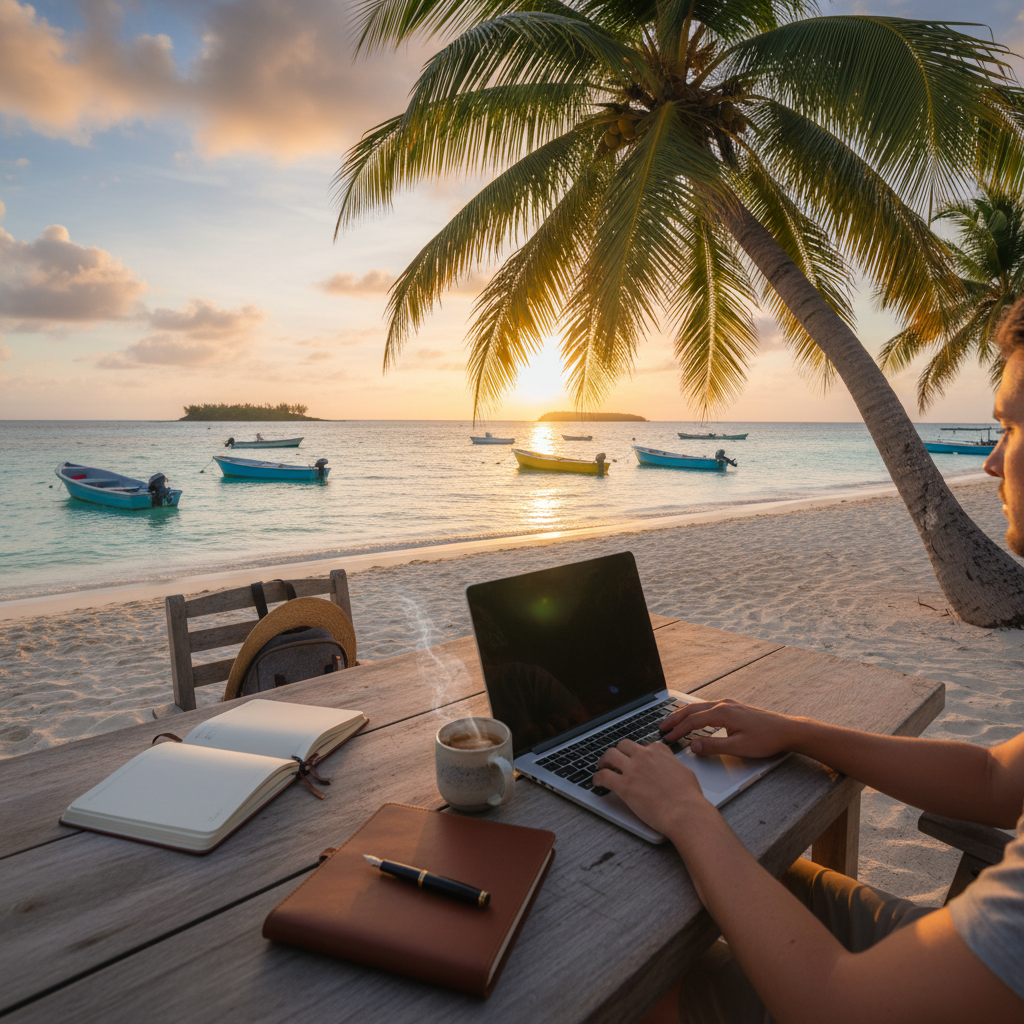
Embarking on a remote work adventure in a tropical paradise often sounds like a distant dream, but for many digital nomads, the Bahamas Digital Nomad Visa makes this a tangible reality. This definitive guide serves as your comprehensive resource for navigating the application process, understanding the requirements, and settling into the Bahamian lifestyle as a remote worker in 2026. The Bahamas has firmly established itself as an attractive destination for location-independent professionals, offering a unique blend of stunning natural beauty, a favorable time zone for many international businesses, and a straightforward visa process.
Quick Verdict: The Bahamas Digital Nomad Visa in 2026 presents an accessible and attractive option for eligible remote workers seeking a high-quality lifestyle amidst unparalleled natural beauty, provided they meet the clear financial requirements and are prepared for the associated costs.
The Bahamas' commitment to diversifying its economy and attracting skilled professionals has solidified its position as a go-to destination for those living the digital nomad lifestyle. With its clear skies, turquoise waters, and vibrant culture, it's more than just a workplace; it's an experience. This guide will meticulously break down every aspect, ensuring you have all the facts to make an informed decision for your 2026 remote work journey.
Quick Facts
| Feature | Detail |
|---|---|
| Income requirement | Minimum USD $50,000 annually |
| Visa duration | 1 year |
| Renewable | Yes, for up to 3 years |
| Application fee | USD $1,000 for primary applicant, USD $500 per dependent |
| Processing time | 5-10 business days |
| Tax rate for holders | 0% on foreign-earned income (no income tax in The Bahamas) |
| Family members allowed | Yes, dependents can be included |
| Path to residency | No direct path through this visa; renewal limitation applies |
What is the Bahamas digital nomad visa?
The Bahamas digital nomad visa, officially known as the Bahamas Extended Stay Visa (BEST Programme), was launched in late 2020 as a direct response to the global shift towards remote work. It is designed for individuals who are employed by a company outside of The Bahamas or operate their own foreign-registered business, allowing them to legally reside and work remotely from any island within the archipelago for an extended period. This program acknowledges the growing trend of digital entrepreneurship and aims to attract individuals contributing to the global economy without directly competing with the local labor market.
The visa's primary objective is to offer a seamless pathway for remote workers and their families to experience The Bahamas, injecting foreign currency into the local economy through tourism and expenditure. Unlike traditional work permits, the BEST Programme does not require a local employer or a change in tax residency status for foreign-earned income, making it particularly appealing for location-independent professionals seeking a new base. The visa is initially granted for one year and can be renewed for up to two additional years, totaling a maximum stay of three years under this program. This structured approach provides stability for digital nomads while safeguarding local employment opportunities.
Bahamas digital nomad visa requirements
To be eligible for the Bahamas Digital Nomad Visa in 2026, applicants must satisfy several key criteria. These requirements are in place to ensure that participants are genuinely remote workers, financially stable, and will not place a burden on Bahamian public services. The primary applicant must be at least 18 years of age and hold a valid passport with at least six months' validity remaining.
Income & Employment Requirements
Applicants must demonstrate a stable and reliable source of income that originates from outside The Bahamas. The minimum annual income requirement is USD $50,000. This must be substantiated with bank statements, employment contracts, and/or business registration documents. Acceptable forms of proof include:
- Proof of employment: A letter from a foreign employer stating the applicant's position, salary, and confirmation that remote work is permitted.
- Proof of self-employment/business ownership: Business registration documents, recent tax returns, and client contracts demonstrating ongoing work and income generating activities.
- Bank statements: At least three to six months of recent bank statements showing consistent income exceeding the USD $50,000 annual threshold.
Health Insurance
Comprehensive health insurance covering the applicant and any dependents for the entire duration of their stay in The Bahamas is mandatory. This insurance must provide international coverage, including medical emergencies, hospitalization, and repatriation. Proof of insurance must be submitted with the application.
Clean Criminal Record
Applicants and any adult dependents must possess a clean criminal record. A police certificate or equivalent document from their country of citizenship and any country where they have resided for more than six months in the past year is required. This document must be recent, typically issued within six months of the application date.
Other Documentation
- Copy of passport: Bio-data page for all applicants and dependents.
- Passport-sized photographs: Recent digital photographs for all applicants and dependents.
- Marriage certificate/birth certificates: If applying with dependents, proof of relationship must be provided.
How to apply for the Bahamas digital nomad visa
The application process for the Bahamas Extended Stay Visa (BEST Programme) is entirely online, designed for efficiency and convenience. Prospective digital nomads can submit their applications through the official Bahamas Department of Immigration portal. Here’s a step-by-step breakdown of the process for 2026:
Step 1: Gather Required Documents
Before initiating the online application, ensure all necessary documents are prepared. This includes scanned copies of your passport, proof of income (bank statements, employment letters, business registration), comprehensive international health insurance, and police certificates for all adult applicants. For dependents, prepare their passports, proof of relationship, and health insurance details.
Step 2: Complete the Online Application Form
Navigate to the official Bahamas Department of Immigration website (consult the country's official immigration website). Create an account if you don't already have one. Carefully fill out the online application form, providing accurate personal details, employment information, and travel plans. Double-check all entries to avoid delays.
Step 3: Upload Supporting Documents
Once the form is completed, you will be prompted to upload the scanned copies of your supporting documents. Ensure all files are in the specified format (usually PDF or JPEG) and clearly legible. Missing or unclear documents are a common cause for application delays or rejections.
Step 4: Pay the Application Fee
After successfully uploading all documents, proceed to pay the non-refundable application fee. The fee structure for 2026 is USD $1,000 for the primary applicant and USD $500 for each dependent. Payments are typically made online via credit card or bank transfer. Note that these fees are for processing the application and do not guarantee approval.
Step 5: Await Processing and Approval
Upon submission and payment, your application will undergo review by the Department of Immigration. The stated processing time is generally 5-10 business days. You will receive email notifications regarding the status of your application. If approved, an electronic visa document will be issued to you.
Step 6: Arrival in The Bahamas
Upon arrival at any port of entry in The Bahamas, present your valid passport and the electronic Extended Stay Visa. Immigration officials will verify your documents and officially grant your stay.
Cost breakdown
Understanding the financial commitment beyond the visa fee is crucial for any digital nomad considering The Bahamas. While the visa fees are straightforward, the overall cost of living and other potential expenses can vary significantly. Here’s a detailed breakdown of costs you should anticipate in 2026:
Visa Fees (Non-refundable)
- Primary Applicant: BSD $1,000 (equivalent to USD $1,000 due to the Bahamian Dollar being pegged to the US Dollar).
- Each Dependent: BSD $500 (equivalent to USD $500).
Health Insurance
Costs for comprehensive international health insurance can range from USD $50 to $200 per month per person, depending on age, coverage level, and chosen provider. For a family of two, this could easily amount to USD $1,200 to $4,800 annually.
Accommodation
Rent is the most significant variable expense. Prices depend heavily on the island, location (e.g., Nassau, Grand Bahama vs. Family Islands), size, and amenities. Here's an estimated range for monthly rent:
- 1-bedroom apartment in city center (e.g., Nassau): USD $1,500 - $3,000
- 1-bedroom apartment outside city center: USD $1,000 - $2,000
- 2-3 bedroom house/apartment: USD $2,500 - $6,000+
Example cost: A modern 2-bedroom condo in a good area of Nassau could cost around USD $3,500 per month.
Utilities
Electricity is notably expensive in The Bahamas. Expect to pay:
- Electricity: USD $200 - $600+ per month (heavily dependent on air conditioning usage).
- Water: USD $50 - $100 per month.
- Internet (high-speed fiber): USD $80 - $150 per month.
- Mobile Plan: USD $30 - $70 per month.
Groceries & Food
Most food items are imported, leading to higher grocery bills than in many North American or European countries. Cooking at home is more economical than dining out frequently.
- Monthly groceries (single person): USD $400 - $800
- Monthly groceries (family of two): USD $800 - $1,500+
- Meal at an inexpensive restaurant: USD $20 - $40
- Dinner for two in a mid-range restaurant: USD $80 - $150
Transportation
While public transport exists in some areas (jitneys in Nassau), a personal vehicle often provides more flexibility. Car rental can be expensive, and purchasing a car involves import duties and maintenance costs.
- Monthly car rental: USD $700 - $1,500
- Gasoline: Approximately USD $6-8 per gallon.
Miscellaneous & Activities
Budget for entertainment, excursions, and personal care. The Bahamas offers numerous activities, from boating to diving, which can add to your expenses.
- Average monthly miscellaneous: USD $300 - $800+
Summary of Estimated Monthly Costs (Excluding Visa Fee)
| Category | Low Estimate (USD) | High Estimate (USD) |
|---|---|---|
| Accommodation (1-bd) | $1,000 | $3,000 |
| Utilities | $360 | $920 |
| Internet/Mobile | $110 | $220 |
| Groceries | $400 | $800 |
| Health Insurance | $50 | $200 |
| Transportation | $100 | $500 |
| Miscellaneous | $300 | $800 |
| Total Estimated Monthly | $2,320 | $6,440 |
These figures represent general estimates. Your actual costs will depend on your lifestyle, location choices, and spending habits.
Taxes for digital nomads in The Bahamas
One of the most attractive aspects of the Bahamas digital nomad visa for remote workers is the favorable tax regime. The Bahamas operates under a territorial tax system and does not impose income tax on individuals, whether they are citizens, residents, or temporary visa holders. This means that if your income is sourced entirely from outside The Bahamas while you are on the Extended Stay Visa, you will not be liable for Bahamian income tax on that foreign-earned income.
It is crucial, however, to understand that this absence of income tax in The Bahamas does not exempt you from potential tax obligations in your home country or country of tax residency. Many countries have tax laws that require their citizens or permanent residents to pay taxes on worldwide income, regardless of where it is earned or where they reside temporarily. Therefore, digital nomads should consult with a tax professional experienced in international taxation to understand their specific tax liabilities in their home country and any potential implications of spending an extended period in The Bahamas.
While there is no income tax, residents and visitors in The Bahamas are subject to Value Added Tax (VAT) on most goods and services, currently at 10%. Property taxes are also applicable for real estate owners. It is important to factor in these indirect taxes when calculating your overall cost of living. For the purposes of the digital nomad visa, the primary benefit remains the 0% personal income tax on foreign-sourced income, making The Bahamas a fiscally attractive option for many remote professionals.
For Bangladeshi passport holders
Bangladeshi passport holders are eligible to apply for the Bahamas digital nomad visa, provided they meet all the standard eligibility criteria outlined in this guide. There are no specific additional restrictions or requirements imposed solely on Bangladeshi citizens for the Extended Stay Visa, beyond those applicable to all international applicants.
However, Bangladeshi applicants should pay particular attention to several aspects to ensure a smooth application process:
- Document Verification: Ensure all official documents, such as police certificates and birth/marriage certificates, are properly authenticated and translated into English by an accredited translator if originally in Bengali. It's advisable to have these verified by the relevant authorities in Bangladesh and potentially by the Bahamian consulate (if one exists in or near Bangladesh) or a designated diplomatic mission prior to application submission.
- Financial Proof: Demonstrating the USD $50,000 annual income requirement might involve providing detailed bank statements, a clear employment contract from a foreign entity, or comprehensive business registration documents and client invoices if self-employed. It's imperative that the origin of funds is transparent and legitimate.
- Connectivity and Infrastructure: While enjoying the Bahamian lifestyle, Bangladeshi remote workers might find themselves operating across significant time differences with clients or teams in Asia. Evaluating internet stability and speed on your chosen island is crucial. Major islands like New Providence (Nassau) and Grand Bahama offer reliable fiber optic connections, but connectivity can vary in more remote locations.
- Cultural Adaptation: Moving from Bangladesh to The Bahamas involves a significant cultural shift. While Bahamians are known for their warmth and hospitality, understanding local customs, particularly regarding communication and pace of life, can ease the transition. The cost of living in The Bahamas can also be considerably higher than in major Bangladeshi cities like Dhaka, especially for imported goods and services, which should be thoroughly budgeted for.
- Visa Interview: While the process is predominantly online, there is always a possibility that the Bahamian Department of Immigration may request further verification or an online interview. Bangladeshi applicants should be prepared to articulate their remote work setup and financial stability.
Bangladeshi digital nomads seeking a tropical base will find The Bahamas a welcoming, albeit premium, destination. Diligent preparation and a clear understanding of the requirements will be key to a successful application and a fulfilling stay.
Frequently asked questions
What is the Bahamas digital nomad visa?
The Bahamas digital nomad visa, known as the Extended Stay Visa (BEST Programme), allows foreign remote workers to legally reside and work from The Bahamas for up to one year, renewable for an additional two years, without requiring a local employer.
Who is eligible for the Bahamas digital nomad visa?
Eligible applicants must be at least 18, possess a valid passport, have comprehensive health insurance, a clean criminal record, and demonstrate a minimum annual income of USD $50,000 from an external source.
How much does the Bahamas digital nomad visa cost?
The application fee for the Bahamas digital nomad visa is USD $1,000 for the primary applicant and USD $500 for each dependent. These fees are non-refundable.
How long does Bahamas digital nomad visa processing take?
Processing time for the Bahamas digital nomad visa typically takes 5-10 business days from the date of a complete application submission and fee payment.
Can I bring my family on the Bahamas digital nomad visa?
Yes, you can bring your family. Dependents, including spouses and minor children, can be included in your application, with an additional fee of USD $500 per dependent.
Do I pay tax in The Bahamas on the digital nomad visa?
No, The Bahamas does not impose income tax on foreign-earned income for Extended Stay Visa holders. However, you will be subject to local VAT on goods and services, and possible taxes in your home country.
Can Bangladeshi citizens get the Bahamas digital nomad visa?
Yes, Bangladeshi citizens are eligible to apply for the Bahamas digital nomad visa, provided they meet all the general requirements including income, health insurance, and a clean criminal record. No specific additional restrictions apply.
Sources
- The Bahamas Ministry of Tourism & Aviation - Official BEST Programme Page (consult the country's official immigration website)
- Bahamas Department of Immigration (consult the country's official immigration website)
- Bahamas Customs & Excise Department - VAT Information (consult the country's official immigration website)
- Various reputable expat and global living cost databases (e.g., Numbeo.com, Expatistan.com) for cost of living estimates (accessed January 2026).
Compare with: Barbados, Cayman Islands, Antigua and Barbuda
Interested in applying for the Bahamas visa?
Tell us a bit about yourself and we'll send tailored guidance on eligibility, paperwork, and next steps.