Why Australia for Digital Nomads
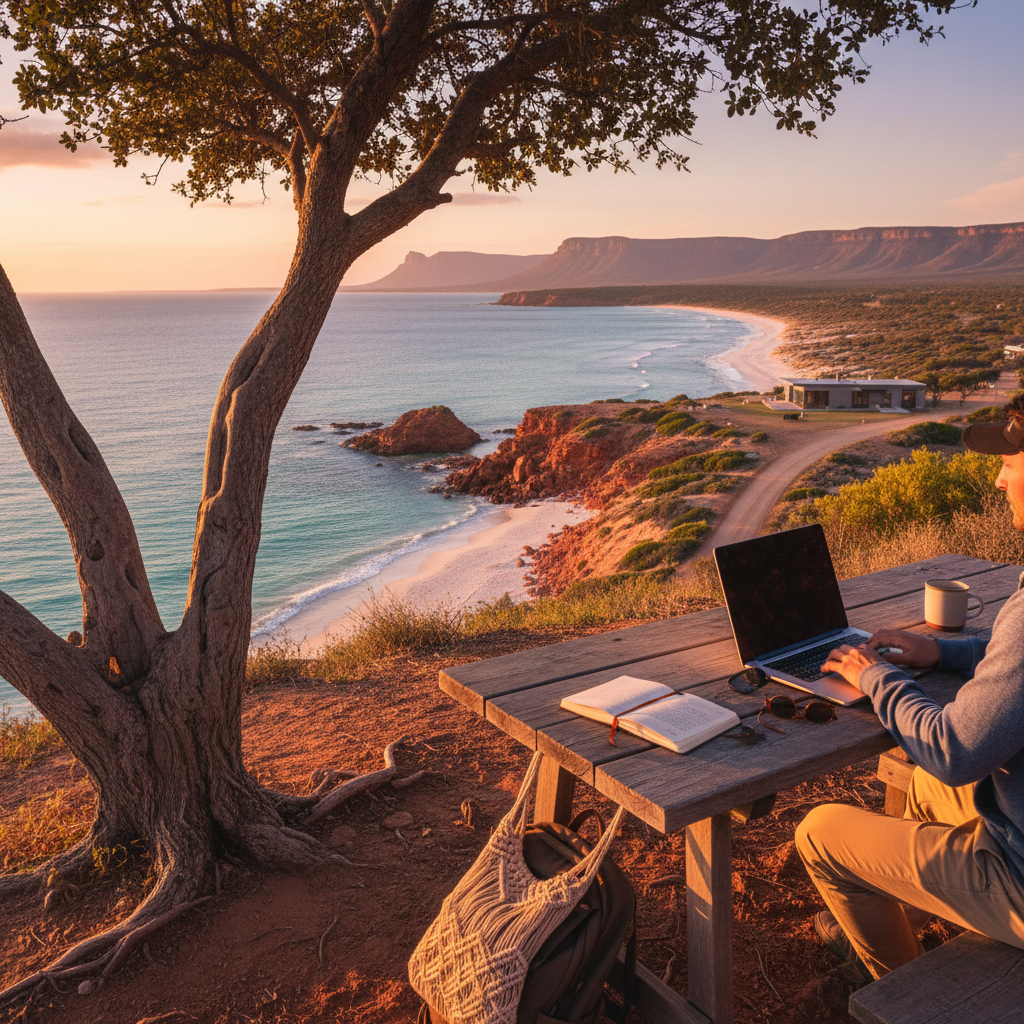
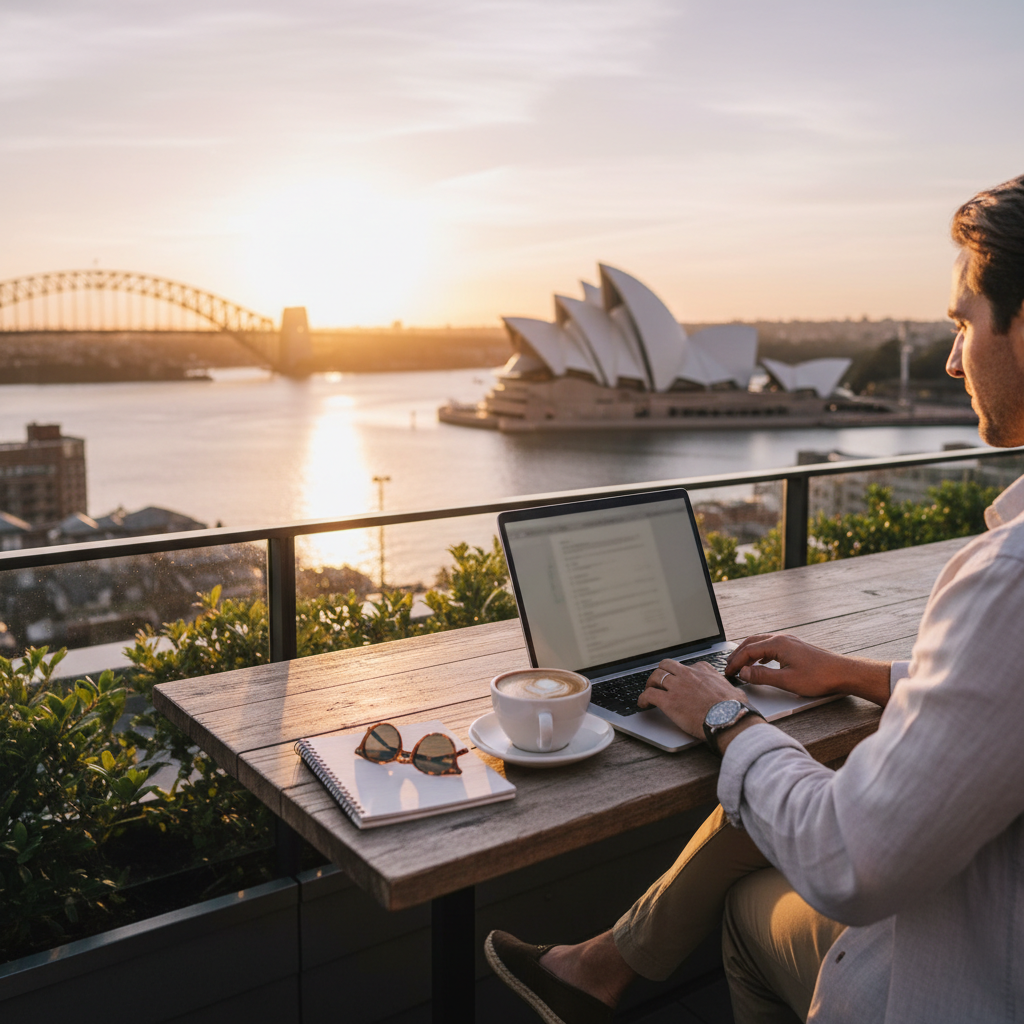
Australia, the vast island continent, offers an intoxicating blend of world-class cities, stunning natural beauty, and a laid-back, yet high-quality, lifestyle that beckons digital nomads globally. In 2026, the allure remains as strong as ever, albeit with some unique considerations for remote workers. Imagine starting your day with a surf before diving into your project, or networking with innovators in bustling city hubs. Australia provides diverse landscapes, from the iconic Sydney Opera House and Melbourne's laneway cafes to the ancient wonders of the Outback and the pristine beaches of Queensland. The robust economy, advanced infrastructure, and English-speaking environment make for a relatively smooth transition for many. A key draw is the weather – predominantly sunny and warm, fostering an outdoor culture from barbecues on the beach to hiking in national parks. The friendly locals, often referred to as 'Aussies,' are known for their easygoing nature and love of a good yarn. While a dedicated digital nomad visa is still under discussion by the government for 2026, existing visa pathways, particularly the Working Holiday Visa for younger professionals, offer viable routes to experience life Down Under while working remotely. The time zone can be a challenge for those collaborating with teams in Europe or the Americas, but it also means early mornings or late nights can offer uninterrupted work blocks. The cost of living is undeniably high, especially in major cities, but the quality of life, safety, and experiences on offer often justify the expense for those earning a good remote income. For the adventurous, the cultured, and those seeking a vibrant lifestyle coupled with professional opportunities, Australia holds an undeniable charm.
Visa Options & Eligibility
As of 2026, Australia does not yet have a specific 'digital nomad visa' category. Remote workers looking to live and work from Australia must utilize existing visa pathways, which come with specific conditions. The most common options are:
-
Working Holiday Visa (Subclass 417 & 462)
- Description: This is the most popular route for eligible digital nomads. It allows individuals aged 18-30 (or 18-35 for some countries like Canada, France, Ireland, Italy, Denmark, UK) to have an extended holiday in Australia and undertake casual work to supplement their travel funds. While the primary intent is holiday, remote work for an overseas employer generally fits within the 'supplement' income clause, provided you are not taking a role that an Australian citizen or resident could fill.
- Subclass 417 (Working Holiday): For passport holders from Belgium, Canada, Cyprus, Denmark, Estonia, Finland, France, Germany, Hong Kong SAR, Ireland, Italy, Japan, Republic of Korea, Malta, Netherlands, Norway, Sweden, Taiwan, United Kingdom.
- Subclass 462 (Work and Holiday): For passport holders from Argentina, Austria, Brazil, Chile, China, Czech Republic, Ecuador, Greece, Hungary, Indonesia, Israel, Luxembourg, Malaysia, Mongolia, Peru, Philippines, Poland, Portugal, San Marino, Singapore, Slovak Republic, Slovenia, Spain, Switzerland, Thailand, Turkey, Uruguay, USA, Vietnam.
- Maximum Stay: Up to 12 months, with the possibility of extending for a second and third year if specific regional work requirements are met (e.g., 3 months of specified work for a second year, 6 months for a third year).
- Eligibility: Aged 18-30 (or 35 for some countries) at the time of application, hold a valid passport from an eligible country, have sufficient funds (AUD 5,000-7,000, roughly USD 3,300-4,700, plus a return fare), and meet health and character requirements.
- Application Fee: Approximately AUD 635 (USD 420) as of 2026.
- Processing Time: 14-90 days, depending on nationality and application quality.
-
Visitor Visa (e.g., eVisitor, ETA)
- Description: For shorter stays (typically up to 3 months) for tourism. While working remotely for an overseas employer is generally considered a 'grey area' on a tourist visa, it's widely accepted as long as it's not for an Australian entity and doesn't constitute 'work' in the traditional sense (i.e., you aren't taking a job from an Australian, selling services locally, or spending most of your time working). The intention should primarily be tourism.
- eVisitor (Subclass 651): For passport holders from certain European countries. Allows multiple entries for up to 3 months at a time within a 12-month period.
- ETA (Electronic Travel Authority - Subclass 601): For passport holders from selected countries (e.g., USA, Canada, Japan, most European countries, Singapore, Malaysia). Allows multiple entries for up to 3 months at a time within a 12-month period.
- Application Fee: eVisitor is free. ETA is AUD 20 (USD 13) service charge for online applications.
- Processing Time: Usually immediate to a few days.
- Limitation: Strictly no working for an Australian employer. Prolonged remote work could be questioned upon entry or exit.
Important Considerations:
- Health Insurance: It is mandatory to have comprehensive health insurance for the duration of your stay on most long-term visas.
- Proof of Funds: You must demonstrate sufficient funds to support yourself without becoming a burden on the Australian public.
- Future Digital Nomad Visa: Keep an eye on announcements from the Australian Department of Home Affairs. While there's been discussion, no concrete 'Digital Nomad Visa' category has been introduced yet for 2026.
Cost of Living Breakdown
Australia is known for its high cost of living, particularly in its major cities. Digital nomads should budget carefully. Here's an estimated monthly breakdown in USD for a single person in a mid-range city like Brisbane or Adelaide, adjusting for 2026 prices. Sydney and Melbourne will be 20-30% higher.
| Expense Category | Estimated Monthly Cost (USD) |
|---|---|
| Accommodation | |
| 1-bedroom apartment (city center) | 1,500 - 2,500 |
| 1-bedroom apartment (outside city) | 1,000 - 1,800 |
| Room in shared house | 700 - 1,200 |
| Utilities | |
| Electricity, heating, cooling, water, garbage | 150 - 250 |
| Internet (unlimited, 100 Mbps) | 50 - 70 |
| Mobile Plan | 30 - 50 |
| Food & Groceries | |
| Groceries (cooking at home) | 350 - 550 |
| Dining Out (mid-range, 4-6 meals) | 150 - 250 |
| Coffee & Snacks | 70 - 100 |
| Transportation | |
| Public Transport Pass | 100 - 150 |
| Occasional Rideshares/Taxis | 50 - 100 |
| Health & Wellness | |
| Health Insurance (mandatory for some visas) | 70 - 120 |
| Gym Membership | 60 - 90 |
| Leisure & Entertainment | |
| Social activities, attractions | 200 - 400 |
| Miscellaneous | |
| Personal care, incidentals | 100 - 200 |
| Total Estimated Monthly Cost | 3,000 - 4,700 |
- Average Minimum Monthly Cost: USD 3,000 (around AUD 4,500) for a comfortable but frugal lifestyle outside Sydney/Melbourne.
- Comfortable Monthly Cost: USD 4,000 - USD 6,000+ (AUD 6,000-9,000+) for a more central location, dining out frequently, and enjoying more activities.
Best Cities & Neighborhoods
Australia offers a range of thriving cities, each with its unique character suitable for digital nomads:
- Melbourne, Victoria: Consistently ranked among the world's most liveable cities, Melbourne is a cultural powerhouse. It boasts an incredible café culture, world-class dining, vibrant arts scene, and numerous coworking spaces.
- Neighborhoods: Fitzroy (bohemian, cafes, street art), Collingwood (hip, industrial-chic, creative industries), Southbank (modern, high-rises, riverside), St Kilda (beachside, lively, relaxed).
- Sydney, New South Wales: Australia's largest city, known for its iconic landmarks (Opera House, Harbour Bridge), stunning beaches (Bondi, Manly), and bustling business districts. It's more expensive but offers unparalleled opportunities and experiences.
- Neighborhoods: Surry Hills (trendy, design, cafes), Newtown (alternative, vibrant, diverse), Bondi (beach-centric, active lifestyle), Pyrmont (modern, city living, close to CBD).
- Brisbane, Queensland: A rapidly growing city with a sub-tropical climate, Brisbane offers a more relaxed pace than Sydney or Melbourne but still has excellent amenities, a thriving arts scene, and proximity to stunning natural attractions.
- Neighborhoods: Fortitude Valley (entertainment, nightlife, creative), South Bank (cultural precinct, parklands, riverside), West End (eclectic, bohemian, community feel).
- Perth, Western Australia: The capital of WA, known for its sunny weather, pristine beaches, and close proximity to natural wonders like Rottnest Island. It offers a slightly lower cost of living than the east coast giants.
- Neighborhoods: Fremantle (historic port, artsy, relaxed), Northbridge (dynamic, dining, nightlife), Subiaco (upscale, leafy, good amenities).
- Adelaide, South Australia: Often overlooked, Adelaide is gaining popularity for its affordability, burgeoning food and wine scene, and easy access to wine regions. It's calmer but offers a high quality of life.
- Neighborhoods: Norwood (boutique shopping, cafes, lovely streets), Glenelg (beachside, popular for tourism), Unley (leafy, residential, good cafes).
- Gold Coast, Queensland: While known for its tourist traps, the Gold Coast also appeals to digital nomads seeking a beach-focused lifestyle with year-round warm weather, abundant surfing, and a growing number of modern apartments.
- Neighborhoods: Burleigh Heads (surf, cafes, national park), Palm Beach (family-friendly, relaxed), Broadbeach (more commercial, dining, entertainment).
Internet, Coworking & Remote-Work Infrastructure
Australia generally provides excellent infrastructure for remote work, particularly in urban centers.
- Internet Speed: The National Broadband Network (NBN) is Australia's wholesale broadband provider. As of 2026, average fixed broadband speeds are around 70 Mbps download and 18 Mbps upload. In major cities like Sydney and Melbourne, many areas have access to NBN Fibre to the Premises (FTTP) or Hybrid Fibre Coaxial (HFC), achieving speeds of 100-250 Mbps and even gigabit speeds in some residential zones. Mobile 5G is widely available in cities, offering speeds comparable to or exceeding fixed broadband. Reliable internet is rarely an issue in well-populated areas.
- Mobile Connectivity: All major cities and populated coastal areas have strong 4G and growing 5G coverage from providers like Telstra, Optus, and Vodafone. Prepaid SIM cards are easily obtainable, offering competitive data plans.
- Coworking Spaces: The coworking scene is robust and expanding. All major cities boast numerous options ranging from trendy boutique spaces to large global chains like WeWork, Regus, and Spaces.
- Pricing: Hot desking typically costs AUD 30-50 (USD 20-33) per day or AUD 300-600 (USD 200-400) per month. Dedicated desks can range from AUD 600-1000 (USD 400-670) per month. Most offer amenities like professional meeting rooms, fast internet, printing, and community events.
- Popular Chains/Independents:
- WeWork: Multiple locations in Sydney, Melbourne, Brisbane, Perth.
- Spaces: Locations in all major capitals.
- Regus: Extensive network across Australia.
- The Commons: Melbourne, Sydney.
- Stone & Chalk: Focus on startups, FinTech (Sydney, Melbourne, Adelaide).
- Fishburners: Not-for-profit for tech startups (Sydney).
- Cafes with Wi-Fi: Most cafes in Australian cities offer free Wi-Fi, making them suitable for casual work sessions, though dedicated workspaces are recommended for longer, more focused tasks. Public libraries also provide free internet access.
- Time Zones: Australia spans several time zones, which can be an advantage or disadvantage. Working with North American or European teams often means early mornings or late nights, but it also allows for long, uninterrupted work blocks during the day.
Taxes & Legal Considerations
Navigating Australian tax and legal obligations as a digital nomad requires careful attention, especially since there isn't a specific digital nomad visa.
- Tax Residency: This is the most critical factor. Your tax residency status determines how your income is taxed in Australia. It's not the same as your visa status. Generally, if you reside in Australia for more than six months in any income year (July 1st to June 30th), or demonstrate an intention to reside, you may be considered a resident for tax purposes. This means:
- Australian Tax Resident: You are taxed on your worldwide income. You will need to obtain a Tax File Number (TFN) and lodge an annual tax return. Australia has various tax treaties to prevent double taxation, so you may be able to claim credits for taxes paid in other countries.
- Foreign Resident for Tax Purposes: If you are not deemed a tax resident, you are only taxed on Australian-sourced income. Income earned from an overseas employer for work performed remotely for non-Australian clients would generally not be considered Australian-sourced. However, the definition can be complex, and getting professional advice is crucial.
- Income Tax Rates (2026 estimates, subject to change):
- Foreign Residents: Taxed from the first dollar, usually at a higher flat rate (e.g., 32.5% up to AUD 120,000, then higher).
- Australian Residents (for tax purposes): Enjoy a tax-free threshold (e.g., AUD 18,200), with progressive tax rates thereafter (e.g., 19% up to AUD 45,000, then 32.5%, etc.).
- Goods and Services Tax (GST): Australia has a 10% GST on most goods and services. If you offer services to Australian clients and your turnover exceeds AUD 75,000 per year, you might need to register for GST.
- Business Registration: If you intend to operate a business within Australia or provide services to Australian clients, you might need to register for an Australian Business Number (ABN), even if it's a sole proprietorship.
- Visa Conditions: Always adhere strictly to your visa conditions. For Working Holiday visa holders, remember the primary purpose is holidaying. While remote work is generally accepted to 'supplement' funds, working full-time for an Australian entity or taking a job that an Australian could fill is generally prohibited if not explicitly covered by specific work rights. On a Visitor Visa, any form of work should be approached with extreme caution, as the primary purpose must be tourism.
- Seek Professional Advice: Due to the complexities of international tax law and Australian immigration rules, it is highly recommended to consult with an Australian immigration lawyer and a tax professional specializing in international income before or upon arrival. They can provide personalized advice based on your specific circumstances and ensure compliance.
Lifestyle, Culture & Community
Australia's lifestyle is often romanticized, and for good reason. It's characterized by its love for the outdoors, a relaxed attitude, and a strong emphasis on work-life balance.
- Outdoor Living: Australians embrace the sunshine. Expect long days at the beach, barbecues in parks, hiking in national parks, and a general preference for being outside. Sports (especially surfing, cricket, and Aussie Rules Football) are integral to the culture.
- Coffee & Food Culture: Particularly in Melbourne and Sydney, the coffee scene is world-class, with high standards for baristas and specialty beans. The culinary landscape is incredibly diverse, reflecting Australia's multicultural population, with influences from Asia, Europe, and the Middle East.
- Friendliness & Mateship: Australians are generally friendly, informal, and have a dry sense of humor. The concept of 'mateship' (loyalty, camaraderie) is strong. Learning a bit of Aussie slang (e.g., 'G'day', 'no worries', 'arvo') can help you connect.
- Multiculturalism: Australia is a vibrant multicultural society. This brings a rich tapestry of languages, cuisines, and festivals, creating open-minded and welcoming communities.
- Digital Nomad & Expat Scene: While Australia hasn't traditionally been a digital nomad hotspot like Southeast Asia, its cities have growing expat and remote worker communities. Facebook groups like 'Digital Nomads Australia' or city-specific expat groups are great places to connect. Coworking spaces also foster community through events and networking opportunities.
- Safety & Healthcare: Australia is very safe, with low crime rates. The healthcare system is excellent, though non-residents will need comprehensive travel insurance. Australians also have a strong awareness of mental health, with readily available services.
- Work-Life Balance: Compared to some other Western countries, Australia generally values a good work-life balance. Weekends are for leisure, and holidays are taken seriously. This can be a refreshing change for many remote workers.
How to Apply: Step-by-Step
Assuming you are applying for a Working Holiday Visa (Subclass 417 or 462), the most common route for eligible digital nomads in 2026. Always refer to the official Australian Department of Home Affairs website for the most up-to-date information.
-
Check Your Eligibility:
- Are you aged 18-30 (or 35 for specific countries) at the time of application?
- Do you hold a valid passport from an eligible country?
- Do you meet the health and character requirements?
- Do you have sufficient funds (AUD 5,000-7,000, plus a return ticket)?
- This must be your first Working Holiday visa (unless applying for a second or third based on specified work).
-
Gather Required Documents:
- Valid Passport (copy of biodata page).
- Certified copy of your birth certificate.
- Bank statements proving sufficient funds (e.g., 3 months of statements).
- Proof of onward travel or sufficient funds to purchase one.
- Educational qualifications (if applicable, for certain nationalities for subclass 462).
- Police checks/character certificates from any country you've lived in for 12 months or more over the last 10 years after turning 16.
- Health examinations (if requested by the Department).
- Employer details (if currently employed remotely).
- A credit or debit card for the application fee.
-
Create an ImmiAccount:
- Go to the Australian Department of Home Affairs website.
- Create an ImmiAccount – this is your online portal for applying for and managing your visa.
-
Complete the Online Application Form:
- Log into your ImmiAccount and select 'New application'.
- Choose 'Working Holiday Visa (417)' or 'Work and Holiday Visa (462)' as appropriate.
- Fill out the application form truthfully and completely. Provide all requested personal, travel, and health information.
-
Attach Supporting Documents:
- Digitally upload all the documents gathered in Step 2. Ensure they are clear, legible, and correctly named. Follow any specific file size/format instructions.
-
Pay the Application Fee:
- As of 2026, the fee is approximately AUD 635 (USD 420). This must be paid online via credit card.
- Your application will not be processed until the fee is paid.
-
Submit Your Application:
- Review all information and uploaded documents. Once satisfied, submit your application.
- You will receive a confirmation email with a transaction reference number (TRN).
-
Wait for Processing & Further Requests:
- Processing times vary (typically 14-90 days, but check current estimates). You can track your application status via your ImmiAccount.
- The Department may request additional information or health checks at any point.
-
Visa Grant Notification:
- If successful, you will receive a visa grant notification via email. This document contains your visa conditions, including the date by which you must make your first entry into Australia.
-
Plan Your Travel:
- Book your flights and accommodation.
- Arrange comprehensive travel and health insurance (highly recommended, often mandatory).
Common Pitfalls
Australia, while appealing, presents a few common challenges for digital nomads:
- High Cost of Living: This is by far the biggest hurdle. Unprepared nomads can find their savings dwindling quickly, especially in Sydney or Melbourne. Budgeting meticulously and maintaining a strong income stream is paramount.
- Visa Misinterpretation: The biggest pitfall is misinterpreting visa conditions. Australia is strict with its immigration laws. Using a tourist visa for extensive work, even remote, is risky. Even on a Working Holiday Visa, the primary intent must be holiday, and you generally cannot work for the same employer for more than six months (some exceptions apply).
- Tax Residency Confusion: Many digital nomads mistakenly assume they won't owe tax in Australia. If you become an Australian tax resident (which can happen after 6 months), you are taxed on worldwide income. Failing to declare and pay taxes can lead to significant penalties.
- Accommodation Scams/Difficulty: Finding affordable housing, especially short-term, can be challenging in competitive markets. Be wary of scams and always verify listings, ideally viewing properties in person before committing large sums.
- Remoteness & Travel Costs: While Australia is stunning, internal travel between major cities is expensive and time-consuming due to the vast distances. Budget for both international and domestic travel costs if you plan to explore extensively.
- Time Zone Challenges: For those collaborating with teams in Europe or the Americas, the significant time difference can lead to working unusual hours, which might impact work-life balance or social plans.
- Healthcare Costs: Without proper health insurance, medical expenses can be exorbitant. Ensure your travel insurance covers you adequately for the duration of your stay, as you won't be covered by Medicare (the public health system) on a Working Holiday or Visitor Visa.
- Difficulty Extending Stays: While Working Holiday Visas offer second and third-year extensions, they typically require periods of specific regional work, which might not align with a purely remote role. Other visa pathways for long-term stays are often more complex and require sponsorships or highly specialized skills.
- Wildlife & Weather Awareness: While generally safe, be aware of Australia's unique wildlife (e.g., spiders, snakes, jellyfish in certain areas) and extreme weather events (bushfires, floods, cyclones) in relevant seasons and regions. Stay informed via local news and emergency services.