Armenia vs. Georgia 2026: The Ultimate Digital Nomad Showdown
Deciding between Armenia and Georgia for your next digital nomad hub? We pit these two Caucasian gems against each other, comparing visa eligibility, costs, tax, and lifestyle factors to help you make an informed choice in 2026.
June 4, 2026

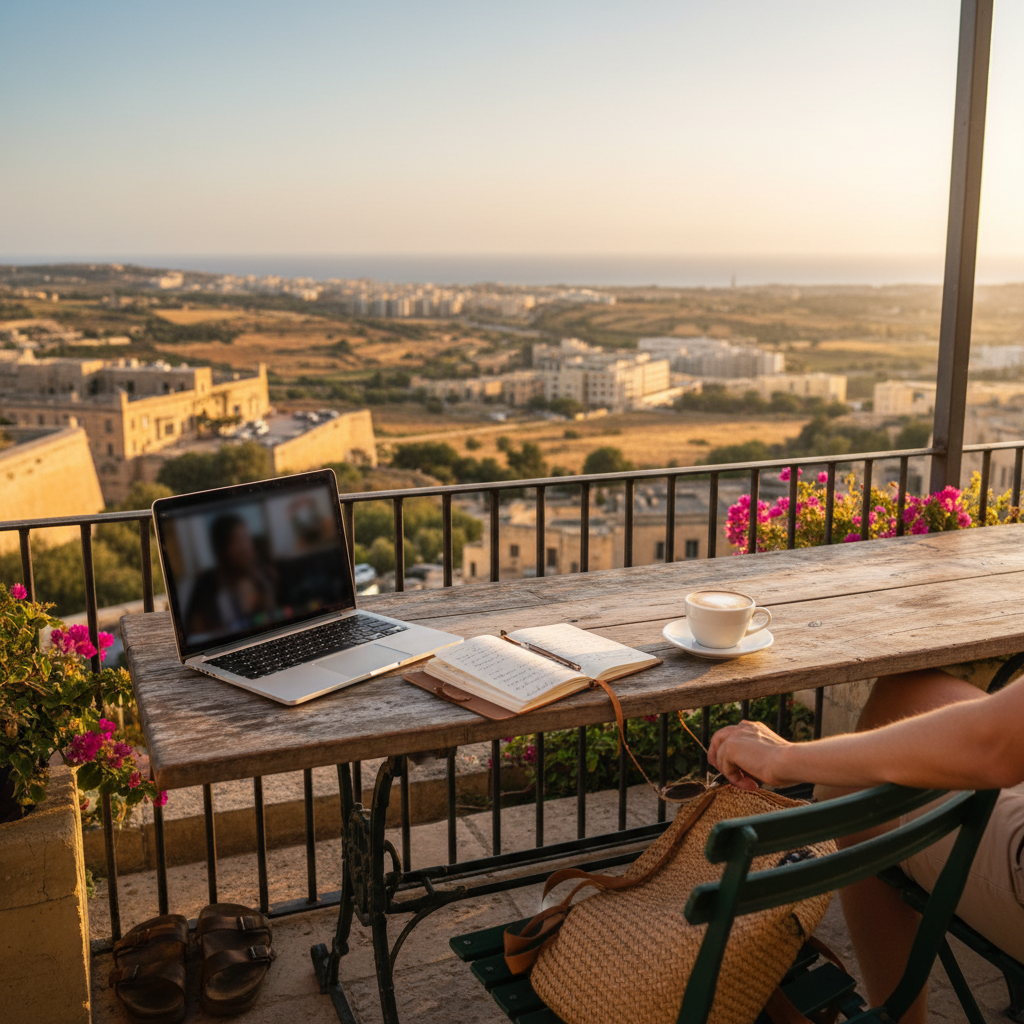
Maria, a freelance UI/UX designer from Brazil, was staring at two open tabs on her laptop: one for Yerevan, Armenia, and the other for Tbilisi, Georgia. Both promised vibrant cultures, burgeoning tech scenes, and remarkably low costs of living. She'd just wrapped up a two-year stint in Lisbon and was craving something new, a place with a distinct history and a sense of adventure. The Armenian visa seemed less formal, almost an 'unspoken' open-door policy for remote workers, while Georgia loudly proclaimed its 'Remotely From Georgia' program. The choice wasn't just about the visa itself, but the entire ecosystem: internet speed, fellow nomads, tax implications, and the ever-important cup of coffee. This article will help you, like Maria, navigate the nuances of choosing between these two compelling destinations for your 2026 digital nomad adventure.
Unpacking Armenia's Digital Nomad Appeal
Armenia, with its ancient history, stunning landscapes, and rapidly modernizing capital of Yerevan, has quietly emerged as an attractive, albeit less officially structured, destination for digital nomads. While it doesn't boast a dedicated 'Digital Nomad Visa' akin to many European nations, its highly liberal visa policy, particularly for certain nationalities, combined with a progressive tax system, makes it incredibly accessible.
Eligibility Criteria: The Armenian Approach
Unlike countries with explicit digital nomad visas, Armenia relies on its general immigration framework. The key here is the duration of stay permitted for your nationality. Many nationalities, including EU citizens, Americans, Canadians, Australians, and citizens of various CIS countries, can enter Armenia visa-free for up to 180 days within a calendar year. For longer stays, or if your nationality requires a visa, you'll typically apply for a long-stay visa (Type D), followed by a temporary residency permit.
To be considered a digital nomad under this de facto system, you'll need to demonstrate:
- Proof of Remote Work: This could be a contract with an employer outside Armenia, freelance client agreements, or proof of self-employment with international clients. The income must originate from outside Armenia.
- Financial Means: While there's no fixed minimum income for the initial entry for many nationalities, to qualify for a temporary residency permit (which is crucial for stays exceeding 180 days and for managing tax residency), you will generally need to show sufficient funds to support yourself without becoming a burden on the state. Anecdotal evidence suggests demonstrating around AMD 200,000 – 300,000 per month (€450-€670 / $490-$730 USD approx. as of late 2025/early 2026) in consistent income is advisable when applying for residency, though it's not a legal minimum for initial entry.
- Clean Criminal Record: Standard for any visa or residency application.
Fees and Costs: Surprisingly Affordable
Armenia's fee structure is refreshingly straightforward and significantly lower than many dedicated digital nomad programs.
- Visa Fees: For nationalities requiring a visa, a single-entry Type D visa typically costs AMD 15,000 (approx. €34 / $37 USD). A multiple-entry visa (valid for up to 60 or 120 days within a 180-day period) might cost AMD 20,000 - AMD 30,000 (€45-€67 / $49-$73 USD), depending on the type and duration. Always reconfirm with the embassy or consulate in your country of residence.
- Temporary Residency Permit: This is where the real value lies for long-term nomads. A one-year temporary residency permit costs AMD 105,000 (approx. €235 / $255 USD). This is issued for various grounds, including employment, business activities, or education – and can be secured by establishing yourself as a private entrepreneur, a relatively easy process.
Step-by-Step Application for Long-Term Stay
- Enter Armenia Visa-Free (if applicable): Most Western nationalities can enter for up to 180 days without a visa.
- Registration at Police: Within 15 days of arrival, if you plan to stay long-term, register your address with the Passport and Visa Department of the Police of the Republic of Armenia. Your landlord can typically assist with this.
- Establish as a Private Entrepreneur (PE): This is the most common and easiest route for digital nomads to obtain a temporary residency permit. Registering as a PE can be done at the State Register of Legal Entities. It's a quick process, often completed within 1-2 working days. You'll need a local lawyer or consultant (cost: AMD 50,000 - AMD 150,000 / €110-€335 / $120-$365 USD) for this, as the process is in Armenian.
- Open a Local Bank Account: Essential for business operations and demonstrating financial stability.
- Apply for a Temporary Residency Permit: With your PE registration and bank account, submit your application to the Passport and Visa Department. Required documents usually include: passport, PE registration certificate, bank statement, proof of address, medical certificate, and photos. Processing time can be anywhere from 30 to 60 days.
Processing Times
- Visa application (outside Armenia): 3-10 working days.
- Residency Permit application (inside Armenia): 30-60 working days.
Tax Treatment: Highly Favorable
This is where Armenia truly shines. As a Private Entrepreneur (PE) on the micro-entrepreneurial system, you can benefit from an incredibly low tax rate. For services provided outside Armenia (e.g., to international clients, common for digital nomads), the tax rate can be as low as 0% to 5% for qualifying activities and turnover. This is a significant advantage. Income derived from sources within Armenia would be subject to standard rates, but this is less common for typical digital nomad work. A flat income tax rate of 20% applies to salaries.
Family and Dependents
Dependents (spouse, minor children) can apply for the same type of residency permit based on the principal applicant's status. They will need to provide proof of relationship and meet standard health and background checks.
Renewals
The temporary residency permit is typically issued for one year and is renewable. The renewal process is similar to the initial application, requiring updated documentation including proof of continued remote work and financial solvency.
Armenia-Specific Pitfalls
- Language Barrier: While English is spoken in tourist areas and among the younger generation, Armenian is the official language. Daily administrative tasks can be challenging without local assistance or a basic grasp of the language.
- Bureaucracy: While less onerous than some countries, navigating the police and other government departments can be slow and requires patience.
- No Explicit DN Visa: The lack of a formal 'Digital Nomad Visa' means you're relying on general immigration laws, which can feel less secure to some, even though it's effectively a working system.
- Internet Stability: Generally good in Yerevan, but can be less reliable in rural areas.
Georgia's Digital Nomad Ecosystem: 'Remotely From Georgia'
Georgia boldly launched its 'Remotely From Georgia' program in 2020, specifically targeting remote workers – a clear statement of intent. The country offers a blend of ancient charm, stunning mountain vistas, and a bustling capital in Tbilisi that is a magnet for expats and nomads.
Eligibility Criteria: Clear-Cut Requirements
Georgia's program is more structured. To qualify for 'Remotely From Georgia', you must:
- Nationality: Be a citizen of one of the 95 eligible countries (including most of Europe, North America, Australia, New Zealand, etc.).
- Proof of Remote Work: Employed by a company outside Georgia, or self-employed/freelancer with clients outside Georgia.
- Minimum Income: A strict minimum monthly income of USD $2,000 (approx. GEL 5,400). This must be demonstrably consistent for at least the last 12 months.
- Travel Insurance: Proof of health insurance valid for at least six months.
- Clean Criminal Record: Must hold a clean record from your country of origin.
Fees and Costs: Higher, but Still Reasonable
Georgia's program has fewer direct government fees but requires upfront investment in insurance and potentially legal assistance.
- Application Fee: There is no direct government application fee for the 'Remotely From Georgia' program itself. However, if you need a visa to enter Georgia (which most eligible nationalities do not for tourist stays), standard visa fees would apply, though this program is designed for visa-free entry nations.
- Health Insurance: This is a mandatory and significant cost. Expect to pay anywhere from $200 - $600 USD (GEL 540-GEL 1,620) for 6-12 months of coverage, depending on the provider and level of coverage.
- Legal Assistance: While possible to apply independently, many opt for local lawyers to navigate the process, especially with document translation and submission. This can add $100 - $300 USD (GEL 270-GEL 810) to your costs.
Step-by-Step Application for 'Remotely From Georgia'
- Online Application: Submit an online application through the official 'Remotely From Georgia' portal. This requires uploading all supporting documents (passport, proof of employment/self-employment, bank statements showing income, health insurance, criminal record certificate).
- Approval/Rejection: The Ministry of Economy and Sustainable Development of Georgia reviews applications. If approved, you receive an email with an official letter.
- Entry to Georgia: Travel to Georgia. You will present your approval letter to immigration officials upon arrival. This allows you to enter for up to 365 days, which extends beyond the standard visa-free 365 days.
- Tax Registration (if applicable): If you intend to stay for more than 183 days and become a tax resident, you'll need to register with the Georgian tax authorities.
Processing Times
- Online application: Typically 10 working days, but can extend to 30 days due to high volume.
Tax Treatment: Favorable for 'Small Business Status'
Georgia offers an attractive 'Small Business Status' (SBS) which taxes turnover at 1% for incomes up to GEL 500,000 (approx. €170,000 / $185,000 USD) per year, provided your activities qualify. For digital nomads providing services to clients outside Georgia, this is highly beneficial. If you exceed this threshold or do not qualify for SBS, the standard income tax rate is a flat 20%.
Family and Dependents
The 'Remotely From Georgia' program doesn't explicitly cover dependents in the initial application, but they can enter under their standard visa-free status (if applicable) and then apply for a temporary residency permit based on family reunification once the principal applicant has established residency.
Renewals
The 'Remotely From Georgia' status itself is for an initial 365 days. For continued stay, you would need to apply for a temporary residency permit based on your 'Small Business Status' or other grounds.
Georgia-Specific Pitfalls
- Income Threshold: The $2,000 USD minimum income is non-negotiable and higher than the de facto threshold in Armenia.
- Insurance Requirement: Mandatory health insurance adds a significant upfront cost.
- Banking: Opening a bank account can sometimes be challenging for foreigners without prior residency, requiring significant paperwork and potentially multiple visits.
- Bureaucracy for Residency: While the 'Remotely From Georgia' application is online, securing longer-term residency permits (beyond the initial 365 days) can involve traditional bureaucracy.
- Earthquake Risk: While not a frequent occurrence, Georgia is in an active seismic zone; earthquake preparedness is a consideration for long-term residents. Yerevan is also in a seismic zone but has generally stricter building codes.
Head-to-Head Comparison: Armenia vs. Georgia
Let's break down the key differences between these two compelling destinations for digital nomads in 2026.
| Feature | Armenia (De Facto DN) | Georgia ('Remotely From Georgia') | Verdict for Nomads |
|---|---|---|---|
| Visa Status | Liberal visa-free entry (180 days for many); then convert to temporary residency via Private Entrepreneur. | Formal 'Remotely From Georgia' program for 95 nationalities, allowing 365-day stay. | Georgia: Clearer, dedicated program. |
| Minimum Income | No official minimum for entry. Informal suggestion: | ||
| ~€450-€670 / $490-$730 USD/month for residency. | Officially $2,000 USD (GEL 5,400) per month. | Armenia: More accessible for lower earners. | |
| Application Process | Enter, then register as PE, then apply for residency (requires local assistance). | Fully online application before arrival, then entry. | Georgia: Simpler initial application process. |
| Processing Time | Visa: 3-10 days; Residency: 30-60 days. | Online approval: 10-30 days. | Georgia: Faster initial approval. |
| Main Fees | Visa: ~€34-€67; Residency Permit: ~€235; PE Registration: ~€110-€335. | No direct program fee. Mandatory Health Insurance: ~$200-$600. | Armenia: Lower overall government/permit fees. |
| Tax for Nomads | 0-5% for Private Entrepreneurs (PE) on foreign-sourced income. | 1% for Small Business Status (SBS) on income up to GEL 500,000. | Tie: Both exceptionally low, depending on specific qualifications. |
| Health Insurance | Not officially mandated for residency, but always recommended. | Mandatory for the 'Remotely From Georgia' program. | Armenia: More flexibility on insurance choice. (But get it anyway!) |
| Family/Dependents | Can apply for residency based on primary applicant. | Can enter under visa-free status, then apply for family reunification residency. | Armenia: Slightly more integrated process for dependents. |
| Language | Armenian (Russian widely understood). | Georgian (Russian widely understood, English growing). | Tie: Both require effort outside expat bubbles. |
| Internet Speed | Generally good in major cities (Yerevan). | Generally good in major cities (Tbilisi, Batumi). | Tie. |
| Cost of Living | Relatively low, comparable to Georgia. | Relatively low, comparable to Armenia. | Tie. |
| Community | Growing, but smaller and less centralized. | Well-established, vibrant, and larger. | Georgia: Stronger established nomad community. |
| Bureaucracy | Can be slow, requires local help for PE and residency. | Online application is smooth, but long-term residency requires on-the-ground steps. | Armenia: Higher initial administrative hurdle for residency. |
Opinionated Verdict
Choosing between Armenia and Georgia for your digital nomad base in 2026 really boils down to your priorities and risk tolerance.
Choose Armenia if:
- Your income is below the $2,000 USD Georgian threshold. Armenia offers a path that is remarkably affordable and accessible even for those with more modest incomes.
- You appreciate a slightly 'undiscovered' feel and are comfortable with a less formal, more entrepreneurial approach to immigration.
- You are attracted by the potential for a 0-5% tax rate and are willing to navigate the Private Entrepreneur registration process.
- You prefer to avoid mandatory health insurance requirements (though, seriously, get insurance).
Choose Georgia if:
- You meet or exceed the $2,000 USD minimum income comfortably and want a clear, dedicated digital nomad program.
- You value a more direct, online application process for your initial entry, reducing pre-arrival uncertainty.
- You prefer a larger, more established, and more diverse digital nomad community.
- You are keen on the 1% 'Small Business Status' tax rate and appreciate the relative ease of establishing this status (once residency is sorted).
For a first-time digital nomad seeking a straightforward path, Georgia probably edges out Armenia due to its explicit 'Remotely From Georgia' program and easier initial application. The clear income threshold and online process provide more certainty upfront.
However, for the seasoned nomad, or those looking for maximum tax efficiency and willing to engage with a bit more local administrative legwork, Armenia presents an exceptionally compelling proposition. Its effective 0-5% tax rate for foreign-sourced income for PEs is almost unrivalled, making it a powerful magnet for those prioritizing financial optimization. Maria, our hypothetical designer, ultimately leaned towards Armenia after consultation with a local accountant, enticed by the potential 0% tax rate and the allure of Armenia's ancient monasteries and burgeoning tech scene. She figured the initial bureaucratic hurdles were a small price to pay for such long-term benefits.
Both nations offer incredible hospitality, rich histories, delicious food, and a cost of living that is highly attractive compared to Western Europe or North America. Your choice will truly reflect your personal style of remote work and adventure.
FAQ: Armenia vs. Georgia for Digital Nomads
Q1: Is there a formal Digital Nomad Visa for Armenia? A1: No, Armenia does not have a specific 'Digital Nomad Visa' program. Digital nomads typically enter visa-free (for eligible nationalities) and then obtain a temporary residency permit by registering as a Private Entrepreneur (PE) or through other means like employment for a local entity.
Q2: What is the main tax advantage for digital nomads in Armenia? A2: As a registered Private Entrepreneur (PE) in Armenia, if your income is solely from services provided to clients outside Armenia, you can potentially benefit from a highly attractive tax rate, which can range from 0-5% depending on specific circumstances and turnover. This is a significant draw for remote workers.
Q3: How much income do I need for Georgia's 'Remotely From Georgia' program? A3: You must demonstrate a consistent monthly income of at least $2,000 USD (approximately GEL 5,400) for the past 12 months from sources outside Georgia to qualify for the 'Remotely From Georgia' program.
Q4: Do I need health insurance for both countries? A4: Health insurance is mandatory for Georgia's 'Remotely From Georgia' program. While not officially mandated for obtaining a temporary residency permit in Armenia, it is strongly recommended for anyone living there to ensure personal safety and avoid high out-of-pocket medical costs.
Q5: Which country is better for establishing a long-term base with dependents? A5: Both countries offer pathways for dependents. Armenia's temporary residency permit for the primary applicant can more directly facilitate dependent applications based on family reunification. In Georgia, dependents typically enter on their own visa-free status and then apply for family reunification residency once the main applicant is established. The ease of the process might slightly favor Armenia as dependents can be integrated into the residency application process more fluidly, though both are viable with local assistance.
Sources
- Ministry of Foreign Affairs of the Republic of Armenia – Visa Information: consult the country's official immigration website
- Passport and Visa Department of the Police of the Republic of Armenia: consult the country's official immigration website
- State Revenue Committee of the Republic of Armenia – Tax Legislation: consult the country's official immigration website
- Ministry of Economy and Sustainable Development of Georgia – 'Remotely From Georgia' Program: consult the country's official immigration website
- Revenue Service of Georgia – Tax Code: consult the country's official immigration website
- National Bank of Georgia – Exchange Rates: consult the country's official immigration website (for GEL to USD/EUR conversions)
- Various legal and accounting firms specializing in expat services in Armenia and Georgia (e.g., specific firm names omitted as per instructions, but available via online search for 'Armenia expat services' or 'Georgia digital nomad tax advice').
- Online forums and digital nomad communities discussing recent experiences in both countries (e.g., Facebook groups like 'Digital Nomads Armenia', 'Digital Nomads Georgia'). (Note: While useful for anecdotal evidence, always cross-reference with official sources.)
Interested in applying for the Armenia visa?
Tell us a bit about yourself and we'll send tailored guidance on eligibility, paperwork, and next steps.