Anguilla Digital Nomad Visa: Unveiling the True Costs and Caribbean Remote Work Lifestyle in 2026
Dreaming of remote work from a Caribbean paradise? Anguilla's digital nomad visa offers an enticing option. This 2026 guide breaks down all the real costs – from application fees and income requirements to a detailed cost of living – ensuring you can budget effectively for your island work-from-anywhere adventure.
August 12, 2026
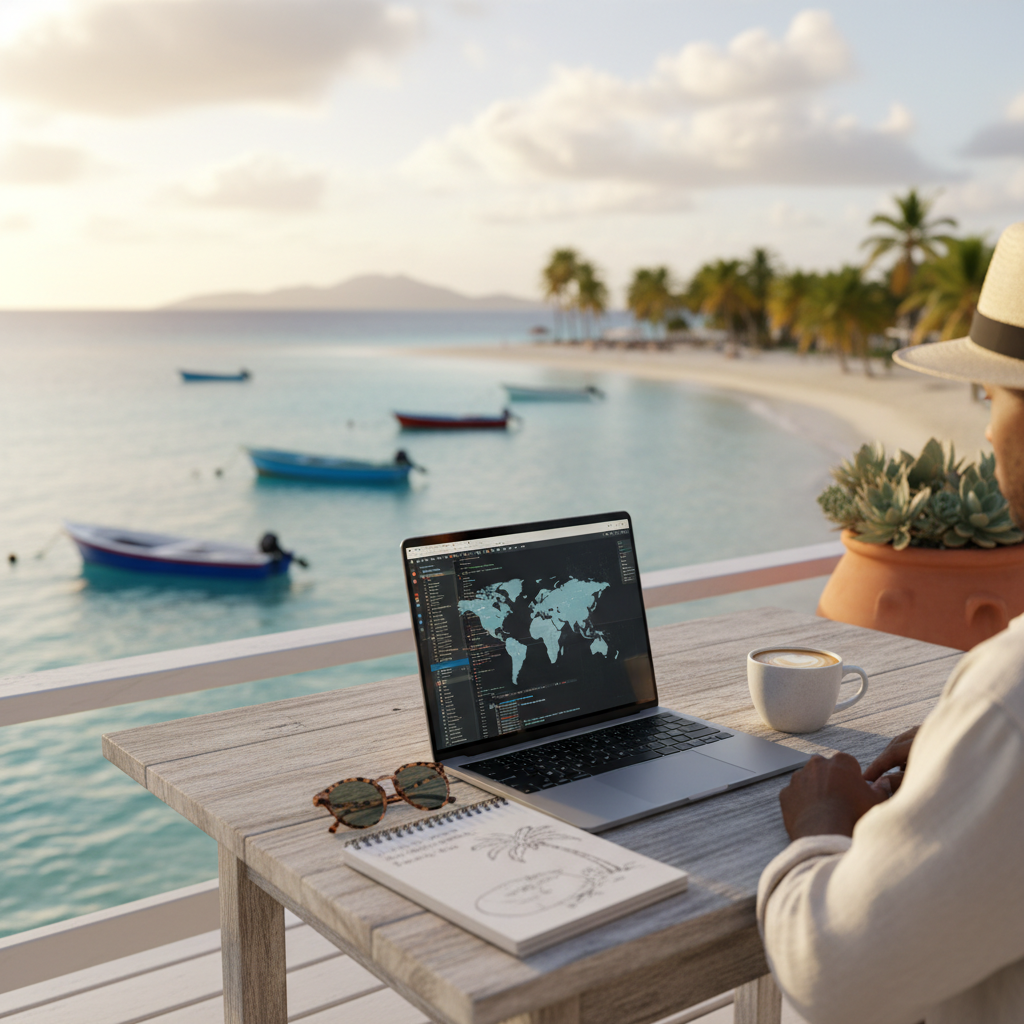
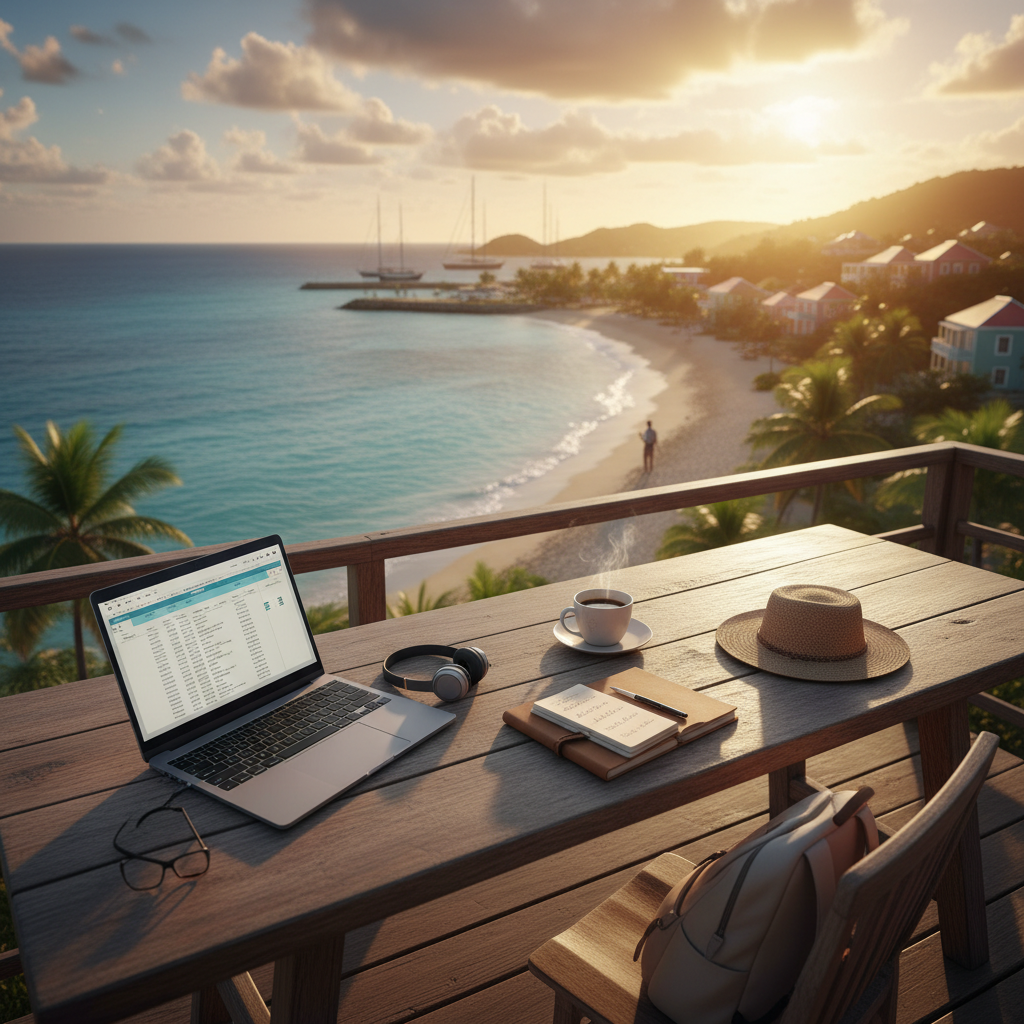
In an unexpected policy shift in early 2026, Anguilla, the serene Caribbean island known for its pristine beaches and tranquil atmosphere, announced a significant reduction in its application fees for the Anguilla digital nomad visa. Previously among the higher-cost options for a Caribbean work-from-anywhere scheme, the government aims to attract a broader demographic of remote professionals, citing a desire to diversify its tourism-reliant economy and inject new energy into its communities. This move positions Anguilla as an even more compelling destination for those seeking a tranquil, upscale, and genuinely location independent lifestyle amidst breathtaking natural beauty.
But beyond the allure of turquoise waters and tax advantages, what are the true financial implications of making Anguilla your remote work base? This comprehensive guide for 2026 delves deep into the real cost of securing and sustaining an Anguilla digital nomad visa, offering transparent breakdowns of everything from application fees to daily living expenses. We’ll arm you with the data needed to accurately budget for your dream Caribbean workation, ensuring your digital nomad lifestyle is as smooth as Anguilla's sandy shores.
Quick facts
| Feature | Details |
|---|---|
| Income requirement | USD 3,000 per month |
| Visa duration | 12 months |
| Renewable | Yes, for an additional 12 months |
| Application fee | USD 1,000 (individual), USD 1,500 (family) |
| Processing time | 5-10 business days |
| Tax rate for holders | 0% on foreign-earned income (non-resident status) |
| Family members allowed | Yes (spouse, dependent children, domestic partners) |
| Path to residency | No direct path to permanent residency via this visa |
What is the Anguilla digital nomad visa?
The Anguilla digital nomad visa, officially known as the "Anguilla Programme for Remote Workers," is a special permit introduced to allow individuals to live and work remotely from the island for up to 12 months. Launched initially in 2020 and updated in 2026, this visa is specifically designed for international professionals whose work can be performed entirely online, freeing them from geographical constraints. It's an invitation to experience Anguilla's high quality of life, stable internet infrastructure, and serene environment while maintaining their existing employment or online business abroad. Unlike traditional work permits, this visa does not allow you to seek employment with Anguillan companies; your income must be derived from sources outside the island. This ensures that you contribute to the local economy through consumption, without impacting the local job market. For those seeking a sophisticated blend of remote work and relaxed island living, Anguilla offers a compelling proposition.
Anguilla digital nomad visa requirements
Before you start packing your bags and dreaming of beachside video calls, it's crucial to understand the eligibility criteria for the Anguilla digital nomad visa. The requirements are designed to ensure applicants are genuinely capable of supporting themselves and contributing positively to the Anguillan community without becoming a burden. These are the key stipulations as of 2026:
- Valid Passport: You must hold a passport from an eligible country that is valid for at least six months beyond your intended stay.
- Proof of Remote Employment/Self-Employment: Applicants must demonstrate that they are either employed by a company registered outside of Anguilla or are self-employed with clients predominantly located outside of Anguilla. This could include contracts, letters from employers, company registration documents, or client invoices. The core principle is that your income-generating activities must be external to Anguilla.
- Minimum Income Threshold: A critical financial requirement is the ability to prove a stable, consistent income. For individual applicants, this stands at a minimum of USD 3,000 per month (or USD 36,000 annually). For applicants bringing a family, the threshold increases to USD 4,000 per month (or USD 48,000 annually) to account for additional living expenses. This income must be verifiable through bank statements, pay stubs, or audited financial reports.
- Health Insurance: Comprehensive health insurance with international coverage is mandatory. This insurance must cover medical emergencies, hospitalization, and repatriation for the entire duration of your stay in Anguilla. Proof of policy must be submitted with your application.
- Clean Criminal Record: Applicants must provide a police certificate (or equivalent) from their country of citizenship and any country they have resided in for more than six months in the past five years, demonstrating a clean criminal history.
- No Communicable Diseases: While not always requiring a medical exam upfront, the application generally asks for declarations of good health and the absence of certain communicable diseases.
- Dependents Documentation: If applying with family members (spouse, common-law partner, or dependent children under 18), you must provide marriage certificates, birth certificates, and proof of dependency. Each family member will also need a copy of their passport and potentially a police certificate if over 18.
- Intent to Depart: You must confirm your intention to depart Anguilla at the end of your approved stay.
Meeting these requirements demonstrates your suitability for the Anguilla digital nomad visa and ensures a smooth application process.
How to apply for the Anguilla digital nomad visa
The application process for the Anguilla Programme for Remote Workers is designed to be streamlined and efficient, largely conducted online. Here's a step-by-step guide to navigate it in 2026:
- Gather Required Documents: Before starting the online application, collect all necessary documents. This includes scanned copies of your passport, proof of income, health insurance policy, police certificate(s), and any supporting documents for dependents (marriage certificates, birth certificates). Ensure all documents are clear, legible, and translated into English if necessary.
- Access the Official Portal: Visit the official Anguilla government website for the digital nomad program. (Consult the country's official immigration website). Look for the dedicated application portal.
- Complete the Online Application Form: Fill out the detailed online application form. This will require personal details, passport information, employment specifics, and information about any accompanying family members. Be meticulous and ensure all information is accurate and consistent with your supporting documents.
- Upload Supporting Documents: Systematically upload all the prepared documents to the portal. There will typically be specific sections for each type of document (e.g., passport, income proof, insurance). Double-check that all files are correctly attached and meet any specified size or format requirements.
- Pay the Application Fee: This is a crucial step. The application fee for the Anguilla digital nomad visa as of 2026 is USD 1,000 for an individual applicant. For an applicant with family members, the fee is USD 1,500. This fee is typically paid via credit card or bank transfer through the online portal. Note that this fee is non-refundable, regardless of the application outcome.
- Submit the Application: Once the form is complete, documents uploaded, and fee paid, formally submit your application. You should receive a confirmation email with a reference number.
- Await Processing: The Anguillan immigration authorities aim for a swift turnaround. The typical processing time is 5 to 10 business days. During this period, they may contact you for additional information or clarification.
- Receive Decision: If approved, you will receive an official approval letter via email. This letter will serve as your authorization to travel to Anguilla under the digital nomad program.
- Travel to Anguilla: With your approval letter in hand, you can then make your travel arrangements. Upon arrival in Anguilla, present your approval letter and passport to immigration officials, who will then grant you the appropriate entry stamp for your 12-month stay.
Throughout this process, maintaining clear and open communication with the immigration department, should they reach out, can significantly aid in the speedy approval of your Anguilla digital nomad visa.
Cost breakdown
Understanding the financial commitment goes beyond just the visa fee. This section details the initial and ongoing costs associated with living the digital nomad lifestyle in Anguilla, offering a realistic picture for your budget planning.
Initial Costs (Visa & Setup)
| Item | Individual Cost (USD) | Family Cost (USD) | Notes |
|---|---|---|---|
| Application Fee | 1,000 | 1,500 | Non-refundable, covers processing for main applicant and all dependents |
| Comprehensive Health Insurance (12 months) | 1,200 - 3,000 | 2,500 - 7,000 | Highly variable based on age, coverage level, and provider. Critical for visa approval. |
| Flight Tickets | 500 - 1,500 | 1,000 - 4,500 | Varies widely by origin, season, and how far in advance booked. |
| Initial Accommodation (1st month rent + deposit) | 2,000 - 5,000 | 3,000 - 8,000 | Security deposit often 1-2 months' rent. High-end options can be significantly more. |
| Vehicle Rental (1st month) | 800 - 1,500 | 1,000 - 2,000 | Essential for mobility on the island; public transport is limited. |
| Relocation Incidentals | 500 - 1,000 | 1,000 - 2,500 | Shipping, initial groceries, local SIM cards, taxi from airport, etc. |
| Estimated Total Initial | 6,000 - 13,000 | 9,000 - 25,500 | This represents a significant upfront investment. |
Monthly Cost of Living (Estimated for 2026)
Anguilla is known for its high-end tourism and, consequently, a higher cost of living compared to many other Caribbean islands. Your lifestyle choices will heavily influence your monthly expenditure. Here's a realistic breakdown:
| Category | Low Budget (USD/month) | Mid-Range (USD/month) | High-End (USD/month) |
|---|---|---|---|
| Accommodation | 1,800 - 2,500 | 2,500 - 4,500 | 4,500 - 8,000+ |
| (1-2 BR Apartment/Villa) | (studio/1BR) | (1-2BR) | (2-3BR Villa) |
| Utilities | 250 - 400 | 400 - 700 | 700 - 1,200+ |
| (Electricity, Water, Gas, Internet) | (basic) | (moderate A/C use) | (heavy A/C, pool) |
| Groceries | 600 - 900 | 900 - 1,400 | 1,400 - 2,000+ |
| (Imported goods are expensive) | (local markets) | (mix) | (gourmet) |
| Transportation | 400 - 800 | 800 - 1,200 | 1,200 - 2,000+ |
| (Car rental/lease, fuel) | (small car) | (mid-size) | (SUV/luxury) |
| Dining Out | 200 - 400 | 400 - 1,000 | 1,000 - 2,500+ |
| (Local eateries, occasional fine dining) | (casual) | (regular) | (frequent) |
| Activities & Entertainment | 100 - 300 | 300 - 800 | 800 - 2,000+ |
| (Beach, hiking, occasional boat trip) | (basic) | (some tours) | (regular tours, spa) |
| Miscellaneous | 100 - 200 | 200 - 500 | 500 - 1,000+ |
| (Personal care, unforeseen expenses) | (essentials) | (some extras) | (luxuries) |
| TOTAL MONTHLY (Individual) | 3,450 - 5,500 | 5,500 - 10,100 | 10,100 - 19,700+ |
For families, expect to add USD 1,000 - 3,000+ per month depending on the number of dependents and their needs (e.g., schooling costs, additional food, activities). Education costs can be substantial, as private schools are the main option for expatriate families, ranging from USD 5,000 to USD 15,000 per child per year.
Comparing Anguilla's Cost of Living
Let's put Anguilla's expenses into perspective by comparing it with other popular digital nomad destinations in the Caribbean and a major Asian city, focusing on mid-range individual monthly costs.
| Destination | 1-BR Rent (USD) | Utilities (USD) | Groceries (USD) | Transportation (USD) | Total Est. Monthly (USD) |
|---|---|---|---|---|---|
| Anguilla | 2,500 - 4,500 | 400 - 700 | 900 - 1,400 | 800 - 1,200 | 5,500 - 10,100 |
| Barbados | 1,200 - 2,500 | 300 - 600 | 700 - 1,200 | 600 - 1,000 | 3,500 - 7,000 |
| St. Lucia | 1,000 - 2,000 | 250 - 500 | 600 - 1,000 | 500 - 800 | 2,700 - 5,300 |
| Bali (Indonesia) | 500 - 1,000 | 150 - 300 | 300 - 600 | 100 - 300 | 1,200 - 2,200 |
| Lisbon (Portugal) | 1,000 - 1,800 | 200 - 400 | 400 - 700 | 100 - 250 | 1,700 - 3,150 |
This table clearly illustrates that Anguilla falls into the higher end of the spectrum for work from anywhere destinations, reflecting its exclusive nature and reliance on imported goods.
Taxes for digital nomads in Anguilla
One of the significant advantages for digital nomads choosing Anguilla is its favorable tax regime for individuals under this program. As of 2026, holders of the Anguilla digital nomad visa are generally considered non-residents for tax purposes. This means that you are not liable to pay income tax on your foreign-earned income to the Anguillan government. Your income derived from sources outside Anguilla, which is the prerequisite for the visa, remains untaxed by Anguilla.
However, it's crucial to understand a few nuances:
- Source of Income: The key is that your income must be sourced outside Anguilla. If you were to perform services for an Anguillan company or client, that income could be subject to local taxation. The digital nomad visa is explicitly for those whose digital entrepreneurship or remote employment is based internationally.
- Consumption Taxes: While you won't pay income tax, you will naturally contribute to the local economy through consumption taxes. Anguilla levies a Goods and Services Tax (GST) on most goods and services, which was introduced to replace some older consumption taxes. This is typically included in the price of items you purchase. There are also import duties, which contribute to the higher cost of many imported goods.
- No Property Tax for Residents: Currently, Anguilla does not have property taxes for residents. If you choose to rent, this is absorbed into your rental cost. If you were to purchase property (a more complex route and not directly tied to the digital nomad visa), it would be subject to transfer fees but generally not annual property tax.
- Tax Residency in Home Country: It is absolutely vital to understand your tax obligations in your home country or country of citizenship. Many countries have specific rules regarding tax residency based on factors like the number of days spent abroad, having a 'permanent home' elsewhere, or severing ties. You might still be liable for taxes in your home country even if you are not paying income tax in Anguilla. Always consult with a qualified international tax advisor to understand your specific situation and ensure compliance in all relevant jurisdictions.
- Social Security/National Insurance: As a non-resident working remotely, you typically will not contribute to Anguilla's social security or national insurance schemes. Your obligations in this regard will usually remain with your home country's system, if applicable.
In essence, the Anguilla digital nomad visa provides a tax-efficient environment for your remote work, but it does not absolve you of all tax responsibilities globally. Diligent planning and professional advice are paramount.
For Bangladeshi passport holders
For Bangladeshi digital nomad hopefuls eyeing the serene shores of Anguilla, the process largely mirrors that for other nationalities, with a few specific considerations. The Anguilla Programme for Remote Workers is accessible to citizens of all countries that meet the eligibility criteria, including Bangladesh.
- Visa-Free Access (or lack thereof): Bangladeshi passport holders typically require a visa to enter Anguilla for tourism purposes. However, the Anguilla digital nomad visa is your authorization to enter and reside for 12 months, effectively bypassing the need for a separate tourist visa. Your approval letter will be the key document upon arrival.
- Document Verification: Ensure all your supporting documents, especially income proof and police certificates, are meticulously prepared and authenticated if required by the Anguillan authorities. Translations must be certified. For police certificates, obtain them from the relevant Bangladeshi authorities and any other country of residence as specified.
- Income Threshold in BDT: The income requirement of USD 3,000 per month (or USD 4,000 for families) must be demonstrated. For Bangladeshi citizens, this means proving consistent earnings equivalent to approximately BDT 330,000 per month (based on an exchange rate of ~110 BDT to 1 USD, though this fluctuates). This income must be verifiable through bank statements from international or local banks demonstrating sufficient foreign currency earnings. Freelancers from Bangladesh often earn in USD or EUR, making this requirement more straightforward for them.
- Internet Infrastructure for Remote Work Bangladesh: Anguilla boasts robust internet infrastructure, with fiber optic connectivity widespread. This is crucial for remote work and freelancing Bangladesh professionals who depend on stable, high-speed connections for their daily tasks. Ensure your proposed accommodation has reliable internet access.
- Financial Transfer & Banking: Bangladeshi applicants should ensure they have reliable means to transfer funds from their international clients or employers to their Anguillan or international bank accounts. While Anguilla's banking system is stable, opening a local account might require additional KYC (Know Your Customer) documents upon arrival. It's advisable to have access to international banking facilities that facilitate easy transfers.
- Return Ticket & Intent: While not always strictly enforced for visa holders, immigration may ask about your return travel plans. Having a general idea or proof of sufficient funds to leave Anguilla at the end of your stay is advisable.
The Anguilla digital nomad visa offers a viable pathway for Bangladeshi professionals seeking a premium digital nomad lifestyle. Careful preparation of documents and understanding the financial implications will be key to a successful application.
Living and working in Anguilla: Perks and pitfalls
Embracing the Anguilla digital nomad visa offers a unique blend of benefits and challenges. It’s crucial to go beyond the glossy brochures and understand the day-to-day realities.
The Perks
- Unrivaled Natural Beauty: Anguilla boasts some of the world's most stunning beaches, consistently ranking high in global surveys. The crystal-clear waters and white sands provide an unparalleled backdrop for relaxation and inspiration after your workday.
- Tranquil & Safe Environment: With a low crime rate and a laid-back pace of life, Anguilla offers a safe and peaceful setting. This fosters a stress-free atmosphere conducive to focused remote work and a high quality of life.
- Strong Internet Infrastructure: For a small island, Anguilla has invested significantly in its digital connectivity. Fiber optic internet is widely available, ensuring reliable, high-speed connections essential for digital nomad jobs and maintaining productivity.
- Friendly Local Community: Anguillans are known for their warmth and hospitality. Integrating into the local community can be a rewarding experience, offering insights into Caribbean culture.
- Excellent Dining Scene: Despite its size, Anguilla is a culinary hotspot, especially for fine dining. This caters to those who appreciate gourmet experiences, though it comes at a price.
- Tax Advantages: As discussed, the lack of income tax on foreign-earned income is a major draw, allowing you to maximize your earnings.
- Outdoor Activities: From snorkeling and diving to sailing and paddleboarding, the island offers an abundance of water sports and outdoor activities to enjoy during your downtime.
The Pitfalls
- High Cost of Living: This is the most significant drawback. As highlighted in the cost breakdown, Anguilla is expensive. From groceries (mostly imported) to accommodation and transportation, your budget will need to be robust.
- Limited Public Transport: Relying on taxis is costly, and public transport is almost non-existent. A rental car is virtually essential for independent mobility, adding significantly to monthly expenses.
- Island Fever: For some, the small size of the island (16 miles long, 3 miles wide) can lead to 'island fever' or a feeling of being confined over time, especially for those accustomed to bustling cities with endless options.
- Limited Shopping & Amenities: While adequate for daily needs, shopping options are limited compared to larger destinations. Specialized goods or certain brands might be unavailable, requiring online orders or trips to neighboring islands.
- Healthcare Access: While there is a public hospital and several private clinics, for serious or highly specialized medical procedures, medical evacuation to a larger hub (like Puerto Rico or the US mainland) might be necessary. This underscores the importance of comprehensive health insurance.
- Hurricane Season: From June to November, the Caribbean is susceptible to hurricanes. While Anguilla has robust infrastructure to withstand storms, this period can bring disruptions and is a consideration for long-term stays.
- Social Scene for Nomads: While locals are friendly, a dedicated coworking spaces culture or a large, established digital nomad community is less prevalent compared to hubs like Bali or Lisbon. Socializing might require more proactive effort.
Balancing these factors is key to determining if Anguilla is the right fit for your location independent lifestyle. The island offers unparalleled tranquility and beauty, but it demands a significant financial commitment and an appreciation for its unique charm and limitations.
Maximizing your Anguilla digital nomad experience
To truly thrive as a digital nomad in Anguilla, a strategic approach is essential. It's not just about meeting the visa requirements; it's about integrating and optimizing your experience.
- Budget Meticulously: Given the high cost of living, detailed financial planning is non-negotiable. Track your expenses, identify areas for savings (e.g., cooking more at home, opting for local eateries), and maintain a buffer for unforeseen costs.
- Secure Reliable Accommodation: Research housing thoroughly before arrival. Consider short-term rentals initially to scout neighborhoods and then negotiate a long-term lease. Ensure your rental includes robust internet and, ideally, backup power solutions.
- Embrace Local Life: While it’s easy to stick to expat circles, make an effort to engage with the local Anguillan culture. Attend local events, try traditional dishes, and support local businesses. This enriches your experience and helps you feel more connected.
- Get Mobile: A rental car is almost a necessity. Factor this into your budget. Alternatively, consider leasing a car for longer stays, which might offer better rates.
- Stay Connected (Globally): For digital entrepreneurship, maintaining networks and access to resources beyond Anguilla is important. Leverage online communities, virtual coworking spaces, and regular trips if necessary.
- Health and Wellness: Prioritize your well-being. Take advantage of the natural environment for exercise, eat fresh local produce, and ensure your health insurance provides adequate coverage for medical needs and potential evacuations.
- Backup Solutions: For remote jobs, consider having redundant internet solutions (e.g., a mobile hotspot as a backup) and power banks, especially during hurricane season. This ensures productivity for digital nomads remains high.
- Explore: Don't just work; explore Anguilla's hidden gems. Discover secluded beaches, try different watersports, and visit neighboring islands like St. Maarten for a change of pace or more extensive shopping.
By proactively planning for these aspects, your Anguilla digital nomad visa experience can be a profoundly rewarding chapter in your work from anywhere journey, blending professional growth with an idyllic Caribbean existence.
Frequently asked questions
What is the Anguilla digital nomad visa?
The Anguilla digital nomad visa is a special permit allowing eligible remote workers and freelancers to live and work from the island for up to 12 months, contributing to the local economy without competing for local jobs. It's designed for those with foreign-earned income.
Who is eligible for the Anguilla digital nomad visa?
Eligible individuals must have a valid passport, proof of remote employment or self-employment outside Anguilla, earn at least USD 3,000 per month, hold comprehensive health insurance, and have a clean criminal record. Dependents are also allowed.
How much does the Anguilla digital nomad visa cost?
The application fee is USD 1,000 for an individual and USD 1,500 for a family. Beyond this, anticipate significant costs for health insurance (USD 1,200-3,000+ annually) and initial setup, making the total upfront investment substantial.
How long does Anguilla digital nomad visa processing take?
Anguilla's immigration authorities typically process digital nomad visa applications within 5 to 10 business days. This efficient turnaround time makes it one of the faster options for Caribbean remote work visas.
Can I bring my family on the Anguilla digital nomad visa?
Yes, you can bring family members, including a spouse, common-law partner, and dependent children under 18. The income requirement increases to USD 4,000 per month, and the application fee is USD 1,500 for a family unit.
Do I pay tax in Anguilla on the digital nomad visa?
No, as a non-resident digital nomad, you are not liable to pay income tax on your foreign-earned income to the Anguillan government. However, you will pay consumption taxes (GST) on goods and services locally.
Can Bangladeshi citizens get the Anguilla digital nomad visa?
Yes, Bangladeshi citizens are eligible to apply for the Anguilla digital nomad visa, provided they meet all the standard requirements, including the income threshold and document submissions. The process is the same as for other nationalities.
Sources
- Anguilla Department of Immigration (consult the country's official immigration website)
- Anguilla Tourist Board (consult the country's official tourism website)
- Numbeo Cost of Living Index 2026 data (for general comparisons)
- International tax advisory firms (for general tax residency principles)
Compare with
Barbados, St. Lucia, Montserrat
Interested in applying for the Anguilla visa?
Tell us a bit about yourself and we'll send tailored guidance on eligibility, paperwork, and next steps.