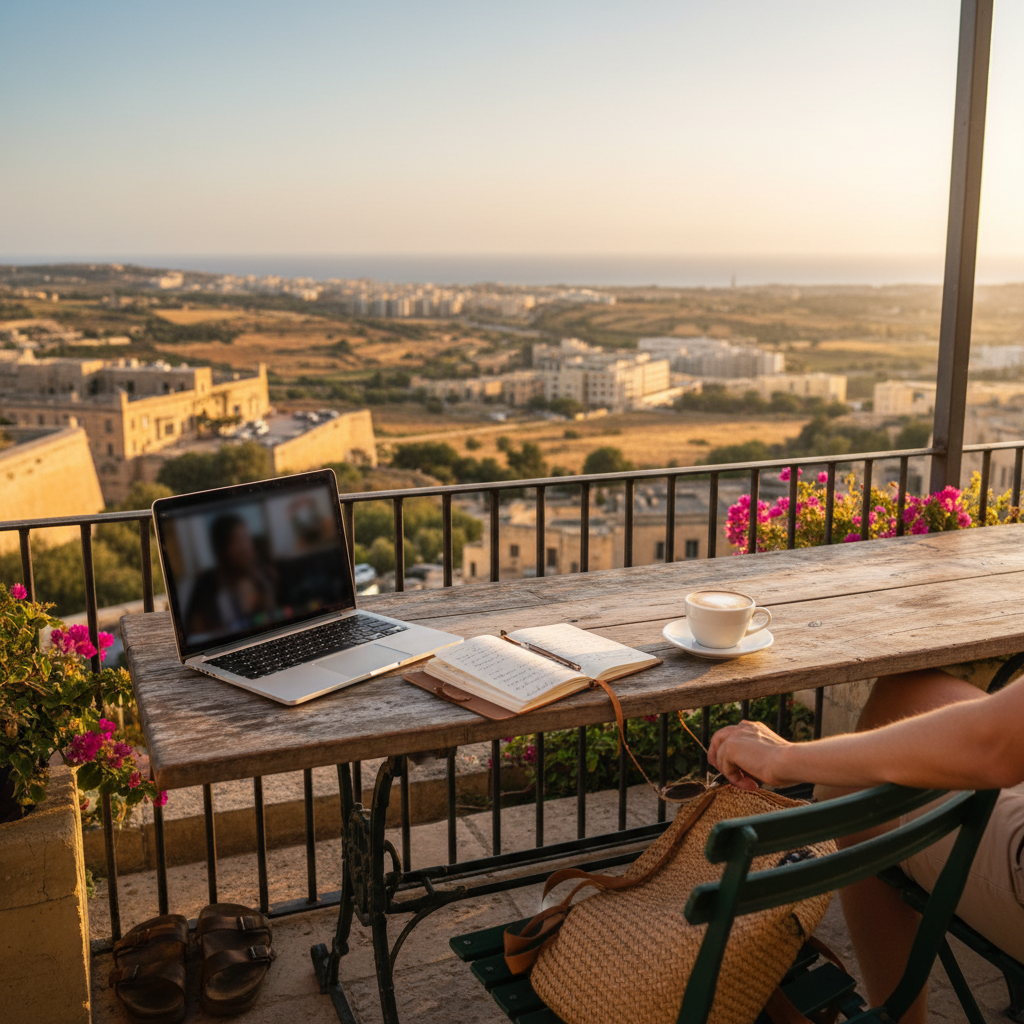
Spain Digital Nomad Visa 2026: The Ultimate Guide for Remote Workers
Dreaming of remote work under the Spanish sun? This comprehensive 2026 guide covers everything you need to know about Spain's Digital Nomad Visa, including eligibility, income requirements, application steps, costs, taxes, and pros and cons.
May 25, 2026

Overview
Spain, a country renowned for its vibrant culture, diverse landscapes, and high quality of life, officially launched its Digital Nomad Visa (DNV) in 2023. Governed by the Startup Law (Law 28/2022), this visa is designed to attract international talent and foster innovation by allowing non-EU/EEA citizens to live and work remotely from Spain for extended periods. It offers a unique opportunity for freelancers and remote employees to immerse themselves in Spanish life, benefiting from a favorable tax regime and the country's excellent infrastructure and connectivity. The visa is initially granted for one year but can be extended for up to five years, paving a potential path to long-term residency. As of 2026, the framework remains largely consistent, with a strong emphasis on verifiable remote work and stable income.
The Spanish DNV aims to position Spain as a leading destination for digital nomads, contributing to local economies and diversifying its workforce. It's a carefully crafted program that balances attracting foreign talent with ensuring applicants are genuinely independent and can sustain themselves financially without burdening public resources. The program's stipulations reflect Spain's commitment to creating a welcoming yet structured environment for remote professionals.
Who qualifies?
The Spanish Digital Nomad Visa is available to non-EU/EEA citizens who meet specific criteria. The primary requirement is to be employed by a company located outside of Spain, or to work as a self-employed professional (freelancer) for clients primarily located outside of Spain. Specifically:
- Remote Employees: Individuals working for a company or companies located outside of Spain. You must be able to demonstrate that your work can be performed remotely.
- Freelancers/Self-employed: Individuals who work for themselves, providing services to clients primarily located outside of Spain. It's generally required that at least 80% of your income comes from clients outside of Spain.
Crucially, you cannot work for a company based in Spain unless your work for that Spanish company does not exceed 20% of your total professional activity. This ensures the visa remains focused on attracting international remote workers rather than supplementing the local workforce directly.
Applicants must also be over 18 years old and must not have resided in Spain irregularly. They should not have a criminal record in Spain or in any other country where they have resided for the past five years. A university degree or professional experience of at least three years in their sector is often required to demonstrate professional capability. Family members (spouse, dependent children, dependent parents) can also apply for a co-applicant visa, allowing families to move to Spain together under this scheme.
Requirements
To successfully apply for the Spanish Digital Nomad Visa, applicants must gather a comprehensive set of documents and meet specific criteria. As of 2026, these requirements include:
- Proof of Remote Work:
- Employees: A letter from your employer (or employers if you work for multiple companies) confirming your employment, job title, salary, and explicit permission to work remotely from Spain. It should also state the company's location outside Spain and that your contract allows for remote work.
- Freelancers: Contracts with clients (at least one year old), invoices, and a declaration confirming that at least 80% of your income is from non-Spanish clients. You'll need to demonstrate your professional activity and the remote nature of your work.
- Minimum Income: You must prove a stable and sufficient monthly income. As of 2026, the minimum income requirement is set at 200% of Spain's monthly minimum wage (SMI - Salario Mínimo Interprofesional). Assuming the SMI is approximately €1,134 in 2026 (subject to annual adjustment), this would mean a minimum income of approximately €2,268 per month. For each additional dependent family member, an additional percentage of the SMI is required: 75% of the SMI for the first dependent (€850.50) and 25% for each subsequent dependent (€283.50). This income must be consistent and verifiable through bank statements, pay stubs, and financial records for at least the last three months, and often up to the last six or twelve months.
- No Criminal Record: A criminal record certificate from your country of origin and any other country where you have resided in the last two years (or five years, depending on the consulate). These documents must be apostilled or legalized and translated into Spanish by a sworn translator.
- Private Health Insurance: Proof of comprehensive private health insurance covering all risks in Spain, equivalent to the national health system, for the entire duration of your stay. The insurance company must be authorized to operate in Spain.
- Proof of Funds: Bank statements showing sufficient funds to cover your stay in addition to the regular income. While not explicitly separate from the income requirement, demonstrating a healthy bank balance is always beneficial.
- Professional Qualification/Experience: A university degree or diploma, or proof of at least three years of professional experience in your field. This demonstrates your capacity to perform the remote work you've declared.
- Tax Residency Certificate: For freelancers, a certificate from your home country's tax authority confirming your tax residency before moving to Spain.
- Passport: A valid passport with at least one year of validity remaining.
- Application Form & Fees: Duly completed visa application form and proof of payment of application fees. The fees typically include a visa processing fee and a residency permit fee.
- Curriculum Vitae (CV): A detailed CV outlining your professional history.
All documents not originally in Spanish must be officially translated into Spanish by a sworn translator (traductor jurado). Depending on the country of origin, documents may also need to be apostilled or legalized by the Spanish consulate.
Application process
The application process for the Spanish Digital Nomad Visa can be initiated either from outside Spain or from within Spain, depending on your current situation. The choice impacts the type of initial permit you receive.
Option 1: Applying from outside Spain (most common)
- Gather Documents: Collect all required documents as detailed in the 'Requirements' section. Ensure all foreign documents are translated into Spanish by a sworn translator and, if necessary, apostilled or legalized.
- Submit Application to Spanish Consulate/Embassy: Submit your application to the Spanish Consulate or Embassy in your country of residence. You will typically need to schedule an appointment. Provide the completed visa application form (National Visa D type) and all supporting documents.
- Interview (Optional): Some consulates may require an interview.
- Visa Decision: If approved, the consulate will issue a DNV (Digital Nomad Visa) which is valid for one year. This visa allows you to enter Spain and reside legally for that period.
- NIE and Social Security: Upon arrival in Spain, within three months, you must apply for your Foreigner Identification Number (NIE) and register with the Social Security system (for tax and legal compliance). This step is crucial for working and living legally in Spain. This initial one-year visa is then effectively converted into a residency permit for the remainder of the year.
- Residency Authorization Application: Within 60 days before the expiry of your initial one-year visa, you must apply for a residency authorization (Autorización de Residencia para teletrabajadores de carácter internacional) with the Unidad de Grandes Empresas y Colectivos Estratégicos (UGE-CE) in Spain. This is a crucial step to extend your stay for up to another two years, with subsequent renewals potentially leading to a five-year total and eventually long-term residency.
Option 2: Applying from within Spain (if you are already in Spain legally)
- Legal Status: You must be legally present in Spain (e.g., on a tourist visa). If you are on a tourist visa, you can apply directly for the residency authorization within 90 days of your arrival. It is advisable to apply sooner rather than later.
- Gather Documents: Collect all required documents.
- Submit Application to UGE-CE: Submit your application directly to the Unidad de Grandes Empresas y Colectivos Estratégicos (UGE-CE) via their online platform. This application is for the 'residency authorization for international teleworkers' (Autorización de Residencia para teletrabajadores de carácter internacional).
- Processing: The UGE-CE has a statutory period of 20 working days to process your application. If a decision is not issued within this period, the application is deemed approved by administrative silence (silencio administrativo positivo).
- Fingerprinting and TIE Card: Once approved, you will need to schedule an appointment to submit your fingerprints at the nearest Policía Nacional office and apply for your TIE (Tarjeta de Identidad de Extranjero - Foreigner's Identity Card). The TIE is your physical residency card and is usually valid for up to three years initially, renewable for another two years.
Regardless of the application route, it is highly recommended to seek professional legal advice from an immigration lawyer specializing in the Spanish Digital Nomad Visa to ensure all requirements are met and the application is submitted correctly.
Costs & duration
Costs:
The costs associated with the Spanish Digital Nomad Visa can vary, but generally include:
- Visa Application Fee: Approximately €80 (this is the fee for the national visa at the consulate). This may vary slightly by consulate.
- Residency Authorization Fee (if applying from within Spain or for renewal): Approximately €73.10 (Modelo 790, Código 038 – for residency card fees/taxes).
- TIE Card Fee (Fingerprinting): Approximately €16 (Modelo 790, Código 012 – for the TIE card itself).
- Criminal Record Certificate: Varies by country, typically €10-€50.
- Sworn Translations: Highly variable, depending on the volume of documents. Expect to pay €30-€60 per page for official sworn translations.
- Apostille/Legalization: Varies by country, typically €10-€30 per document.
- Private Health Insurance: Annually, costs can range from €600 to €1,500+, depending on age, coverage, and provider. This is a significant ongoing cost.
- Legal Assistance: Strongly recommended. Fees for immigration lawyers can range from €800 to €2,000+ for a full application service.
Duration:
- Initial Visa/Residency Authorization:
- If applying from a Consulate outside Spain: The visa (Type D) is initially issued for one year. Upon arrival and registration, this effectively acts as your first year of residency.
- If applying from within Spain: The residency authorization is typically granted for up to three years initially.
- Processing Time:
- Consulate Applications: Can range from 20 days to 2 months, depending on the consulate's efficiency and caseload.
- UGE-CE Applications (within Spain): The statutory maximum processing time is 20 working days. If no resolution is provided within this period, it is considered approved by administrative silence.
- Renewals: The Digital Nomad Visa (or rather, the residency authorization) can be renewed for an additional two years, provided the conditions are still met. This can lead to a total stay of up to five years. After five years of continuous legal residence, it is possible to apply for long-term residency in Spain.
- TIE Card Issuance: After fingerprints are submitted, the physical TIE card usually takes around 30-45 days to be issued.
It's important to factor in these costs and timelines to plan your move effectively. Financial planning should include not just the application process but also initial living expenses in Spain.
Taxes
One of the most attractive features of the Spanish Digital Nomad Visa, particularly for high-income earners, is the favorable tax regime it offers. Successful DNV holders can opt into the Special Tax Regime for Inpatriates, commonly known as the Beckham Law (Ley Beckham).
Beckham Law (Special Tax Regime for Inpatriates):
- Eligibility: To qualify, you must not have been a tax resident in Spain during the five tax periods prior to your move. You must also become a tax resident in Spain due to your move under the DNV. The option must be exercised by filing Form 149 with the Spanish tax agency within six months of registering with Social Security.
- Taxation: If you opt for the Beckham Law, you will be taxed as a non-resident for your first six years in Spain, even though you are a resident. This means:
- Flat Tax Rate: A flat tax rate of 24% on your Spanish-sourced income up to €600,000 per year. Any income above €600,000 is taxed at 47%.
- Foreign Income: Most foreign-sourced income, with some exceptions (e.g., capital gains, certain dividends), is generally not taxed in Spain under this regime. This is the significant advantage for digital nomads whose primary income is generated outside Spain.
- Wealth Tax: You are generally exempt from Spanish Wealth Tax on assets located outside Spain.
- Duration: This regime applies for the tax year in which you become a tax resident and for the following five tax years, totaling six years.
- Caveats: The Beckham Law primarily benefits those with high foreign-sourced income. If a significant portion of your income is from Spanish sources or you have considerable capital gains from foreign assets, it's crucial to consult with a tax advisor to determine if this regime is truly advantageous for your specific situation. Also, certain types of income (e.g., director's fees) are always considered Spanish-sourced and subject to Spanish taxation regardless of the Beckham Law.
Standard Spanish Tax Residency (if you do not opt for Beckham Law or after 6 years):
If you do not opt for the Beckham Law, or once the six-year period concludes, you will be subject to standard Spanish income tax rules as a tax resident. This means:
- Worldwide Income Taxation: All your income, both Spanish and foreign-sourced, will be subject to Spanish income tax (IRPF - Impuesto sobre la Renta de las Personas Físicas).
- Progressive Tax Rates: Income tax is levied at progressive rates, which can reach up to 47-50% or more, depending on the autonomous community and income level.
- Wealth Tax: You will be subject to Spanish Wealth Tax on your worldwide assets, subject to regional variations and exemptions.
- Declarations: You will be required to declare all overseas assets exceeding €50,000 via Form 720 (Modelo 720).
Given the complexities of international taxation, it is absolutely essential to consult with a Spanish tax advisor before or immediately after obtaining your Digital Nomad Visa. They can help you understand your specific tax obligations, confirm eligibility for the Beckham Law, and ensure compliance with all Spanish tax regulations.
Pros & cons
Spain offers an incredibly appealing destination for digital nomads, but like any country, it comes with its own set of advantages and disadvantages.
Pros of the Spanish Digital Nomad Visa:
- Quality of Life: Spain consistently ranks high for quality of life, offering an excellent work-life balance, rich cultural experiences, delicious food, warm climate (especially in the south), and diverse landscapes from beaches to mountains.
- Favorable Tax Regime (Beckham Law): The possibility to opt into the Beckham Law (24% flat tax rate on Spanish-sourced income up to €600,000, and often exempting foreign-sourced income) is a significant financial draw for many DNV holders, especially during the initial six years.
- EU Access: The DNV grants you legal residency in Spain, allowing visa-free travel within the Schengen Area, simplifying European exploration during your time off.
- Path to Residency: The visa is initially for one year, renewable for up to three years, and then an additional two, leading to a potential total of five years. This can then pave the way for long-term residency and eventually, Spanish citizenship.
- Infrastructure & Connectivity: Spain boasts robust internet infrastructure, especially in major cities, and a well-developed public transport system. Many co-working spaces and a growing digital nomad community are available.
- Cost of Living: Compared to many other Western European countries, the cost of living in Spain, especially outside of major cities like Madrid and Barcelona, can be quite affordable, particularly for housing, food, and public transport.
- Culture & Language: An immersive experience in a vibrant culture and the opportunity to learn or improve your Spanish language skills, which can be an invaluable asset.
- Healthcare: Access to a high-quality (private) healthcare system, which is a visa requirement, giving peace of mind. After a certain period of contributing to social security, access to the public health system may also become available.
Cons of the Spanish Digital Nomad Visa:
- Bureaucracy: Spanish bureaucracy can be complex, slow, and require a significant amount of patience. Document requirements, appointments at government offices, and the overall administrative process can be frustrating. Professional assistance (lawyer, gestor) is highly recommended but adds to the cost.
- Initial Income Requirement: The minimum income requirement (200% of SMI) can be a barrier for some newer digital nomads or those with fluctuating income, although it's lower than some other DNVs.
- Application Complexity: Gathering all necessary documents, ensuring proper translations and legalizations (apostille), and understanding the nuances of the application process can be overwhelming without professional help.
- Language Barrier: While English is spoken in tourist areas and among younger generations, daily life, especially dealing with administration, will often require Spanish. This can be challenging for non-Spanish speakers.
- Taxation After Beckham Law: Once the six-year Beckham Law regime expires, you will be subject to Spain's standard worldwide income tax and wealth tax, which are high and can be a significant disincentive for those with substantial income or assets.
- Integration Challenges: While generally welcoming, fully integrating into Spanish society can take time, especially if you don't speak the language. Social circles can be tight-knit.
- Job Market Restrictions: The visa is strictly for remote work for non-Spanish companies (with a small exception). You cannot simply walk into Spain and start looking for local employment under this visa.
Overall, the Spanish Digital Nomad Visa is an excellent option for remote workers seeking a European base with cultural richness and good weather, provided they are prepared for the administrative hurdles and have a stable income. The tax benefits are a major draw, but long-term planning regarding tax residency is crucial.
FAQ
Q: What is the main difference between applying for the DNV from outside vs. inside Spain? A: If you apply from outside Spain (via a consulate), you get a one-year visa to enter Spain, which then regularizes your residency. This effectively gives you one year of legal stay. If you apply from inside Spain (while legally present, e.g., on a tourist visa), you apply directly for a residency authorization, which is typically granted for up to three years initially, making it a potentially longer initial permit.
Q: Can I bring my family with me on the Spanish Digital Nomad Visa? A: Yes, absolutely. Spouses, dependent children, and dependent parents can apply for a co-applicant visa/residency authorization. You will need to demonstrate additional financial means (75% of SMI for the first dependent, 25% for subsequent ones) and comprehensive health insurance for each family member.
Q: Do I need a Spanish bank account? A: While not strictly required for the initial visa application, having a Spanish bank account is essential for daily life, paying bills, and managing finances once you are in Spain. You should open one shortly after arrival.
Q: Can I travel within the Schengen Area with the Spanish Digital Nomad Visa? A: Yes, once you have your DNV and register your residency (receiving your TIE card), you are a legal resident of Spain. This allows you to travel freely within the Schengen Area for up to 90 days in any 180-day period, just like any other Spanish resident.
Q: What happens if my income drops below the minimum requirement after I get the visa? A: Maintaining the minimum income is crucial for renewals. If your income significantly drops, it may jeopardize your ability to renew your residency authorization. It's important to demonstrate stable income throughout your stay. For initial visa, you must show you consistently met a minimum income for previous few months.
Q: How long does it take to get the TIE (foreigner's identity card)? A: After your DNV or residency authorization is approved and you submit your fingerprints at the police station, it typically takes around 30 to 45 days for the physical TIE card to be ready for collection.
Q: Is the Beckham Law mandatory for Digital Nomads in Spain? A: No, it is optional. You become eligible for it if you meet the criteria and choose to apply within the specified timeframe (six months from Social Security registration). You can instead opt for standard Spanish tax residency, but this is usually less financially advantageous for most digital nomads with foreign-sourced income.
Q: Can I switch from a tourist visa to a Digital Nomad Visa in Spain? A: Yes, if you are legally in Spain on a tourist visa, you can apply directly for the Digital Nomad Residency Authorization (Autorización de Residencia para teletrabajadores de carácter internacional) directly with the UGE-CE, provided you do so within 90 days of your arrival.
Q: Do I need private health insurance, or can I use the public system? A: For the DNV application, you are required to have comprehensive private health insurance from a company authorized to operate in Spain. Once you are registered with Social Security and making contributions, you may gain access to the public health system, but private insurance is a must for the visa itself.
Sources
- Law 28/2022, of December 21, on the promotion of the ecosystem of emerging companies (Startup Law): This is the foundational legislation for the Digital Nomad Visa.
- Royal Decree 2/2023, of January 17, which approves the Regulation of the law on the promotion of the ecosystem of emerging companies: Provides further details and implements the Startup Law.
- Ministry of Inclusion, Social Security and Migrations (Ministerio de Inclusión, Seguridad Social y Migraciones): Consult their official website for updated guidelines on the national visa and immigration procedures.
- Ministry of Foreign Affairs, European Union and Cooperation (Ministerio de Asuntos Exteriores, Unión Europea y Cooperación): Their website and the websites of Spanish Embassies/Consulates provide specific application instructions for your country of residence.
- Agencia Tributaria (Spanish Tax Agency): For detailed information on the Beckham Law (Special Tax Regime for Inpatriates) and general tax obligations in Spain. Consult Form 149 and relevant tax regulations.
- Unidad de Grandes Empresas y Colectivos Estratégicos (UGE-CE): The governmental body responsible for processing residency authorizations for digital nomads once in Spain or for renewals.
Always consult the country's official immigration website and, if necessary, seek professional legal and tax advice as laws and regulations can change.
Interested in applying for the Spain visa?
Tell us a bit about yourself and we'll send tailored guidance on eligibility, paperwork, and next steps.