Uruguay vs. Argentina: The South American Digital Nomad Showdown for 2026
Considering a remote work move to South America? This head-to-head comparison between Uruguay and Argentina's digital nomad visas for 2026 delves into eligibility, costs, taxes, and lifestyle, helping you decide which country best fits your location independent lifestyle.
September 27, 2026
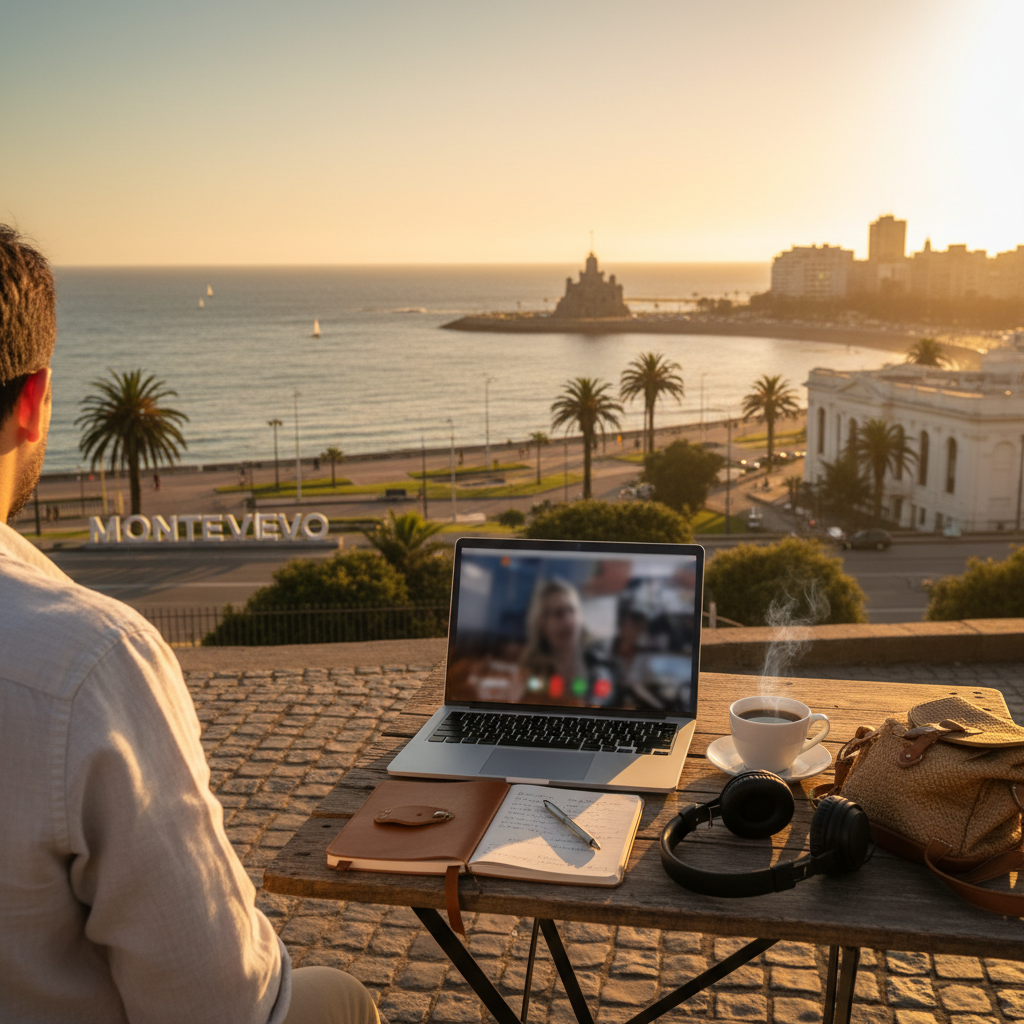
The gentle hum of the Atlantic breeze, the rich aroma of a perfectly grilled asado, and the vibrant street art of Montevideo beckoned. Clara, a freelance UX designer from Berlin, had spent months deliberating. Uruguay or Argentina? Both promised a South American adventure, a dynamic backdrop for her digital nomad lifestyle. But after countless hours of research, poring over visa requirements and tax implications, she still found herself in a delightful dilemma. "It's not just about the visa," she mused, sipping her mate. "It's about where my remote work will truly flourish, where I can build a community, and where my earnings stretch the furthest." Her journey to pick the perfect South American hub is a common one for many aspiring digital nomads, and in 2026, the choice between Uruguay and Argentina remains a compelling head-to-head. Let's break down these two fantastic destinations for those seeking a work from anywhere future.
Quick facts: Uruguay Digital Nomad Visa
| Feature | Detail |
|---|---|
| Income requirement | USD 1,500 - 2,000 per month (depending on duration/type of applicant) |
| Visa duration | 6 months or 1 year, extendable |
| Renewable | Yes, up to 2 years in total |
| Application fee | Varies; generally USD 100 - USD 250 |
| Processing time | 30-90 days |
| Tax rate for holders | 0% for foreign-sourced income for up to 10 years (tax holiday) |
| Family members allowed | Yes, dependents can apply |
| Path to residency | Yes, after 2-3 years, potential for permanent residency |
What is the Uruguay digital nomad visa?
The Uruguay digital nomad visa (officially known as the Temporary Residence for Digital Nomads) was established to attract location-independent professionals seeking a welcoming and stable environment in South America. Launched with an eye towards boosting the economy and diversifying its international presence, Uruguay offers a compelling proposition: a relatively straightforward path for individuals who earn their income from sources outside the country. This program is designed for those who perform their professional services remotely, leveraging technology to connect with clients or employers located abroad. It caters perfectly to the digital entrepreneurship mindset, allowing individuals to operate their businesses or perform their remote jobs from Uruguay without integrating into the local labor market. The visa permits stays of either six months or one year, with the possibility of extension, making it flexible for both short-term exploration and longer-term immersion into Uruguayan life.
Uruguay prides itself on its democratic stability, high quality of life, and robust internet infrastructure, making it an attractive hub for those embracing the location independent lifestyle. The visa explicitly targets individuals who derive 100% of their income from foreign sources, ensuring that they do not compete with local employment. This clarity and commitment to attracting foreign talent underscore Uruguay's position as a forward-thinking destination for the global remote workforce. The government aims to make the application process as smooth as possible, encouraging an influx of skilled professionals and contributing to a dynamic international community.
Uruguay digital nomad visa requirements
To successfully apply for the Uruguay digital nomad visa in 2026, applicants must meet several key criteria. These requirements are in place to ensure that candidates are genuinely remote workers and can financially sustain themselves without burdening the local social system.
- Proof of Remote Work: You must be able to demonstrate that your work is conducted entirely remotely for a company or clients outside Uruguay. This can include employment contracts, client agreements, or letters from employers detailing your remote work arrangement. For freelancing professionals or online business owners, this would typically involve showing client invoices, service agreements, or a portfolio of work and business registration documents from your home country.
- Income Threshold: A crucial requirement is proving sufficient financial means. As of 2026, applicants generally need to demonstrate a minimum stable monthly income of USD 1,500 for the 6-month visa or USD 2,000 for the 1-year visa. This income must be derived from outside Uruguay. Acceptable proof includes recent bank statements (typically for the last 3-6 months), tax returns, or certified income statements from employers/clients. This ensures that you are self-sufficient during your stay.
- Valid Passport: A passport valid for at least six months beyond your intended stay in Uruguay is mandatory. It should also have sufficient blank pages for visa stamps.
- Health Insurance: Comprehensive international health insurance coverage for the entire duration of your stay in Uruguay is compulsory. This insurance must cover medical emergencies, hospitalisation, and repatriation.
- Clean Criminal Record: Applicants must provide a police certificate or criminal record check from their country of origin and any country where they have resided for more than six months in the last five years. This document must typically be apostilled or legalised.
- Accommodation Proof: While not always strictly enforced for the initial application, having a plan for accommodation, such as a temporary rental agreement or hotel booking for your first few weeks, can strengthen your application.
- Declaration of Non-Employment in Uruguay: A sworn declaration confirming that you will not seek employment with Uruguayan companies or clients while on the digital nomad visa is required.
Documents Checklist for Uruguay Digital Nomad Visa
- Completed application form
- Passport-sized photographs (2-4)
- Original passport + copies of all pages
- Proof of remote income (bank statements, contracts)
- Proof of international health insurance
- Police clearance certificate (apostilled/legalised)
- Copy of flight itinerary (recommended but not always required)
- Proof of accommodation (initial booking)
- Sworn declaration of remote work/non-local employment
- University degrees or professional certifications (if relevant to your profession)
How to apply for the Uruguay digital nomad visa
The application process for the Uruguay digital nomad visa is typically conducted in two main phases: online pre-application and in-person submission/interview. While it generally aims for simplicity, attention to detail is key.
- Gather Required Documents: Before starting, ensure all necessary documents, as listed above, are collected. Pay close attention to apostille or legalisation requirements for documents like police certificates and marriage certificates (if bringing dependents). Documents not in Spanish may need official translation.
- Online Pre-Application: Visit the official website of the Uruguayan Dirección Nacional de Migración (National Directorate of Migration) or the Ministry of Foreign Affairs (Ministerio de Relaciones Exteriores). You will likely need to register for an account and fill out an online pre-application form, uploading scanned copies of your documents. This step registers your intent and allows authorities to pre-screen your eligibility. Note that some nationalities may need to apply for a standard tourist visa first to enter Uruguay, then convert it. However, many common passport holders (e.g., EU, US, Canada) can enter visa-free for 90 days and apply for the DNV from within the country.
- Schedule an Appointment: Once your online pre-application is reviewed (this can take a few weeks), you will be instructed to schedule an in-person appointment at a Uruguayan consulate in your home country or, if you are already in Uruguay on a tourist visa, at the National Directorate of Migration office in Montevideo. It's often advisable to secure a slot well in advance, as appointments can fill up quickly.
- In-Person Submission and Interview: Attend your scheduled appointment with all original documents and their copies. A migration officer will verify your documents, collect your biometrics (fingerprints, photograph), and conduct a brief interview. The interview typically covers your remote work, financial stability, and intentions in Uruguay. This is also where you will pay the application fees.
- Processing and Decision: After your interview, your application will enter the processing phase. This can take anywhere from 30 to 90 days, depending on the volume of applications and the complexity of your case. You might receive updates via email, or you may need to check the status online. Some applicants receive a temporary residence permit while waiting for the final decision.
- Visa Collection/Residency Card: Upon approval, you will be notified to collect your residence card (Cédula de Identidad), which serves as your official identification and proof of your digital nomad visa status in Uruguay. If applying from outside Uruguay, your passport will be stamped with the visa, and you'll collect the residence card upon arrival.
Cost breakdown
Understanding the financial commitment is crucial for any digital nomad considering a move. The Uruguay digital nomad visa involves several fees, both official and incidental.
Official Fees (Approximate, as of 2026):
- Application Fee: The primary visa application fee generally ranges from USD 100 to USD 250 (approximately UYU 3,900 to UYU 9,750, based on an exchange rate of 1 USD = 39 UYU). This fee is usually non-refundable.
- Residency Card Issuance Fee: Once approved, there's a fee for the Cédula de Identidad (residence card), typically around USD 50-70 (UYU 1,950 to UYU 2,730).
- Translation/Apostille Fees: This can vary significantly. Official translations of documents (e.g., police certificates, birth/marriage certificates) can cost USD 30-80 per document. Apostille services in your home country might range from USD 20-100 per document.
Other Potential Costs:
- Health Insurance: Comprehensive international health insurance will be a significant ongoing cost. Depending on your age, coverage level, and provider, expect to pay anywhere from USD 50-200 per month.
- Travel Costs: Flights to Uruguay will vary widely based on your origin. Budget for at least USD 500-1500+.
- Initial Accommodation: Securing an Airbnb or short-term rental for your first few weeks or months can range from USD 800-2000+ per month, depending on the city and property type.
- Legal Assistance (Optional): While the process is designed to be manageable independently, some applicants opt for legal assistance, especially for complex cases or document preparation. This could add USD 500-1500+ to your initial setup costs.
Total Estimated Initial Outlay (Excluding flights): USD 1,500 - USD 4,500+ for the first month, covering visa fees, initial insurance, document legalisation, and a month's rent. This is a crucial budget consideration for anyone planning their digital nomad travel.
Taxes for digital nomads in Uruguay
One of Uruguay's most attractive features for digital nomads is its highly favorable tax regime for foreign-sourced income. The country operates on a territorial tax system, which significantly benefits remote workers.
Foreign-Sourced Income Tax Exemption: As a digital nomad visa holder, you will generally be exempt from Uruguayan income tax (IRPF) on income derived from sources outside Uruguay. This means that if your clients or employer are not based in Uruguay and your work is performed remotely, those earnings will not be taxed by the Uruguayan government. This exemption applies for up to 10 years for new tax residents, often referred to as a 'tax holiday' or 'fiscal residency for digital nomads'. After this period, a nominal tax rate (typically 7%) on certain foreign passive income (e.g., dividends, interest) may apply, but active remote work income usually remains untaxed.
Local Income: If you were to generate any income from Uruguayan sources (e.g., local clients, renting out a property in Uruguay), that income would be subject to Uruguayan income tax, albeit often at favorable rates for small businesses or individuals.
Social Security: Digital nomad visa holders are typically not required to contribute to Uruguay's social security system, as their income is foreign-sourced and they are not considered local employees. This is a significant advantage, reducing the overall cost of living and working.
Value Added Tax (IVA): You will, however, pay IVA on goods and services purchased in Uruguay, just like any resident or tourist. The general IVA rate is 22%, though some goods have reduced rates.
Property Tax: If you decide to purchase property in Uruguay, you would be subject to annual property taxes.
Tax Residency: While your income may be exempt, you will be considered a tax resident after spending more than 183 days in Uruguay within a 12-month period. It is crucial to understand that being a tax resident does not automatically mean your foreign-sourced income is taxed; it merely establishes your residency status for tax purposes. Always consult with a qualified Uruguayan tax advisor to understand your specific obligations.
Uruguay vs. Argentina: A Head-to-Head for Digital Nomads
The choice between Uruguay and Argentina for your digital nomad lifestyle is a fascinating one. Both offer rich cultural experiences, beautiful landscapes, and a welcoming environment. However, they diverge significantly in cost, economic stability, and visa specifics. Here’s a detailed comparison to help you make an informed decision for 2026.
| Feature | Uruguay Digital Nomad Visa (2026) | Argentina Digital Nomad Visa (2026) | Income Requirement | USD 1,500 - USD 2,000/month (foreign sourced) | USD 1,500/month or equivalent in foreign currency (foreign sourced) is to make digital nomad journeys less daunting, fostering informed choices for those embracing the remote work revolution.
Interested in applying for the Uruguay visa?
Tell us a bit about yourself and we'll send tailored guidance on eligibility, paperwork, and next steps.