My First 90 Days as a Digital Nomad in Nepal: A Case Study in Himalayan Remote Work
My first 90 days as a digital nomad in Nepal were an exhilarating blend of cultural immersion, natural beauty, and unexpected challenges. This case study delves into the realities of working remotely from the Himalayas, covering visa processes, daily life, and invaluable lessons learned for aspiring location-independent professionals.
September 25, 2026
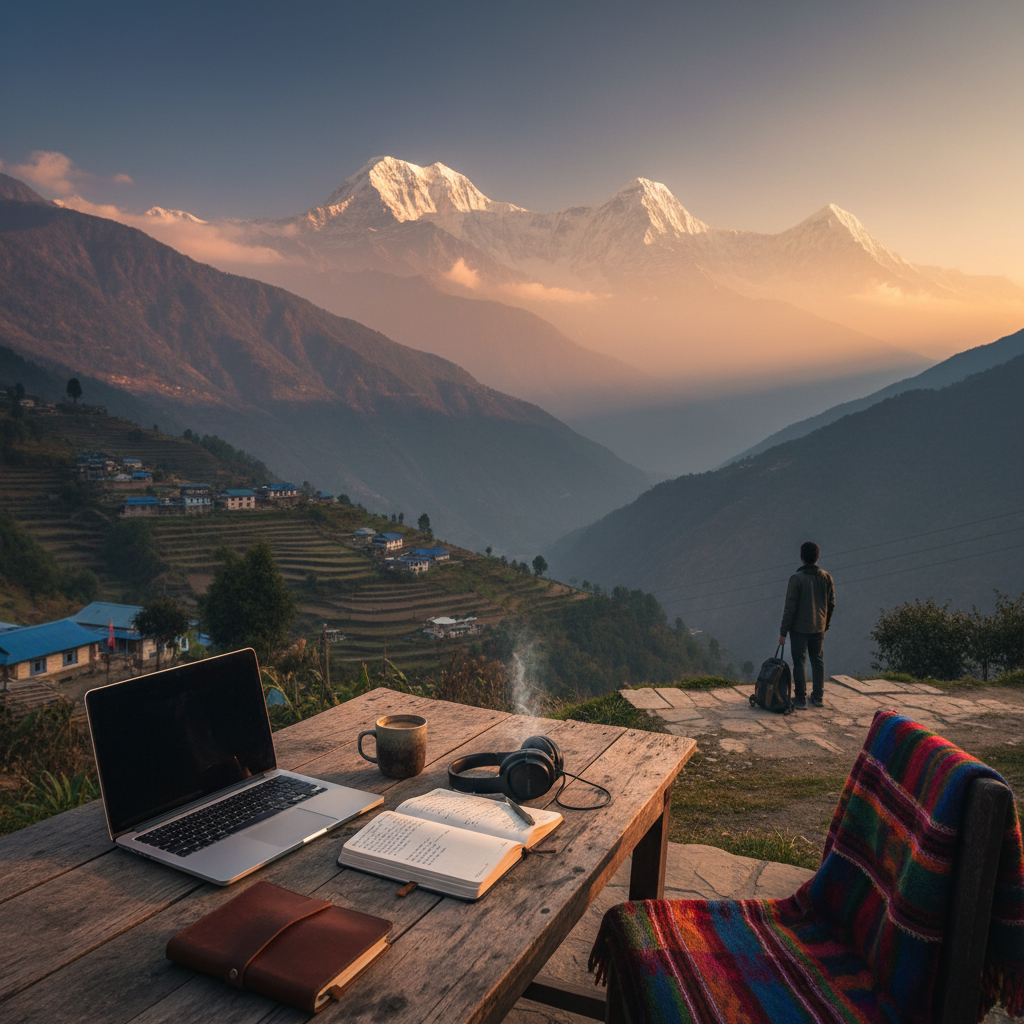
My first 90 days as a digital nomad in Nepal were undeniably transformative, offering a profound journey into a rich culture and breathtaking landscapes, despite some operational hurdles. From the bustling streets of Kathmandu to the tranquil mountain trails, the experience of establishing a remote work base here taught me invaluable lessons about adaptability, community, and the true meaning of a location-independent lifestyle. This isn't just about a visa; it's about embedding yourself in a different rhythm of life while keeping your remote career on track. If you're considering the Nepal digital nomad visa for 2026, prepare for an adventure that challenges and rewards in equal measure. My hope is this detailed account of my initial three months helps you navigate your own Himalayan remote work journey. It’s an ideal destination for those seeking unique cultural immersion alongside their professional endeavors.
Quick facts
| Feature | Details |
|---|---|
| Income requirement | USD 2,000/month (or equivalent) for primary applicant, plus USD 500/month per dependent |
| Visa duration | Initial 6 months, renewable up to 1 year |
| Renewable | Yes, for an additional 6 months (total 1 year) |
| Application fee | NPR 25,000 (approx. USD 190) for initial 6 months, plus additional fees for longer stays/renewal |
| Processing time | 2-4 weeks (can vary) |
| Tax rate for holders | Income earned outside Nepal is generally exempt; income sourced in Nepal taxed per local laws |
| Family members allowed | Yes, with additional income proof |
| Path to residency | No direct path to permanent residency through this visa, but longer-term stay options may exist |
What is the Nepal digital nomad visa?
Nepal officially launched its Digital Nomad Visa in late 2025, a strategic move to attract remote workers, freelancers, and digital entrepreneurs to its stunning landscapes and vibrant culture. For those like me, seeking a blend of professional flexibility and deep cultural immersion, this visa represents a significant opportunity. Essentially, it allows foreign nationals to reside in Nepal for an extended period, earning income from sources outside the country. This isn't a work permit for local employment; rather, it’s a permit for individuals engaged in remote work or online business activities for clients or employers based abroad. The vision behind it is clear: boost the local economy through increased tourism, consumption, and potentially, skills exchange, while offering a unique experience for the digital nomad community. The visa duration typically starts with an initial six-month period, extendable up to one year, providing ample time to explore and contribute to the local ecosystem while maintaining your global career.
My Journey to Application: Research and Preparation
Before I even thought about applying, the extensive research was critical. I spent weeks pouring over the official Department of Immigration website, cross-referencing information with fellow digital nomads who had ventured to other Asian countries. The sheer allure of the Himalayas and the promise of a vibrant cultural experience made Nepal an irresistible choice for my next chapter. My primary goal was to ensure my digital entrepreneurship could thrive in this new environment, and I wanted to be prepared for every eventuality, from internet stability to local banking. The anticipation was immense, fueled by images of ancient temples and snow-capped peaks, making the remote work aspect even more appealing.
Nepal digital nomad visa requirements
Navigating the requirements felt like a mini-project in itself, but with methodical preparation, it was entirely manageable. The core idea is to prove you're self-sufficient and won't be taking local jobs. Here's a breakdown of what was needed:
- Valid Passport: Must be valid for at least six months beyond your intended stay.
- Visa Application Form: Duly filled and signed, available online or at the embassy/consulate.
- Photographs: Recent passport-sized photos (typically 2-4 copies).
- Proof of Income: This is crucial. I had to provide bank statements from the last six months, showing consistent income from foreign sources. The minimum requirement is USD 2,000 per month (or equivalent in other convertible currency) for the principal applicant. I submitted invoices and client contracts to further strengthen my case. For dependents, an additional USD 500 per month per person is required.
- Proof of Remote Work: This included letters from my international clients confirming I work remotely for them, my freelancing portfolio, and a brief business plan outlining my digital entrepreneurship activities. For employees, a letter from the foreign employer stating your remote work status is sufficient.
- Medical Insurance: Comprehensive travel and health insurance valid for the entire duration of your stay in Nepal, with coverage for medical emergencies and repatriation. I made sure mine explicitly covered remote work-related accidents.
- Accommodation Proof: A booking confirmation for at least the first few weeks of my stay, or a rental agreement. I initially booked a month-long Airbnb in Kathmandu.
- No Criminal Record: A police clearance certificate from my home country, sometimes referred to as a Certificate of Good Conduct.
- Return Ticket/Onward Journey Proof (Optional but Recommended): While not always strictly required for this specific visa, having a plan for your exit can sometimes streamline the process.
- Educational Certificates/CV: To demonstrate professional qualifications relevant to my remote career.
It's worth noting that all documents not in English or Nepali needed to be translated by a certified translator. I had everything scanned and organized digitally before making physical copies, which proved to be a lifesaver during the application process.
How to apply for the Nepal digital nomad visa
The application process for the Nepal digital nomad visa involves several key stages, and my experience started well before I even landed in Nepal. Here’s a step-by-step account:
- Online Pre-Application: The first step was to complete the online visa application form on the Nepal Department of Immigration website. This form gathers basic personal details, passport information, and proposed travel dates. I ensured all fields were accurately filled and uploaded a digital copy of my passport photo.
- Document Gathering: As detailed above, I meticulously collected all required documents: income proofs, remote work contracts, insurance, police clearance, and accommodation booking. I created a checklist to ensure nothing was missed. This phase took me about two weeks, primarily waiting for bank statements and the police clearance certificate.
- Submission at a Nepali Diplomatic Mission (Pre-Arrival): For most applicants, the initial application is submitted to a Nepali Embassy or Consulate in their home country or country of residence. I booked an appointment at the nearest embassy, where I presented my physical documents along with the printed online application form. The consular officer reviewed everything, verified originals, and collected the initial processing fee. This pre-approval is crucial.
- Visa Issuance Upon Arrival (or at the Embassy): In my case, after about three weeks, I received an email from the embassy stating my pre-approval was granted, and I was instructed to collect a visa-on-arrival endorsement letter. This letter was critical for presenting to immigration upon landing at Tribhuvan International Airport (TIA) in Kathmandu. Some embassies may issue the visa sticker directly in your passport.
- Immigration Clearance in Nepal: Upon arrival in Kathmandu, I proceeded to the immigration counter specifically designated for 'Digital Nomads/Special Visas.' I presented my passport, the pre-approval letter, and paid the remaining visa fee. A brief interview ensued, mostly verifying my purpose of visit and remote work nature. They stamped my passport with the initial six-month Digital Nomad Visa. It was a moment of relief and excitement, knowing I could finally begin my Himalayan adventure.
- Reporting to the Department of Immigration: Within 7 days of arrival, I was advised to report to the Department of Immigration in Kalikasthan, Kathmandu, to complete a final registration. This involved submitting copies of my visa, passport, and proof of accommodation, and providing my local contact details. This step formally registered my presence as a digital nomad in the country.
Self-note: The process can feel fragmented, so keeping all communications and receipts organized is paramount. Always consult the country's official immigration website for the most up-to-date procedures, as they can sometimes change.
Cost breakdown
Understanding the financial implications is critical for any digital nomad. Here’s a breakdown of the costs I encountered during my first 90 days, covering the visa application and initial living expenses. Prices are approximate as of 2026.
| Item | Cost (NPR) | Cost (USD Approx.) | Notes |
|---|---|---|---|
| Visa Application Fee (Initial 6 months) | 25,000 | 190 | Paid at embassy/on arrival. For 1 year, it's NPR 50,000. |
| Police Clearance Certificate | 5,000 | 38 | Varies by home country, my local fee. |
| Medical Insurance | 20,000 | 150 | 6-month comprehensive plan. |
| Flight to Kathmandu | 100,000 | 750 | From my home country, one-way. Varies widely. |
| Accommodation (1st month) | 40,000 | 300 | Private studio apartment in Thamel, Kathmandu. |
| Accommodation (Months 2 & 3) | 60,000 | 450 | Co-living space in Lakeside, Pokhara, per month. |
| Food (3 months) | 45,000 | 340 | Mix of local eateries, home cooking. (NPR 15,000/month) |
| Local Transport (3 months) | 9,000 | 68 | Taxis, local buses, scooters. (NPR 3,000/month) |
| Internet & SIM Card (3 months) | 6,000 | 45 | NCELL/NTC top-ups, Wi-Fi dongle. (NPR 2,000/month) |
| Co-working Space (1 month) | 8,000 | 60 | One month in Kathmandu. |
| Activities/Sightseeing | 25,000 | 190 | Trekking permits, temple entries, local tours. |
| Miscellaneous/Buffer | 20,000 | 150 | Unforeseen expenses. |
| Total Estimated Initial Costs | 363,000 | 2,771 | Excluding flight, total initial setup costs around USD 2,000. |
My experience reinforced that Nepal offers an incredibly affordable lifestyle, especially compared to Western countries. While the initial visa fees are a one-time outlay, monthly living costs can be managed very efficiently, freeing up capital for further exploration or investment in digital nomad tools. My digital nomad lifestyle required careful budgeting, but the value for money in Nepal is exceptional, particularly outside the most touristy areas.
Taxes for digital nomads in Nepal
One of the most appealing aspects of the Nepal digital nomad visa, and a critical factor for any location-independent professional, is its tax treatment. Generally, as a holder of the Nepal digital nomad visa, you are not taxed in Nepal on income earned from foreign sources. This is a significant advantage, meaning if your clients, employers, or online business operations are based outside Nepal, your earnings are typically exempt from Nepali income tax. This exemption is designed to attract those who contribute to the local economy through their spending, rather than competing for local jobs or revenue.
However, it's vital to understand the nuances:
- Foreign Sourced Income: Income derived from remote work, freelancing, or online businesses where the client or employer is outside Nepal, and the services are rendered to them, generally falls under this exemption.
- Nepali Sourced Income: If you were to somehow generate income from a Nepali client or employer, or engage in any local business activities within Nepal, that income would be subject to Nepali tax laws and regulations. This is typically not permitted under the digital nomad visa's scope, which is strictly for foreign-sourced income.
- Tax Residency: While you are residing in Nepal, your tax residency status in your home country or other countries will depend on their specific tax laws and any double taxation agreements (DTAs) they have with Nepal. It's crucial to consult with a tax professional specializing in international taxation to ensure compliance in all relevant jurisdictions.
- Reporting Requirements: While you might not be taxed, some level of reporting or declaration of foreign income might be required by the Nepali authorities for statistical or monitoring purposes. Always check with the Department of Immigration or a local tax advisor upon arrival.
For me, this meant I could largely maintain my existing tax arrangements in my home country, focusing on managing my online business without the added complexity of a new income tax regime in Nepal. This clarity significantly reduced my administrative burden and made the financial planning for my digital nomad lifestyle much simpler.
Life in Kathmandu: First Impressions & Practicalities
Landing in Kathmandu was a sensory overload – the sounds, the smells, the vibrant colors. My initial month was based in Thamel, a tourist hub. I quickly found a reliable local SIM card (Ncell offers good data packages) and sorted out local transportation using ride-sharing apps like Pathao. Internet cafes and decent Wi-Fi in cafes were surprisingly common, though power outages (load shedding) were an occasional reality – a good portable power bank became my best friend. Finding a co-working space was crucial for productivity and networking, and I joined 'The Hub' for a month, which provided stable internet and a professional environment. Building a routine, albeit flexible, was key to maintaining my remote work schedule while immersing myself in the local culture.
For Bangladeshi passport holders
For digital nomads holding a Bangladeshi passport, the process of applying for the Nepal digital nomad visa follows the same general guidelines as for other nationalities. However, there are a few specific considerations that might be particularly relevant:
- Visa Application Point: Bangladeshi citizens typically apply for their Nepal visa through the Embassy of Nepal in Dhaka, Bangladesh. This is where you would submit your pre-application documents and attend any required interviews.
- Document Verification: Ensure all your financial documents, such as bank statements and proof of income, are clearly verifiable and meet the specified minimum income threshold of USD 2,000 per month. Given the economic context, providing comprehensive documentation demonstrating your foreign-sourced income and remote work status is crucial. This can often be a more stringent review for regional applicants.
- Police Clearance Certificate: Obtaining a police clearance certificate from Bangladesh is a standard requirement. Ensure you start this process well in advance, as administrative processing times can vary.
- Cultural Proximity: While the visa process is formal, Bangladeshi digital nomads might find the cultural transition to Nepal somewhat smoother due to geographical and cultural similarities. This can aid in quicker assimilation into the local community and understanding local customs.
- Travel Logistics: Direct flights are readily available from Dhaka to Kathmandu, making travel convenient once the visa is secured.
It's always recommended for Bangladeshi digital nomads to consult the official website of the Embassy of Nepal in Dhaka and the Department of Immigration in Nepal for the most precise and up-to-date requirements and procedures. Engaging with expatriate communities or digital nomad forums specifically for South Asia can also provide valuable insights into regional experiences.
Transitioning to Pokhara: Finding My Rhythm
After a month in Kathmandu, I yearned for more tranquility and natural beauty. Pokhara, with its stunning Lakeside and views of the Annapurna range, was the obvious next step. Here, I opted for a co-living arrangement, which provided a fantastic community and a balanced work-life environment. My productivity for my online business actually increased, as the serene surroundings and easy access to nature walks fostered a better work-life balance. I found a more consistent power supply than in Kathmandu, and many cafes offered excellent connectivity, making remote jobs more manageable. The pace of life was slower, and I dedicated my mornings to work, reserving afternoons for hiking, boating on Phewa Lake, or exploring the local markets. This shift highlighted the flexibility inherent in the digital nomad lifestyle – the ability to relocate and adapt based on personal preference and productivity needs.
Challenges and Lessons Learned
My 90 days weren’t without challenges. The internet, while generally good in major cities, could be inconsistent in more rural areas – always have a backup plan (like a powerful mobile hotspot). Navigating bureaucracy for extensions or local registrations required patience and persistence. Language barriers, while manageable with basic Nepali phrases and English speakers in tourist areas, could occasionally complicate daily tasks. Moreover, understanding the local etiquette and pace of life took time; things don’t always move as quickly as one might be used to. However, these challenges were ultimately learning experiences that deepened my appreciation for the country and my resilience as a digital nomad. My advice: embrace the unexpected, be patient, and always carry a power bank!
Frequently asked questions
What is the Nepal digital nomad visa?
The Nepal digital nomad visa is an official permit allowing foreign nationals to reside in Nepal for an extended period, typically 6-12 months, while working remotely for employers or clients outside Nepal. It facilitates long-term stays for location-independent professionals.
Who is eligible for the Nepal digital nomad visa?
Eligible individuals include remote workers, freelancers, and digital entrepreneurs earning a minimum of USD 2,000 per month from foreign sources. Applicants must have a valid passport, health insurance, and a clean criminal record.
How much does the Nepal digital nomad visa cost?
The initial application fee for a 6-month Nepal digital nomad visa is NPR 25,000 (approx. USD 190). For a 1-year visa, it's NPR 50,000 (approx. USD 380). Additional costs apply for dependents and administrative fees.
How long does Nepal digital nomad visa processing take?
Processing time for the Nepal digital nomad visa generally takes between 2 to 4 weeks after complete submission of all required documents. However, this can vary based on the volume of applications and the specific diplomatic mission.
Can I bring my family on the Nepal digital nomad visa?
Yes, you can bring family members (spouse and dependent children) on the Nepal digital nomad visa. You must show additional income proof of USD 500 per month per dependent, and they must meet general visa requirements.
Do I pay tax in Nepal on the digital nomad visa?
No, generally, digital nomad visa holders in Nepal are not taxed on income earned from foreign sources. Income generated from services provided to clients or employers outside Nepal is typically exempt from Nepali income tax.
Can Bangladeshi citizens get the Nepal digital nomad visa?
Yes, Bangladeshi citizens are eligible to apply for the Nepal digital nomad visa, following the same general requirements and application process. They typically apply through the Embassy of Nepal in Dhaka, Bangladesh.
Can the Nepal digital nomad visa be renewed?
Yes, the initial 6-month Nepal digital nomad visa can be renewed for an additional 6 months, allowing a total stay of up to one year. Renewal requires submitting an application to the Department of Immigration in Nepal.
Sources
- Nepal Department of Immigration: Consult the country's official immigration website
- Ministry of Culture, Tourism and Civil Aviation, Nepal: Consult the country's official tourism website
- Nepal Rastra Bank (Central Bank of Nepal): Consult the country's official central bank website
- Various online digital nomad forums and expatriate communities in Nepal (for anecdotal evidence and practical tips)
Compare with
Thailand, Indonesia, Vietnam
Interested in applying for the Nepal visa?
Tell us a bit about yourself and we'll send tailored guidance on eligibility, paperwork, and next steps.