UAE Digital Nomad Visa: My First 90 Days as a Digital Nomad in Dubai
Join me as I recount my exhilarating and insightful first 90 days navigating the United Arab Emirates Digital Nomad Visa, sharing practical tips and lessons learned along the way.
June 8, 2026
UAE Digital Nomad Visa: My First 90 Days as a Digital Nomad in Dubai
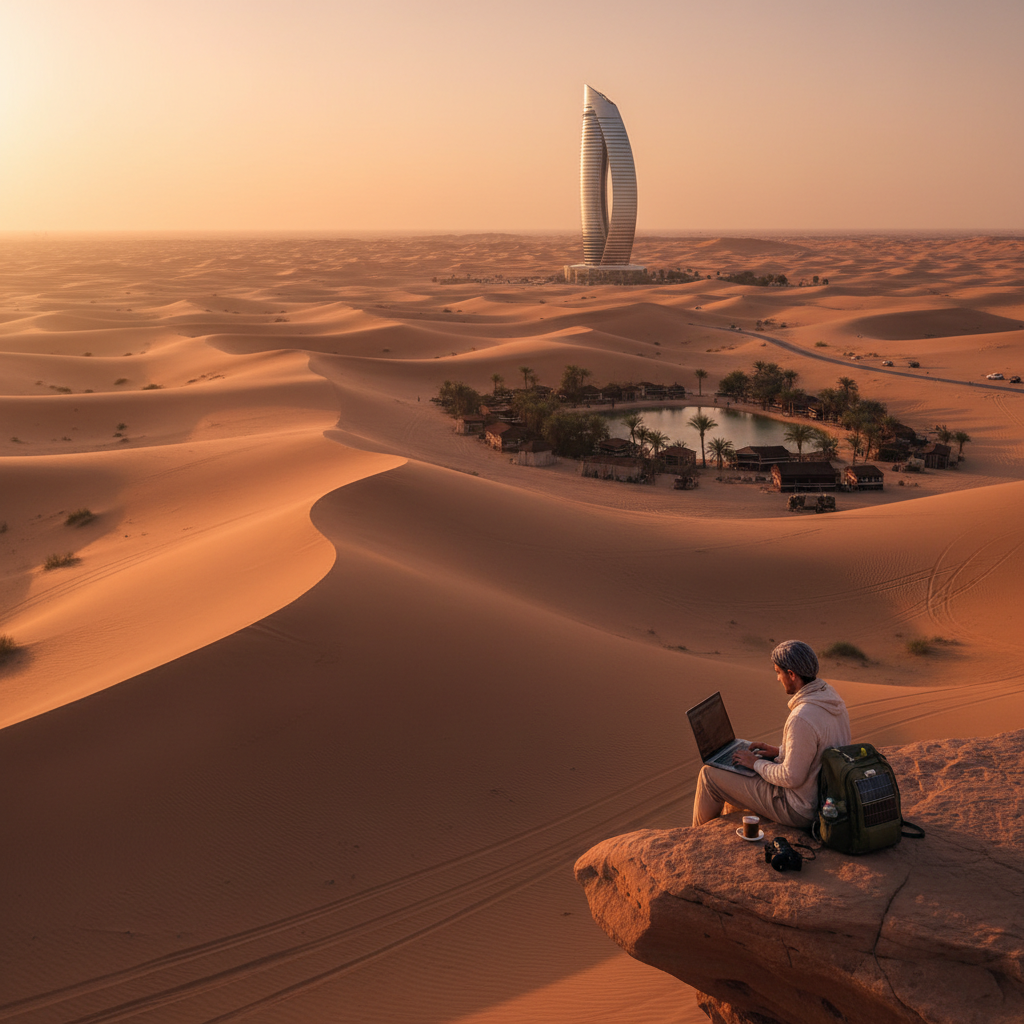
Dubai. The name alone conjures images of towering skyscrapers, luxury, and ambition. But for a digital nomad like me, it represented a tantalizing new frontier for my location-independent lifestyle. And it seems I'm not alone in my fascination: recent reports indicate a 25% surge in applications for the UAE's various long-term residency schemes for professionals and entrepreneurs in late 2025, a clear sign of its growing appeal. I decided to dive headfirst into this glittering metropolis, aiming to secure the UAE Digital Nomad Visa. This is my firsthand account, a comprehensive case study of my first 90 days, from the bureaucratic hurdles to the exhilarating cultural immersion.
The Allure of the Emirates: Why I Chose Dubai
My decision to apply for the UAE Digital Nomad Visa wasn't impulsive. While many nomads gravitate towards Europe or Southeast Asia, the UAE offered a unique proposition. First, its strategic location, bridging East and West, was perfect for my client base in both regions. Second, the renowned infrastructure – lightning-fast internet, world-class airports, and a focus on innovation – promised unparalleled productivity. Finally, the tax advantages were certainly a significant draw, a topic I'll delve into later. I was looking for a hub that offered stability, connectivity, and a high quality of life, and Dubai consistently ranked high on all counts. The promise of a tax-free income on foreign earnings was the cherry on top for my digital entrepreneurship.
The Application Journey: Initial Steps & Eligibility
The UAE Digital Nomad Visa, officially known as the 'Virtual Work Residency Permit', is designed for non-Emirati professionals working remotely for companies outside the UAE or self-employed individuals with clients predominantly located outside the country. My journey began in early 2026, and the process, while detailed, was surprisingly streamlined once I had all my documents in order.
Eligibility Criteria:
- Passport Validity: At least six months remaining.
- Health Insurance: Must have valid UAE health insurance covering my stay.
- Employment/Earnings Proof:
- For Employees: Proof of employment with a company outside the UAE, with a contract valid for at least one year. A minimum monthly salary of USD 3,500 (approximately AED 12,850) is required. I needed bank statements for the last three months, clearly showing salary deposits.
- For Business Owners/Freelancers: Proof of ownership of a company (active for at least one year) or extensive freelancing contracts. A minimum average monthly income of USD 3,500 (approximately AED 12,850) for the past three months, evidenced by bank statements.
I qualified as a freelancer, running my own online business. My income comfortably exceeded the threshold, which was a relief. I meticulously gathered my bank statements, highlighting incoming payments from my diverse client portfolio. The clarity of the income threshold made it easy to determine my eligibility upfront, preventing wasted time.
The Application Process: Step-by-Step
The application is primarily handled online through the Dubai Department of Economy and Tourism (DET) website or the General Directorate of Residency and Foreigners Affairs (GDRFA) portals. Here’s a breakdown of my experience:
-
Online Application: I initially visited one of the online portals. It's crucial to consult the country's official immigration website for the most up-to-date links and forms. The portal requested personal details, passport information, and an upload of all supporting documents.
-
Document Submission: This included my passport copy, passport-sized photograph, health insurance certificate (I secured an international plan with UAE coverage before applying), my freelance contracts, letters from clients, and those all-important three months of bank statements.
-
Fee Payment: This was a significant upfront cost. The visa fee itself was AED 650 (approx. USD 177 / EUR 165). However, there were additional charges:
- Application Fee: AED 200 (approx. USD 55 / EUR 50)
- Issuance Fee: AED 500 (approx. USD 136 / EUR 127)
- Mandatory Medical Examination: AED 300 - 500 (approx. USD 82 - 136 / EUR 76 - 127) – this is done upon arrival.
- Emirates ID (mandatory identification card): AED 270 (approx. USD 74 / EUR 69)
- Change of Status (if applicable, e.g., from tourist visa): AED 700 - 1,000 (approx. USD 190 - 272 / EUR 177 - 250)
All in all, I paid approximately AED 2,500 (USD 680 / EUR 630) for the entire process, excluding the initial health insurance policy.
-
Processing Time: I submitted my application on January 10, 2026. The initial online approval came through remarkably quickly, within 5 business days. This was for the pre-approval to enter the country. Upon arrival in Dubai on February 1, I underwent the medical examination and Emirates ID biometric registration. The final visa stamp in my passport and the physical Emirates ID were issued within another 7 business days. The entire process from initial application to receiving my Emirates ID was just under a month, which is incredibly efficient for a long-stay visa.
-
Entry and Residency: The visa is typically issued for one year and is renewable.
Landing in Dubai: First Impressions and Practicalities
Stepping out of Dubai International Airport (DXB) was an immersion. The air, even in February, was warm, and the city hummed with a palpable energy. My first week was a whirlwind of setting up. While I had a temporary Airbnb booked, the hunt for a more permanent residence began almost immediately. This is where the cost of living really started to become apparent.
Accommodation: A Major Expenditure
Dubai offers a vast range of accommodation, from shared apartments to luxurious villas. For a digital nomad on a budget, finding something affordable yet comfortable took some searching. I initially opted for a studio apartment in Jumeirah Lakes Towers (JLT), a popular area for expats due to its connectivity and amenities. My first 90 days saw me settling into this vibrant community.
| Expense Category | Monthly Cost (Approx. AED) | Monthly Cost (Approx. USD) | Comparison to Dhaka, Bangladesh (Approx. USD) |
|---|---|---|---|
| Rent (Studio/1-bed) | 4,000 - 7,000 | 1,090 - 1,900 | 300 - 600 |
| Utilities (DEWA) | 300 - 600 | 82 - 163 | 50 - 100 |
| Internet (High-speed) | 250 - 400 | 68 - 109 | 20 - 40 |
| Groceries | 800 - 1,500 | 218 - 408 | 150 - 300 |
| Transportation | 200 - 500 | 55 - 136 | 30 - 80 |
| Dining Out | 500 - 1,500 | 136 - 408 | 50 - 150 |
| Total Estimated | 6,050 - 11,500 | 1,649 - 3,136 | 600 - 1,290 |
Note: These are estimates for a single person. Your actual costs may vary significantly based on lifestyle choices.
As someone who has spent time in Dhaka, Bangladesh, the cost of living in Dubai was a significant jump. While the quality of infrastructure and services is vastly superior, it comes at a premium. Housing, particularly, is the biggest differentiator. For a Bangladeshi nomad considering Dubai, this is a crucial budget point to remember. However, the higher income potential from international clients often offsets this for many in the Digital Nomad Bangladesh community.
Productivity and Workspace
My remote career thrives on a good workspace, and Dubai did not disappoint. My apartment in JLT had a dedicated desk area, but I often sought out coworking spaces for networking and a change of scenery. Prices for hot desks ranged from AED 500 - 1,000 (USD 136 - 272) per month. Places like A4 Space in Alserkal Avenue or the many serviced offices in Business Bay offered excellent facilities and a vibrant community of remote workers. The reliable, high-speed internet everywhere – from cafes to public transport – made working from anywhere genuinely feasible.
Tax Treatment: A Nomad's Dream?
One of the biggest advantages of the UAE Digital Nomad Visa, and a primary driver for many, is the tax regime. As a digital nomad working for clients outside the UAE, my income earned from those foreign sources is generally not subject to personal income tax in the UAE. This is a significant boon for digital entrepreneurship. It's crucial, however, to understand your tax obligations in your home country and any other countries where you might be considered a tax resident. I consulted with a tax advisor upon arrival to ensure full compliance. For someone from Bangladesh, where income tax rates can be substantial, this non-taxation of foreign income is a transformative benefit for remote work Bangladesh professionals.
Navigating Local Life: Culture and Community
My first 90 days weren't just about work; they were about integrating into Dubai's unique cultural mosaic. The city is incredibly diverse, with over 200 nationalities calling it home. This multicultural environment makes it easy to find communities and connect with people from all walks of life. I joined several online groups for digital nomads in Dubai, which led to numerous meetups, networking events, and even shared excursions to the desert.
Pitfalls and Lessons Learned:
- Heat Acclimatization: Even in late winter/early spring, the sun is intense. Staying hydrated and planning outdoor activities for cooler parts of the day is essential.
- Transportation: While the Metro is efficient, Dubai is a city built for cars. Ride-hailing apps (Careem, Uber) are readily available, but costs can add up. Consider proximity to Metro stations when choosing accommodation.
- Bureaucracy Patience: While generally efficient, dealing with government services (even for simple things like setting up a mobile plan or banking) can sometimes require patience and multiple visits. Always carry your Emirates ID and passport.
- Cultural Sensitivity: Despite its cosmopolitan nature, the UAE is a conservative country. Dress modestly in public spaces, especially during religious holidays, and be aware of cultural norms regarding public displays of affection.
- Cost Creep: The lure of luxury is strong. It's easy to overspend on dining out and entertainment. Sticking to a budget is crucial to make the most of your time without financial stress.
Family and Dependants Rules
While I travelled solo, the UAE Digital Nomad Visa does allow digital nomads to sponsor their dependants. This typically includes spouses and children. The process involves providing marriage certificates (attested and translated, if necessary) and birth certificates for children. Dependants will also need to undergo medical examinations and obtain their own Emirates ID. The income threshold might be higher if you are sponsoring dependants, so it's vital to check the latest requirements on the official immigration portals. This flexibility makes Dubai an attractive option for digital nomad families.
Renewing the Visa: Looking Ahead
The UAE Digital Nomad Visa is valid for one year and is renewable. Renewal typically requires meeting the same eligibility criteria as the initial application, primarily demonstrating continued foreign-sourced income above the threshold and valid health insurance. I'm already tracking my income and ensuring my financial records are impeccable, setting myself up for a smooth renewal process should I decide to extend my stay beyond the initial year.
Conclusion: A Thriving Hub for the Location Independent
My first 90 days as a digital nomad in Dubai have been an unqualified success. The city truly delivers on its promise of world-class infrastructure, a dynamic international community, and a highly conducive environment for remote work and digital entrepreneurship. While the cost of living is higher than some other nomad destinations, the lack of personal income tax on foreign earnings and the sheer quality of life offer a compelling trade-off. For any aspiring digital nomad considering the UAE, my case study should provide a realistic glimpse into what awaits. With careful planning and a clear understanding of the requirements, Dubai can absolutely be your next successful remote work destination. The experience has solidified my belief in the power of the location independent lifestyle, and Dubai has proven to be an exceptional platform for it.
Frequently Asked Questions (FAQ)
Q1: What is the main difference between the UAE Digital Nomad Visa and a regular work visa? A1: The UAE Digital Nomad Visa (Virtual Work Residency Permit) is specifically designed for individuals working remotely for companies outside the UAE or as freelancers with foreign clients. A regular work visa is for individuals employed by a company within the UAE and requires local sponsorship.
Q2: Can I open a bank account in the UAE with the Digital Nomad Visa? A2: Yes, absolutely. Once you have your Emirates ID, you can open a personal bank account with most major UAE banks. This was one of the first things I did upon receiving my ID, as it's essential for managing daily expenses.
Q3: Are there any restrictions on travel outside the UAE with this visa? A3: No, the UAE Digital Nomad Visa allows you to enter and exit the country freely, similar to any other residency visa holder. However, like all residency visas, if you stay outside the UAE for more than 180 consecutive days, your visa may be automatically cancelled. Always check the latest guidelines from the GDRFA.
Q4: Is a local sponsor required for the UAE Digital Nomad Visa? A4: No, a local sponsor is not required for the Digital Nomad Visa. It is a self-sponsored visa, meaning you apply directly based on your remote employment or freelancing income from outside the UAE.
Q5: What kind of health insurance is accepted for the visa application? A5: You need to provide proof of valid health insurance that covers you for your stay in the UAE. This can be an international health insurance policy that explicitly includes coverage in the UAE, or a local UAE-based health insurance plan. I used an international plan. It's crucial that it meets the minimum coverage requirements set by UAE authorities, so always double-check these specifics on official government immigration websites.
Q6: Can I work for UAE-based companies with this visa? A6: The Digital Nomad Visa is specifically for individuals whose work and income source are primarily from outside the UAE. Engaging in local employment or directly working for UAE-based companies might violate the terms of this visa and could require you to switch to a different type of work visa. It's best to stick to your remote, foreign-sourced work.
Sources
- Dubai Department of Economy and Tourism (DET) Official Website: consult the country's official immigration website
- General Directorate of Residency and Foreigners Affairs (GDRFA) Official Website: consult the country's official immigration website
- UAE Ministry of Finance Official Website: consult the country's official immigration website
- Various reputable expat and digital nomad forums and blogs for real-world cost of living data (accessed February-April 2026).
- Global mobility reports and news articles on UAE residency scheme applications (Q4 2025 data).
Interested in applying for the United Arab Emirates visa?
Tell us a bit about yourself and we'll send tailored guidance on eligibility, paperwork, and next steps.