South Africa Digital Nomad Visa: Unpacking the 2026 Policy Revisions and What Changed
Often considered a future prospect, South Africa's digital nomad visa officially launched in 2024, but 2026 brought significant revisions. This article breaks down the updated requirements, income thresholds, fees, and application process, helping remote workers understand the new landscape for living and working from the Rainbow Nation.
September 30, 2026
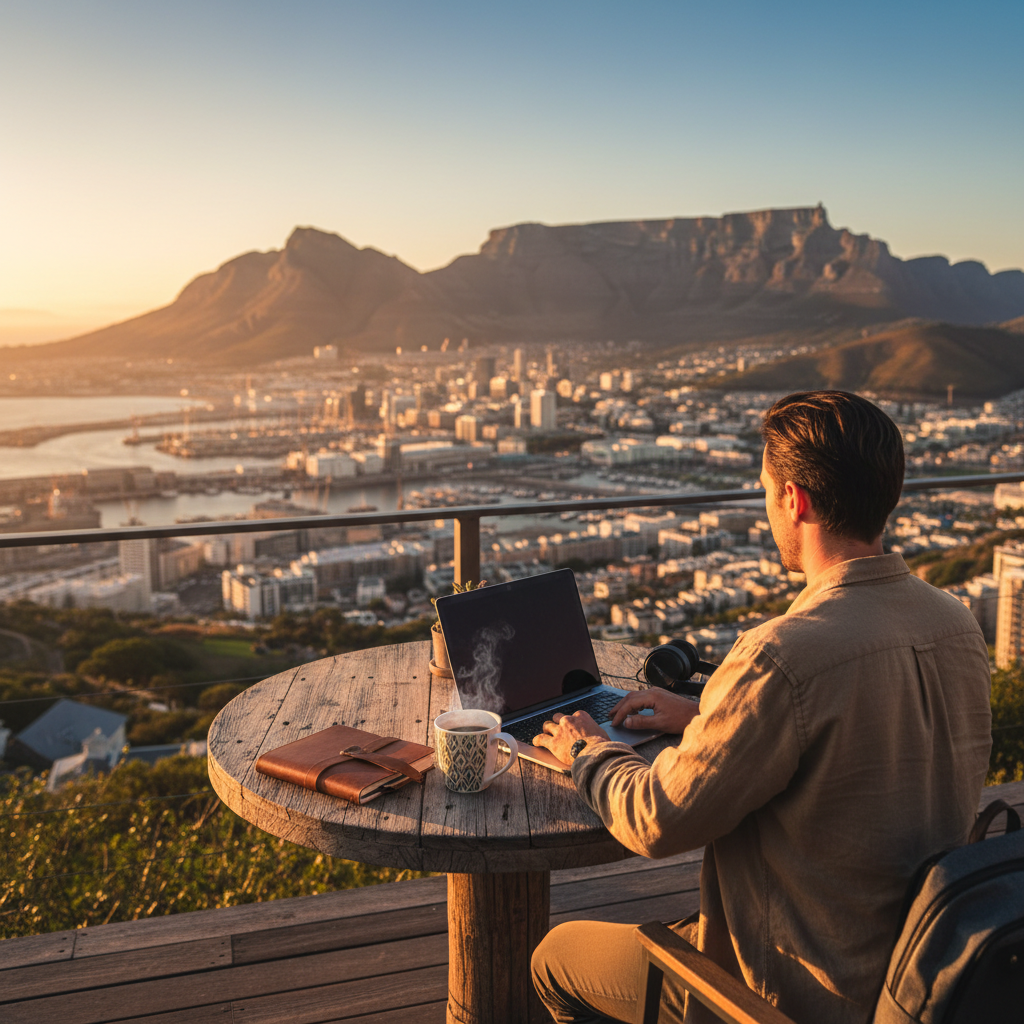
Many remote workers held a common misconception: the South Africa digital nomad visa was still 'coming soon' or mired in legislative delays. While it’s true that its initial rollout in 2024 faced some administrative teething problems, 2026 marks a pivotal year, bringing much-anticipated policy revisions and clarity to the application process. This isn't the same visa many cautiously observed two years ago; significant adjustments have made it more accessible and, crucially, more predictable for the growing cohort of professionals embracing a Digital Nomad Lifestyle.
South Africa, with its diverse landscapes, vibrant cities, and favorable time zones for European and Asian markets, has always been an attractive proposition for those seeking a Location Independent Lifestyle. The 2026 updates aim to solidify its position as a premier destination for Remote Work, streamlining a path for qualified individuals to experience the Rainbow Nation without the bureaucratic hurdles of its predecessors. Let's dive into what's new and how these changes impact your dream of working from Cape Town, Johannesburg, or the Garden Route.
Quick facts
| Feature | Details |
|---|---|
| Income requirement | ZAR 50,000 per month (approx. USD 2,700 / EUR 2,500) |
| Visa duration | 1 year |
| Renewable | Yes, for up to 2 additional years (3 years total) |
| Application fee | ZAR 1,500 (approx. USD 80 / EUR 75) + service fees |
| Processing time | 4-6 weeks (post-2026 revisions) |
| Tax rate for holders | Non-resident for tax purposes, income taxed in home country |
| Family members allowed | Yes, dependents can apply for an accompanying visa |
| Path to residency | No direct path, but can transition to other visa types |
What is the South Africa digital nomad visa?
The South Africa digital nomad visa, officially launched in 2024, was designed to attract skilled foreign nationals who can work remotely for employers or clients outside South Africa. It falls under the category of a Critical Skills Visa amendment or a new, dedicated Remote Work Visa as per the 2026 immigration act revisions, specifically designed for individuals engaged in Digital Entrepreneurship or employed remotely by non-South African entities. The key distinction from regular visitor or business visas is its explicit recognition of remote employment as a valid long-term stay purpose, allowing holders to legally reside and work in South Africa for an extended period.
Prior to 2026, the framework was somewhat ambiguous, often requiring applicants to fit into existing visa categories that weren't quite right for the typical remote worker. The revisions have clarified the eligibility criteria, streamlined the application process, and introduced specific income thresholds, making it a truly fit-for-purpose visa for modern remote professionals. This new clarity empowers individuals to plan their relocation with far greater certainty.
South Africa digital nomad visa requirements
The 2026 policy changes have significantly refined the eligibility criteria for the South Africa digital nomad visa. Applicants must now demonstrate a clear commitment to Work From Anywhere principles and possess the financial stability to support themselves.
Here are the core requirements, including the crucial updates:
- Proof of Remote Employment/Clients: You must be genuinely employed by a company registered outside South Africa or provide services to clients predominantly based outside South Africa. This can be evidenced by an employment contract, service agreements, or official letters from clients.
- Minimum Income Threshold: This is one of the most critical updates. As of 2026, applicants must demonstrate a minimum gross income of ZAR 50,000 per month (approximately USD 2,700 or EUR 2,500, depending on exchange rates). This is a net increase from the ZAR 37,000 initially discussed in 2024 drafts, reflecting local economic considerations and ensuring nomads can contribute meaningfully to the economy through spending. This income must be derived from sources outside South Africa.
- Proof of Funds: Beyond the income, you'll need to show bank statements for the past three to six months to prove consistent income and sufficient savings to cover your initial stay.
- Valid Passport: Your passport must be valid for at least 30 days beyond your intended stay and have at least two blank pages.
- Health Insurance: Comprehensive medical insurance covering your entire stay in South Africa is mandatory. This must include coverage for hospitalization, medical expenses, and repatriation.
- Clean Criminal Record: A police clearance certificate from your home country and any country you've resided in for more than 12 months in the past five years is required.
- Accommodation: Proof of accommodation for at least your initial period of stay (e.g., hotel booking, rental agreement) may be requested, though not always strictly enforced for the full year.
- Age Requirement: Applicants must typically be 18 years or older.
One significant clarification in 2026 is the explicit allowance for various forms of remote work, from traditional employment to Freelancing and running an Online Business, as long as the income source is external. This broadens the scope of eligible applicants considerably.
How to apply for the South Africa digital nomad visa
The application process, while simplified in 2026, still requires meticulous attention to detail. It largely follows a three-stage approach:
-
Gathering Documentation: This is the most time-consuming part. Collect all necessary documents, including your passport, proof of income (employment contract, client invoices, bank statements), health insurance policy, police clearance certificates, and a detailed letter explaining your remote work setup and intention to work from South Africa. Ensure all foreign documents are translated into English by a sworn translator if necessary.
-
Online Application Submission: As of 2026, the South African Department of Home Affairs (DHA) has significantly improved its online portal. You will create an account, fill out the application form electronically, and upload scanned copies of all your supporting documents. This initial online submission streamlines the process and allows for preliminary vetting.
-
Biometrics and Interview (In-Person): After successful online submission and payment of fees, you will be scheduled for an in-person appointment at a South African embassy, consulate, or a VFS Global office (South Africa's visa processing partner) in your country of residence. Here, you will submit your original documents for verification, provide biometric data (fingerprints and a photograph), and potentially undergo a brief interview to confirm your intentions and eligibility.
Key change for 2026: The backlog for in-person appointments has been significantly reduced due to increased staffing and improved digital infrastructure. This means fewer delays between online submission and the physical appointment, which was a major pain point in 2024-2025.
Processing time: Post-2026 reforms, the standard processing time is quoted as 4 to 6 weeks from the date of your in-person appointment. However, it is always advisable to apply well in advance, preferably 2-3 months before your intended travel date, to account for any unforeseen delays.
Cost breakdown
Understanding the financial commitment is crucial for any aspiring digital nomad. The 2026 adjustments have clarified several fees, making budgeting more predictable.
| Item | Cost (ZAR) | Approximate Cost (USD) | Notes |
|---|---|---|---|
| Visa Application Fee | 1,500 | 80 | Payable to the Department of Home Affairs |
| VFS Global Service Fee | 1,200 | 65 | For processing and appointment scheduling through VFS Global |
| Police Clearance Cert. | Varies | 10-100 | Depending on country of origin |
| Document Translation | Varies | 50-200 | If documents are not in English |
| Health Insurance (annual) | 10,000 - 30,000 | 550 - 1,650 | Comprehensive medical and repatriation coverage, highly variable |
| Proof of Funds (initial liquidity) | 150,000 - 300,000 | 8,200 - 16,500 | Recommended liquid savings for initial months beyond income threshold |
| Estimated Total (Excluding Funds) | 14,000 - 33,000+ | 760 - 1,800+ | Varies significantly based on insurance and additional services |
Note: Exchange rates are approximate as of late 2025/early 2026 (1 USD ≈ ZAR 18.2, 1 EUR ≈ ZAR 20.0) and are subject to fluctuation. It's always best to check current rates.
Beyond the official fees, remember to factor in initial setup costs like flights, temporary accommodation, and establishing a local phone plan. For those considering Digital Nomad Tools or Coworking Spaces, budget accordingly, although South Africa offers excellent value for these services compared to many Western countries.
Taxes for digital nomads in South Africa
One of the most appealing aspects of the South Africa digital nomad visa, maintained through the 2026 revisions, is the tax treatment for holders. Digital nomads on this visa are generally considered non-residents for tax purposes in South Africa, provided they do not spend more than 183 days in the country during a 12-month period, and more than 60 of those days are continuous, or they do not meet other residency tests (like having a 'permanent home' in SA).
This means that income earned from foreign sources (i.e., your remote work employer or clients outside South Africa) is not taxed by the South African Revenue Service (SARS). You will continue to pay taxes in your country of origin or primary tax residence, depending on its tax laws and any double taxation agreements.
However, it's crucial to understand a few caveats:
- Local Income: Any income derived from South African sources (e.g., freelance work for a South African company, rental income from a South African property) would be subject to South African taxation.
- Residency Test: While the visa itself doesn't confer tax residency, overstaying the 183-day mark in any 12-month period could trigger tax residency rules. This is why careful tracking of your days in the country is paramount.
- Professional Advice: Always consult with a qualified tax advisor specializing in international taxation, especially for your specific home country's laws, to ensure full compliance.
The clarity on tax implications post-2026 makes South Africa an attractive hub for Digital Nomad Jobs and those focusing on Productivity for Digital Nomads, as financial planning is simplified.
South Africa vs. Initial Drafts: A Policy Evolution
The journey to the refined 2026 digital nomad visa has involved significant changes from its initial conceptualization. Understanding these evolutions highlights South Africa's commitment to creating a viable framework for remote workers.
| Feature | Initial 2024 Draft Discussion Points | 2026 Implemented Policy Revisions |
|---|---|---|
| Visa Category | Often vague; amendment to existing visas | Dedicated 'Remote Work Visa' or clear Critical Skills amendment |
| Income Threshold | ZAR 37,000 per month (approx.) | ZAR 50,000 per month (non-negotiable minimum) |
| Processing Time | Highly uncertain, 2-3 months often cited | 4-6 weeks post-biometrics, due to administrative improvements |
| Application Mode | Predominantly manual with online booking | Streamlined online submission first, then in-person biometrics |
| Tax Status Clarity | Ambiguous, caused concern for applicants | Explicitly non-resident for foreign income, subject to physical presence test |
| Family Inclusion | Less defined | Clear provisions for dependent visas and accompanying family members |
| Renewal Options | Limited or complex process | Explicit renewal for up to 2 additional years, total 3 years possible |
This table illustrates a clear move towards a more structured, efficient, and transparent system, addressing many of the uncertainties that plagued early discussions.
For Bangladeshi passport holders
Bangladeshi citizens often face stricter visa requirements for international travel. For the South Africa digital nomad visa, the general eligibility criteria for income, remote work proof, and health insurance remain the same. However, Bangladeshi applicants should pay particular attention to a few additional considerations:
- Police Clearance: Obtaining a police clearance certificate from Bangladesh can sometimes take longer. Start this process well in advance.
- Appointment Availability: While VFS Global services are available in Bangladesh (e.g., Dhaka), appointment slots for South Africa visas might be more competitive. Book your appointment as soon as you receive the notification after your online submission.
- Document Verification: Be prepared for thorough verification of your documents, especially income statements and employment contracts. Ensure all documents are original or certified true copies and professionally translated if not in English.
- Interview Focus: During your interview at the VFS Global center, be ready to clearly articulate your remote work setup, the nature of your Online Business or employment, and your financial independence. Emphasize that your income is derived from outside South Africa.
There are no specific additional fees for Bangladeshi passport holders, but factor in potential courier costs for sending documents if you reside outside major cities with VFS Global centers. South Africa aims for an inclusive digital nomad program, so as long as all criteria are met, nationality is not a barrier.
Extending your stay and path to residency
The initial South Africa digital nomad visa is valid for one year. A significant enhancement introduced in 2026 is the clear pathway for renewal. You can apply for a renewal for up to two additional years, bringing your total potential stay to three years. The renewal process is similar to the initial application, requiring updated proof of income, health insurance, and a clean record.
However, it's important to note that the digital nomad visa does not offer a direct path to permanent residency in South Africa. If you wish to stay longer than three years, you would need to transition to another long-term visa category, such as a Critical Skills Visa (if your profession is on the list and you secure local employment), a business visa, or potentially a general work visa. This would involve meeting the specific requirements of those respective visa categories, which are distinct from the digital nomad program.
South Africa-specific pitfalls and tips for success
While South Africa is an incredible destination for Digital Nomad Travel, navigating its unique challenges requires foresight:
- Safety and Security: Like any major country, safety varies by area. Research neighborhoods thoroughly, use reputable transport, and always be aware of your surroundings, especially in larger cities like Johannesburg or even parts of Cape Town. The 2026 environment prioritizes safety for foreign nationals, but personal vigilance is key.
- Load Shedding (Electricity Outages): South Africa experiences planned power outages. While significantly improved in 2025-2026 due to infrastructure investments, they still occur. Invest in a UPS (Uninterruptible Power Supply) for your electronics and ensure your accommodation has a reliable backup power solution (inverter, solar, or generator) for uninterrupted Remote Work.
- Internet Connectivity: Major cities offer excellent fiber optic internet. However, outside urban hubs, connectivity can be slower or less reliable. Research your intended location's internet infrastructure if constant, high-speed access is critical for your Remote Career.
- Cost of Living Fluctuations: While generally affordable, the South African Rand can be volatile. Factor currency fluctuations into your budget, especially if your income is in USD or EUR.
- Local Bank Account: While not strictly mandatory for the visa, opening a local bank account simplifies daily life, rent payments, and withdrawing cash. You'll generally need your passport, proof of address, and proof of your visa.
- Cultural Sensitivity: South Africa is a diverse nation with 11 official languages. Embrace the rich culture, learn a few basic phrases, and engage respectfully with local customs.
Frequently asked questions
What is the South Africa digital nomad visa?
This visa allows remote workers employed outside South Africa to legally reside and work in the country for up to one year, renewable for an additional two years. It caters specifically to individuals with external income and promotes a digital nomad lifestyle.
Who is eligible for the South Africa digital nomad visa?
Eligible individuals are those employed by a foreign company or serving foreign clients, earning a minimum of ZAR 50,000 per month, with valid health insurance and a clean criminal record.
How much does the South Africa digital nomad visa cost?
The primary government application fee is ZAR 1,500, with an additional VFS Global service fee of ZAR 1,200. Total costs, including insurance and other certificates, typically range from ZAR 14,000 to ZAR 33,000+ (approx. USD 760 – 1,800+) before living expenses.
How long does South Africa digital nomad visa processing take?
Post-2026 policy revisions, processing generally takes 4-6 weeks after your in-person biometrics appointment. It is advisable to apply 2-3 months before your intended travel date.
Can I bring my family on the South Africa digital nomad visa?
Yes, dependents, including spouses and minor children, can apply for an accompanying visa. They will need to meet specific requirements and demonstrate sufficient funds for their support.
Do I pay tax in South Africa on the digital nomad visa?
Generally, no. As a non-resident for tax purposes, income earned from foreign sources (your remote work) is not taxed by South Africa, provided you don't exceed residency days (183 days in 12 months).
Can Bangladeshi citizens get the South Africa digital nomad visa?
Yes, Bangladeshi citizens are eligible, provided they meet all the standard requirements, including the income threshold, remote work proof, and health insurance. Special attention should be paid to police clearance and document verification.
Sources
- South African Department of Home Affairs (DHA): consult the country's official immigration website
- VFS Global South Africa: consult the official VFS Global website for South Africa
- South African Revenue Service (SARS): consult the official SARS website for tax guidelines
Compare with
Mauritius, Portugal, Spain
Interested in applying for the South Africa visa?
Tell us a bit about yourself and we'll send tailored guidance on eligibility, paperwork, and next steps.