Making Malaysia Home: A Family's Guide to the DE Rantau Digital Nomad Visa in 2026
Dreaming of a vibrant life in Southeast Asia with your loved ones? Malaysia's DE Rantau digital nomad visa offers an enticing pathway. This comprehensive guide, updated for 2026, delves into the requirements, costs, and practicalities of bringing your family, focusing on schools, healthcare, and building a thriving remote work life in this diverse nation.
September 17, 2026
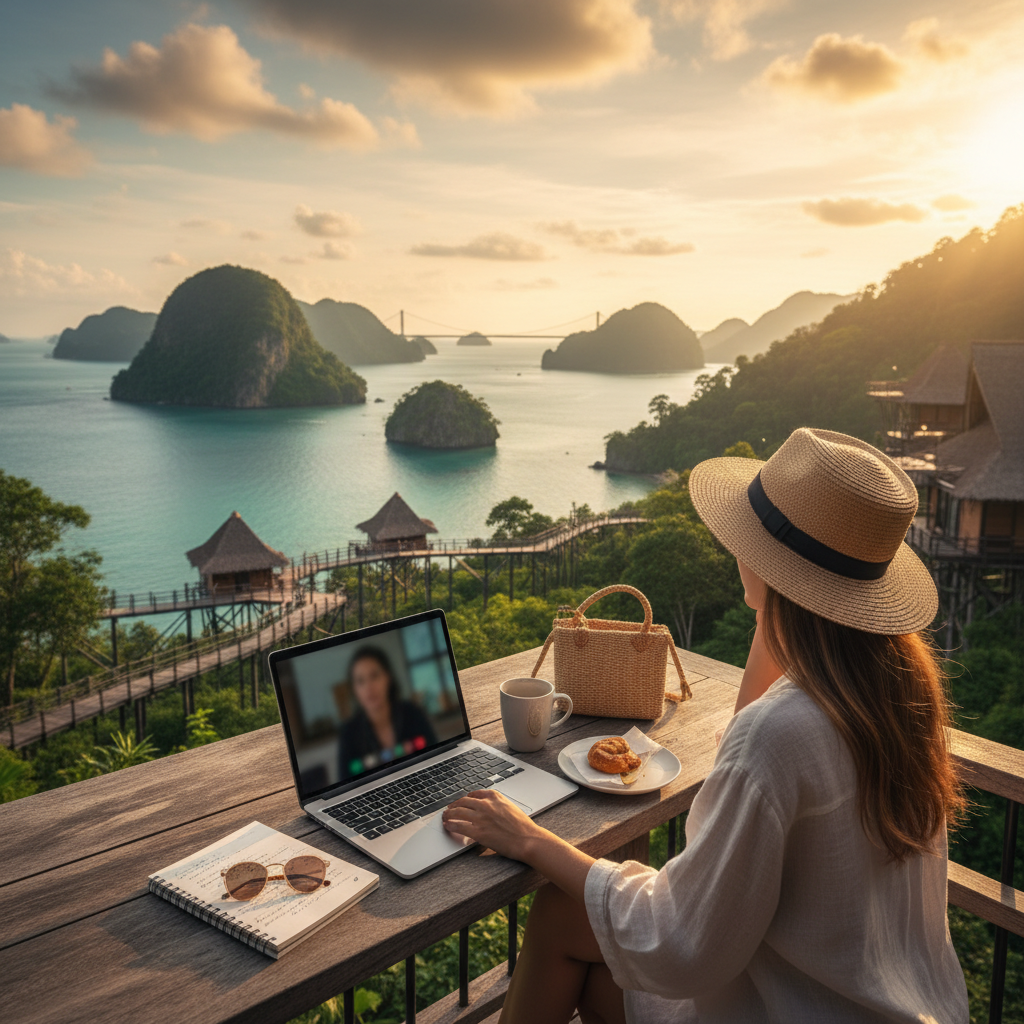
The aroma of durian and pandan wafts through the bustling streets of Kuala Lumpur, where futuristic skyscrapers meet ancient rainforests. Your children, captivated, point at a family of monkeys scampering up a roadside tree. Just moments before, you were answering emails from a chic coworking space overlooking the iconic Petronas Towers. This isn't a vacation fantasy; it's a glimpse into the vibrant, enriching digital nomad lifestyle that Malaysia offers families in 2026, made possible by its innovative DE Rantau program. But how do you turn this dream into a tangible reality for your entire household? What are the real costs, the educational prospects, and the healthcare considerations? Let’s dive into making Malaysia your next family-friendly remote work destination.
Malaysia has rapidly emerged as a top contender for those seeking a balance of affordability, modern infrastructure, and rich cultural experiences, especially for families. The DE Rantau program, launched to attract global talent and boost the local digital economy, is more than just a visa; it’s an invitation to integrate into a dynamic society. For those embracing remote work or work from anywhere, the prospect of settling your family in a country renowned for its multiculturalism, delicious food, and diverse landscapes is incredibly appealing.
Quick facts
| Feature | Details |
|---|---|
| Income requirement | MYR 90,000 (approx. USD 19,000 / EUR 17,500) per year |
| Visa duration | 12 months |
| Renewable | Yes, for another 12 months |
| Application fee | MYR 1,000 (approx. USD 210 / EUR 195) for principal applicant |
| MYR 500 (approx. USD 105 / EUR 98) per dependent | |
| Processing time | 4-8 weeks |
| Tax rate for holders | 0% on foreign-sourced income; local income taxed per resident rates (if applicable) |
| Family members allowed | Spouse, common-law partner, and children under 21 years old |
| Path to residency | Not a direct path to permanent residency; requires separate immigration application |
What is the Malaysia digital nomad visa?
The Malaysia digital nomad visa, officially known as the DE Rantau program, is a specialized pass designed to attract remote workers and freelancers to the country. Introduced with the goal of establishing Malaysia as a leading digital nomad hub in Southeast Asia, it offers a legal framework for individuals to live and work remotely from within its borders for an extended period. This initiative is particularly attractive for those who have embraced a location independent lifestyle, allowing them to explore new cultures while maintaining their professional commitments. The visa facilitates a streamlined entry and stay for eligible applicants, including their immediate families, making it a comprehensive solution for global citizens.
Unlike traditional work permits tied to local employment, the DE Rantau program acknowledges the evolving nature of work. It targets individuals who are employed by companies outside Malaysia, or who operate their own online business or freelancing ventures that serve clients predominantly outside the country. The program aims to foster a vibrant ecosystem by encouraging interaction between global remote workers and local communities, potentially contributing to knowledge transfer and economic growth. For many, it represents an exciting opportunity to immerse themselves in a new environment without sacrificing their career trajectory.
Malaysia digital nomad visa requirements
Eligibility for the DE Rantau program is clearly defined to ensure that applicants genuinely fit the profile of a digital nomad or remote professional. Meeting these criteria is the first crucial step towards securing your visa and embarking on your Malaysian adventure with your family. Ensure all documents are translated into English and certified where necessary.
Principal Applicant Requirements:
- Nationality: Open to citizens of all countries, provided they meet other criteria.
- Occupation: Must be a digital professional, including but not limited to freelancers, independent contractors, or remote employees. Eligible fields include IT (software development, cybersecurity, AI, blockchain), digital marketing, content creation, and other digital services. Digital nomad jobs are diverse, so verify if your profession falls under the eligible categories.
- Employment/Client Contract:
- Remote Employees: Must have a valid employment contract with a company based outside Malaysia. This contract should explicitly state the ability to work remotely.
- Freelancers/Independent Contractors: Must have active contracts with clients predominantly based outside Malaysia. A portfolio demonstrating consistent work and client testimonials is highly recommended.
- Income Threshold: A crucial requirement is demonstrating a minimum annual income of MYR 90,000. This is approximately USD 19,000 or EUR 17,500 based on early 2026 exchange rates. Proof typically includes bank statements, tax returns, and client invoices or employment letters covering the past 6-12 months. This threshold is designed to ensure financial self-sufficiency and the ability to support dependents comfortably.
- Health Insurance: Comprehensive travel or health insurance covering Malaysia for the entire duration of the stay is mandatory for both the principal applicant and all dependents.
- Clean Record: A clean criminal record is required. Applicants must provide a Certificate of Good Conduct (or equivalent) from their home country.
Dependent Requirements:
For families considering Malaysia, the dependent provisions are highly attractive. The DE Rantau visa allows you to bring:
- Spouse or Common-Law Partner: Proof of marriage (marriage certificate) or a declaration of common-law partnership is required.
- Children: Biological, legally adopted, or step-children under the age of 21 years old. Birth certificates and proof of legal guardianship (if applicable) are necessary. Children must also be covered by health insurance.
How to apply for the Malaysia digital nomad visa
The application process for the DE Rantau visa is primarily online, managed by the Malaysia Digital Economy Corporation (MDEC). While generally straightforward, meticulous preparation is key, especially when including dependents.
-
Gather Required Documents: Collect all necessary documents for yourself and each family member. This includes passports, proof of income, employment/client contracts, health insurance policies, marriage certificates, birth certificates, and any other supporting documentation. Ensure all foreign-language documents are professionally translated into English and notarized if required by your home country or Malaysian authorities. For example, a marriage certificate issued in German would need an official English translation.
-
Online Application Submission: Visit the official DE Rantau portal on the MDEC website. You will need to create an account and then proceed with filling out the application form. This form will ask for personal details, professional background, and details of all accompanying dependents.
-
Upload Documents: Carefully upload all scanned copies of your documents. Ensure they meet the specified file size and format requirements. Double-check that every required document for both the principal applicant and each dependent has been uploaded correctly.
-
Pay Application Fees: The application fees are MYR 1,000 for the principal applicant and MYR 500 for each dependent. These fees are non-refundable. Payment is typically made online via credit card or bank transfer through the MDEC portal.
-
Application Review & Interview (if applicable): MDEC will review your application. They may request additional information or clarification. In some cases, an online interview may be conducted, particularly if there are complexities in your application or dependent status.
-
Approval Letter: If successful, you will receive an approval letter from MDEC. This letter is crucial for the next step.
-
Visa Endorsement (Entry Visa/VP): With the approval letter, you will then need to apply for a Visa with Reference (VDR) or an Entry Visa from the Malaysian Embassy/High Commission in your current country of residence. This typically involves submitting your passport, the MDEC approval letter, and other standard visa application forms. The type of visa required depends on your nationality. Once this entry visa is granted, you can enter Malaysia.
-
Pass Sticker Endorsement (Upon Arrival): Upon arrival in Malaysia, you must visit the Immigration Department to get your DE Rantau pass sticker endorsed in your passport. This is the final step that officially activates your digital nomad visa. You might need to bring your original documents again for verification.
Processing Time:
The standard processing time for the DE Rantau visa application is generally 4 to 8 weeks from the submission of a complete application. However, this can vary depending on the volume of applications and the complexity of individual cases, especially those with multiple dependents. It's always advisable to apply well in advance of your intended travel date.
Cost breakdown
Moving a family to a new country involves significant financial planning. Here's a breakdown of the typical costs associated with the Malaysia digital nomad visa for a family, focusing on a primary applicant, a spouse, and two children.
| Item | Principal Applicant (MYR) | Spouse (MYR) | Child 1 (MYR) | Child 2 (MYR) | Total (MYR) | Total (USD est.) | Total (EUR est.) |
|---|---|---|---|---|---|---|---|
| DE Rantau Application Fee | 1,000 | 500 | 500 | 500 | 2,500 | 525 | 485 |
| Health Insurance (Annual est.) | 2,000 | 2,000 | 1,500 | 1,500 | 7,000 | 1,470 | 1,360 |
| Flight Tickets (one-way, est.) | 3,000 | 3,000 | 2,000 | 2,000 | 10,000 | 2,100 | 1,940 |
| Accommodation (1st month rent + deposit, est.) | 8,000 | - | - | - | 8,000 | 1,680 | 1,550 |
| School Registration/Deposit (est.) | - | - | 5,000 | 5,000 | 10,000 | 2,100 | 1,940 |
| Miscellaneous (initial setup, visas, etc.) | 3,000 | - | - | - | 3,000 | 630 | 580 |
| Grand Total (Initial) | 17,000 | 5,500 | 9,000 | 9,000 | 40,500 | 8,505 | 7,855 |
Exchange rates used for estimation (early 2026): 1 USD = MYR 4.76, 1 EUR = MYR 5.15. These are approximate and subject to market fluctuations.
Beyond these initial setup costs, families should budget for monthly living expenses, which are generally lower than in Western countries but higher than some other Southeast Asian nations. For a family of four, comfortable living in a city like Kuala Lumpur or Penang could range from MYR 8,000 to MYR 15,000 per month (USD 1,680 – 3,150 / EUR 1,550 – 2,900), depending heavily on lifestyle, housing choices, and school fees.
Taxes for digital nomads in Malaysia
Understanding your tax obligations is paramount for any digital nomad, especially when managing family finances. The tax situation for DE Rantau visa holders in Malaysia is generally favorable, especially for those with income primarily sourced from outside the country.
Foreign-Sourced Income:
Crucially, as a DE Rantau visa holder, your foreign-sourced income is generally exempt from Malaysian income tax. This means that if your remote work income (from your overseas employer or international clients) is earned and deposited outside of Malaysia, you typically will not be taxed on it in Malaysia. This is a significant advantage for those maintaining a digital entrepreneurship model with international clients.
Malaysian-Sourced Income:
If you generate any income from Malaysian sources or clients while on the DE Rantau visa, that income would be subject to Malaysian income tax. Digital nomads should be careful to maintain clear distinctions in their client base and income streams to avoid unintended tax liabilities. For individuals deemed tax residents (generally those residing in Malaysia for more than 182 days in a year), local income is taxed at progressive rates, which can go up to 28% for higher earners.
Tax Residency:
Your tax residency status is distinct from your immigration status. Even on a digital nomad visa, if you spend more than 182 days in Malaysia within a calendar year, you will likely be considered a tax resident. While your foreign income may remain exempt, this status can have implications for other financial activities within Malaysia and potential reporting obligations in your home country.
It is highly recommended to consult with a Malaysian tax professional before or shortly after your arrival to fully understand your specific tax obligations, especially with complex family financial structures. You should also verify your tax obligations in your home country, as some countries tax their citizens regardless of where they reside.
Healthcare and Education for Families in Malaysia
Bringing a family means prioritizing healthcare and education. Malaysia boasts a robust private healthcare system and a wide array of international schools, making it an attractive option for expat families.
Healthcare:
Malaysia has an excellent dual-tier healthcare system: public and private. For digital nomads and their families, especially those from Western countries, the private healthcare sector is generally preferred due to shorter wait times, state-of-the-art facilities, and English-speaking medical staff. Major cities like Kuala Lumpur, Penang, and Johor Bahru have numerous world-class private hospitals.
- Mandatory Health Insurance: As part of the visa requirements, you and your dependents must have comprehensive health insurance that covers you in Malaysia. Ensure your policy covers hospitalization, outpatient care, and emergencies. Given the relatively affordable cost of private healthcare compared to some Western nations, securing a good international health insurance policy or a local expat plan is highly recommended.
- Medical Costs: While insurance covers significant expenses, routine check-ups and some specialist visits in private clinics are often more affordable than in many Western countries. Many pharmacies are well-stocked and accessible.
Education:
Malaysia offers a diverse and high-quality education landscape for expat children, primarily through its extensive network of international schools. These schools often follow various curricula (e.g., British, American, IB, Australian) and cater to a multicultural student body.
- International Schools: These are the most popular choice for digital nomad families. They typically offer excellent facilities, a broad curriculum, and extracurricular activities. Fees can be substantial, often ranging from MYR 20,000 to MYR 80,000+ per child per year, depending on the school, location, and grade level. Early application is advised as popular schools can have waiting lists. Researching schools well in advance and budgeting for these costs is critical.
- Local Private Schools: Some local private schools offer English-medium instruction but might follow the Malaysian national curriculum. They are generally more affordable than international schools but might not suit all expat families.
- Homeschooling: While not as widely integrated as in some Western countries, homeschooling is an option, though you should check the specific legal requirements and regulations with the Ministry of Education upon arrival.
Choosing the right school is a significant decision. Consider factors like curriculum, location, fees, and the school's community. Online forums and expat groups are excellent resources for first-hand reviews and recommendations.
Life for Families: Integrating into Malaysian Society
Malaysia's rich tapestry of Malay, Chinese, and Indian cultures, coupled with its natural beauty, offers a unique and enriching environment for families. Integrating into this society can be a rewarding experience for children and adults alike.
Lifestyle & Activities:
- Food Paradise: Malaysia is famous for its incredible food. Eating out is affordable and offers a fantastic way to explore the local culture. Your family will enjoy everything from hawker stalls to fine dining.
- Outdoor Adventures: From the beaches of Langkawi and the tea plantations of Cameron Highlands to the rainforests of Borneo, Malaysia is a playground for outdoor enthusiasts. Weekend trips and holidays can involve jungle trekking, island hopping, and exploring national parks.
- Community: Expat communities are thriving, especially in major cities. Joining social groups, sports clubs, or parenting networks can help families quickly settle in and make new friends. Coworking spaces also often host community events.
- Safety: Malaysia is generally a safe country, with low rates of violent crime. However, as in any urban environment, petty crime can occur, so standard precautions should be taken.
Culture & Language:
English is widely spoken, especially in business, tourism, and urban centers, making daily life manageable for expat families. Malay (Bahasa Melayu) is the official language, and learning a few basic phrases can greatly enhance your experience and show respect for the local culture. Many international schools also offer language classes.
For Bangladeshi passport holders
For Bangladeshi citizens considering the Malaysia digital nomad visa, the general requirements and application process outlined above apply. However, there are a few specific points to note:
- Visa with Reference (VDR): Bangladeshi passport holders will almost certainly require a Visa with Reference (VDR) from the Malaysian High Commission in Dhaka after receiving MDEC approval. This is a standard procedure for many nationalities and involves an additional step in the visa acquisition process. Ensure you have all necessary supporting documents as requested by the High Commission, which may include bank statements, return flight tickets, and accommodation bookings.
- Proof of Funds: While the income threshold is MYR 90,000, Bangladeshi applicants might face closer scrutiny regarding the source and stability of their income due to international banking regulations. Providing clear, verifiable financial records is crucial.
- Cultural Adjustment: While Malaysia shares some cultural similarities with Bangladesh due to shared Islamic heritage and diverse populations, there will still be cultural nuances to navigate. The vibrant multiculturalism of Malaysia, with its strong Malay, Chinese, and Indian influences, offers a rich, yet distinct, experience. Finding Bangladeshi expat communities can ease the transition.
- Remittance and Banking: Opening a local bank account in Malaysia might require additional documentation for foreign nationals. For managing finances, research efficient international money transfer services for remittances, especially if you plan to send funds back to Bangladesh or receive payments from overseas clients.
Bangladeshi digital nomads can find a welcoming environment in Malaysia, leveraging its affordable cost of living relative to many Western countries, excellent infrastructure, and strong internet connectivity for their remote career and digital nomad travel ambitions. Organizations like MDEC aim to streamline the process for all nationalities, but being prepared for potential administrative specifics is always wise.
Renewing your DE Rantau digital nomad visa
The initial DE Rantau visa is valid for 12 months. It is renewable for an additional 12 months, allowing for a total stay of up to 2 years. To renew, you will typically need to demonstrate continued eligibility, including meeting the income threshold and having valid health insurance for yourself and your dependents. The renewal application is generally submitted through the MDEC portal a few months before your current visa expires. Plan for this well in advance to avoid any gaps in your immigration status.
Potential pitfalls for digital nomad families in Malaysia
While Malaysia offers an incredible experience, families should be aware of potential challenges:
- School Availability and Cost: Popular international schools can fill up quickly and are expensive. Budgeting for these costs and applying early is non-negotiable.
- Cultural Adjustment for Children: While children are often adaptable, transitioning to a new environment, especially with a different school system and social norms, can be challenging. Active engagement in school activities and expat communities can help.
- Traffic in Major Cities: Traffic congestion in Kuala Lumpur, especially during peak hours, can be substantial. This impacts commute times to schools and activities.
- Humidity and Climate: Malaysia's tropical climate means high heat and humidity year-round. This can take some getting used to, particularly for those from temperate climates. Air conditioning is a necessity.
- Dependency on Cars: While public transport is improving, having a car is often more convenient for families, especially outside central city areas. Factor in car purchase/rental costs and driving license conversion.
- Visa Conditions: Always adhere strictly to the visa conditions. Any unauthorized work or violation of immigration laws can lead to severe penalties and jeopardize future applications.
Frequently asked questions
What is the Malaysia digital nomad visa?
The Malaysia digital nomad visa, called DE Rantau, allows remote workers, freelancers, and digital entrepreneurs to live and work in Malaysia for up to 12 months, renewable for another 12. It aims to boost the digital economy and attract global talent.
Who is eligible for the Malaysia digital nomad visa?
Eligible applicants are digital professionals (e.g., IT, marketing, content creation) working remotely for overseas clients/companies, earning at least MYR 90,000 annually, and holding valid health insurance and a clean criminal record.
How much does the Malaysia digital nomad visa cost?
The primary applicant fee is MYR 1,000 (approx. USD 210/EUR 195). Each dependent costs MYR 500 (approx. USD 105/EUR 98). Initial total costs for a family of four can exceed MYR 40,000, including insurance and initial setup.
How long does Malaysia digital nomad visa processing take?
Processing typically takes 4 to 8 weeks after submitting a complete application. This timeframe can extend if additional documents are requested or if there are complexities, especially for families.
Can I bring my family on the Malaysia digital nomad visa?
Yes, the DE Rantau visa allows you to bring your spouse or common-law partner and children under 21 years old. Each dependent incurs a separate application fee and must have health insurance.
Do I pay tax in Malaysia on the digital nomad visa?
Generally, foreign-sourced income is exempt from Malaysian tax. However, any income earned from Malaysian sources or clients would be taxable. Consult a tax professional for personalized advice, especially if you become a tax resident.
Can Bangladeshi citizens get the Malaysia digital nomad visa?
Yes, Bangladeshi citizens are eligible, provided they meet all requirements. They will typically need to obtain a Visa with Reference (VDR) from the Malaysian High Commission in Dhaka after MDEC approval.
Sources
- Malaysia Digital Economy Corporation (MDEC) DE Rantau Official Website: consult the country's official immigration website
- Malaysian Immigration Department Official Portal: consult the country's official immigration website
- Ministry of Education Malaysia: consult the country's official immigration website
Compare with Thailand, Vietnam, Indonesia
Interested in applying for the Malaysia visa?
Tell us a bit about yourself and we'll send tailored guidance on eligibility, paperwork, and next steps.