Sakura & Servers: Your Definitive 2026 Guide to the Japan Digital Nomad Visa
Japan has finally opened its doors to long-term remote workers. This definitive 2026 guide unpacks the Japan digital nomad visa, covering eligibility, income thresholds, application steps, and tax implications for a fulfilling digital nomad lifestyle.
September 21, 2026
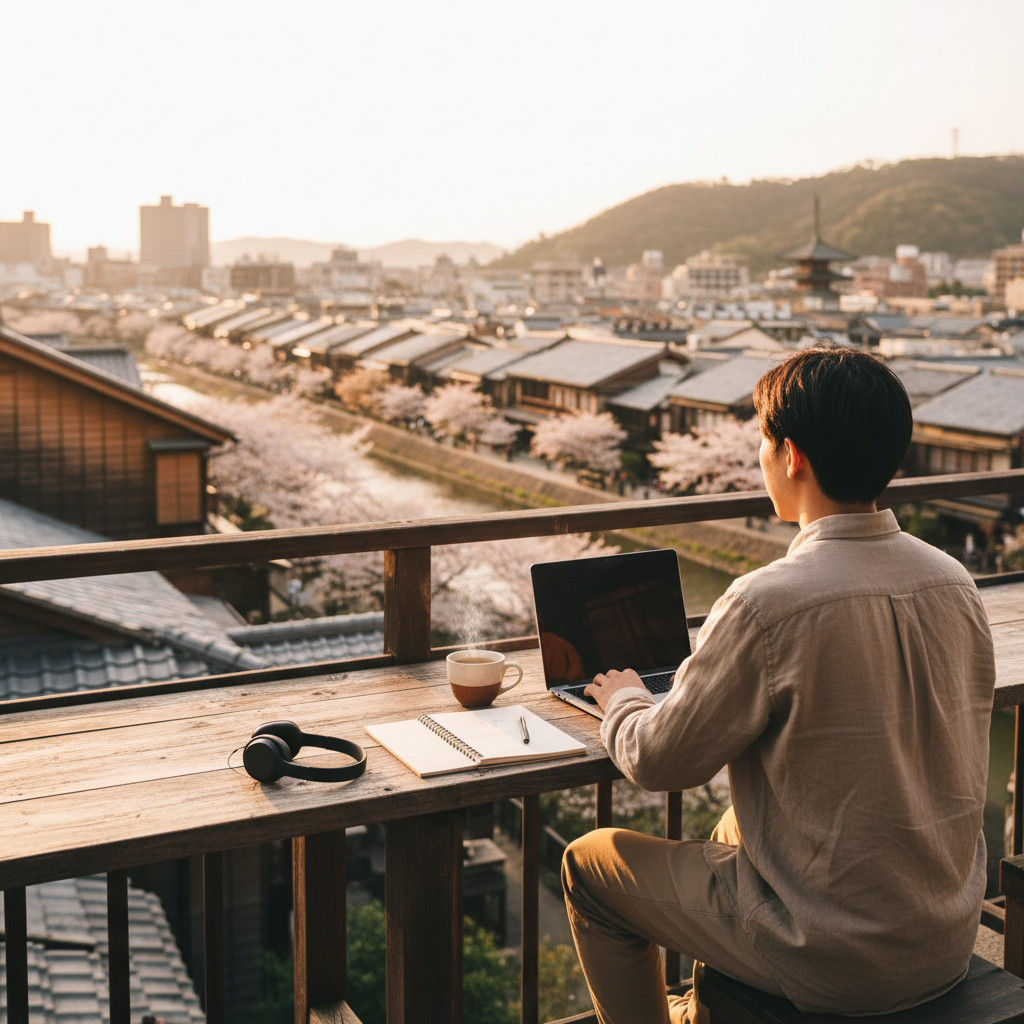
In a historic move, Japan, long known for its meticulous immigration policies, launched its highly anticipated Japan digital nomad visa program on March 1, 2026. This landmark policy shift, years in the making, now allows remote professionals from 49 eligible countries and regions to reside and work remotely in the Land of the Rising Sun for up to one year. This isn't just a visa; it's an invitation to immerse oneself in a culture rich with tradition and innovation, all while maintaining a location-independent lifestyle. For many, this marks the opening of a truly aspirational destination for remote work, challenging previous notions of Japan's strict residency rules. This definitive guide will walk you through every aspect of securing and thriving with Japan's new digital nomad visa in 2026.
Quick facts
| Feature | Detail |
|---|---|
| Income requirement | ¥10 million JPY per year (approx. $64,000 USD / €59,000 EUR) |
| Visa duration | 1 year |
| Renewable | No, but re-application possible after 6 months abroad |
| Application fee | ¥3,000 JPY (approx. $19 USD / €18 EUR) |
| Processing time | 5-10 business days (standard), up to 4 weeks (complex) |
| Tax rate for holders | Non-resident tax rules apply; typically 0% on foreign income |
| Family members allowed | Yes, spouse and dependent children (with additional proof) |
| Path to residency | No direct path; designed for temporary stay |
What is the Japan digital nomad visa?
The Japan digital nomad visa is a specific type of Designated Activities Visa (特定活動) introduced by the Japanese government to attract skilled remote workers and digital entrepreneurs. Effective from March 1, 2026, it permits citizens from countries with existing visa-waiver agreements with Japan, alongside those with specific tax treaties, to live and work remotely within Japan for up to 12 months. This initiative is a strategic effort to diversify Japan's economy, foster cultural exchange, and tap into the global pool of talent without impacting the local labor market directly. Unlike traditional work visas, it explicitly targets individuals whose income is derived from outside Japan, emphasizing their financial independence from Japanese employers. The visa does not allow applicants to engage in local employment, though activities like language exchange or volunteer work may be permissible under certain conditions, provided they do not generate local income.
This visa offers a unique opportunity for individuals who have built a location independent lifestyle to experience Japan's unparalleled safety, efficiency, and cultural depth. It's designed for those who perform remote work for clients or companies outside of Japan, utilizing digital tools and technologies. The introduction of this visa reflects a global trend where nations are recognizing the economic and cultural benefits of attracting individuals engaged in digital entrepreneurship and work from anywhere models.
Japan digital nomad visa requirements
To be eligible for the Japan digital nomad visa, applicants must meet a stringent set of criteria designed to ensure self-sufficiency and genuine remote work status. These requirements are non-negotiable and form the bedrock of the application process.
Eligibility Criteria Summary
- Nationality: Applicant must be a citizen of one of the 49 countries and regions that have a visa-waiver agreement with Japan and also a tax treaty to prevent double taxation. Key examples include the United States, Canada, Australia, New Zealand, the United Kingdom, and most EU member states. Consult the Ministry of Foreign Affairs of Japan (MOFA) for the full, updated list.
- Income Threshold: A crucial requirement is demonstrating a minimum annual income of ¥10 million JPY (Japanese Yen) from sources outside Japan. As of late 2025/early 2026, this translates to approximately $64,000 USD or €59,000 EUR, though currency exchange rates fluctuate. This income must be verifiable through bank statements, tax returns, and client invoices or employment contracts.
- Remote Work Definition: The applicant's primary work must be performed remotely for an employer or clients located outside of Japan. This is central to the digital nomad lifestyle ethos of the visa. Freelancers, independent contractors, and employees of foreign companies are all potential candidates, provided their income originates externally.
- Health Insurance: Proof of private health insurance coverage for the entire duration of the stay in Japan is mandatory. This insurance must cover medical treatment, hospitalization, and repatriation, with a minimum coverage amount that meets Japanese standards (typically ¥5 million JPY or more for major medical events). Japanese National Health Insurance is not an option for this visa type.
- Clean Record: Applicants must have a clean criminal record. A police clearance certificate or equivalent document may be required from their country of residence.
Required Documents
Gathering the correct documentation is critical. Prepare these meticulously:
- Valid Passport: Must be valid for at least six months beyond the intended stay, with sufficient blank pages for stamps.
- Visa Application Form: Duly completed and signed.
- Passport-sized Photographs: Recent, meeting Japanese government specifications (e.g., 4.5 cm x 3.5 cm, white background).
- Proof of Income: Bank statements for the last 6-12 months showing consistent income, tax returns for the past 1-2 years, employment contracts detailing remote work arrangement and salary, or service agreements with foreign clients totaling the income threshold.
- Proof of Remote Work: Letter from employer confirming remote work status and employer's foreign location, or business registration documents for self-employed individuals/freelancers operating outside Japan. Client contracts are also beneficial.
- Private Health Insurance Certificate: Stating coverage amount, policy period, and benefits.
- Flight Itinerary (Optional but recommended): While not strictly required for the application, having an idea of entry can be helpful.
- Accommodation Plan (Optional): Evidence of initial accommodation (e.g., hotel booking, Airbnb) can demonstrate preparedness.
These documents will form the core of your application. Ensure all non-English documents are accompanied by certified English translations.
How to apply for the Japan digital nomad visa
The application process for the Japan digital nomad visa is straightforward, largely following standard visa application procedures, but requires attention to detail.
Step-by-Step Application Process
- Confirm Eligibility: Before anything else, verify that your nationality is on the approved list and you meet the income threshold. This is the first gatekeeper.
- Gather Documents: Collect all required documents as outlined above. This includes income proof, insurance, passport, photos, and the application form. Start this process early, especially for documents that may take time to acquire, like police clearances or comprehensive bank statements.
- Complete the Application Form: Download the visa application form from the official website of the Japanese Ministry of Foreign Affairs (MOFA) or your nearest Japanese embassy/consulate. Fill it out accurately and completely. Any discrepancies can lead to delays or rejection.
- Schedule an Appointment: Contact your nearest Japanese embassy or consulate in your country of residence to inquire about their specific application submission procedures. Some may require an appointment, while others accept walk-ins during specific hours. Always check their official website or call ahead.
- Submit Application: Attend your appointment (if required) and submit all original documents along with their photocopies. The consular officer will review your application. Be prepared for questions about your remote work, income sources, and intentions in Japan.
- Pay Application Fee: The standard application fee for a single-entry visa is ¥3,000 JPY (approximately $19 USD / €18 EUR). This fee is usually paid in local currency at the embassy/consulate at the time of application or upon visa issuance. The fee is non-refundable, even if your application is rejected.
- Await Processing: Once submitted, your application will be processed. Standard processing time is typically 5-10 business days for straightforward cases. However, complex applications or those requiring additional checks might take up to 4 weeks. During peak seasons, delays are also possible. It's advisable not to make irreversible travel plans until your visa is approved.
- Visa Collection: Upon approval, you will be notified to collect your passport with the affixed visa. Review all details on the visa sticker immediately to ensure accuracy.
Upon arrival in Japan, digital nomads will receive a landing permit allowing their stay. It's crucial to understand that this visa is a single-entry visa, meaning if you leave Japan, you would need to reapply for a new visa to return and continue your remote work. However, specific re-entry permits can sometimes be obtained from immigration authorities for short, specific trips abroad without fully voiding the visa, though this requires prior application.
Cost breakdown
Understanding the financial commitments beyond the income threshold is essential for a sustainable digital nomad lifestyle in Japan. While Japan can be perceived as expensive, strategic planning can make it manageable.
| Item | Estimated Cost (JPY) | Estimated Cost (USD) | Notes |
|---|---|---|---|
| Visa Application Fee | ¥3,000 | $19 | Paid at embassy/consulate. Non-refundable. |
| Private Health Insurance (1 year) | ¥150,000 - ¥300,000 | $960 - $1,920 | Varies by provider, coverage, and age. Mandatory. |
| Flight to Japan | ¥80,000 - ¥200,000 | $510 - $1,280 | Varies by origin, season, and booking time. |
| Initial Accommodation (1 month) | ¥80,000 - ¥250,000 | $510 - $1,600 | Rent for apartment/Airbnb, or hotel; depends on city/size. |
| Initial Living Expenses (1 month) | ¥100,000 - ¥200,000 | $640 - $1,280 | Food, transport, utilities, initial setup costs. |
| Total Initial Outlay (Est.) | ¥413,000 - ¥953,000 | $2,640 - $6,099 | Does not include ongoing monthly expenses, only initial setup. |
- Currency conversions are approximate as of early 2026 for illustration (1 USD ≈ 156 JPY, 1 EUR ≈ 169 JPY).
Beyond the Application
Monthly Living Expenses: These vary significantly based on location and lifestyle. Tokyo is considerably more expensive than regional cities like Fukuoka or Sapporo. A realistic budget for a comfortable single person in Tokyo might range from ¥250,000 to ¥400,000 JPY ($1,600 - $2,500 USD) per month, covering rent, utilities, food, transport, and leisure. In smaller cities, this could drop to ¥150,000 - ¥250,000 JPY ($960 - $1,600 USD).
Internet and Connectivity: Japan boasts excellent and affordable internet infrastructure. High-speed fiber optic internet for your home typically costs ¥4,000 - ¥6,000 JPY per month. Mobile data plans are also competitive, ranging from ¥2,000 - ¥5,000 JPY for generous data allowances. Access to reliable internet is crucial for successful remote work.
Coworking Spaces: For those who prefer dedicated workspaces, Japan offers numerous coworking spaces in major cities. Membership fees can range from ¥10,000 to ¥30,000 JPY per month, offering amenities like high-speed Wi-Fi, meeting rooms, and networking opportunities. These spaces are excellent for productivity and connecting with other professionals.
Taxes for digital nomads in Japan
Taxation is a critical aspect of any work from anywhere arrangement. For the Japan digital nomad visa, the rules are relatively favorable, as it's specifically designed for individuals earning income from outside Japan.
Non-Resident Tax Status
Upon receiving the digital nomad visa, holders are generally considered non-residents for tax purposes in Japan, provided their stay does not exceed one year and they do not establish a permanent residence or economic base in the country. As non-residents, digital nomads are typically only taxed on income sourced within Japan. Since the fundamental requirement of this visa is that all income must originate from outside Japan, in most cases, digital nomads on this visa will not pay Japanese income tax on their foreign-sourced earnings. This makes the visa highly attractive for those focused on their digital entrepreneurship endeavors.
It is imperative, however, to understand the specifics:
- Foreign-Sourced Income: Income earned from clients or employers based outside Japan is generally not subject to Japanese income tax for non-residents. This is the primary benefit.
- Japanese-Sourced Income: If a digital nomad were to accidentally, or intentionally, earn income from a Japanese entity or client while on this visa, that specific income would be subject to Japanese tax. This is generally disallowed by the visa terms and could lead to issues.
- Tax Treaties: Japan has tax treaties with many countries (including the 49 eligible for the visa) designed to prevent double taxation. These treaties ensure that you are not taxed twice on the same income – once in Japan and once in your home country. However, your obligation to pay tax in your home country remains, based on your tax residency status there.
- Consumption Tax: Digital nomads, like any resident or visitor, will pay Japan's consumption tax (currently 10%) on goods and services purchased within the country.
- Reporting: While you might not owe income tax, it is always wise to keep meticulous records of your income and demonstrate its foreign source. Seek professional tax advice from an expert specializing in international taxation if you have complex income streams or concerns.
It's important to remember that this visa does not lead to permanent residency or a change in your overall tax residency in your home country, unless you actively pursue such changes there. Your primary tax obligations for your remote income will remain with your country of citizenship or permanent residence, depending on their tax laws and your length of absence.
For Bangladeshi passport holders
While the Japan digital nomad visa presents an exciting opportunity for many, it's crucial for Bangladeshi passport holders to note a specific limitation: Bangladesh is currently not on the list of 49 eligible countries/regions for the Japan digital nomad visa. The eligibility criteria strictly state that applicants must be citizens of countries that have both a visa-waiver agreement with Japan and a tax treaty for the prevention of double taxation. Bangladesh currently does not meet these criteria for this specific visa type.
This does not mean opportunities for remote work or freelancing in Japan are entirely closed off for Bangladeshi citizens, but the digital nomad visa, in its current form, is not an option. Bangladeshi professionals interested in working remotely in Japan would need to explore alternative, more traditional visa pathways, such as specific work visas if they secure employment with a Japanese company, or investor visas if they intend to establish a significant business in Japan. These routes have different, often more complex, requirements and generally do not align with the typical digital nomad lifestyle of working for foreign entities.
For Bangladeshi digital entrepreneurs and remote workers, focusing on other countries that offer digital nomad visas with broader eligibility (or no nationality restrictions) might be a more immediate and viable path. However, the landscape of immigration policies is always evolving. It is always advisable for Bangladeshi citizens to monitor updates from the Japanese Ministry of Foreign Affairs (MOFA) and their local Japanese embassy for any future changes or new visa categories that might become available. For now, the door to the Japan digital nomad visa remains closed to Bangladeshi passport holders.
Family members and dependents
One of the positive aspects of the Japan digital nomad visa is the provision for family reunification. The visa allows for certain family members to accompany the primary digital nomad, enabling a more integrated digital nomad lifestyle.
Who Can Join?
- Spouse: Legally married spouses are eligible to apply for a dependent visa.
- Dependent Children: Unmarried children who are financially dependent on the primary visa holder are also eligible.
Requirements for Dependents
To bring family members, the primary digital nomad must demonstrate sufficient financial means to support not only themselves but also all accompanying dependents for the entire duration of their stay. This will likely mean a higher effective income threshold, though specific figures for dependents are not strictly defined beyond the general ¥10 million JPY for the primary applicant. Proof of this increased financial capacity must be submitted with the dependent visa applications. Additionally, relationship proof (marriage certificates, birth certificates) must be provided, along with their respective passports and photos. Dependents will also need their own private health insurance.
It's important to note that dependent visas typically do not allow the spouse or children to work in Japan. If a dependent wishes to work, they would need to apply for their own appropriate work visa, which is a separate and often more complex process. The dependent visa is purely for accompanying and residing with the primary digital nomad.
Renewal and long-term stay considerations
The Japan digital nomad visa is issued for a maximum period of one year and, critically, is not directly renewable. This means that at the end of your 12-month stay, you must depart Japan.
Re-application Process
However, the Japanese government has provided a pathway for returning digital nomads. After departing Japan, applicants are eligible to re-apply for a new digital nomad visa after a mandatory six-month period outside of Japan. This effectively means a digital nomad could spend one year in Japan, six months abroad, and then potentially return for another year. This policy suggests that Japan envisions the visa as a temporary, rotational opportunity rather than a direct path to long-term residency.
Path to Residency
It's crucial to understand that the Japan digital nomad visa does not offer a direct path to permanent residency or Japanese citizenship. It is explicitly designed for temporary, high-income remote workers. For those aiming for long-term settlement in Japan, this visa serves as an excellent way to experience the country, but they would eventually need to transition to other visa categories, such as a highly skilled professional visa, an investor visa, or a traditional work visa, which have significantly different requirements and often necessitate securing a job with a Japanese employer or establishing a substantial business in Japan. These alternative pathways require a different set of qualifications and a long-term commitment to Japan's economy and society.
Pitfalls and considerations for digital nomads in Japan
While the Japan digital nomad visa is an incredible opportunity, potential applicants should be aware of several specific challenges and unique aspects of life in Japan.
Language Barrier
English proficiency, while improving in major cities, is not universal. Basic Japanese language skills will significantly enhance your daily life, from navigating public transport to ordering food and interacting with locals. While you can get by with translation apps, a serious commitment to learning Japanese will unlock a deeper, more rewarding experience of the culture and is highly recommended for anyone planning an extended stay.
Accommodation Challenges
Securing rental accommodation in Japan, especially in major cities like Tokyo or Osaka, can be complex for foreigners. Many landlords and real estate agencies require a guarantor, which can be difficult to arrange without local connections or a Japanese employer. Key money (礼金 - reikin), deposit (敷金 - shikikin), and agency fees (chuukai tesuuryou) can also amount to several months' rent upfront, representing a significant initial cost. Utilizing gaijin-friendly real estate services or short-term serviced apartments/coliving spaces for initial periods can ease this transition. For those operating an online business, the costs of setting up a physical base can be significant.
Cultural Nuances
Japanese society operates on a foundation of respect, politeness, and adherence to social norms. Understanding these nuances, such as bowing etiquette, quietness on public transport, and specific rules for waste disposal, is essential. While locals are generally understanding of foreigners, making an effort to learn and respect these customs will greatly enhance your integration and daily interactions. This cultural immersion is a significant part of the digital nomad travel experience in Japan.
Banking and Financial Services
Opening a Japanese bank account as a temporary resident can be challenging. Some banks have strict requirements, often needing a long-term visa or proof of employment with a Japanese company. You might initially rely on international debit/credit cards or fintech solutions, but for longer stays, a local bank account becomes crucial for rent payments, utility bills, and daily transactions. Researching foreigner-friendly banks or online-only banks that cater to temporary residents before arrival is advisable.
Time Zones and Client Communication
Working for clients in different time zones, particularly if they are in North America or Europe, will require careful scheduling. Japan's time zone (JST, UTC+9) can mean working late nights or early mornings to align with international business hours. Maintaining productivity for digital nomads under these circumstances requires discipline and effective time management strategies.
Disaster Preparedness
Japan is prone to natural disasters, including earthquakes and typhoons. Familiarizing yourself with local emergency procedures, designated shelters, and disaster apps is crucial for your safety and peace of mind. Most urban areas have robust early warning systems and infrastructure to mitigate risks, but personal preparedness is always recommended.
Navigating these aspects requires preparation and flexibility, but the rewards of experiencing Japan as a digital nomad are immense. The unparalleled safety, efficient public transport, delicious cuisine, and rich cultural tapestry make it an exceptionally appealing destination for those who work from anywhere.
Frequently asked questions
What is the Japan digital nomad visa?
The Japan digital nomad visa is a 1-year Designated Activities Visa launched on March 1, 2026. It allows remote workers from 49 eligible countries to reside and work remotely in Japan, provided their income is derived from outside the country.
Who is eligible for the Japan digital nomad visa?
Eligibility requires citizenship from one of 49 specific countries with visa-waiver and tax treaties with Japan, a minimum annual income of ¥10 million JPY from foreign sources, and private health insurance coverage for the duration of the stay.
How much does the Japan digital nomad visa cost?
The official application fee for the visa is ¥3,000 JPY (approximately $19 USD). Beyond this, applicants must budget for private health insurance, flights, initial accommodation, and living expenses, which can total several thousands of USD/EUR.
How long does Japan digital nomad visa processing take?
Standard processing time for the Japan digital nomad visa is typically 5-10 business days. However, more complex cases or peak application periods might extend this to up to 4 weeks. It is always best to apply well in advance.
Can I bring my family on the Japan digital nomad visa?
Yes, the Japan digital nomad visa allows for bringing a spouse and dependent children on a dependent visa. The primary applicant must demonstrate sufficient financial means to support all accompanying family members for their entire stay.
Do I pay tax in Japan on the digital nomad visa?
Generally, digital nomads on this visa are considered non-residents for tax purposes and are not taxed on their foreign-sourced income in Japan. You will still pay consumption tax on goods and services, and tax obligations in your home country remain.
Can Bangladeshi citizens get the Japan digital nomad visa?
No, Bangladeshi citizens are currently not eligible for the Japan digital nomad visa. The visa is restricted to citizens of 49 specific countries that have both visa-waiver agreements and tax treaties with Japan.
Sources
- Ministry of Foreign Affairs of Japan (MOFA) - Official Visa Information (consult the country's official immigration website)
- Immigration Services Agency of Japan - Visa Guidelines and Procedures (consult the country's official immigration website)
- National Tax Agency of Japan - Tax Information for Foreigners (consult the country's official immigration website)
Compare with: South Korea, Thailand, Taiwan
Interested in applying for the Japan visa?
Tell us a bit about yourself and we'll send tailored guidance on eligibility, paperwork, and next steps.