Dominican Republic Digital Nomad Visa: The Complete Family and Partner Guide to Remote Work in 2026
Relocating your family to the Caribbean? Learn the requirements, income thresholds, schooling, healthcare, and costs for the Dominican Republic digital nomad visa in 2026.
November 4, 2026
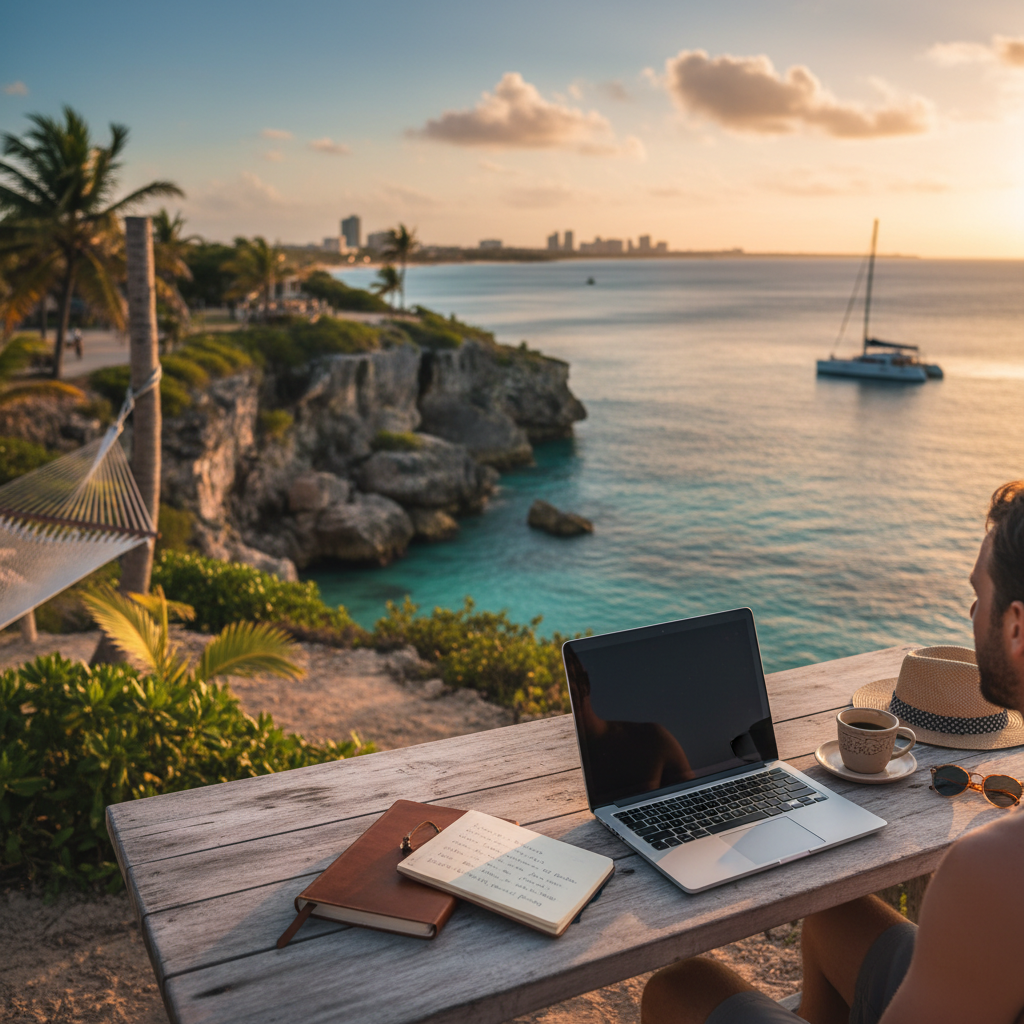
When Elena and Marcus landed at Las Américas International Airport in Santo Domingo with their seven-year-old son Lucas, two laptops, and four oversized suitcases, they were bracing for chaos. Like many digital nomads pursuing a location independent lifestyle, they had spent months calculating whether bringing a young dependent into the Caribbean was a pipe dream or a practical reality. Within forty-eight hours, Lucas was chasing hermit crabs along the coconut-fringed shores of Las Terrenas, while Marcus dialed into a quarterly engineering sync over stable fiber-optic Wi-Fi. The Dominican Republic digital nomad visa has quickly transformed from an experimental immigration pathway into one of the region's most accessible options for remote workers looking to balance high-stakes careers with wholesome family living.
Securing entry for a spouse, partner, or dependent children under the Dominican Republic digital nomad visa requires navigating distinct income formulas, bureaucratic document apostilles, and local infrastructure considerations. Far beyond simply lounging on white-sand beaches, embarking on a digital nomad lifestyle with your family demands an intimate understanding of international schooling, private health networks (ARS plans), and municipal stability. This guide breaks down the legal, financial, and logistical framework you need to relocate your household seamlessly in 2026.
Quick facts: Dominican Republic Digital Nomad Visa
| Feature | Details |
|---|---|
| Income requirement | $3,000 USD/month (DOP 180,000 / €2,750) + $1,000 USD/month (DOP 60,000 / €915) per dependent |
| Visa duration | 12 months |
| Renewable | Yes (renewable for an additional 12 months) |
| Application fee | $250 USD (DOP 15,000 / €230) primary applicant; $150 USD (DOP 9,000 / €140) per dependent |
| Processing time | 30 to 45 business days |
| Tax rate for holders | 0% on foreign-sourced income (territorial tax framework) |
| Family members allowed | Legal spouse/civil partner, dependent children under 18 (up to 25 if enrolled full-time in university) |
| Path to residency | Non-immigrant permit; does not lead directly to permanent residency (requires separate application) |
What is the Dominican Republic digital nomad visa?
The Dominican Republic digital nomad visa is a specialized non-immigrant residence category administered jointly by the Ministry of Foreign Affairs (Ministerio de Relaciones Exteriores, or MIREX) and the General Directorate of Migration (Dirección General de Migración, or DGM). Formalized to capture the economic momentum of distributed global labor, this visa grants foreign remote workers, corporate telecommuters, and digital founders the legal right to reside in the country for up to one year, with an optional one-year renewal.
Unlike traditional tourist entries—which theoretically restrict holders from conducting active business within the borders and incur rolling extension penalties upon airport departure—the digital nomad permit offers unambiguous legal clarity. It permits foreign professionals to operate an online business, deliver contract work, or maintain remote jobs for overseas employers without violating local labor statutes.
For families, the visa framework is notably inclusive. Rather than requiring secondary applicants to lodge entirely separate, unlinked files, the primary applicant serves as the principal economic sponsor (garante financiero). This structure allows married partners, legally registered common-law companions, and minor children to obtain derivative dependent visas linked directly to the main earner's status, ensuring synchronized entry, legal residence stamps, and access to local services.
Dominican Republic digital nomad visa requirements
Qualifying as a solo remote professional is relatively straightforward, but bringing your family introduces mandatory verification checks to prove both economic capacity and biological or civil kinship.
1. Financial Thresholds for Families
The primary applicant must establish verifiable, stable remote income. In 2026, the baseline requirement is set at $3,000 USD per month (approximately DOP 180,000 or €2,750) for an individual applicant. If you are sponsoring dependents, you must prove an additional $1,000 USD per month (approximately DOP 60,000 or €915) for each accompanying family member.
- A couple without children must demonstrate verified earnings of at least $4,000 USD/month (DOP 240,000).
- A family of four (two parents, two minor children) must establish a consistent monthly income of at least $6,000 USD (DOP 360,000).
Documentation requires the last six consecutive months of official bank statements showing salary deposits, investment payouts, or contractor disbursements, coupled with an active employment agreement or certified corporate ownership records.
2. Legal Documentation and Vital Records
Every document issued outside the Dominican Republic must be submitted with an official Hague Apostille (or legalized by the relevant Dominican consulate if your country of origin is not a party to the Hague Convention), and translated into Spanish by a certified court-appointed translator (intérprete judicial):
- Valid Passports: Must have a minimum validity of 12 months remaining at the time of submission.
- Marriage Certificate: Apostilled within the last six months to sponsor a spouse.
- Birth Certificates: Apostilled long-form birth certificates for all dependent children, proving biological or legal parentage.
- Criminal Background Checks: Police clearance certificates for the primary applicant and any accompanying dependents aged 18 and older, issued within 90 days of submission from their state/national jurisdiction.
- Comprehensive Health Coverage: International medical insurance policy covering inpatient care, emergencies, medical evacuation, and pediatric coverage valid across the Dominican territory for the entire 12-month period.
How to apply for the Dominican Republic digital nomad visa
The application unfolds in two primary phases: an initial consular filing submitted through the MIREX electronic portal, followed by in-country registration and biometric validation with the DGM in Santo Domingo.
Step 1: Document Curation and Certified Translations
Gather all required financial records, police records, marriage certificates, and birth records. Send non-Spanish documentation to an authorized sworn translator. Ensure all apostilles are affixed to original documents prior to translation, as the translator must certify the apostille text itself.
Step 2: Digital Consular Submission
Submit your application through the official MIREX consular visa portal corresponding to your country of legal residence. You will create a joint family dossier wherein the principal earner is tagged as the primary applicant, uploading digital scans of financial affidavits and attaching each dependent’s specific sub-file.
Step 3: Consular Interview and Fee Payment
Once the digital file passes preliminary triage, your jurisdictional Dominican consulate will schedule an in-person or virtual interview. You will submit the physical files, surrender passports for processing, and pay the mandatory consular evaluation and visa processing fees ($250 USD for the main applicant; $150 USD per dependent).
Step 4: Visa Endorsement and Entry
Consular review typically concludes within 30 to 45 business days. Once approved, the consulate affixes a single-entry digital nomad visa vignette to each passport. You have 60 days from the date of stamping to enter the Dominican Republic with your dependents.
Step 5: DGM Registration and In-Country Biometrics
Upon touchdown in Santo Domingo, Santiago, or Punta Cana, you have 30 days to visit the DGM headquarters in Santo Domingo. The family undergoes biometric registration, fingerprinting, and digital photography. Within two to three weeks of your biometric appointment, the DGM issues your physical non-resident identity card (Carné de No Residente), solidifying your family's legal status for the year.
Cost breakdown
Relocating dependents to the Caribbean requires realistic budgeting. Beyond government administration fees, your initial capital deployment must account for document authentications, temporary deposits, international schooling admissions, and private medical premiums.
Estimated Upfront Visa & Administrative Fees (Family of 3)
| Item | Cost (DOP) | Cost (USD Equiv.) | Cost (EUR Equiv.) |
|---|---|---|---|
| Primary Applicant Visa Fee | DOP 15,000 | $250 USD | €230 |
| Spouse Visa Fee | DOP 9,000 | $150 USD | €140 |
| Child Visa Fee | DOP 9,000 | $150 USD | €140 |
| Apostilles & Translations (3 dossiers) | DOP 36,000 | $600 USD | €550 |
| DGM In-Country Biometrics (3 cards) | DOP 27,000 | $450 USD | €415 |
| Total Administrative Baseline | DOP 96,000 | $1,600 USD | €1,475 |
Monthly Family Living Costs by Enclave (Couple + 1 Child)
To contextualize lifestyle expenses, consider how core recurring costs vary across the primary remote work hubs in the Dominican Republic:
| Expense Category | Las Terrenas (Samaná) | Punta Cana / Bávaro | Santo Domingo (Piantini) | Cabarete (North Coast) |
|---|---|---|---|---|
| 3-Bedroom Furnished Home | $1,500 – $2,300 USD | $1,800 – $2,800 USD | $1,700 – $3,000 USD | $1,200 – $2,000 USD |
| Private Bilingual School | $400 – $750 USD/mo | $600 – $1,200 USD/mo | $800 – $1,500 USD/mo | $350 – $700 USD/mo |
| Family Private Health (ARS) | $180 – $280 USD/mo | $200 – $320 USD/mo | $220 – $350 USD/mo | $180 – $280 USD/mo |
| Utilities & Redundant Fiber | $250 – $400 USD/mo | $280 – $450 USD/mo | $200 – $350 USD/mo | $220 – $380 USD/mo |
| Estimated Monthly Total | $2,330 – $3,730 USD | $2,880 – $4,770 USD | $2,920 – $5,200 USD | $1,950 – $3,360 USD |
Taxes for digital nomads in Dominican Republic
One of the most attractive attributes of the Dominican Republic digital nomad visa is its alignment with the country's historic territorial tax doctrine. Under Article 269 of the Dominican Tax Code (Código Tributario, Law 11-92), foreign individuals living temporarily in the country are subject to tax exclusively on their Dominican-sourced income.
Foreign earnings—such as compensation from an overseas corporate employer, retainers generated through cross-border freelancing, or capital dividends paid out of non-Dominican entities—are legally exempt from local income tax (Impuesto Sobre la Renta) during your non-resident visa period. You do not need to register for local tax withholdings or file monthly returns with the General Directorate of Internal Taxes (DGII), provided you do not transact with or invoice local Dominican commercial entities.
However, families should remain mindful of banking and physical presence regulations. While territorial tax exemptions protect your offshore revenue, maintaining high balances in local Dominican commercial banks (such as Banco Popular or Banreservas) can occasionally trigger reporting queries regarding interest earnings. Digital nomads frequently utilize multi-currency accounts and international debit cards for everyday family transactions to circumvent bureaucratic friction.
Family life, international schools, and healthcare in the DR
Relocating loved ones requires far more than just signing residency paperwork; you must construct a safe, predictable routine that supports your children's development and safeguards your partner's well-being.
Finding the Right Base for Family Life
Selecting your destination shapes your daily routine, schooling alternatives, and access to coworking spaces:
- Las Terrenas: Celebrated for its laid-back European-Caribbean fusion, this town hosts vibrant French, Italian, and North American expat communities. It is ideal for families seeking an outdoor, beach-centric lifestyle with established bilingual nursery and primary schooling.
- Punta Cana / Bávaro: Highly developed, modern gated communities (such as Punta Cana Village or Cap Cana) feature manicured environments, reliable electrical grids, underground utilities, and leading international private academies.
- Santo Domingo: The metropolitan capital offers world-class international schools (accredited with US High School diplomas and International Baccalaureates), premier specialist hospitals, and expansive urban amenities, though it lacks daily beach access and experiences heavy metropolitan traffic.
- Cabarete / Sosúa: A global kitesurfing hub offering an alternative, active lifestyle. Excellent for outdoor-oriented families with older kids, though rental housing stock can be older.
Family Infrastructure Priority Matrix:
- Kindergarten / Primary: Las Terrenas, Cabarete, Punta Cana
- High School / IB Diploma: Santo Domingo, Punta Cana
- Tertiary Medical Specialists: Santo Domingo, Santiago
- Power/Fiber Reliability: Punta Cana, Central Santo Domingo
International Education and Childcare
Public schools in the Dominican Republic fall well below the standards expected by global remote workers. Consequently, foreign families rely entirely on private and international day schools.
- In Punta Cana, schools such as Punta Cana International School (PCIS) and Cap Cana Heritage School deliver bilingual instruction accredited by AdvancED and the Dominican Ministry of Education (MINERD), with annual tuitions ranging from $6,000 to $12,000 USD.
- In Santo Domingo, established institutions like The Carol Morgan School and Saint George School offer full English-immersion and IB diploma programs, with tuition often exceeding $10,000 to $16,000 USD annually.
- In coastal enclaves like Las Terrenas and Cabarete, alternative bilingual schools (such as École Française de Las Terrenas or 3 Mariposas Montessori) deliver tailored, community-driven education ranging from $3,500 to $7,000 USD per school year.
Childcare and domestic assistance are exceptionally affordable. Hiring a full-time, experienced live-out nanny (nana) typically costs between DOP 18,000 and DOP 30,000 per month ($300 to $500 USD), providing remote-working parents the bandwidth to handle overseas client calls without disruptions.
Healthcare Networks and Pediatric Care
Do not rely on the local public health system. Enrolling your family in a top-tier private health plan (Seguro Médico Privado / ARS) is essential. Reputable national providers like Primera ARS, ARS Universal, and Mapfre Salud ARS offer family comprehensive policies that cover emergency treatment, pediatric checkups, and prescription allowances for $180 to $320 USD per month for a household of three.
Private clinical centers in the Dominican Republic rival modern Western standards. Facilities such as CEDIMAT and Hospital General de la Plaza de la Salud in Santo Domingo, alongside Centro Médico Punta Cana (accredited by Accreditation Canada), house English-speaking pediatricians, fully equipped neonatal ICUs, and comprehensive emergency wings.
Common Family Pitfalls to Avoid
- The Power Grid (Luz): The public power grid outside of private resort enclaves can experience intermittent brownouts. When renting a family villa or apartment, ensure the property has a dedicated inverter (inversor) with lithium batteries or an automatic diesel generator (planta eléctrica). A drop in power can instantly cut off your home office Wi-Fi and air conditioning.
- Water Potability: Tap water is never potable. Family households run on 5-gallon bottled water dispensers (botellones), costing roughly DOP 70 to 100 ($1.20 to $1.65 USD) per bottle delivered.
- Expired Background Checks: A frequent administrative trap: police certificates expire 90 days from issuance. If your consulate takes six weeks to review your initial submission, an older certificate might lapse before final in-country DGM processing, forcing you to re-request documents from your home country.
For Bangladeshi passport holders
Bangladeshi digital nomads and tech entrepreneurs evaluating the Dominican Republic must prepare for nuanced consular logistics. The Dominican Republic does not maintain an active resident diplomatic mission in Dhaka. Bangladeshi nationals fall under the concurrent jurisdiction of the Embassy of the Dominican Republic in New Delhi, India.
Consular Routing & Third-Party Visas
Bangladeshi passport holders who hold an active, physical, multi-entry tourist or business visa issued by the United States, Canada, the United Kingdom, or a Schengen member state enjoy standard tourist entry to the Dominican Republic without a consular tourist visa. However, to obtain the formal Dominican Republic digital nomad visa, you cannot simply fly in on a US tourist visa; you must submit an official remote worker non-immigrant visa application through the Dominican Embassy in New Delhi.
Document Authentication Steps for Bangladeshis
- Attestation in Dhaka: All personal vital records (Bangladeshi marriage certificates from the Kazi office, birth certificates, and police clearances from the local police commissioner or Ministry of Foreign Affairs) must first be verified by the Ministry of Foreign Affairs (MOFA) in Dhaka.
- Super-Legalization: Because Bangladesh is not fully operationalized under the Hague Apostille Convention for all overseas civil interactions, documents often require consular legalization via the Dominican Embassy in New Delhi after MOFA attestation.
- Income Thresholds & Remittances: For applicants operating through software development, IT export freelancing, or remote jobs out of Dhaka or Chittagong, you must verify your monthly inflows meet the $3,000 USD (approx. BDT 360,000) threshold for yourself plus $1,000 USD (approx. BDT 120,000) per dependent. Remittance statements or foreign currency clearing accounts (ERQ accounts) can be submitted as evidence alongside direct bank statements.
Cost Comparison: Santo Domingo vs. Dhaka
Living expenses in high-end sectors of Santo Domingo (like Piantini or Bella Vista) are roughly 50% to 75% higher than comparable living costs in Gulshan or Banani, Dhaka. However, high-speed fiber internet infrastructure (Claro and Altice offering symmetrical 300–500 Mbps lines), access to international bilingual education, and predictable Caribbean time-zone alignment with North American tech employers make it a strategic relocation choice for Bangladeshi tech founders looking to scale global operations.
Frequently asked questions
What is the Dominican Republic digital nomad visa?
The Dominican Republic digital nomad visa is a non-immigrant temporary residence permit enabling foreign remote workers, digital founders, and freelancers to reside legally in the country for 12 months. Issued via MIREX and the General Directorate of Migration (DGM), it allows holders to work for foreign clients while living in the Caribbean, and it can be renewed for an additional 12 months.
Who is eligible for the Dominican Republic digital nomad visa?
Eligible applicants include employed telecommuters, independent contractors, and business owners whose earnings originate outside the Dominican Republic. Applicants must demonstrate verifiable remote income of at least $3,000 USD per month for the principal applicant, clean criminal background records, valid travel passports, and comprehensive international health insurance that covers the Dominican territory.
How much does the Dominican Republic digital nomad visa cost?
The government visa processing fee is $250 USD (approx. DOP 15,000 or €230) for the primary applicant, plus $150 USD (approx. DOP 9,000 or €140) per dependent. In-country biometric and non-resident identity card issuance costs approximately $150 USD (DOP 9,000) per individual. Document translations and apostilles typically cost $300 to $600 USD depending on family size.
How long does Dominican Republic digital nomad visa processing take?
Consular processing takes approximately 30 to 45 business days once your complete file, including background checks and apostilled certificates, is received. Following arrival in the Dominican Republic, scheduling and completing your mandatory biometric appointment at the General Directorate of Migration (DGM) in Santo Domingo typically takes another 15 to 20 business days.
Can I bring my family on the Dominican Republic digital nomad visa?
Yes, you can sponsor your legal spouse or common-law partner and dependent children under the age of 18 (or up to 25 if enrolled full-time in accredited tertiary education). You must demonstrate an additional $1,000 USD per month in remote income per dependent, and submit apostilled, translated marriage and birth certificates.
Do I pay tax in Dominican Republic on the digital nomad visa?
No, digital nomad visa holders do not pay local income tax on earnings derived strictly from foreign employers, offshore clients, or foreign investments. Under Article 269 of the Dominican Tax Code, non-residents benefit from a territorial taxation framework, meaning only local, Dominican-sourced business revenue is taxable within the country.
Can Bangladeshi citizens get the Dominican Republic digital nomad visa?
Yes, Bangladeshi citizens are eligible. Because the Dominican Republic lacks a resident embassy in Dhaka, applications are processed via the Dominican Embassy in New Delhi, India. Documents must be certified by the Bangladesh Ministry of Foreign Affairs (MOFA), translated into Spanish, and supported by foreign income bank statements.
Sources
- Ministerio de Relaciones Exteriores (MIREX) – Official Dominican Consular Guidelines & Visa Protocols (mirex.gob.do)
- Dirección General de Migración (DGM) – Non-Resident Registration & Biometric Identity Protocols (migracion.gob.do)
- Dirección General de Impuestos Internos (DGII) – Law 11-92 (Código Tributario de la República Dominicana, Article 269)
- Punta Cana International School & Carol Morgan School – Official Family International Enrollment Profiles 2025/2026
Compare with: Costa Rica, Panama, Colombia
Interested in applying for the Dominican Republic visa?
Tell us a bit about yourself and we'll send tailored guidance on eligibility, paperwork, and next steps.