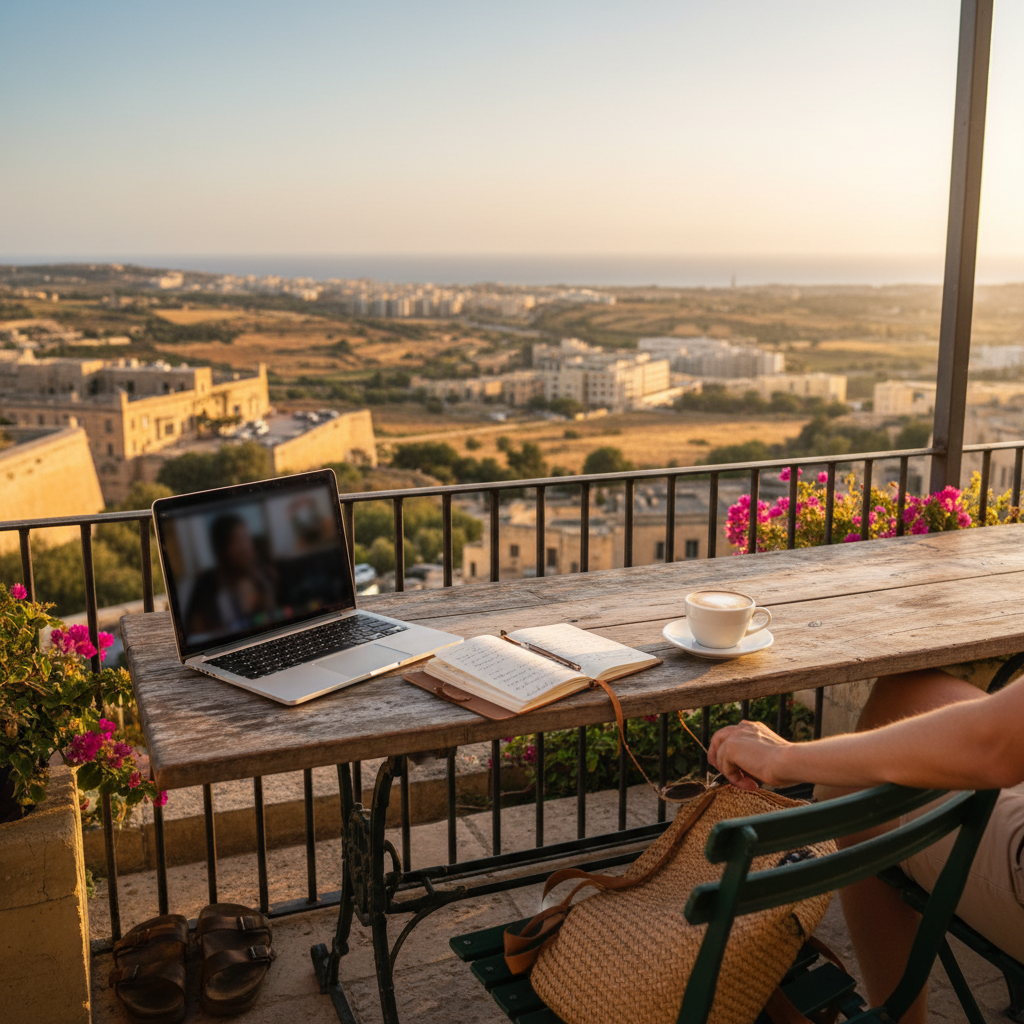
Italy Digital Nomad Visa: Your 2026 Guide to Living La Dolce Vita
Dreaming of remote work amidst ancient ruins and Tuscan hills? Italy's Digital Nomad Visa offers a pathway to combine your career with 'la dolce vita'. This comprehensive guide covers 2026 eligibility, application, costs, taxes, and practical tips for remote workers.
May 25, 2026

Overview
Italy, a country synonymous with rich history, unparalleled artistry, delectable cuisine, and breathtaking landscapes, has officially embraced the global trend of remote work by introducing its Digital Nomad Visa. Envisioned to attract skilled professionals seeking a change of scenery and a deeper cultural immersion, this visa allows non-EU citizens to live and work remotely from Italy for an extended period. Launched in April 2024, the Italian Digital Nomad Visa (Visa D, subtype 'Lavoro da Remoto' - remote work) opens doors for individuals who earn income from outside Italy and wish to experience 'la dolce vita' without sacrificing their careers. It's a game-changer for those who have long dreamt of working from a charming Roman apartment, a Tuscan villa, or a coastal retreat in Sicily. This visa acknowledges the evolving nature of work and Italy's desire to benefit from the influx of skilled, independent professionals.
The visa is not a simple tourist visa extension; it's a specific immigration pathway designed to distinguish digital nomads from other types of workers or visitors. It provides legal residency, access to certain public services (like healthcare after registration), and a clearer framework for long-term stays. The initial validity typically ranges from one year and is renewable. Navigating the Italian bureaucracy can be famously complex, but with proper preparation and understanding of the requirements, the process is manageable. This guide aims to demystify the 2026 landscape of the Italian Digital Nomad Visa, providing practical, up-to-date information for aspiring remote workers.
Who qualifies?
The Italian Digital Nomad Visa is designed for non-EU/EEA citizens who can perform their work activities remotely using technological tools. This category is distinct from employees of Italian companies. To qualify, applicants must meet several key criteria:
- Non-EU/EEA Citizenship: The visa is explicitly for third-country nationals, meaning citizens from outside the European Union or European Economic Area.
- High-Skilled Professional: While not explicitly defined by an 'official' list of professions, the visa targets individuals capable of independent, remote work. This generally includes professionals in fields such as IT, design, marketing, consulting, writing, education, and various other online services. The emphasis is on having skills that are in demand globally and can be exercised autonomously.
- Remote Work Capacity: The core requirement is that your work must be performed remotely from Italy, for a company or clients outside of Italy. You cannot work for an Italian employer under this visa. You must be able to demonstrate that your job function does not require your physical presence in another country and can be carried out entirely using telecommunication technologies.
- Sufficient and Stable Income: A critical component is demonstrating a minimum annual income. As of 2026, the specific threshold is subject to periodic adjustment by the Italian government, but it is generally set at least three times the minimum level required for exemption from participation in healthcare costs, which often reflects the minimum annual income for the social security system. While official figures can fluctuate, it's widely understood to be in the range of €28,000 to €35,000 per year, or approximately €2,300 to €2,900 per month, after tax. This income must be stable and originate from your remote work activities.
- Health Insurance: Applicants must prove they have comprehensive health insurance coverage for the duration of their stay in Italy. This insurance must cover all medical expenses, including emergency medical evacuation and repatriation. It should be valid in Italy and provide coverage equivalent to what is available under the Italian National Health Service (SSN).
- Proof of Accommodation: While not necessarily required at the initial visa application stage, you will eventually need to demonstrate where you intend to live in Italy once you arrive. This can be a rental agreement, a property deed, or even a confirmed long-term Airbnb booking for the initial period.
- Clean Criminal Record: Applicants must provide a clean criminal background check from their country of origin and any countries where they have resided for a significant period. This is a standard requirement for most long-term visa applications.
- Valid Travel Document: A passport valid for at least three months beyond your intended stay in Italy, with at least two blank pages, is essential.
Requirements
To successfully apply for the Italian Digital Nomad Visa, applicants must gather and submit a comprehensive set of documents. While the exact list might have minor variations depending on the Italian Consulate or Embassy you apply through, the core requirements typically include:
- Visa Application Form: Duly completed and signed long-stay (Type D) visa application form for 'Lavoro da Remoto'.
- Valid Passport: Original passport valid for at least three months beyond the planned departure from Italy, with at least two blank pages, and copies of all relevant pages.
- Passport-sized Photos: Usually two recent, color photographs meeting Schengen visa specifications.
- Proof of Remote Employment/Self-Employment:
- For Employees: A letter from your non-Italian employer confirming your employment, job title, responsibilities, salary, and explicit permission to work remotely from Italy. This letter should specify that your work does not require your physical presence in the employer's country.
- For Self-Employed/Freelancers: Contracts with non-Italian clients, letters of intent, or other documentation demonstrating ongoing work relationships and a stable income stream from clients outside Italy. A portfolio of work, business registration documents (if applicable), and professional licenses might also be requested.
- Proof of Income: Bank statements from the last 6-12 months, showing a consistent and sufficient income stream meeting the minimum threshold (e.g., approximately €28,000-€35,000 annually, verifiable as of 2026). This should clearly indicate salary deposits or payments from clients outside Italy. Tax returns from the previous 1-2 years can also bolster this proof.
- Comprehensive Health Insurance: Proof of a valid health insurance policy covering emergency medical treatment, hospitalization, and repatriation for the entire duration of your stay in Italy, with a minimum coverage that aligns with the Italian National Health Service (SSN) benefits. This must explicitly state coverage for Italy.
- Proof of Accommodation (Post-Arrival): While not always required at the initial visa stage, for the 'Permesso di Soggiorno' (residence permit) application after arrival, you'll need a rental agreement or property deed. For the visa, an affidavit of accommodation or initial booking confirmation might be accepted.
- Criminal Background Check: A certificate of good conduct or police clearance certificate from your country of origin and any country where you have resided for more than six months in the last five years. These usually need to be apostilled or legalized and translated into Italian.
- Curriculum Vitae (CV)/Resume: Detailing your professional experience and qualifications.
- Letter of Intent: A personal statement explaining your reasons for wanting to live and work in Italy as a digital nomad, your plans for your stay, and how you meet the visa criteria.
- Visa Fee Payment: Proof of payment for the visa application fee.
All documents not originally in Italian or English often require an official translation into Italian, typically apostilled or legalized.
Application process
The application process for the Italian Digital Nomad Visa generally follows these stages:
Step 1: Gather Required Documents
Before initiating your application, meticulously gather all the documents listed in the 'Requirements' section. Ensure all documents are current, valid, and properly translated and legalized where necessary. This step is crucial for avoiding delays.
Step 2: Apply for the Visa at an Italian Consulate/Embassy
Applicants must apply for the 'Lavoro da Remoto' (remote work) visa (Type D) at the Italian Consulate or Embassy in their country of residence. It is not possible to apply for this visa from within Italy if you entered as a tourist. The process typically involves:
- Online Appointment Booking: Visit the website of the Italian Consulate or Embassy responsible for your jurisdiction and book an appointment for a national visa (Type D). These appointments can sometimes be in high demand, so plan ahead.
- Application Submission: Attend your scheduled appointment. You will submit your completed visa application form along with all supporting documents. The consular officer may ask you questions about your remote work, financial situation, and intentions in Italy.
- Biometrics: Your fingerprints and a digital photograph will be taken as part of the application process.
- Pay Visa Fee: Pay the non-refundable visa application fee at the time of submission.
Step 3: Wait for Visa Processing
After submitting your application, you will need to wait for the consulate to process it. The processing time can vary significantly.
Step 4: Visa Issuance and Travel to Italy
If your visa is approved, you will be notified to collect your passport with the affixed D-type visa. Once you have your visa, you can travel to Italy.
Step 5: Apply for Permesso di Soggiorno (Residence Permit) within 8 Days of Arrival
This is a critical step. Upon arrival in Italy, you have 8 working days to apply for your Permesso di Soggiorno (residence permit). This permit legalizes your stay beyond the visa's initial entry period. To do this:
- Obtain Modulo 209 (Application Kit): Purchase the Permesso di Soggiorno kit from a local post office (seek out Ufficio Postale that handles immigration services, often marked with 'Sportello Amico').
- Fill out the Kit: Carefully complete the forms within the kit. This will require detailed personal information, details of your visa, and information about your accommodation in Italy. You will need copies of all documents submitted for your visa application, your passport, and proof of health insurance.
- Submit at Post Office: Return to a 'Sportello Amico' post office to submit the filled kit. You will pay a fee for the Permesso di Soggiorno and the cost of the electronic card. The post office will issue you a receipt (ricevuta) – this receipt is your temporary proof of legal stay in Italy until your physical permit is ready. You will also receive an appointment date and time for the Questura (Police Headquarters).
Step 6: Attend Questura Appointment
On the scheduled date, visit the designated Questura (Immigration Office at the Police Headquarters). Here, your fingerprints will be taken, you might be interviewed briefly, and you'll submit any additional documents requested. This is also where you will get the official confirmation for your Permesso.
Step 7: Collect Permesso di Soggiorno
You will be notified (usually by SMS or mail, or by checking the status online with your receipt number) when your physical Permesso di Soggiorno is ready for collection at the Questura.
Costs & duration
Understanding the financial commitments and the standard period of validity is crucial for planning your move to Italy.
Application Costs:
- Visa Application Fee: As of 2026, the standard fee for a national (Type D) visa is typically around €116. This fee is non-refundable, regardless of the outcome of your application.
- Permesso di Soggiorno Fee: The application for the residence permit in Italy involves several costs:
- Application Stamp Duty (Marca da Bollo): Approximately €16.
- Permesso di Soggiorno Contribution: This varies based on duration but is generally around €40 for permits valid for over three months up to one year, plus an additional cost for the electronic card (currently around €30.46).
- Post Office Fees: Small administrative fees for submitting the kit, usually around €30.
- Translation and Legalization/Apostille Fees: These can vary widely depending on the number of documents and the service providers. Expect to pay anywhere from €50 to €200 or more per document.
- Health Insurance: The cost of comprehensive health insurance will depend on your age, coverage level, and chosen provider. Expect to pay anywhere from €400 to €1500+ annually.
- Financial Proof: While not a direct fee, remember you need to demonstrate significant funds (minimum annual income of €28,000-€35,000) to cover living costs, which should be readily accessible.
Total upfront costs, excluding health insurance and the required financial proof, could range from €300 to €700 depending on specific requirements and how many documents need translation/legalization.
Visa and Permesso Duration:
- Initial Visa Validity: The initial Digital Nomad Visa (Type D) issued by the consulate is typically valid for up to one year. This visa allows you to enter Italy legally.
- Permesso di Soggiorno Validity: The Permesso di Soggiorno (residence permit) issued upon arrival in Italy usually matches the visa's duration, granting you official residency for up to one year. This permit is renewable.
- Renewal: Digital Nomad permits are generally renewable annually, provided you continue to meet the eligibility criteria (e.g., maintaining the minimum income, health insurance, and clean record). The renewal process also takes place at the Questura and requires updated documentation.
Processing Times:
- Visa Application: Processing times at consulates can range from 3 weeks to 3 months, sometimes longer. It depends heavily on the volume of applications, the specific consulate, and the completeness of your submission. It is advisable to apply well in advance of your intended travel date.
- Permesso di Soggiorno: After submitting your kit at the post office, receiving your Questura appointment can take 1-3 months. Collecting the physical card after the Questura appointment can take another 1-3 months. During this waiting period, your post office receipt acts as proof of legal stay.
Taxes
Taxation is a critical aspect for digital nomads, and Italy's system, while potentially beneficial, requires careful understanding. As of 2026, the general principles are:
Tax Residency:
Italy's tax residency rules are primarily based on physical presence. You are generally considered a tax resident if you:
- Are registered in the Resident Population Register (Anagrafe della Popolazione Residente) for more than 183 days (184 in a leap year) in a given tax year.
- Have your 'domicile' (center of vital interests, e.g., family, principal business activities) in Italy for more than 183 days.
- Have your 'residence' (habitual abode) in Italy for more than 183 days.
Even if you don't register with Anagrafe, if you spend more than 183 days in Italy and have your primary interests there, you may be deemed a tax resident.
Income Tax for Digital Nomads:
As a tax resident, you generally become subject to Italian income tax on your worldwide income. This means all income, regardless of where it is earned, is potentially taxable in Italy. Italy operates a progressive income tax system (IRPEF - Imposta sul Reddito delle Persone Fisiche) with varying brackets.
Special Tax Regimes:
This is where Italy can be particularly attractive.
- Flat Tax Regime (Regime Forfettario): This regime is highly beneficial for self-employed individuals with annual gross revenues up to €85,000 (threshold as of 2026, subject to change). If you qualify, you pay a significantly reduced flat tax rate on a percentage of your turnover, rather than on actual profit. For new businesses, the rate can be as low as 5% for the first five years, and 15% thereafter on a fixed percentage of revenues (e.g., typically 67% for professional activities). This can result in a substantially lower tax burden compared to standard progressive rates. Digital nomads operating as self-employed individuals are often ideal candidates for this regime, provided they meet all requirements.
- New Resident Tax Regime (Regime degli Impatriati): For professionals who move their tax residency to Italy (and have not been tax residents for the previous 2-5 tax periods), Italy offers a highly attractive regime known as the 'Impatriati' regime. This allows individuals to declare only 30% of their employment or self-employment income for tax purposes for a period of five years (extendable to 10 years under certain conditions, especially for those with children or property ownership). For those moving to specific southern regions of Italy, the taxable portion can be reduced even further to 10%. To qualify, you must commit to residing in Italy for at least two years and maintain your tax residency there. This regime can significantly reduce the tax base for high-earning digital nomads.
Social Security Contributions:
As a resident, you will also be required to make social security contributions (contributi previdenziali) to the Italian system, typically to INPS (National Institute for Social Security). The rates can be substantial (around 25-33% for self-employed individuals), paid on a portion of your income, and cover pensions, sickness, and other benefits. If your home country has a social security agreement with Italy to prevent double contributions, you might be exempt, but this needs careful verification with both national social security bodies.
Double Taxation Treaties:
Italy has double taxation treaties with many countries worldwide. These agreements aim to prevent individuals from being taxed twice on the same income. If you become an Italian tax resident, the treaty will determine whether your foreign income is taxed solely in Italy, solely in the source country, or if a credit for foreign taxes paid can be claimed in Italy.
Recommendation: Due to the complexity of international tax law and Italy's specific regimes, it is highly advisable to consult with an Italian tax advisor before and during your stay. They can help you determine your tax residency status, assess your eligibility for beneficial regimes like the Flat Tax or Impatriati regime, and ensure compliance with all Italian tax and social security obligations.
Pros & cons
Venturing into the Italian digital nomad lifestyle comes with its unique set of advantages and disadvantages.
Pros of the Italian Digital Nomad Visa:
- Cultural Immersion & Lifestyle: Italy offers an unparalleled quality of life, rich history, diverse landscapes (mountains, coastlines, cities), world-renowned cuisine, and vibrant cultural experiences. Live 'la dolce vita' with ease, enjoying espresso, aperitivo, and leisurely strolls.
- Schengen Area Access: The visa and subsequent Permesso di Soggiorno grant you legal residency in Italy, which is part of the Schengen Area. This means you can travel freely across 26 European countries without additional visa requirements for short stays.
- Attractive Tax Regimes: As detailed in the 'Taxes' section, Italy offers potentially significant tax breaks for new residents and self-employed individuals (e.g., the Flat Tax Regime and Impatriati Regime), making it financially appealing for qualifying digital nomads.
- Healthcare Access: With the Permesso di Soggiorno, you can register with the Italian National Health Service (SSN) or maintain private health insurance, ensuring access to quality medical care.
- Relatively Low Cost of Living (Outside Major Cities): Compared to other Western European countries, the cost of living in many Italian towns and smaller cities can be quite affordable, especially for rent and fresh produce.
- Excellent Food & Wine: A daily joy, Italy's culinary scene is a major draw, offering high-quality, fresh, and often locally sourced ingredients.
- Opportunity to Learn Italian: Immersing yourself in the language and culture provides a fantastic opportunity for personal growth and deeper integration.
Cons of the Italian Digital Nomad Visa:**
- Bureaucracy: Italian bureaucracy is notorious for its complexity, slow pace, and sometimes inconsistent information. The process for obtaining the Permesso di Soggiorno and dealing with local administration can be a source of frustration.
- Language Barrier: While many people in tourist areas speak English, daily life and administrative tasks often require at least a basic understanding of Italian. This can be a challenge initially.
- Variable Internet Connectivity: While major cities have good internet infrastructure, rural areas or smaller towns might have less reliable or slower connections, which can be problematic for remote work.
- High Start-up Costs: Beyond visa and permit fees, establishing yourself in Italy involves initial costs for accommodation deposits, furnishing (if unfurnished), and potentially higher prices for certain imported goods.
- Social Security Contributions: While tax benefits exist, the social security contributions can be a significant expense, especially for self-employed individuals, and need to be factored into your financial planning.
- Finding Accommodation: Securing long-term rental accommodation, especially remotely or without an Italian guarantor, can sometimes be difficult. Property portals can be tricky to navigate, and finding a landlord willing to sign a long-term contract with a freelancer can require persistence.
- Cultural Differences and Integration: While charming, some cultural differences, work habits, and societal norms might take time to adjust to. Building a local network can also take effort.
FAQ
Q: Can I apply for the Italian Digital Nomad Visa from within Italy?
A: No, the Italian Digital Nomad Visa (Type D) must be applied for at an Italian Consulate or Embassy in your country of residence before you travel to Italy. You cannot switch from a tourist visa to a digital nomad visa while in Italy.
Q: What is the minimum income requirement for the Italy Digital Nomad Visa?
A: As of 2026, the specific threshold is generally set at a minimum annual income of approximately €28,000 to €35,000, verifiable as originating from outside Italy. This figure is subject to official government updates, so always consult the latest information from official Italian sources.
Q: Do I need a job offer from an Italian company?
A: No, quite the opposite. The Italian Digital Nomad Visa is specifically for individuals who work remotely for companies or clients outside of Italy. You cannot work for an Italian employer on this visa.
Q: Is the Italian Digital Nomad Visa renewable?
A: Yes, the Permesso di Soggiorno issued after your arrival is typically valid for one year and is renewable annually, provided you continue to meet all the eligibility requirements.
Q: Can I bring my family with me?
A: The Italian legislation allows for family reunification, meaning that close family members (spouse, minor children, and adult dependent children) may be able to join you in Italy under specific conditions. They would typically apply for their own dependent visas after your main visa is granted, or once you have your Permesso di Soggiorno. Check with the consulate for specific requirements for accompanying family members.
Q: What happens if my visa application is rejected?
A: If your visa application is rejected, you will usually receive a formal notification stating the reasons for the refusal. You may have the right to appeal the decision within a specific timeframe once you understand the grounds for rejection. If you believe the refusal was unjust or based on an error, professional legal advice can be beneficial.
Q: Do I need to be fluent in Italian to apply?
A: While not a formal requirement for the visa itself, having at least a basic understanding of Italian will significantly ease your integration and daily life in Italy, especially when dealing with landlords, local officials, and everyday interactions. Administrative processes are almost exclusively in Italian.
Q: How long does the entire process take from application to receiving the Permesso di Soggiorno?
A: The entire process can take several months. Visa processing at the consulate can be 1-3 months. After arriving in Italy, applying for and receiving the Permesso di Soggiorno can take another 2-6 months. It's crucial to prepare for these timelines and apply well in advance.
Q: Will I pay taxes in both my home country and Italy?
A: As an Italian tax resident, you will primarily be taxed on your worldwide income in Italy. Italy has double taxation treaties with many countries, which aim to prevent you from being taxed twice on the same income. However, the specifics depend on your home country's tax laws and the particular treaty. It is essential to consult with a tax advisor in both your home country and Italy.
Q: Can I buy property in Italy with this visa?
A: Yes, holding a valid Permesso di Soggiorno allows you to purchase property in Italy. This is a common path for those settling long-term or those wishing to use property as proof of accommodation. However, property ownership does not guarantee automatic visa renewal or permanent residency.
Sources
- Italian Ministry of Foreign Affairs and International Cooperation (Ministero degli Affari Esteri e della Cooperazione Internazionale): Consult the official website for the most up-to-date information on visa categories, requirements, and application procedures. This is the primary authority for visa rules. (e.g., consult the country's official immigration website)
- Italian Police (Questura) Immigration Sections: For details regarding the Permesso di Soggiorno application process, necessary documents, and local procedures after arrival in Italy. (e.g., consult the country's official immigration website)
- Italian Tax Agency (Agenzia delle Entrate): For comprehensive information on Italian tax laws, residency rules, and special tax regimes for new residents and self-employed individuals. (e.g., consult the country's official immigration website)
- Italian Law No. 21 of March 11, 2024: This law introduced amendments to existing immigration legislation that formally establish the legal basis for the digital nomad visa in Italy.
- European Commission Website: For general information on Schengen visa rules and rights.
- Reputable Immigration Lawyers and Tax Advisers in Italy: For specialized legal and tax advice, especially for complex cases or specific tax regime qualifications. Always seek advice from professionals experienced in Italian immigration and tax law for the latest interpretations and guidance.
Interested in applying for the Italy visa?
Tell us a bit about yourself and we'll send tailored guidance on eligibility, paperwork, and next steps.