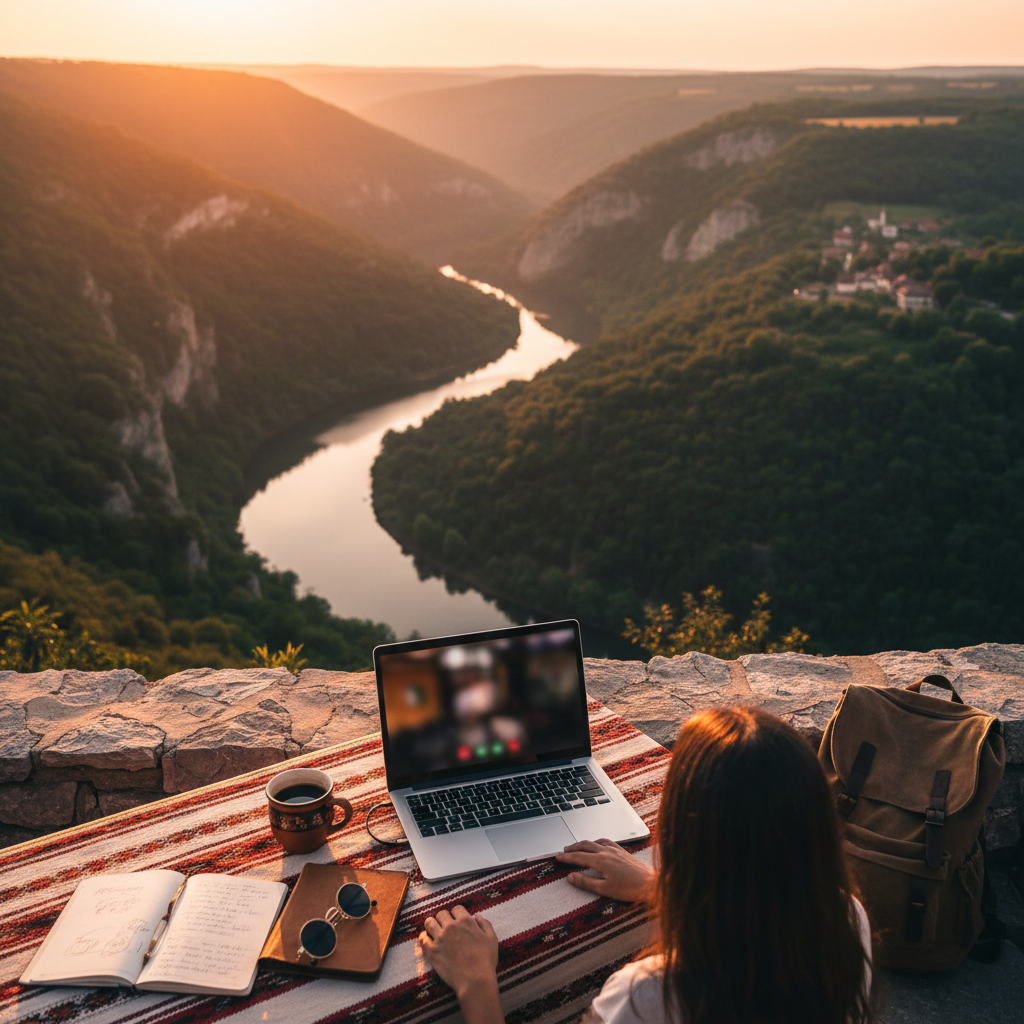
Indonesia's Digital Nomad Visa: A Step-by-Step Application Walkthrough for 2026
Dreaming of remote work from Bali's beaches or Jakarta's vibrant cityscapes? This comprehensive guide provides a practical, step-by-step walkthrough for applying to Indonesia's Digital Nomad Visa in 2026.
June 15, 2026

“I remember staring at the ‘submit’ button, my heart pounding. Years of dreaming, months of planning, and countless hours researching the Indonesia Digital Nomad Visa were finally culminating. It felt monumental,” recalls Anya, a freelance graphic designer who successfully obtained her Indonesian DNV in early 2026. "The process seemed daunting at first, with a lot of conflicting information online. But by breaking it down step-by-step, it became manageable. Now, I wake up to the sound of roosters and the smell of jasmine – definitely worth it!" If Anya's experience resonates with your aspirations of a Location Independent Lifestyle in the stunning Indonesian archipelago, then you've come to the right place. This comprehensive guide will walk you through every single step of securing your own Indonesia Digital Nomad Visa in 2026, ensuring you're well-equipped for your Remote Work adventure.
The Indonesian government, recognizing the immense potential of Digital Nomad Lifestyle, officially launched its dedicated Digital Nomad Visa (DNV), often referred to as the Second Home Visa for longer stays or specific work permits for shorter stints, in late 2025/early 2026, solidifying its commitment to attracting global talent. This visa aims to simplify the process for remote workers, freelancers, and Digital Entrepreneurship individuals who wish to live and work in Indonesia without engaging in local employment. Forget navigating complex business visas or repeatedly extending tourist permits; the DNV is designed for you. Let's dive into the specifics, ensuring you can navigate the application with confidence.
1. Understanding the Indonesia Digital Nomad Visa (DNV) Framework in 2026
Indonesia's approach to the Digital Nomad Visa is multifaceted, offering different pathways depending on your ancticipated length of stay and income. For true digital nomads, the primary option is the B211A Visit Visa (extendable, non-work permit) or the newly introduced Second Home Visa (long-term stay, requires significant funds) that allows for remote work. The B211A is what most remote workers opt for, given its flexibility. However, for those seeking a more permanent residency and clarity on taxation, the Second Home Visa, while demanding a significant capital deposit, offers a clearer long-term path. This guide will focus on the most accessible route for a Digital Nomad: the B211A initially, with a brief overview of the Second Home Visa.
Visa Types Relevant for Remote Work
- B211A Visit Visa: Initially valid for 60 days, extendable up to a total of 180 days. This is the de facto short-term Digital Nomad visa, allowing online work for overseas clients. It does not grant the right to work for Indonesian companies.
- Second Home Visa (Visa Rumah Kedua): Valid for 5 or 10 years, requiring substantial funds deposited in an Indonesian bank. This is designed for longer-term stays and higher-net-worth individuals, effectively allowing them to live in Indonesia as remote workers. This visa is new and targets a different demographic than the typical DNV.
Important Note: The Indonesian government is constantly refining its immigration policies. Always consult the country's official immigration website for the most up-to-date information, as specific requirements and fees can change.
2. Eligibility Requirements: Do You Qualify for the Indonesia Digital Nomad Visa?
Before you even think about gathering documents, make sure you meet the fundamental criteria. This is your initial checklist.
For the B211A Visit Visa (most common Digital Nomad route):
- Nationality: Generally, all nationalities are eligible, but it's crucial to check if your country has specific visa-on-arrival agreements or requires pre-approval. For most Digital Nomad Travel, this is widely accessible.
- Purpose of Stay: You must genuinely intend to work remotely for companies outside Indonesia, conduct online freelancing, or run an Online Business with clients predominantly outside Indonesia. You cannot seek employment with Indonesian entities.
- Proof of Funds: While there isn't a strict, officially published minimum income for the B211A specifically for remote workers, immigration generally expects you to prove sufficient funds to support yourself during your stay. A bank statement showing at least IDR 25,000,000 (approximately USD 1,600 / EUR 1,500 based on early 2026 exchange rates) per month for the duration of your intended stay is a good benchmark, though showing more is always better. For example, for a 6-month stay, aim to show IDR 150,000,000 (approx. USD 9,600 / EUR 9,000).
- Clean Criminal Record: You must not have any history of criminal offenses.
- Valid Passport: Your passport must be valid for at least 6 months beyond your intended stay.
- Return or Onward Ticket: Proof of a confirmed ticket out of Indonesia within your visa validity period is often required.
For the Second Home Visa (long-term, higher threshold Digital Nomad potential):
- Age: Over 18 years old.
- Proof of Funds/Assets: This is the most significant requirement. You must provide proof of funds in an Indonesian bank account totalling at least IDR 2,000,000,000 (approximately USD 128,000 / EUR 120,000 based on early 2026 exchange rates), or ownership of luxury property in Indonesia.
- Clean Criminal Record: As above.
- Valid Passport: Passport must be valid for at least 36 months beyond your intended stay.
- Health Insurance: Must have active health insurance covering your stay in Indonesia.
(Note: The Second Home Visa is generally not considered a 'typical' Digital Nomad visa due to its high financial barrier, but it technically allows for remote work. Most digital nomads will use the B211A as their primary entry point.)
3. Required Documents: Your Essential Checklist
Preparation is key. Gather these documents meticulously before starting your application.
General Documents for B211A (and often adaptable for other types):
- Passport: Scanned copy of your passport bio-page, showing passport number, expiry date, and personal details.
- Passport-Sized Photo: Recent (within 6 months) color photograph with a white background, generally 3x4cm or 4x6cm, adhering to standard passport photo specifications.
- Bank Statement: Proof of funds (see 'Eligibility' section) from latest 3 months, showing sufficient balance to cover your stay. Must be in English or officially translated.
- Sponsorship Letter (if applicable): Although Indonesia is moving towards direct applications, some B211A applications might still benefit from sponsorship by a local entity (often an agency facilitating the visa). This is less common for DNVs now but good to be aware of.
- Return/Onward Ticket: Confirmation of your flight out of Indonesia.
- Travel Insurance: Proof of comprehensive travel insurance covering your stay, including medical emergencies and repatriation.
- Proof of Remote Work: A letter from your employer confirming your Remote Work status, or contracts with international clients if you're a freelancer/Digital Entrepreneur. This demonstrates your commitment to not seeking local employment.
Additional Documents for Second Home Visa:
- Bank Account Statement: Proof of funds of IDR 2,000,000,000 in an Indonesian bank account.
- Health Insurance: Proof of health insurance with coverage in Indonesia.
- Curriculum Vitae (CV): A detailed resume outlining your professional experience.
4. Indonesia Digital Nomad Visa Application Process: A Step-by-Step Guide
Here’s a practical, actionable walkthrough for applying, primarily focusing on the B211A Visit Visa as the most common path for a Digital Nomad.
(Remember: The exact process can vary slightly depending on your nationality and where you apply. Always cross-reference with the official Indonesian immigration website.)
Step 1: Choose Your Visa Type (B211A Recommended)
- Action: Decide whether the B211A Visit Visa (for up to 180 days with extensions) or the Second Home Visa (for 5-10 years with high financial requirements) is right for you. For most Digital Nomads, the B211A is the practical starting point.
Step 2: Gather All Required Documents Electronically
- Action: Scan all the documents listed in Section 3 digitally. Ensure they are clear, legible, and saved in formats like PDF or JPG, as specified by the online application portal. Make sure your passport photo adheres to digital size and resolution requirements.
Step 3: Access the Official Online Visa Application Portal
- Action: Go to the official Indonesian Immigration website (consult the country's official immigration website). Look for the
e-VisaorVisa Online Applicationsection. Some nationalities might need to apply through an embassy/consulate.
Step 4: Create an Account and Fill Out the Application Form
- Action: Register for an account on the e-Visa portal. Carefully and accurately fill in all personal details, travel plans, and purpose of visit. Double-check every entry for typos. Select Visitor Visa (B211A) and specify your purpose as holiday/tourism/family visit, not employment, but be prepared to explain your income source if asked by immigration upon arrival. For Remote Work, the key is not to take jobs from locals.
Step 5: Upload Your Documents
- Action: Systematically upload each of your scanned documents to the corresponding fields in the online application. Ensure file sizes meet the specified limits. Incorrect or unclear uploads are the most common cause of delays.
Step 6: Pay the Application Fee
- Action: After submitting your application and documents, you will be prompted to pay the visa fee. The B211A visa fee is typically IDR 1,500,000 (approximately USD 96 / EUR 90 in early 2026). Payments are usually made online via credit card or bank transfer. Keep a record of the payment confirmation.
Step 7: Wait for Processing
- Action: Once paid, your application enters the processing queue. The standard processing time for a B211A eVisa is generally 3-7 business days. However, during peak seasons or for complex cases, it can take longer. You will receive updates via email or through your online portal account.
Step 8: Receive Your eVisa
- Action: If approved, you will receive your eVisa electronically via email. Print this eVisa out and keep a digital copy on your phone. This is crucial for your arrival in Indonesia.
Step 9: Plan Your Arrival and Extension (if applicable)
- Action: With your eVisa in hand, book your flights and accommodation. Upon arrival, present your passport, eVisa, and return ticket to immigration. If you plan to stay beyond 60 days, begin the extension process well in advance (at least 3-4 weeks before expiry) at a local immigration office in Indonesia. Extensions typically allow for another 60 days, up to a maximum of 180 days total for the B211A.
Visa Renewal and Extension Process
For the B211A, extensions are handled in Indonesia at a local immigration office (Kantor Imigrasi). This usually involves:
- Submission of Documents: Passport, original visa, flight ticket, proof of funds, and a new photo.
- Interview and Biometrics: Attending an interview and providing fingerprints/photo.
- Payment: Each extension typically costs around IDR 500,000 (approx. USD 32 / EUR 30).
It's often easier to use a local visa agent for extensions, as they can navigate the bureaucratic process more efficiently, though this comes at an additional cost (expect IDR 800,000 - IDR 1,500,000 per extension).
5. Cost Breakdown: What to Budget for Your Indonesia DNV
Understanding the financial commitments is crucial for any aspiring Remote Worker. Here’s a detailed breakdown of potential costs in 2026.
Application & Visa Fees
| Item | Cost in IDR (approx.) | Cost in USD (approx.) | Cost in EUR (approx.) |
|---|---|---|---|
| B211A Visit Visa (Single Entry) | 1,500,000 | 96 | 90 |
| B211A Visa Extension (each) | 500,000 | 32 | 30 |
| Second Home Visa (5 Years) | 14,000,000 | 897 | 842 |
| Second Home Visa (10 Years) | 21,000,000 | 1,345 | 1,263 |
| Visa Agent Fee (B211A, optional) | 800,000 - 1,500,000 | 51 - 96 | 48 - 90 |
| Notarizations/Translations (if needed) | Varies, up to 500,000 | Varies, up to 32 | Varies, up to 30 |
| Required Bank Deposit (Second Home) | 2,000,000,000 | 128,400 | 120,400 |
(Exchange rates as of early 2026: 1 USD ≈ IDR 15,600; 1 EUR ≈ IDR 16,700. These are subject to fluctuation.)
Living Expenses for Digital Nomads in Indonesia (Bali example)
While visa fees are fixed, your actual living costs will vary greatly depending on your lifestyle and location. Bali is a popular choice for Digital Nomad Lifestyle, but cities like Jakarta or Yogyakarta offer different price points.
| Item | Monthly Cost (Low-Budget) | Monthly Cost (Mid-Range) | Monthly Cost (High-End) |
|---|---|---|---|
| Accommodation (Studio/1BR) | IDR 4,000,000 (USD 256) | IDR 8,000,000 (USD 513) | IDR 15,000,000+ (USD 961+) |
| Food (local/mix) | IDR 2,500,000 (USD 160) | IDR 4,000,000 (USD 256) | IDR 8,000,000+ (USD 513+) |
| Transportation (Scooter rental/Grab) | IDR 1,000,000 (USD 64) | IDR 1,500,000 (USD 96) | IDR 2,500,000 (USD 160) |
| Internet/Utilities | IDR 500,000 (USD 32) | IDR 750,000 (USD 48) | IDR 1,200,000 (USD 77) |
| Coworking Space (Hot-desk) | IDR 1,000,000 (USD 64) | IDR 1,500,000 (USD 96) | IDR 2,000,000 (USD 128) |
| Entertainment/Activities | IDR 1,000,000 (USD 64) | IDR 2,000,000 (USD 128) | IDR 5,000,000+ (USD 321+) |
| Total Estimated Monthly | IDR 10,000,000 (USD 640) | IDR 17,750,000 (USD 1,137) | IDR 33,700,000+ (USD 2,160+) |
(These figures are estimates for 2026. Costs in places like Ubud or Canggu, Bali, are generally higher than other regions of Indonesia. For Bangladeshi nomads, these figures might seem significant compared to Dhaka, but the cost of living still offers excellent value compared to Western countries, particularly for the quality of life and opportunities for Digital Entrepreneurship.)
6. Tax Treatment for Digital Nomads in Indonesia
This is a critical area for any Digital Nomad and often complex. Indonesia’s tax regulations in 2026 for digital nomads largely depend on the length of stay and the visa type.
- B211A Visit Visa: If you are on a B211A visa and stay less than 183 days in a calendar year, you are generally considered a non-resident for tax purposes. This means you are typically only taxed on income sourced within Indonesia. Since Digital Nomad Jobs involve earning from foreign clients/companies, this income is usually not taxed by Indonesia, provided it's remitted from outside the country. This makes the B211A a very attractive option for many remote workers.
- Second Home Visa: With the Second Home Visa, which grants a longer-term stay (5-10 years), the likelihood of being considered a tax resident increases significantly. If you stay more than 183 days in a 12-month period, you are typically considered a tax resident and subject to Indonesian income tax on your worldwide income. However, Indonesia has tax treaties with many countries to prevent double taxation. It is imperative to consult with a tax professional specializing in international tax law to understand your specific obligations.
Regional Note for Bangladeshi nomads: If you are a resident of Bangladesh and work remotely, understanding the DTA (Double Taxation Avoidance) agreement between Bangladesh and Indonesia is crucial. Generally, if your income is taxed in Indonesia as a tax resident, you might get a tax credit in Bangladesh and vice versa. However, if using the B211A and remaining a non-resident, your primary tax obligation usually remains in Bangladesh, provided you maintain tax residency there. Always seek professional tax advice tailored to your individual circumstances.
7. Dependants and Family Rules
Can your family join you on your Digital Nomad adventure in Indonesia? Yes, but it depends on the visa.
- B211A Visit Visa: Each family member (spouse, children) must apply for their own B211A Visit Visa independently, fulfilling all the same requirements: passport, photos, proof of funds, and return tickets. There isn't a direct 'dependant' visa linked to the B211A for family members in the same way some other countries offer. They will follow the same extension process.
- Second Home Visa: This visa explicitly allows for dependants. Spouses and children (under 18) can be included in the Second Home Visa application, with certain conditions. Each dependant's application will require similar documentation and fees, though the primary financial requirement of IDR 2,000,000,000 applies to the main applicant.
8. Potential Pitfalls and How to Avoid Them
While Indonesia is welcoming, there are common mistakes to avoid.
- Working Illegally for Local Companies: This is the most significant pitfall. The DNV is for Remote Work for foreign entities. Engaging in local employment or business activities without the correct work permit is illegal and can lead to deportation and blacklisting.
- Overstaying Your Visa: Never, ever overstay. The penalty is IDR 1,000,000 (approx. USD 64 / EUR 60) per day, and repeated overstays will lead to deportation and a ban from re-entering Indonesia.
- Unrealistic Expectations of the Extension Process: While extensions for the B211A are common, they are not guaranteed. Start the process early, be patient, and consider using a reputable agent to avoid stress.
- Lack of Health Insurance: Healthcare can be expensive in Indonesia if you don't have adequate coverage. Always have comprehensive travel and health insurance.
- Scams: Be wary of unscrupulous visa agents or individuals promising 'guaranteed' visas for exorbitant fees. Stick to official channels or well-vetted, reputable agencies.
- Banking Challenges: Opening an Indonesian bank account as a foreigner on a short-term visa can be challenging. Plan to use international debit/credit cards or wise/revolut for initial months.
9. Productivity for Digital Nomads and Coworking Spaces
Indonesia, especially Bali, is a hub for Digital Nomad Travel and offers a thriving ecosystem for productivity. From fast internet to dedicated Coworking Spaces, you'll find what you need.
- Internet Connectivity: Major cities and popular nomad hubs like Bali (Canggu, Ubud, Seminyak) have excellent fiber optic internet. Outside these areas, connectivity can be slower.
- Coworking Spaces: Places like Dojo Bali, ZIN Cafe, and Outpost in Bali are renowned for their community, reliable internet, and diverse amenities, catering specifically to the needs of Digital Nomad Jobs. Expect monthly hot desk rates to range from IDR 1,000,000 to IDR 2,500,000.
- Community: The large expat and nomad community offers plenty of networking opportunities, social events, and support groups, which is invaluable for a Location Independent Lifestyle.
Frequently Asked Questions (FAQ)
Q1: Can I work for an Indonesian company on the Digital Nomad Visa (B211A)? A1: No, absolutely not. The B211A Visit Visa is strictly for conducting remote work for clients or companies located outside Indonesia. Seeking or accepting employment with an Indonesian entity requires a specific work permit (KITAS), which is a completely different visa category. Violating this rule can lead to severe penalties, including deportation.
Q2: How long does the Indonesia Digital Nomad Visa (B211A) process take? A2: The typical processing time for an B211A eVisa is 3-7 business days once all documents are submitted and the fee is paid. However, it's always advisable to apply well in advance, as delays can occur due to high demand, national holidays, or if additional information is required.
Q3: What is the minimum income requirement for the B211A Digital Nomad Visa? A3: For the B211A, there isn't an officially stated minimum monthly income specifically for remote workers. Instead, you need to prove sufficient funds to support yourself during your stay. A bank statement showing at least IDR 25,000,000 (approximately USD 1,600 / EUR 1,500) per month for the duration of your intended stay (e.g., IDR 150,000,000 for a 6-month stay) is a strong demonstration of financial stability. Showing more is always recommended.
Q4: Can I extend my B211A Digital Nomad Visa beyond 180 days? A4: No. The B211A Visit Visa is extendable for a maximum total stay of 180 days (60 days initial + two 60-day extensions). After 180 days, you must leave Indonesia. To stay longer, you would need to apply for a different type of visa, such as the Second Home Visa or a completely different multi-entry visa from abroad.
Q5: Is it mandatory to use a visa agent for the Indonesia Digital Nomad Visa application or extensions? A5: No, it is not mandatory. You can apply for the B211A eVisa directly through the official Indonesian Immigration website, and you can also handle extensions at a local immigration office yourself. However, many digital nomads opt to use reputable visa agents for extensions because they can simplify the process, save time, and navigate the local bureaucratic requirements, particularly helpful for those less familiar with the local language and procedures.
Sources
- Indonesia Directorate General of Immigration Official Website (consult the country's official immigration website)
- Ministry of Law and Human Rights of the Republic of Indonesia - Immigration Regulations (consult the country's official immigration website)
- Bank Indonesia (for exchange rates)
- Various reputable expat and digital nomad forums for anecdotal evidence and current living cost estimates (e.g., Nomad List, Bali Digital Nomads Facebook Group).
- PwC Indonesia: Taxation Guide 2026 (consult financial advisory websites).
- ASEAN Post: Focus on Indonesia's Digital Nomad Strategy (consult regional news portals).
- Global Property Guide: Bali Real Estate Market Analysis (consult real estate data providers).
Interested in applying for the Indonesia visa?
Tell us a bit about yourself and we'll send tailored guidance on eligibility, paperwork, and next steps.