Raising Globetrotters: The Best Destinations for Digital Nomad Families in 2026
Discover the top family-friendly digital nomad destinations in 2026. This guide covers visa requirements, cost of living, educational opportunities, and community for remote working families.
June 1, 2026
Raising Globetrotters: The Best Destinations for Digital Nomad Families in 2026
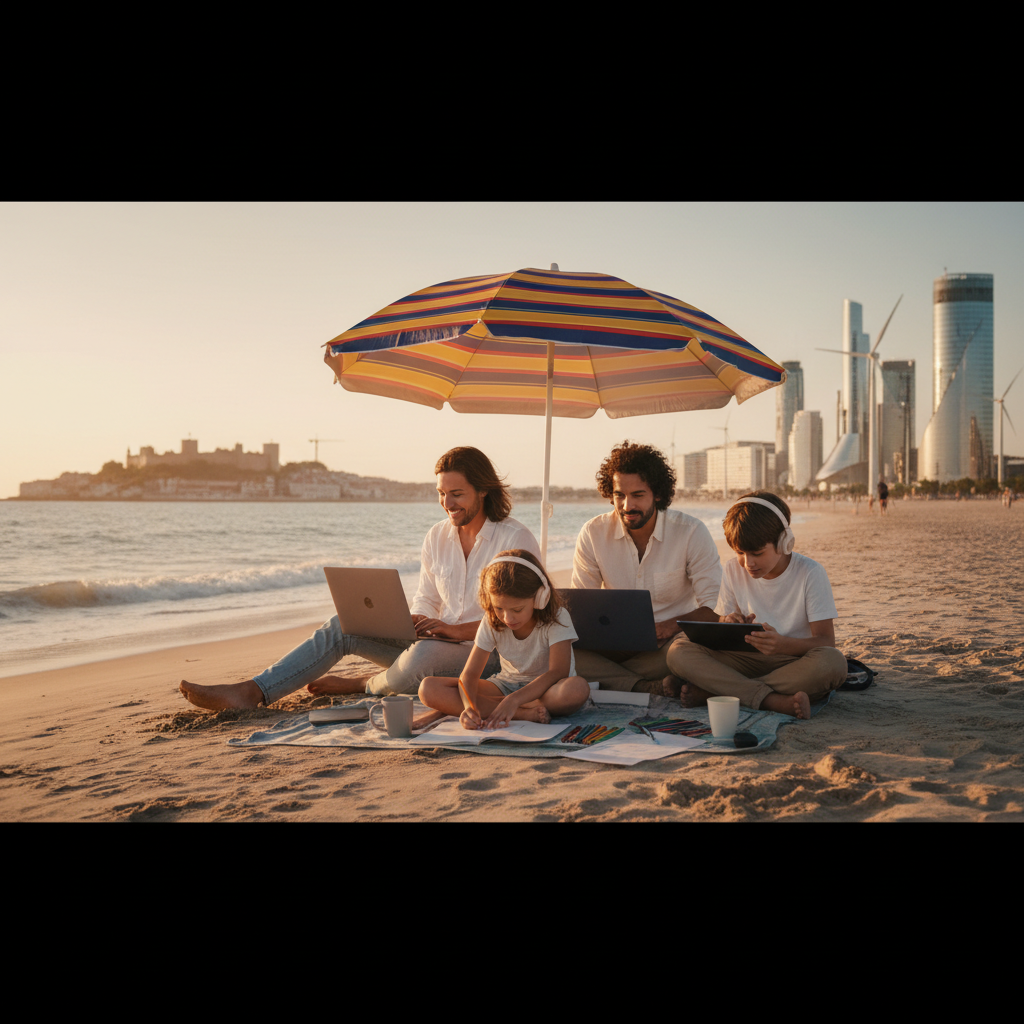
The dream of working remotely from anywhere often conjures images of solo adventurers perched on a beach with a laptop. But what about those of us navigating the digital nomad lifestyle with a gaggle of children in tow? The reality for family-focused remote workers is far more complex than just finding good Wi-Fi. It's about safety, education, healthcare, community, and the subtle art of making a new place feel like home for everyone—from toddlers to teenagers.
In 2026, the landscape for digital nomad families is both challenging and exhilarating. While more countries are opening their doors to remote workers, not all are created equal when it comes to supporting the unique needs of a family unit. This isn't just about obtaining a visa; it's about finding an ecosystem where children can thrive, parents can work productively, and the family can create lasting memories, not just temporary residences. We'll delve into the destinations that truly stand out, offering tangible benefits and a supportive environment for the next generation of global citizens.
The Unique Considerations for Digital Nomad Families
Before we dive into specific destinations, it's crucial to understand the distinct criteria that separate a good digital nomad hub from a great family-friendly one. Beyond the standard internet speed and cost of living, families must weigh:
- Education: What are the schooling options? International schools, homeschooling resources, local public schools, or hybrid models? What are the costs and availability?
- Healthcare: Access to quality pediatric care, emergency services, and general family medicine. Are there English-speaking doctors? What are the insurance requirements and costs?
- Safety & Infrastructure: Low crime rates, reliable public transport (if needed), pedestrian-friendly areas, and well-maintained public spaces like parks and playgrounds.
- Community & Activities: Opportunities for children to socialize, engage in sports or hobbies, and for parents to connect with other expatriate or local families.
- Cost of Living (Family Edition): Beyond rent for a single person, consider costs for larger accommodation, groceries for more mouths, school fees, childcare, and family entertainment.
- Visa Accessibility & Duration for Dependents: Some digital nomad visas are excellent for individuals but less straightforward for accompanying family members, or limit their stay.
Ignoring these factors can turn a dream into a logistical nightmare. The goal is to enrich your family's life, not complicate it beyond repair.
Portugal: A Perennial Favorite for a Reason
Portugal continues to be a darling of the digital nomad community, and for good reason—especially for families. Its D8 Digital Nomad Visa, refined over time, caters well to dependents.
Visa Details & Family Inclusion
The Portugal D8 Digital Nomad Visa requires applicants to demonstrate remote work income from outside Portugal. As of 2026, the minimum income threshold for the main applicant is typically four times the national minimum wage. For accompanying family members, the requirements are generally:
- Spouse/Partner: An additional 50% of the main applicant's income.
- Each Dependent Child: An additional 30% of the main applicant's income.
Given Portugal's current minimum wage (around €885 per month in 2026, though subject to annual review), a family of four (two adults, two children) would need to demonstrate a combined monthly income of roughly:
- Main Applicant: 4 x €885 = €3,540
- Spouse: 0.5 x €3,540 = €1,770
- Child 1: 0.3 x €3,540 = €1,062
- Child 2: 0.3 x €3,540 = €1,062
- Total Minimum Monthly Income: €7,434
Note: These figures are illustrative based on current trends and the 2026 minimum wage projection. Always consult the official Portuguese immigration website for the most up-to-date requirements. The visa grants residency for two years, renewable for three, leading potentially to permanent residency after five years.
Education & Healthcare Landscape
- Education: Portugal boasts a good mix of public, private, and international schools. Major cities like Lisbon, Porto, and the Algarve region offer numerous international schools teaching in English, French, and German, typically following curricula like the IB, British, or American systems. Tuition can range from €7,000 to €20,000+ per child per year depending on the school and age group. Public schools are free for residents, though instruction is in Portuguese, which can be a steep learning curve for older children but offers excellent immersion for younger ones.
- Healthcare: Portugal's National Health Service (SNS) provides universal healthcare to residents. Once registered, families can access public healthcare, often with minimal co-payments. Private health insurance is highly recommended for faster access to specialists and a wider choice of facilities, with family plans typically costing €150-€400 per month.
Living & Family Life in Portugal
Portugal offers a relaxed, family-centric culture. Safety is generally high, and the infrastructure is modern, particularly in urban areas. Parks, beaches, and historical sites provide ample family activities. The cost of living is rising but remains competitive compared to other Western European nations. Rent for a three-bedroom apartment in Lisbon or Porto can range from €1,500 - €3,000+ per month, while in smaller towns or the silver coast, it might be €900 - €1,800. Groceries for a family of four can be around €500 - €800 per month.
Estonia: A Digital Frontier for Families
Estonia, the pioneer of e-residency, offers a robust digital nomad visa that is surprisingly family-friendly, particularly for those who value efficiency and a high-tech environment.
Visa Details & Family Inclusion
The Estonia Digital Nomad Visa (D-Visa) allows remote workers to reside in Estonia for up to one year. The income requirement is explicit: a minimum gross monthly income of €3,500 for the six months preceding the application. While the visa itself doesn't have explicit escalating income requirements for dependents like Portugal, family members typically apply for their own D-visa as dependents, or a different type of long-term visa if they are not themselves 'digital nomads'. The crucial aspect is demonstrating sufficient funds to support the entire family during their stay. As such, an informal 'rule of thumb' might suggest an additional proportionate amount per dependent, often an extra 30-50% for a spouse and 20-30% for each child, on top of the main applicant's €3,500, to prove financial stability. This needs to be considered when preparing bank statements.
Education & Healthcare Landscape
- Education: Tallinn and Tartu, the main hubs, offer excellent international schools with English-language instruction. The European School of Tallinn or the International School of Estonia follow the IB curriculum, with annual fees ranging from €6,000 to €15,000. Estonian public schools are free and boast a world-class education system, but instruction is primarily in Estonian. There are also a growing number of progressive alternative schools.
- Healthcare: Estonia has a high-quality, universal healthcare system. Digital nomads and their families must ensure they have comprehensive private health insurance covering their stay, or meet the criteria to access the Estonian Health Insurance Fund. Private family health insurance premiums are typically €100-€250 per month.
Living & Family Life in Estonia
Estonia is incredibly safe, boasting clean air, vast natural landscapes, and a quiet, efficient way of life. The capital, Tallinn, is a UNESCO World Heritage site with a charming Old Town and modern amenities. Winters can be long and dark, but summers are beautiful. Community for expat families is strong, particularly around international schools. Cost of living is generally lower than in Western Europe and Scandinavia. A three-bedroom apartment in Tallinn might cost €1,200 - €2,200 per month, while outside the capital, it's significantly less. Monthly groceries for a family of four would likely be in the €400 - €700 range.
Malaysia (Labuan): An Accessible Asian Hub
For families seeking an Asian adventure, Malaysia's Labuan Island offers a compelling, albeit unique, digital nomad visa program that's far less common than its European counterparts but highly attractive for family inclusion.
Visa Details & Family Inclusion
The Labuan Offshore Company Digital Nomad Visa is distinct. It requires setting up a Labuan International Company (LIC) or having an existing foreign company with an average monthly income of RM 10,000 (approx. US$2,100 / €1,950) for the main applicant. The visa is valid for up to two years and is renewable. The key family-friendly aspect is that dependents (spouse and children under 21) are easily included under the main applicant's visa, typically with no additional income requirements beyond proving sufficient funds for the family's sustainment.
Note: This specific visa is for individuals who wish to operate their remote business from Labuan. Ensure you understand the tax implications of operating a Labuan company. Malaysia also has a more general DE Rantau visa for digital nomads on the mainland, primarily focused on remote workers rather than business owners, but its family provisions are still developing compared to Labuan's established framework.
Education & Healthcare Landscape
- Education: While Labuan itself has limited international school options, the visa allows easy travel to mainland Malaysia. Major cities like Kuala Lumpur and Penang are renowned for their high-quality, affordable international schools following British, American, and IB curricula. Tuition fees are very competitive, ranging from RM 20,000 to RM 60,000 (approx. US$4,200 - US$12,500 / €3,900 - €11,500) per child per year. This makes a 'home base' in Labuan with schooling on the mainland (or even flying in from a different part of Asia) a viable option for a globally mobile family.
- Healthcare: Malaysia boasts excellent private healthcare, with many English-speaking doctors. Family health insurance plans covering Malaysia can range from US$150 - US$400 / €140 - €370 per month, offering access to top-notch medical facilities. Public healthcare is available but may have longer wait times and language barriers.
Living & Family Life in Malaysia
Mainland Malaysia offers a vibrant, multicultural experience with fantastic food, diverse landscapes, and a tropical climate. Labuan, while smaller, is very safe and offers a tax-friendly business environment with good connectivity. Costs of living are significantly lower than in Europe, making it highly attractive for families. Rent for a three-bedroom apartment in Kuala Lumpur or Penang might be RM 2,500 - RM 6,000 (US$520 - US$1,250 / €480 - €1,150) per month, while Labuan is often lower. Groceries for a family of four are typically RM 1,500 - RM 2,500 (US$310 - US$520 / €290 - €480) per month.
Comparison Table: Family-Friendly Digital Nomad Visa Options (2026 Estimates)
| Feature | Portugal D8 Nomad Visa | Estonia D-Visa | Malaysia (Labuan) DN Visa | Costa Rica (Rentista/DM) |
|---|---|---|---|---|
| Visa Type | Temporary Stay / Residence Visa | Long-Stay D-Visa | Business/Work Permit (via Labuan company) | Rentista/Digital Nomad Visa |
| Duration | 2 years (renewable for 3, then PR) | Up to 1 year (renewable for 1, then potential TR) | 2 years (renewable) | 1 year (renewable for 1, then potential TR) |
| Main Applicant Income (Monthly) | 4x Portuguese Minimum Wage (~€3,540) | €3,500 (gross, 6 months prior) | RM 10,000 (~US$2,100/€1,950) via LIC | US$3,000 (individual), US$4,000 (family) |
| Dependent Inclusion | Yes (Spouse 50%, Child 30% of main income) | Yes (Prove sufficient funds for family support) | Yes (Spouse & children under 21, easily included) | Yes (Family included under combined income) |
| Application Fee (Approx.) | ~€200-€300 (per person) | ~€100-€150 (per person) | ~RM 3,000-RM 5,000 (entire family, inc. company setup) | ~US$250-US$500 (per person) |
| Processing Time (Approx.) | 2-4 months | 1-2 months | 2-3 months | 2-3 months |
| Avg. Rent 3BR (Major City) | €1,500-€3,000 | €1,200-€2,200 | RM 2,500-RM 6,000 (KL/Penang) | US$1,200-US$2,500 |
| Avg. Groceries (Family of 4, Monthly) | €500-€800 | €400-€700 | RM 1,500-RM 2,500 | US$600-US$1,000 |
| International School Fees (Annual, per child) | €7,000-€20,000+ | €6,000-€15,000 | RM 20,000-RM 60,000 (mainland Malaysia) | US$7,000-US$18,000 |
| General Safety | Very High | Very High | High (mainland), Very High (Labuan) | Medium to High (varies by area) |
| Healthcare | Good public, excellent private | Excellent public, good private | Excellent private, decent public | Good private, decent public |
| Community for Families | Strong expat, family-centric culture | Growing expat, strong digital community | Strong expat (esp. mainland), friendly locals | Growing expat, nature-focused |
Disclaimer: All figures are approximate estimates for 2026 and can vary significantly based on location within the country, lifestyle, and fluctuating exchange rates. Always verify current prices and official requirements.
Real-World Example: The Chen Family in Lisbon
Meet the Chen family: Alex (42, software developer), Maria (40, freelance marketing consultant), and their two children, Sofia (10) and Leo (7). They successfully moved to Lisbon, Portugal, in late 2024 on the D8 Digital Nomad Visa.
Alex's income averages €6,000 per month, and Maria's is €3,000 per month, totaling €9,000 gross monthly income. This significantly exceeded Portugal's minimum requirement for a family of four (€7,434 in our 2026 scenario), making their visa application smooth.
They found a three-bedroom apartment in the Saldanha neighborhood for €2,300 per month. Their children attend an international school in the Cascais area, with annual fees of €13,500 per child, covering tuition, books, and school trips. They also budget an additional €200 per month for after-school activities like swimming lessons and football.
Their monthly expenses break down roughly as:
- Rent: €2,300
- School Fees (amortized monthly): €2,250 (2 children x €1,125/month)
- Groceries: €700
- Private Health Insurance: €300
- Utilities (electricity, water, internet): €250
- Transportation (public/rideshare): €150
- Children's Activities: €200
- Dining out/Entertainment: €400
- Miscellaneous/Savings: €1,000 (part of their buffer)
Total Estimated Monthly Expenses: €7,550.
This leaves them a healthy buffer, allowing for travel within Portugal and Europe. The children quickly adapted to the international school environment, making friends from around the world. Maria joined a thriving expat community group, and Alex found several digital nomad meetups in Lisbon. Their primary challenge has been the rising cost of living in Lisbon, but the quality of life, safety, and cultural immersion for their children have made it invaluable.
Emerging Options and Future Trends
Beyond these established options, several other countries are solidifying their appeal for digital nomad families:
- Costa Rica: Its Digital Nomad Visa, requiring US$3,000/month for an individual or US$4,000/month for a family, offers a Pura Vida lifestyle. It's affordable, incredibly biodiverse, and has a strong focus on nature. International schools are available in major expat hubs like San José, Tamarindo, and Arenal. Healthcare is good, and the country is generally safe, though property crime can be an issue in some areas.
- Malta: The Nomad Residence Permit in Malta offers the stability of an EU Schengen country. While the income threshold is lower (€2,700/month for individuals), family inclusion is straightforward. Malta boasts numerous international schools and excellent healthcare. Its small size, strong English presence, and Mediterranean climate make it appealing, though larger families may find accommodation costs on the higher side.
- Mauritius: This Indian Ocean island nation offers a Premium Travel Visa for remote workers and retirees. With a relatively low income threshold (US$1,500/month for individuals, US$500 per dependent), it's highly attractive for families seeking a tropical, safe environment. Good international schools exist, and healthcare is robust. However, it's a smaller island with fewer international travel links than Europe.
The trend for 2026 and beyond suggests more countries will not only offer digital nomad visas but will also increasingly tailor them to attract families, recognizing the economic and social benefits that long-term resident families bring. Expect to see more explicit clauses for dependents, clearer information on schooling, and perhaps even incentives for family-friendly businesses and co-working spaces with childcare facilities.
Crafting Your Family's Global Itinerary
The decision of where to anchor your digital nomad family is deeply personal. It's not just about what a country offers, but how well that offering aligns with your family's values, educational philosophies, and lifestyle priorities. Do you prioritize immersion in a new language, or a seamless English-speaking environment? Is proximity to nature paramount, or do you crave vibrant city life? Are you seeking an ultra-low cost of living, or are you willing to pay more for specific amenities?
Before making any major moves, thorough research is non-negotiable. Connect with other digital nomad families in your prospective destinations through online forums and social media groups. Ask the hard questions about daily life, unexpected costs, and the realities of navigating the local bureaucracy with children. Consider a 'scouting trip' to experience the environment firsthand before committing to a longer-term stay.
Raising children with a global perspective is an extraordinary gift. By choosing your family's digital nomad destination wisely, you're not just finding a place to work; you're cultivating an unparalleled education and an unforgettable adventure for everyone involved.
FAQ: Family-Friendly Digital Nomad Life
Q1: How do digital nomad visas typically handle dependents? A1: Most digital nomad visas allow for the inclusion of direct dependents (spouse/partner and minor children). The income threshold for the main applicant is usually increased for each additional family member. Some visas, like Malaysia's Labuan option, are particularly generous with family inclusion, while others might require separate, though linked, applications for each dependent.
Q2: What are the main schooling options for digital nomad children? A2: Common options include international schools (often following British, American, or IB curricula, taught in English), local public schools (requiring language immersion), private local schools, homeschooling (which requires checking local regulations), and online schooling programs.
Q3: How much more expensive is it to be a digital nomad family compared to a single digital nomad? A3: Significantly more expensive. Accommodation needs are larger, requiring 2-3+ bedrooms, increasing rent by 50-150%. Groceries for more people. School fees can be a major expense, ranging from €500 to €2,000+ per child per month for international schools. Healthcare premiums, activity costs, and general leisure also multiply. A family should typically budget at least 1.5x to 3x the costs of a single individual, depending on location and lifestyle choices.
Q4: Is it difficult to find a community as a digital nomad family? A4: It can be, but many destinations with established expat communities or strong digital nomad hubs make it easier. International schools are often a great gateway to meeting other families. Online groups (Facebook, Telegram) specific to expat families in a given city are invaluable resources for connecting and organizing meetups.
Q5: What are the primary concerns for digital nomad families regarding healthcare? A5: The main concerns are access to quality pediatric care, having English-speaking medical professionals, understanding local health insurance requirements (private vs. public systems), and ensuring comprehensive coverage for unexpected emergencies or conditions. Always secure robust international health insurance designed for expatriate families before traveling.
Sources
- Portuguese Immigration and Borders Service (SEF) / AIMA official website (consult for D8 Visa). Url not provided to adhere to instructions.
- Estonian Police and Border Guard Board official website (consult for D-Visa). Url not provided to adhere to instructions.
- Labuan FSA (Financial Services Authority) official website (consult for Labuan Company and Visa guidelines). Url not provided to adhere to instructions.
- Costa Rican Immigration Directorate official website (consult for Digital Nomad Visa). Url not provided to adhere to instructions.
- Malta Residency Malta Agency official website (consult for Nomad Residence Permit). Url not provided to adhere to instructions.
- Official Government Portals of respective countries for minimum wage, education, and healthcare information (e.g., Portugal's INE, Estonia's Statistics Estonia, Malaysia's Department of Statistics). Url not provided to adhere to instructions.
- International Schools Database (various regional sources for fee estimates). Url not provided to adhere to instructions.
- Numbeo.com and Expatistan.com (for cost of living estimates, cross-referenced with expat forums). Url not provided to adhere to instructions.
Interested in applying?
Tell us a bit about yourself and we'll send tailored guidance on eligibility, paperwork, and next steps.