EU Digital Nomad Visas 2026: The Ultimate Showdown for Remote Workers
Navigating the maze of EU digital nomad visas in 2026? This in-depth comparison dissects the best options across income thresholds, tax implications, and lifestyle for the discerning remote professional. Discover which European dream truly aligns with your work from anywhere ambition.
June 9, 2026
EU Digital Nomad Visas 2026: The Ultimate Showdown for Remote Workers
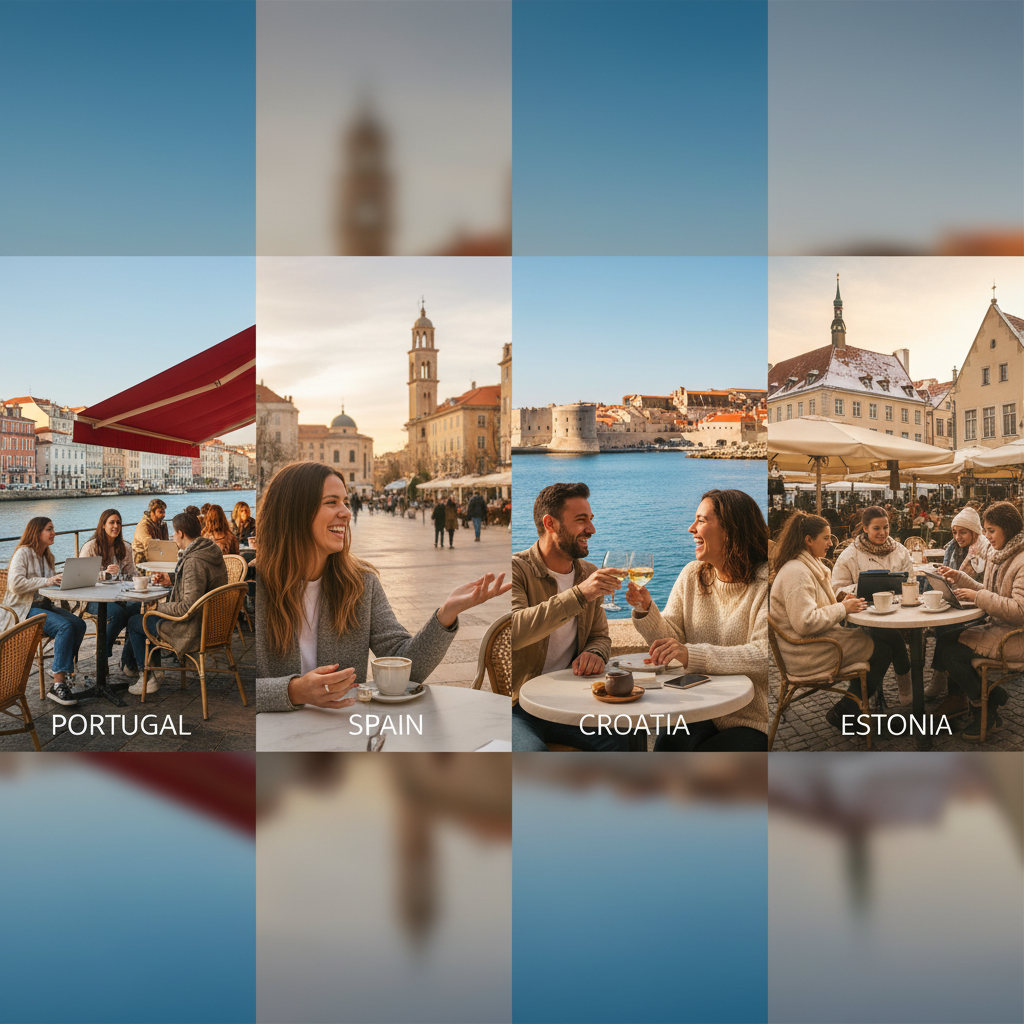
The dream of working remotely from a sun-drenched cafe in Lisbon, a bustling co-working space in Berlin, or a tranquil lakeside chalet in Croatia is more accessible than ever. The European Union, once a patchwork of challenging residency requirements for location-independent professionals, has steadily evolved, offering a growing array of dedicated digital nomad visas. As we stand in 2026, the landscape is richer, but also more complex. Choosing the best EU digital nomad visa isn't a one-size-fits-all decision; it’s a strategic alignment of your professional needs, financial realities, and desired lifestyle. Let's cut through the noise and scrutinize the top contenders, helping you pinpoint your ideal European base.
The Evolving Appeal of Europe for Digital Nomads
Europe, with its rich history, diverse cultures, excellent infrastructure, and strong legal frameworks, has always been a magnet for travelers. For digital nomads, it offers an irresistible blend of professional opportunity and personal enrichment. The recent surge in remote work globally, catalyzed by the pandemic, prompted many EU member states to introduce specific legislation to attract this valuable demographic. They recognize the economic inflow, the skill transfer, and the vibrant cosmopolitan atmosphere that digital nomads bring. But with so many options now available, from the Mediterranean charm of Greece to the Nordic efficiency of Estonia, how do you decide where to plant your remote work flag?
This guide will deep dive into several prominent EU digital nomad visa programs, focusing on their specific requirements, financial implications, and the unique lifestyle they offer. We’ll look beyond the marketing brochures and uncover the practicalities that truly matter.
Key Contenders: A Snapshot of Top EU Digital Nomad Visas (2026)
Before we dissect each program, here’s a quick overview of some of the most popular and established EU digital nomad visas as of 2026:
- Portugal's Digital Nomad Visa: Often hailed as the pioneer, Portugal maintains its allure with a blend of vibrant culture, pleasant climate, and a relatively straightforward application process. Its D8 visa is specifically designed for remote workers.
- Spain's Digital Nomad Visa: A newer entrant, Spain’s offering provides access to a large, diverse country with fantastic infrastructure and an appealing tax regime for new residents.
- Malta's Nomad Residence Permit: This island nation provides a unique English-speaking, sunny environment within the EU, with a dedicated permit for remote workers.
- Croatia's Digital Nomad Permit: Croatia was among the first in the EU to offer a specific permit for digital nomads, emphasizing its natural beauty and growing expat community.
- Estonia's Digital Nomad Visa: A trailblazer in digital governance, Estonia offers a visa for those who truly embrace the digital-first philosophy, with a clear and efficient application process.
- Greece's Digital Nomad Visa: Combining ancient history with a modern approach, Greece offers an attractive climate and a competitive tax incentive.
While other EU countries like Germany, Italy, and Hungary also offer pathways for digital nomads, these six represent some of the most sought-after and well-defined programs. For our comparison, we will focus on Portugal, Spain, Malta, Croatia, and Estonia, given their distinct features and popularity.
Deconstructing the Requirements: Income Thresholds & Application Hurdles
One of the most critical aspects of any digital nomad visa is the income requirement. This threshold ensures applicants can financially sustain themselves without becoming a burden on the host country. It's not just about a monthly figure; it's about demonstrating consistent, reliable income. Remember, these figures are generally net of tax, and you'll often need to prove this earnings stream through bank statements, contracts, and tax returns for the past 3-6 months.
Income Requirement Comparison (Monthly Net Income, Circa 2026)
| Country | Primary Applicant Income Threshold (EUR) | Additional Applicant (Spouse/Partner) | Each Child (Dependent) | Application Fee (Approx. EUR) | Processing Time (Estimate) | Valid For | Tax Incentive | Non-EU / Schengen Access | Language Requirement |
|---|---|---|---|---|---|---|---|---|---|
| Portugal | €3,280 (4x minimum wage) | +50% (€1,640) | +30% (€984) | €90 - €120 | 30-90 days | 1 year (renewable) | NHR (phasing out / restricted for new applicants) | Yes | No |
| Spain | €2,646 (200% minimum wage) | +75% (€1,984.50) | +25% (€661.50) | €75 - €150 | 15-20 days (online only) | 1-3 years (renewable) | 15% flat rate tax for 4 years | Yes | No |
| Malta | €2,700 | +20% (€540) | +15% (€405) | €300 | 15-30 days | 1 year (renewable) | No specific incentive, standard rates | Yes | English Official |
| Croatia | €2,605.41 (2.5x average gross salary) | +10% (€260.54) | +10% (€260.54) | €60 - €100 | 10-20 days | 1 year (non-renewable first term) | Tax-exempt for income earned abroad | Yes | No |
| Estonia | €3,504 (monthly gross) | N/A (separate applications) | N/A (separate applications) | €80 - €100 | 15-30 days | 1 year (renewable) | Standard rates | Yes | No |
| Greece | €3,500 | +15% (€525) | +10% (€350) | €75 - €150 | 10-30 days | 1 year (renewable) | 50% tax exemption for 7 years | Yes | No |
Note: All income thresholds are subject to change and should be verified on the official immigration websites of each respective country for the most current 2026 figures. The 'minimum wage' or 'average gross salary' references are based on 2025/2026 official statistics often used as benchmarks by these nations.
A word on 'non-renewable first term' for Croatia: While the initial permit is for one year and non-renewable immediately, you can reapply after a six-month cooling-off period outside Croatia. This is a crucial detail for long-term planners.
Beyond Income: Other Crucial Requirements
While income is paramount, other factors are equally vital for a successful application:
- Proof of Remote Work: You'll need contracts with foreign-registered companies, proof of self-employment (e.g., invoices, company registration in your home country), or evidence of online business ownership. This is non-negotiable across all programs.
- Health Insurance: Comprehensive health insurance, valid for the entire duration of your stay and covering medical emergencies, hospitalization, and repatriation, is mandatory. It must often meet minimum coverage amounts (e.g., €30,000).
- Clean Criminal Record: A police clearance certificate from your country of origin and any country you've resided in for the past few years is a standard requirement.
- Accommodation Proof: While not always required at the initial visa application stage, you will need to demonstrate proof of accommodation (rental agreement, hotel booking) for your residence permit application upon arrival.
- Tax Residency Declaration: Most countries require a declaration that you will not become a tax resident in your host country, or if you do, that you will adhere to their tax laws.
The Tax Conundrum: A Nomad's Biggest Headache or Hidden Gem?
Taxation is perhaps the most complex and often misunderstood aspect of the digital nomad lifestyle. Many nomads assume that because they earn income from abroad, they are exempt from local taxes. This is rarely the case. Understanding tax residency rules is crucial, and it varies significantly by country.
Tax Regimes for Digital Nomads in the EU (2026)
- Portugal (NHR Status - Phasing Out/Restricted): The Non-Habitual Resident (NHR) regime was a huge draw, offering a flat 20% tax on certain types of foreign-sourced income for 10 years, and often tax exemption on others. However, as of January 1, 2024 (with some transition rules for earlier applicants), the NHR regime for new residents is largely abolished or significantly restricted, replaced by a new 20% flat tax incentive that is harder to qualify for. Always consult a tax expert for the latest on this complex situation. For most new digital nomads in 2026, standard Portuguese progressive tax rates will apply once they become tax residents (typically after 183 days).
- Spain (Beckham Law-esque): Spain offers an incredibly attractive tax regime for digital nomads. If you opt for the Special Tax Regime (often dubbed the 'Beckham Law'), you can choose to be taxed as a non-resident for your first six years. This means a flat tax rate of 15% on Spanish-sourced income (or worldwide income if you choose to be taxed as a P.E.) up to €600,000 for your first four years, and 24% thereafter (up to the €600,000 limit) if you become a tax resident. This is a significant advantage over standard progressive rates that can go up to 47%. Crucially, income earned from work for foreign companies is potentially subject to this 15% flat rate. This makes Spain highly competitive.
- Malta: Digital nomads approved for the Nomad Residence Permit are generally considered non-tax residents if their primary economic interest remains outside of Malta. This means their foreign-sourced income is not taxed in Malta, provided it's not remitted into Malta. If you become a tax resident (living more than 183 days), standard progressive rates apply. Malta is cautious to ensure you genuinely remain non-domiciled and non-tax resident.
- Croatia: A major draw of the Croatian digital nomad permit is that income earned from abroad is explicitly not subject to Croatian income tax. This is a huge benefit for those who strictly maintain foreign tax residency and do not have Croatian clients or income sources. However, you must ensure you do not inadvertently become a tax resident in Croatia by staying longer than allowed or through other means, as per Croatian tax laws.
- Estonia: While Estonia's visa is digitally progressive, it does not offer specific tax breaks for digital nomads. If you stay long enough to become an Estonian tax resident (typically 183 days in any 12-month period), you will be subject to Estonia's standard flat income tax rate of 20% on your worldwide income. For many, this flat rate can still be advantageous compared to progressive rates in other countries.
- Greece: Greece offers a compelling tax incentive: a 50% income tax exemption for seven years for those who move their tax residency to Greece and meet specific criteria. This can significantly reduce your tax burden, making it one of the most attractive tax deals in the EU if you plan to become a tax resident.
Disclaimer: Tax laws are constantly evolving and are highly personal. This information is for general guidance only. Always consult with a qualified tax advisor specialized in international taxation for personalized advice before making any decisions. Failing to do so can lead to significant financial penalties.
Lifestyle & Cost of Living: Beyond the Bureaucracy
While income thresholds and tax incentives are crucial, the day-to-day experience and financial outlay for living are equally, if not more, important. Let's compare the cost of living and general lifestyle offerings.
Living Expenses Comparison (Single Nomad, Monthly Estimate, Circa 2026)
| Country | Rent (1-BR City Center) | Utilities (Basic) | Groceries | Transport (Local Pass) | Dining Out (Mid-Range) | Broadband Internet | Estimated Total (excluding healthcare/personal) | Vibe & Community | |---|---|---|---|---|---|---|---|---|---| | Portugal (Lisbon) | €800 - €1,500 | €80 - €120 | €250 - €400 | €40 | €30 - €60 (per meal) | €30 - €50 | €1,430 - €2,110 | Vibrant, social, expat-heavy, beautiful beaches, strong digital nomad community. | | Spain (Valencia/Seville) | €700 - €1,200 | €70 - €110 | €200 - €350 | €30 | €25 - €50 (per meal) | €30 - €50 | €1,280 - €1,740 | Rich culture, excellent food, late nights, diverse landscapes, good transport links. | | Malta (Sliema/St Julian's) | €900 - €1,600 | €100 - €150 | €300 - €450 | €26 | €35 - €70 (per meal) | €30 - €60 | €1,786 - €2,636 | Island life, English speaking, historical, very compact, high density. | | Croatia (Split/Dubrovnik) | €600 - €1,000 | €70 - €100 | €200 - €350 | €25 | €20 - €45 (per meal) | €25 - €45 | €1,120 - €1,565 | Stunning natural beauty, Adriatic coast, slower pace, seasonal tourism peaks. | | Estonia (Tallinn) | €600 - €900 | €120 - €180 | €250 - €400 | €30 | €25 - €50 (per meal) | €20 - €40 | €1,245 - €1,920 | Tech-savvy, efficient, Nordic influence, cold winters, growing startup scene. | | Greece (Athens/Thessaloniki) | €500 - €900 | €100 - €150 | €200 - €350 | €30 | €20 - €40 (per meal) | €25 - €45 | €1,075 - €1,515 | Ancient history, warm climate, delicious food, slower bureaucratic processes, friendly. |
Note: These are estimates for a single person and can vary greatly depending on personal spending habits, exact location (e.g., capital city vs. smaller town), and lifestyle choices. Exchange rates also fluctuate.
Regional Angle: For Bangladeshi Nomads
For digital nomads from Bangladesh, the concept of a transparent, streamlined application process and predictable legal frameworks found in the EU can be a refreshing change. The cost of living, while higher than cities like Dhaka, often comes with significantly better public infrastructure, healthcare, and safety. The income thresholds, though substantial, are often within reach for experienced freelancers, remote software engineers, or online business owners from Bangladesh who are earning in USD or EUR. Remitting funds from platforms like Upwork, Fiverr, or direct client contracts to European accounts requires careful planning to ensure compliance with both Bangladeshi and EU financial regulations. For many, the opportunity to gain Schengen access and integrate into a global professional network makes the investment worthwhile, representing a significant leap in career and lifestyle opportunities compared to working remotely solely within Bangladesh. For a comprehensive 'Bangladesh Digital Nomad Guide' tailored to outward migration, thorough research into international banking and tax treaties is paramount.
Real-World Scenario: Anya's EU Digital Nomad Journey
Let's consider Anya, a 30-year-old freelance graphic designer from Canada, earning an average of €4,500 net per month from clients in the US and UK. She wants to experience European culture but also wants a good work-life balance and reasonable cost of living. She's single and has no dependents.
Initially, Anya considered Portugal. The low cost of living outside Lisbon and the vibrant expatriate community appealed to her. Her income of €4,500 easily cleared the €3,280 threshold. However, the uncertainties and restrictions around the NHR tax regime for new applicants in 2026 made her hesitant. She didn't want to deal with high Portuguese progressive tax rates on her income if she became a tax resident.
Next, she looked at Malta. The English-speaking environment and warm climate were attractive. Her income of €4,500 surpassed the €2,700 requirement. The non-tax resident status for foreign income was appealing. However, Anya found Malta felt a bit too small for her preferences, and the cost of living, especially for rent, was higher than she anticipated for the overall value.
Finally, Anya focused on Spain. Her €4,500 income comfortably exceeded the €2,646 threshold. The 'Beckham Law' type tax regime, offering a flat 15% tax rate on her income for years, was a huge financial draw. She chose Valencia, finding that rent for a beautiful 1-bedroom apartment was around €900, significantly less than Lisbon or Malta. The city offered a fantastic blend of culture, affordable dining, modern amenities, and proximity to beaches without the overwhelming tourist crowds of Barcelona or Madrid. The online application process was also remarkably efficient.
After a smooth 20-day application process, Anya secured her Spanish Digital Nomad Visa. She moved to Valencia in April 2026, finding a co-working space that quickly connected her with other creatives. She's now enjoying a high quality of life, benefiting from Spain's tax regime, and exploring the country on weekends, all while maintaining her successful freelance career. For Anya, Spain offered the perfect blend of financial advantage, lifestyle, and administrative ease.
Making the Choice: What's Best for You?
Choosing the 'best' EU digital nomad visa boils down to your personal priorities:
- For Tax Efficiency & Long-Term Stay (Becoming a Tax Resident): Spain (with its 15% flat rate for the initial years) and Greece (with its 50% exemption) are incredibly compelling due to their specific tax incentives for new residents.
- For Tax Exemption on Foreign Income (Remaining Non-Tax Resident): Croatia and Malta stand out. However, you must be meticulous in adhering to their non-tax residency rules.
- For Fast, Digital-First Process & Efficiency: Estonia excels here, leveraging its e-residency infrastructure.
- For Vibe, Community & Established Nomad Hubs (despite tax changes): Portugal continues to attract many due to its established digital nomad community, climate, and lifestyle.
- For Natural Beauty & Budget-Friendly Lifestyle: Croatia and Greece offer stunning scenery and a generally lower cost of living compared to Western EU capitals.
Consider what truly matters to you: Is it minimizing your tax burden? Is it living by the beach? Is it joining a large, pre-existing nomad community? Is it efficiency of government services? Weigh these factors carefully against the hard numbers presented.
The Application Journey: General Steps
Regardless of the country, the application process generally follows these steps:
- Research Thoroughly: Confirm 2026 requirements on the official government immigration website of your chosen country. Requirements can change rapidly.
- Gather Documents: This is the most time-consuming part. Collect passport, photos, proof of income, health insurance, criminal record checks, accommodation proof, and letters of intent/contracts from clients.
- Submit Application: This can be done online, at a local embassy/consulate in your home country, or sometimes (as with Spain) directly within the country after entering as a tourist (check specific rules).
- Await Decision: Processing times vary but generally range from a few weeks to a few months.
- Travel to EU & Register: Once approved, travel to your chosen country and complete local registration requirements (e.g., getting a tax number, registering your address, applying for a residence permit if the initial visa was for entry).
Conclusion: Your EU Adventure Awaits in 2026
The EU digital nomad visa landscape in 2026 is richer and more varied than ever. It's a testament to Europe's commitment to embracing the future of work. From the sun-kissed shores of the Mediterranean to the innovative hubs of the Baltics, there's a perfect fit for almost every remote professional. By meticulously comparing income requirements, understanding the nuanced tax implications, and aligning with your ideal lifestyle and budget, you can confidently choose the EU digital nomad visa that propels your location-independent career and personal adventures to new heights. Happy remote working!
FAQ: EU Digital Nomad Visas (2026)
Q1: Can I work for an employer based in the EU if I have an EU Digital Nomad Visa? A1: Generally, no. Most EU digital nomad visas are explicitly for individuals working for companies registered outside the host country or for self-employed individuals with clients predominantly based outside the host country. Working for a local EU employer usually requires a traditional work visa. Always check the specific rules of your chosen country, as there might be rare exceptions or clauses for specific types of contract work.
Q2: Do these visas allow me to travel freely throughout the Schengen Area? A2: Yes, once you have your residence permit (which you obtain after arriving in the country on your digital nomad visa), it functions as a long-stay visa and allows you to travel freely within the Schengen Area for short visits (typically up to 90 days in any 180-day period).
Q3: How long can I stay on an EU Digital Nomad Visa? A3: Most initial digital nomad visas/permits are granted for one year. Many are renewable, often for longer durations (e.g., 2-3 years) if you continue to meet the requirements. Croatia is an exception, where the initial permit is non-renewable and requires a cooling-off period outside the country before reapplying.
Q4: What documents are most crucial for a successful application? A4: Proof of consistent, sufficient income (bank statements, contracts, invoices), comprehensive health insurance, and a clean criminal record are universally critical. Original documents and certified translations (if not in English or the local language) are usually required.
Q5: What are the biggest pitfalls to avoid when applying for an EU Digital Nomad Visa? A5: The most common pitfalls include underestimating income requirements, failing to thoroughly understand tax implications (especially dual tax residency), insufficient health insurance coverage, and submitting incomplete or improperly translated documentation. Always verify all requirements on the country's official immigration website and consider consulting an immigration lawyer specializing in digital nomad visas.
Q6: What about my family? Can they join me on an EU Digital Nomad Visa? A6: Most EU digital nomad visa programs offer provisions for family reunification. This typically includes spouses/partners and dependent children. You will need to demonstrate additional income to support each dependent, as noted in our comparison table. Each family member will also require their own health insurance and clean criminal record checks.
Q7: How does the cost of living in these EU countries compare to Dhaka, Bangladesh? A7: For remote workers from Bangladesh, the cost of living in most EU countries will be significantly higher than in Dhaka. Rent, utilities, and daily expenses like dining out or transportation are generally more expensive. However, this often comes with benefits like superior public infrastructure, higher quality of public services, greater safety, and access to a wider range of international goods and experiences. The minimum income thresholds are designed to ensure you can comfortably afford these higher costs of living.
Sources
- Portugal Immigration and Borders Service (SEF / AIMA): Consult the country's official immigration website for D8 visa requirements.
- Spanish Ministry of Inclusion, Social Security, and Migration: Consult the country's official immigration website for the Digital Nomad Visa.
- Malta Nomad Residence Permit Agency: Consult the country's official immigration website.
- Croatian Ministry of the Interior: Consult the country's official immigration website for digital nomad residency.
- Estonian Police and Border Guard Board: Consult the country's official immigration website for the D visa for digital nomads.
- Greek Ministry of Migration and Asylum: Consult the country's official immigration website for the Digital Nomad Visa.
- European Commission - Taxation: Review information on tax residency rules within the EU.
- Nomad List, Numbeo, Expatistan: Cost of living data aggregators (used for general estimates).
- Official National Statistics Offices: Data on minimum wages and average salaries for income threshold benchmarks.
- Local Embassies and Consulates: For specific application procedures and documentation requirements in your home country.
- International Tax Advisors: Consult with professionals specializing in EU and international tax law (e.g., for 'Beckham Law' specifics or NHR status updates).
All specific income thresholds, application fees, and tax regime details are subject to change by national legislatures and regulatory bodies. Always verify the latest information from official government sources.
Interested in applying?
Tell us a bit about yourself and we'll send tailored guidance on eligibility, paperwork, and next steps.