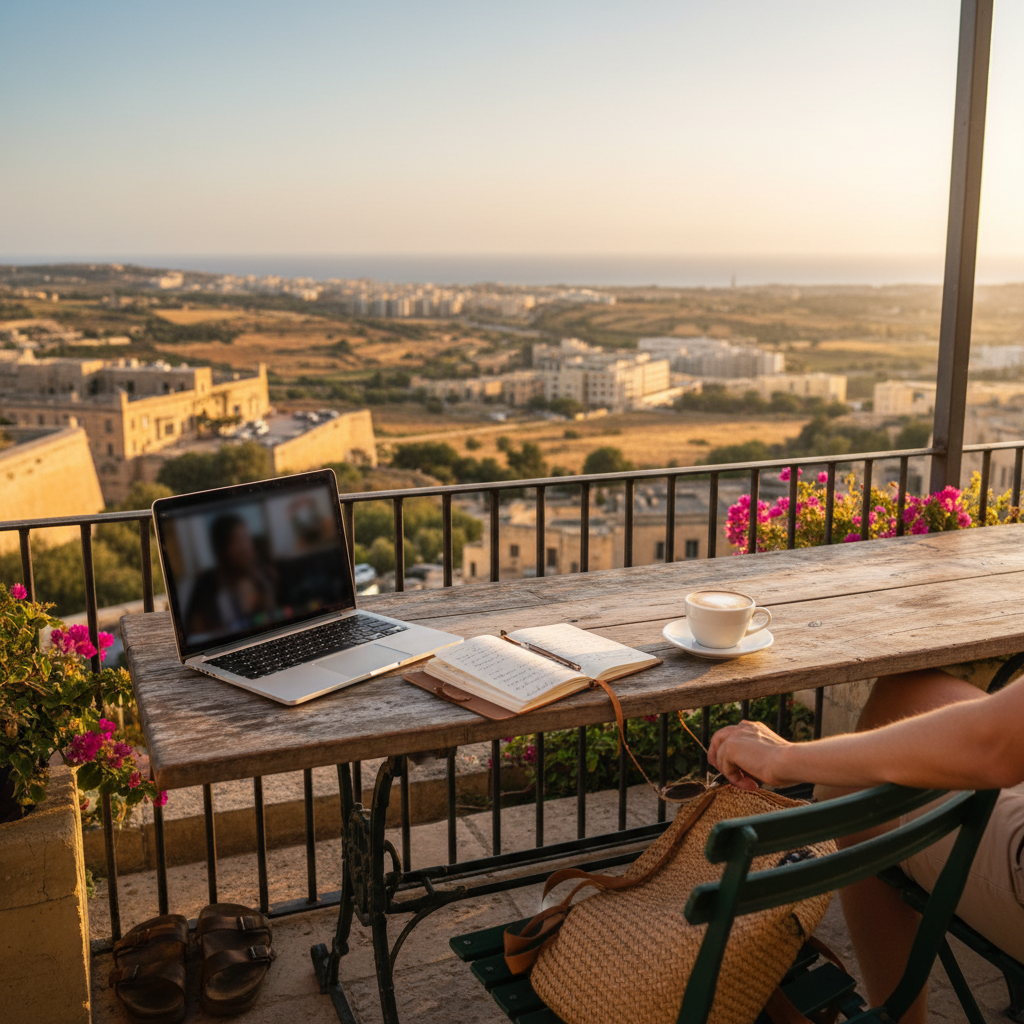
Co-Living Spaces Around the World: A 2026 Guide for Digital Nomads
Explore the evolving world of co-living in 2026, offering digital nomads a blend of community, convenience, and cost-effectiveness. This guide covers global trends, examples, and practical advice.
May 27, 2026

Co-Living Spaces Around the World: A 2026 Guide for Digital Nomads
The landscape of remote work and global mobility has continued to evolve at a rapid pace through 2026, and with it, the demand for flexible, community-focused accommodation. Co-living spaces have solidified their position as a leading choice for digital nomads, offering a compelling blend of convenience, social interaction, and productivity-enhancing environments. This comprehensive guide delves into the world of co-living in 2026, providing practical insights, real-world examples, and essential considerations for the modern global worker.
Overview
Co-living, at its core, is a modern form of shared housing designed for individuals seeking community, flexibility, and a streamlined living experience. It goes beyond mere flat-sharing by offering furnished private bedrooms, shared communal areas like kitchens, living rooms, and often dedicated workspaces, alongside a suite of amenities and curated events. For digital nomads, co-living represents an ideal solution to the challenges of finding short-to-medium term accommodation, combating loneliness, and seamlessly integrating into new locations.
In 2026, the co-living market is characterized by increased specialization and sophistication. We're seeing a rise in niche co-living models catering to specific interests, such as wellness-focused communities, entrepreneurial hubs, or even adventure-oriented groups. Technology integration has also become paramount, with many spaces offering smart home features, robust high-speed internet, and dedicated apps for community management and event scheduling. The emphasis remains on fostering connections, facilitating networking, and providing a 'plug-and-play' living solution that minimizes administrative burdens.
Who Qualifies
Unlike traditional rental agreements, co-living typically has a broader qualification threshold. Most co-living providers target individuals who are:
- Digital Nomads: Professionals who work remotely and travel frequently.
- Remote Workers: Individuals who work from home and seek a more communal living experience.
- Freelancers & Entrepreneurs: Those who value networking opportunities and a supportive work environment.
- Students & Interns: Seeking flexible, furnished accommodation and social integration.
- Individuals in Transition: Anyone in a new city for work, study, or personal reasons who needs a temporary, hassle-free living solution.
Specific qualification criteria can vary by operator. Generally, applicants need to demonstrate:
- Financial Stability: Proof of income or savings to cover rent and expenses. Some may require a credit check.
- Identity Verification: A valid passport or national ID.
- Age Requirements: Usually 18+ or 21+.
- Compatibility: Some co-living spaces may have a brief interview or application process to ensure a good fit with the community's values and existing residents.
There are rarely strict visa requirements tied directly to co-living itself, as it's an accommodation type. However, individuals must, of course, possess the appropriate visa (e.g., digital nomad visa, tourist visa with intent to stay, work visa) for the country they plan to reside in.
Requirements
The fundamental requirements for co-living are generally straightforward:
- Valid Identification: Passport or national ID.
- Proof of Funds: Bank statements, employment contracts, or financial guarantees.
- Deposit: Typically one to two months' rent, refundable upon departure, assuming no damages.
- Rent Payment: Usually paid monthly, often upfront or with an automated system.
- Agreement to House Rules: Residents are expected to adhere to community guidelines regarding noise, cleanliness, guest policies, and respect for others.
Specific requirements might include:
- Minimum Stay Duration: Ranging from a few weeks to several months, though some offer daily rates.
- Background Check: Some premium co-living providers may conduct these for security and community harmony.
- Health & Travel Insurance: Highly recommended, especially for digital nomads, though rarely a direct requirement of the co-living space itself.
What's typically included:
- Fully Furnished Private Room: Bed, desk, chair, storage.
- Shared Furnished Common Areas: Kitchen, living room, dining area.
- Utilities: Electricity, water, gas, heating/cooling.
- High-Speed Wi-Fi: Crucial for remote workers.
- Cleaning Services: For common areas, sometimes for private rooms.
- Community Events: Workshops, social gatherings, excursions.
- Security: Key card access, CCTV.
- Maintenance: On-site or on-call support.
- Co-working Spaces: Dedicated desks or common areas suitable for work.
What's often not included (and might be extra):
- Personal Laundry Service: Though most have washing machines/dryers.
- Parking: May be extra or limited.
- Personal Toiletries & Groceries: Expected to be provided by the resident.
- Specialized Gym Memberships: Though many co-living spaces now include fitness facilities.
- Travel Insurance & Health Coverage: Essential for individual responsibility.
Application Process
The application process for co-living spaces is typically designed to be quick and efficient:
- Research & Selection: Browse co-living platforms (e.g., CoLive, Anyplace, various independent operators) or individual co-living provider websites. Filter by location, price, amenities, and community vibe.
- Inquiry & Tour: Contact the co-living operator to inquire about availability and specific details. Many offer virtual tours; some might facilitate in-person visits if you're already in the area.
- Application Submission: Complete an online application form. This usually asks for personal details, intended stay duration, profession, and sometimes a brief statement about why you want to join the community.
- Documentation Upload: Provide copies of your passport/ID, proof of income, and any other requested documents.
- Interview (Optional): Some communities, particularly those with a strong focus on shared values, might request a short video call to get to know you better.
- Approval & Offer: If approved, you'll receive a tenancy agreement or booking confirmation.
- Payment: Pay the deposit and first month's rent to secure your spot.
- Move-in: Arrive at the co-living space, typically on a pre-arranged date, receive your keys, and get an orientation.
The entire process can sometimes be completed within a few days, making it ideal for those with flexible travel plans.
Costs & Duration
Co-living costs vary significantly based on location, amenities, room type (private vs. shared bathroom), and duration of stay. Generally, longer stays often come with lower monthly rates.
Example Cost Ranges (as of 2026, per month for a private room):
| Region | Budget-Friendly | Mid-Range | Premium |
|---|---|---|---|
| Southeast Asia | "$400-$700" | "$700-$1200" | "$1200-$2000+" |
| (e.g., Bali, Chiang Mai) | |||
| Latin America | "$500-$900" | "$900-$1500" | "$1500-$2500+" |
| (e.g., Medellín, Mexico City) | |||
| Europe (Eastern/Southern) | "$600-$1000" | "$1000-$1800" | "$1800-$3000+" |
| (e.g., Lisbon, Budapest) | |||
| Europe (Western/Nordic) | "$900-$1500" | "$1500-$2500" | "$2500-$4000+" |
| (e.g., Berlin, Amsterdam) |
These prices typically include rent, utilities, Wi-Fi, and basic cleaning services. Comparing this to traditional rentals, co-living often offers better value, especially for short-to-medium stays, as it bundles many expenses that would otherwise be separate.
Duration:
- Short-term: 1 week to 1 month (often higher per-night rates)
- Medium-term: 1 month to 6 months (most common for nomads)
- Long-term: 6 months to 1 year+ (often with discounted rates)
Many nomads start with a 1-3 month booking to test out a location and community before committing to a longer stay.
Taxes
Co-living itself does not directly incur specific taxes beyond standard local accommodation or sales taxes that might be rolled into the price. However, as a digital nomad, your tax obligations are tied to your residency, income, and the tax laws of your home country and the countries where you work/reside.
- Income Tax: Your primary tax obligation will usually be to your country of citizenship or permanent residency, often subject to double taxation agreements. If you spend significant time (e.g., 183 days or more) in a particular country, you may become tax resident there and owe local income taxes.
- VAT/Sales Tax: Accommodation providers, including co-living spaces, will typically include any applicable Value Added Tax (VAT) or sales tax in their advertised rates.
- Tourist Tax/City Tax: Some cities impose a small daily tourist or city tax, which may be added to your bill or included in the overall price.
Important: This is not tax advice. Digital nomads should consult with a qualified tax professional specializing in international taxation to understand their specific obligations, especially when residing in a country for an extended period. The rules around digital nomad visas and tax residency are constantly evolving, so staying informed is crucial.
Pros & Cons
Pros of Co-Living for Digital Nomads
- Built-in Community: Immediate social circle, reducing loneliness and facilitating networking.
- Convenience: Fully furnished, utilities included, often cleaning services. Low-friction move-in and move-out.
- Flexibility: Options for short-term stays, ideal for exploring new locations.
- Cost-Effectiveness: Often cheaper than renting a private apartment short-term when considering all bundled costs.
- Enhanced Productivity: Dedicated co-working areas, reliable internet, and a focus on professional development in many communities.
- Local Immersion: Many co-living spaces actively organize events that help residents explore the local culture.
- Safety & Security: Generally well-maintained properties with security measures.
- Reduced Administrative Burden: No dealing with utility setup, internet contracts, or furniture sourcing.
Cons of Co-Living for Digital Nomads
- Less Privacy: Shared common areas mean less personal space than a private apartment.
- Potential for Noise: Living with others can mean varying schedules, noise levels, and differing habits.
- Varying Community Vibe: The atmosphere can heavily depend on the current residents, which changes frequently.
- Limited Personalization: Rooms are typically furnished and cannot be significantly customized.
- Rules & Restrictions: House rules, while beneficial for harmony, can feel restrictive to some.
- Cost for Long-Term: For very extended stays (1 year+), a private rental might eventually be more cost-effective.
- Location: While increasing, not every desirable location will have co-living options.
- Dependency on Management: Quality of experience can be heavily influenced by management responsiveness and effectiveness.
FAQ
Q: Is co-living just glorified dorm living? A: While there are similarities (shared spaces, community), co-living in 2026 is far more sophisticated. It offers private, often well-appointed bedrooms, professional amenities, curated communities, and a focus on adult professionals rather than just students. It's designed for intentional community building, not just affordable shared accommodation.
Q: How do I choose the right co-living space? A: Consider your priorities: budget, location, desired community vibe (e.g., quiet, social, entrepreneurial), included amenities (gym, co-working), and desired privacy level. Read reviews, look at photos, and if possible, take a virtual or in-person tour.
Q: What if I don't get along with my housemates? A: Most co-living spaces have community managers who can mediate conflicts. Clear house rules also help. If issues persist, many providers offer options to switch rooms or locations, though this is not always guaranteed.
Q: Can I have guests over? A: Guest policies vary. Most allow day-guests freely. Over-night guests usually require registration with management and may incur a small fee. Extended stays for guests are generally not permitted or are significantly restricted.
Q: Is co-living safe? A: Reputable co-living spaces prioritize safety through secure access control, CCTV, and robust vetting processes for residents. As with any shared living situation, individual awareness and respect for others' privacy are key.
Q: What's the internet like in co-living spaces? A: Given the target demographic of remote workers, high-speed, reliable internet is typically a top priority for co-living providers. Most offer fiber optics or equivalent, with robust Wi-Fi networks throughout the property. It's always wise to confirm speeds before booking, especially if you have very demanding connectivity needs.
Q: Can I try co-living for just a few days? A: Some co-living spaces, particularly those with hostel-like or boutique hotel offerings, cater to very short stays. However, many have a minimum stay of 1 week or 1 month to foster a more stable community. Check the specific provider's policies.
Q: Do I need a specific visa to stay in a co-living space? A: No, the co-living space itself doesn't typically require a special visa. However, you must have the legal right to be in the country for the duration of your stay, whether that's a tourist visa, a digital nomad visa, or another appropriate permit. Always ensure your visa status matches your intended stay length and activities.
Sources
- Consult the country's official immigration website for visa requirements.
- Consult the official websites of major co-living operators (e.g., Selina, The Collective, Habyt, Common).
- Industry reports from real estate analysis firms on co-living market trends (e.g., JLL, Cushman & Wakefield).
- Global digital nomad community forums and review platforms for peer experiences.
Interested in applying?
Tell us a bit about yourself and we'll send tailored guidance on eligibility, paperwork, and next steps.