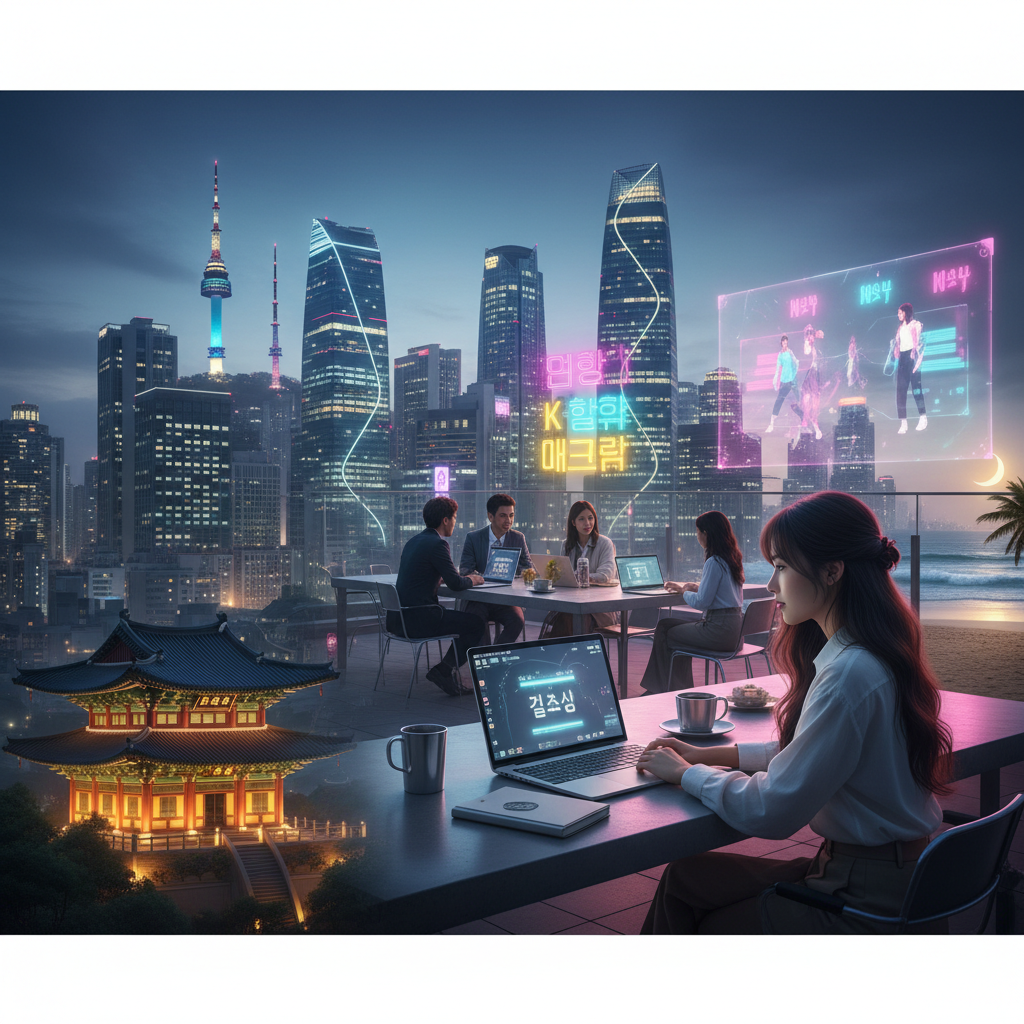
The Comprehensive 2026 Digital Nomad Guide to South Korea
South Korea, a nation where ancient traditions meet hyper-modern technology, has rapidly become a beacon for digital nomads seeking an unparalleled blend of efficiency, culture, and connectivity. From the bustling neon-lit metropolises to serene temple retreats and picturesque coastlines, the country offers a unique backdrop for remote work. In 2024, South Korea officially launched its 'Workation Visa' (F-1-D), signaling its intent to welcome the global remote workforce, and in 2026, this visa is fully implemented and streamlined, making it an increasingly attractive destination.
Why South Korea for Digital Nomads?
South Korea stands out as a premier destination for digital nomads for numerous compelling reasons. Firstly, its technological prowess is unparalleled. Boasting the world's fastest average internet speeds, ubiquitous 5G, and a highly digitized society, seamless remote work is not just possible, but expected. This eliminates common frustrations found in other parts of the world, ensuring smooth video calls, rapid file transfers, and uninterrupted workflow.
Secondly, the country offers an exceptionally high quality of life. South Korea consistently ranks among the safest nations globally, with crime rates so low that public safety is rarely a concern. Public transportation is world-class – efficient, clean, and extensive, making navigation effortless even for those unfamiliar with the language. Healthcare is modern, accessible, and high-quality, offering peace of mind to long-term residents.
Thirdly, South Korea's rich cultural tapestry provides a never-ending source of discovery. From the vibrant K-Pop and K-Drama scene that has captivated the globe to ancient palaces, traditional villages, and exquisite cuisine, there’s an immersive experience at every turn. Food culture is deeply ingrained, offering an incredible variety of delicious and often healthy dishes, from street food stalls to Michelin-starred restaurants. The 'ppalli-ppalli' (faster, faster) culture fosters unparalleled efficiency in services, but is balanced by a deep respect for traditions and community.
Finally, the growing expat and digital nomad community, particularly in Seoul and Busan, means ample opportunities for networking, making friends, and finding support. English is increasingly common among younger generations, and translation apps are highly effective, bridging linguistic gaps. For those seeking innovation, safety, and a profoundly enriching cultural experience, South Korea in 2026 presents an irresistible proposition for digital nomads.
Visa Options & Eligibility
South Korea introduced its dedicated 'Workation Visa' (F-1-D) in 2024, specifically intended for experienced foreign professionals who can work remotely. This visa is designed to allow individuals to reside in South Korea for an extended period while continuing their employment with companies outside of Korea.
Visa Name: Workation Visa (F-1-D)
Key Eligibility Criteria for 2026:
- Nationality: Open to citizens of countries that have a visa-free agreement with South Korea, or those eligible for specific visa categories. Always check with your local Korean embassy for specific country requirements.
- Profession: Must be engaged in an occupation that allows for remote work and whose primary income source is outside of South Korea.
- Income Requirement: Applicants must demonstrate an annual income from their overseas employment that is at least twice the Korean GNI (Gross National Income) per capita from the previous year. As of early 2026 estimates, this is approximately 84.96 million KRW annually, which translates to roughly $70,000 USD per year or about $5,800 USD per month. This is higher than a typical cost of living due to the government's aim to attract higher-earning professionals.
- Work Experience: A minimum of one year of work experience in the relevant industry is generally required.
- Employer Location: The employer must be based outside of South Korea.
- Financial Proof: Evidence of substantial savings or assets might be required in addition to income proof.
- Clean Record: No criminal record.
- Health Insurance: Must provide proof of private health insurance with coverage exceeding 100 million KRW (approximately $75,000 USD) for hospital treatment and repatriation.
- Education: A bachelor's degree or higher is usually expected.
Maximum Stay: The initial visa is typically granted for 1 year, with the possibility of a 1-year extension, totaling a maximum stay of 2 years.
Dependent Eligibility: The F-1-D visa also allows applicants to bring their spouses and unmarried minor children (under 18 years old) as dependents. They will also apply for the F-1-D visa type.
Application Process Summary: Applications are typically submitted at Korean embassies or consulates in the applicant's home country or country of legal residence. The process involves submitting a comprehensive set of documents, including a visa application form, passport, passport-sized photos, proof of employment, income statements, bank statements, educational certificates, work experience letters, health insurance policy, and a criminal background check. Some consulates may require an interview.
Processing Time: Expect processing to take approximately 2-4 weeks (10-20 business days), though this can vary depending on the consulate and individual case complexity.
Application Fee: The standard application fee is around $40 USD, but this can vary slightly by nationality and consulate. An additional fee may apply for multiple-entry visas or for dependents.
It is crucial to consult the official website of the Korean immigration service (Hi-Korea) or your nearest Korean embassy/consulate for the most up-to-date and specific requirements relevant to your nationality in 2026, as regulations can be updated.
Cost of Living Breakdown
The cost of living in South Korea for a digital nomad varies significantly based on lifestyle and chosen city. Seoul is comparable to major Western cities like London or New York, while Busan and particularly Jeju Island can offer a more relaxed price point. Here's an estimated monthly breakdown in USD for a single digital nomad in 2026:
| Expense Category | Seoul (USD) | Busan (USD) | Jeju Island (USD) |
|---|---|---|---|
| Accommodation | |||
| - Studio/1BR apt | $1,000 - $2,000 | $600 - $1,100 | $700 - $1,200 |
| - Shared flat/Coliving | $600 - $900 | $400 - $700 | $500 - $800 |
| Utilities | $100 - $180 | $80 - $150 | $90 - $160 |
| Internet & Mobile | $60 - $80 | $50 - $70 | $55 - $75 |
| Groceries | $350 - $500 | $300 - $450 | $350 - $550 |
| Dining Out | $400 - $800 | $300 - $600 | $350 - $700 |
| Transportation | $50 - $80 | $40 - $70 | $80 - $150 (car rental/taxis) |
| Co-working Space | $150 - $350 | $100 - $250 | $120 - $280 |
| Entertainment/Misc. | $300 - $600 | $250 - $500 | $300 - $600 |
| Total Average | $2,410 - $4,690 | $1,720 - $3,990 | $2,045 - $4,515 |
- Total Monthly Cost (Minimum for a comfortable, mid-range lifestyle): Approximately $2,000 USD in Busan/Jeju, and $3,000 - $3,500 USD in Seoul.
- Accommodation: This is the most significant variable. Goshiwons (tiny, furnished rooms) or one-rooms (small studios) are cheaper but limited. For short-term rentals (1-3 months), expect higher prices. Deposits often require several months' rent or a key deposit (jeonse), which can be a barrier for new arrivals. Many nomads opt for Airbnb or serviced apartments initially.
- Food: Eating out can be affordable if you stick to local restaurants and street food. Groceries are relatively expensive compared to some other Asian countries, especially for imported goods.
- Transportation: Public transport in Seoul and Busan is excellent and inexpensive. Jeju Island relies more on buses, taxis, or car rentals.
- Utilities: Includes electricity, gas, water, and heating/cooling, which can be higher in extreme seasons.
Overall, while not as cheap as Southeast Asia, South Korea offers excellent value for the quality of life and infrastructure provided.
Best Cities & Neighborhoods
South Korea offers diverse urban and natural environments. Here are the top choices for digital nomads in 2026:
Seoul
The capital city is the epicenter of South Korean life, offering endless opportunities and a dynamic pace. It's ideal for those who thrive on urban energy and constant stimulation.
- Gangnam: Upscale district known for luxury shopping, trendy cafes, and a vibrant nightlife. It has numerous co-working spaces and high-end apartments. Expect higher prices.
- Hongdae/Sinchon: Youthful, artistic, and energetic areas near universities. Plenty of affordable eateries, indie shops, live music venues, and a strong nightlife. Great for cultural immersion and networking with young Koreans.
- Itaewon: Known for its international community, diverse restaurants, and vibrant nightlife. More English-friendly, and a good first landing spot for many expats. Easier to find Western comforts.
- Jongno/Euljiro: Historic heart of Seoul, close to palaces, traditional markets, and art galleries. A blend of old and new, offering unique co-working spaces in repurposed buildings. Quieter at night but very central.
- Yeonhui-dong/Gyeongnidan-gil: More residential, charming areas with quirky cafes, boutiques, and a slightly bohemian vibe. Still well-connected but offering a respite from the main hustle.
Busan
South Korea's second-largest city and a major port, Busan offers a fantastic coastal lifestyle with beautiful beaches, mountains, and a slightly more relaxed atmosphere than Seoul, often at a lower cost of living.
- Haeundae: Famous for its stunning beach, high-rise apartments, and resort-like feel. Plenty of cafes, restaurants, and a more international crowd. Excellent for beach lovers.
- Centum City: A modern, futuristic district home to mega-malls, department stores, cinemas, and co-working spaces. It's a business and entertainment hub with good connectivity.
- Seomyeon: Central Busan's main commercial and entertainment district. Bustling nightlife, shopping, and dining options. Well-connected by subway, making it a convenient base.
- Gwangalli: Another popular beach area known for its iconic bridge views, vibrant nightlife, and diverse food scene. A slightly more local and bohemian vibe than Haeundae.
Jeju Island
A volcanic island paradise off the southern coast, Jeju offers a nature-focused, relaxed pace of life. It's a UNESCO World Heritage site known for its dramatic landscapes, hiking trails, and unique culture. Ideal for those seeking tranquility and outdoor activities.
- Jeju City: The island's capital, offering the most amenities, a small international airport, and connection to the mainland. Good co-working options, local markets, and a more urban feel compared to the rest of the island.
- Seogwipo: The second-largest city, located on the south side of the island. Known for its waterfalls, orange groves, and access to Hallasan National Park. More peaceful than Jeju City but still with good infrastructure.
- Rural Coastal Towns (e.g., Aewol, Woljeongri): For those truly seeking peace and quiet, these areas offer stunning ocean views, charming cafes, and a slow-paced life. You'll likely need a car for convenience.
Internet, Coworking & Remote-Work Infrastructure
South Korea is a digital nomad's dream when it comes to connectivity and infrastructure.
Internet Speeds: South Korea consistently holds the top spot globally for average internet speeds. In 2026, you can expect average broadband speeds of 220 Mbps and even faster 5G mobile networks that are widely accessible. Fiber optic (FTTH) is standard in most urban buildings.
Reliability: Internet outages are extremely rare, and connections are incredibly stable, ensuring uninterrupted workflow.
Mobile Connectivity: Prepaid SIM cards are readily available for tourists and long-term residents. Major providers like SK Telecom, KT, and LG U+ offer excellent 5G coverage across the country. Unlimited data plans are common and affordable (around $40-60 USD/month).
Wi-Fi Access: Free public Wi-Fi is ubiquitous in cafes, restaurants, subway stations, and public spaces, often with strong and reliable connections.
Co-working Spaces: The co-working scene has boomed, particularly in Seoul and Busan, offering stylish, well-equipped spaces for various budgets.
- WeWork, Fast Five, SparkPlus (Seoul): These major chains are prevalent in central Seoul districts like Gangnam, Gwanghwamun, and Yeoksam. They offer hot desks, private offices, meeting rooms, and networking events. Prices generally range from $150 - $400 USD per month for a hot desk.
- Local Co-working Spaces: Smaller, independent co-working spaces are popular, often offering more competitive pricing and a community feel. Examples include 'Maru180' (Seoul), 'F1963' (Busan).
- Cafes: South Korea's cafe culture is legendary. Many cafes are designed for work, offering comfortable seating, ample power outlets, and strong Wi-Fi. However, it's generally frowned upon to occupy a table for hours with just one drink during peak times.
- Libraries and Study Cafes: Public libraries offer free study areas. 'Study Cafes' (독서실, dokseosil) are also popular, quiet places to focus, often with hourly or daily rates.
Remote Work Culture: While South Korea's traditional work culture is known for long hours, the digital nomad community operates independently. Employers are mostly international, and local businesses are adapting to remote work concepts. Video conferencing tools like Zoom, Google Meet, and KakaoTalk are widely used for communication.
Taxes & Legal Considerations
Navigating taxes as a digital nomad in South Korea requires careful attention, especially with the introduction of the F-1-D visa.
Tax Residency:
- 183-Day Rule: If you reside in South Korea for 183 days or more within a calendar year, you are generally considered a Korean tax resident. This means you will be subject to Korean income tax on your worldwide income.
- F-1-D Visa Holders: While the F-1-D visa facilitates living and working remotely for an overseas employer, the 183-day rule still applies. Digital nomads holding this visa who stay for an extended period will likely become tax residents.
Income Taxation:
- Foreign-Sourced Income: For tax residents, foreign-sourced income (e.g., salary from an overseas company) is generally taxable in South Korea. However, tax implications can be complex and depend significantly on existing Double Taxation Agreements (DTAs) between South Korea and your home country.
- DTA Benefits: DTAs aim to prevent individuals from being taxed twice on the same income. They often specify which country has the primary right to tax certain types of income. For independent contractors or employees with overseas employers, DTA clauses on 'dependent personal services' or 'independent personal services' will be crucial.
- Progressive Tax Rates: South Korea has a progressive income tax system, with rates ranging from 6% to 45% (plus local income tax surcharge of 10% of the income tax). Specific thresholds apply.
Local Income Tax: In addition to national income tax, a local income tax (Resident Surcharge) of 10% of the national income tax is levied.
Social Security & Health Insurance:
- National Health Insurance (NHI): While the F-1-D visa requires private health insurance, if you become a tax resident, you might also become liable to contribute to the National Health Insurance scheme. This provides comprehensive coverage and is highly regarded.
- National Pension Scheme: Depending on your tax residency status and nationality (and bilateral agreements), you might also be required to contribute to the National Pension Scheme.
Recommendations:
- Professional Tax Advice: It is absolutely essential to consult with a qualified Korean tax accountant specializing in international taxation before or shortly after arriving in South Korea. They can provide personalized advice based on your specific situation, nationality, income sources, and the applicable DTA.
- Maintain Records: Keep meticulous records of all income, expenditures, and periods of stay.
- Visa Conditions: Always adhere strictly to the conditions of your F-1-D visa, especially regarding not seeking employment within South Korea.
Business & Legal: The F-1-D visa explicitly prohibits employment with South Korean companies. If you plan to start a business or offer services to Korean clients, you would need a different visa (e.g., D-8 Corporate Investment Visa, or D-9 Trade Management Visa), which requires significant investment or specific business activities.
Lifestyle, Culture & Community
Living as a digital nomad in South Korea is a deeply enriching experience, blending high-tech convenience with centuries-old traditions.
Safety & Order: South Korea is incredibly safe. You can walk alone at night, accidents rarely happen, and polite behavior is the norm. This sense of security is a major draw for many.
Efficiency & Convenience: Everything works seamlessly, from public transport to online banking (though the latter can be tricky for foreigners initially). Delivery services for food, groceries, and even flowers are hyper-efficient.
Food Culture: Korean food is a highlight. Beyond kimchi and BBQ, explore regional specialties, vibrant street food markets (like Gwangjang market in Seoul), and a thriving cafe scene. Dining is often communal, reflecting the value placed on shared experiences. Banchan (side dishes) come with almost every meal, and you'll quickly discover your favorites.
Social Interactions: Koreans are generally polite and respectful. While direct friendships might take time to form due to language barriers and cultural differences, there's a strong sense of community and helpfulness. Nodding is a common greeting, and bowing is used in formal situations or as a sign of respect. Learning a few basic Korean phrases (e.g., Annyeonghaseyo - hello, Kamsahamnida - thank you) goes a long way.
Work-Life Balance: While traditional Korean work culture often emphasizes long hours, as a digital nomad, you control your schedule. Weekends are for exploration, hiking, or enjoying urban attractions. Many digital nomads find a good balance, leveraging the efficient weekdays for work and enjoying the rich cultural experiences the rest of the time.
Expat & Digital Nomad Community: Major cities like Seoul and Busan have well-established expat communities, offering a ready network for social activities, advice, and cultural exchange. Facebook groups, Meetup events, and co-working spaces are excellent avenues for connecting. The number of digital nomads is growing steadily, fostering a more defined community.
Etiquette:
- Respect for Elders: Always show deference to those older than you.
- Shoes Off: Remove shoes when entering homes, some restaurants, and traditional spaces.
- Dining: Don't stick chopsticks upright in rice (resembles funeral rites). Use both hands when receiving or giving items, especially money or important documents, as a sign of respect.
- Public Transport: Give up your seat to the elderly or pregnant. Avoid loud conversations on phones.
Language: While many young people and those in tourist-heavy areas speak some English, learning Korean will significantly enhance your experience and ability to integrate. Numerous language schools and apps are available.
How to Apply: Step-by-Step
Applying for the South Korea Workation Visa (F-1-D) in 2026 involves several key steps. Always verify the latest requirements with your nearest Korean embassy or consulate.
-
Check Eligibility: Ensure you meet all the criteria, especially the income requirement (estimated ~$70,000 USD/year) and work experience (1+ year).
-
Gather Required Documents (Prepare Early!): This is the most critical and time-consuming step. Documents commonly include:
- Visa Application Form (download from embassy website)
- Original Passport (valid for at least 6 months beyond intended stay)
- Passport-sized Photos (usually 2, less than 6 months old)
- Proof of Remote Employment:
- Employer contract or letter confirming remote work, position, and salary from an overseas company.
- Business registration certificate of the overseas employer.
- Proof of consistent income (bank statements, tax returns for the past year/two years).
- Proof of Sufficient Funds: Bank statements showing stable financial means, potentially beyond just income.
- Educational Certificate (e.g., Bachelor's degree or higher).
- Work Experience Certificate (Employer letters, reference letters).
- Criminal Background Check (from your home country and any country you've resided in for more than 6 months).
- Proof of Private Health Insurance (coverage > 100 million KRW for hospitalization & repatriation).
- Accommodation Plan/Reservation (initially a temporary one, if not a long-term contract).
- Family Relations Certificate (if bringing dependents, proving relationship like marriage certificate, birth certificates).
- Any other documents requested by the specific embassy/consulate.
- Note: All foreign documents may need to be apostilled or legalized and translated into Korean (by a certified translator).
-
Schedule an Appointment: Contact your nearest Korean embassy or consulate to inquire about the application procedure and book an appointment for submission. Some may accept postal applications, but an in-person interview is common.
-
Submit Application: Attend your appointment with all original documents and photocopies. Pay the application fee (around $40 USD).
-
Interview (If Required): Be prepared to answer questions about your work, financial stability, and intentions in South Korea.
-
Visa Processing: Wait for your visa to be processed. This typically takes 2-4 weeks (10-20 business days). You may be notified to pick up your passport or it may be mailed back to you.
-
Arrival in South Korea: Upon arrival, ensure your visa is correctly stamped. Within 90 days, you must apply for an Alien Registration Card (ARC) at the local immigration office. This card serves as your official ID in Korea and is necessary for opening bank accounts, getting a local phone number, etc.
-
Extension: If you wish to extend your stay beyond the initial year, you must apply for an extension at a Korean immigration office before your current visa expires. You'll need to re-submit proof of continuous remote employment, financial stability, and health insurance.
Common Pitfalls
While South Korea is a fantastic destination, digital nomads should be aware of a few potential challenges:
- Visa Requirements & Income Proof: The income requirement for the F-1-D visa is substantial. Ensure your financial documentation is impeccable and clearly demonstrates your consistent remote income from an overseas source. Lack of sufficient, verifiable income is a common reason for rejection.
- Language Barrier: While English is spoken in tourist areas and by younger generations, navigating daily life, official matters, or deeper social interactions outside major cities can be challenging without basic Korean. Invest time in learning the language.
- Initial Setup Difficulty for Foreigners: Even with a visa, tasks like opening a bank account, getting an Alien Registration Card (ARC), or setting up utilities can be more complex for foreigners than expected, often requiring multiple visits or specific documents. Patience is key.
- High Cost of Living (Especially Seoul): Accommodation in Seoul can be particularly expensive, and securing long-term rentals often involves substantial key deposits (jeonse/wolse) or high upfront costs. Researching different housing options and budgeting carefully is crucial.
- Cultural Differences: South Korea has a unique culture with nuanced social etiquette. While generally welcoming, misunderstandings can occur if one is not mindful of local customs regarding respect, hierarchy, and indirect communication. Be open-minded and willing to adapt.
- Finding Community: While expat communities exist, integrating into local Korean society can be challenging without language skills and a proactive approach. It's easy to fall into an expat bubble if not careful.
- Tax Confusion: The taxation of foreign-sourced income for individuals residing in South Korea can be complex. Failing to understand your tax obligations and seek professional advice can lead to significant issues. Do not assume you're exempt from local taxes just because you earn abroad.
- Limited Local Employment: The F-1-D visa strictly prohibits working for Korean companies. Planning to secure local employment after arrival will require a change of visa, which is usually a separate and more complicated process. Ensure your remote work is sustainable for your entire intended stay.