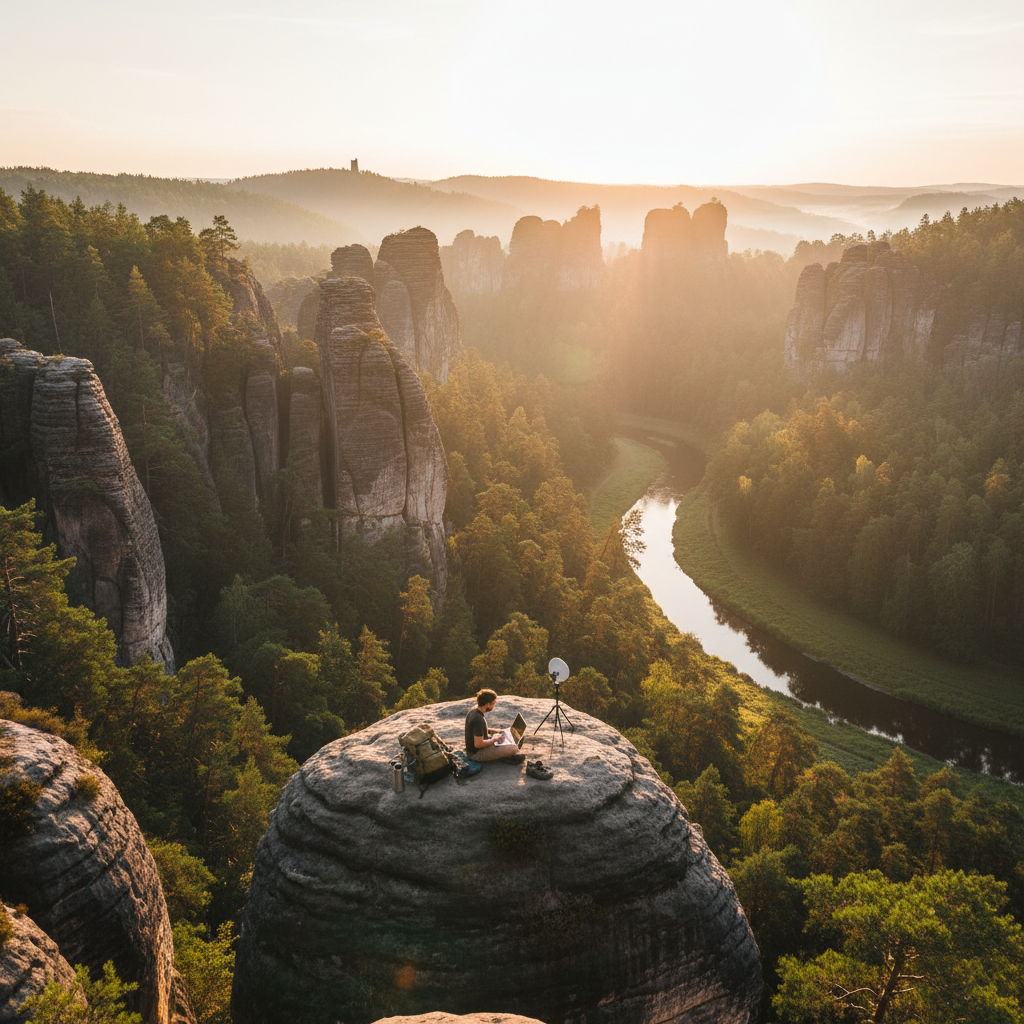
The Czech Republic: A Digital Nomad's Guide to Central European Charm (2026)
Steeped in history, boasting stunning architecture, and offering a quality of life that's both enriching and affordable, the Czech Republic has firmly established itself as a top-tier destination for digital nomads. Beyond its fairytale castles and world-famous beer, the country presents a compelling blend of robust infrastructure, burgeoning entrepreneurial spirit, and a strategic Central European location. For those seeking a vibrant cultural experience without the Western European price tag, the Czech Republic, particularly its iconic capital Prague, offers an irresistible proposition.
Why Czech Republic for Digital Nomads
The Czech Republic, a jewel in the heart of Europe, captivates with its enchanting landscapes, from the bohemian forests to the majestic peaks of the Krkonoše. For digital nomads, its allure extends far beyond mere aesthetics. Prague consistently ranks among the most beautiful cities in the world, yet its cost of living remains significantly lower than its Western counterparts like Paris or Berlin. This allows for a higher quality of life, where a comfortable apartment, delicious food, and a vibrant social scene are all within reach without breaking the bank. The country's central location is a huge draw, offering easy and affordable access to virtually all of Europe for weekend getaways. Imagine a quick train ride to Vienna, a budget flight to Rome, or a road trip through the German countryside – all feasible from your Czech base. The local economy is stable, and the country boasts an impressive 95% literacy rate, reflecting a well-educated populace, many of whom speak English, especially among the younger generation and in urban centers. This makes integration and daily interactions much smoother. Furthermore, the Czech Republic provides a fascinating cultural immersion, rich in arts, music, and traditions, from classical concerts in historic churches to lively beer festivals. Its history, marked by both grandeur and resilience, offers a deep well of exploration for curious minds. The growing expat and digital nomad communities, particularly in Prague and Brno, provide a supportive network and a sense of belonging, making the transition to life here even easier. Excellent public transport, reliable internet, and a generally safe environment round out the compelling reasons why the Czech Republic, even in 2026, remains a perennial favorite for remote workers.
Visa Options & Eligibility
As of 2026, the Czech Republic does not have a single, streamlined 'Digital Nomad Visa' like some other nations. However, it offers a well-trodden path for self-employed individuals and freelancers that effectively serves the digital nomad community: the Long-term visa for the purpose of 'Other', usually paired with a Zivnostenský list (Zivno) trade license.
There is also a 'Digital Nomad Programme' launched by the government, primarily targeting citizens of specific countries (currently Australia, Canada, Japan, New Zealand, South Korea, Taiwan, UK, and USA) to attract highly skilled workers. This program is often linked to the 'Employee Card' or a specific type of long-term visa. It requires higher qualifications and is not strictly for self-employed individuals working for foreign clients. For the majority of digital nomads, the Zivno visa path remains the most accessible route.
Zivno Visa (Long-term visa for 'Other' purposes + Trade License)
- Eligibility: This visa is for individuals who intend to conduct self-employed business activities in the Czech Republic. For digital nomads, this means working for foreign clients remotely.
- Key Requirements:
- Proof of Purpose: An official document confirming your trade license (Zivnostenský list), outlining your business activities (e.g., IT consulting, graphic design, writing).
- Financial Solvency: You must prove you have sufficient funds to cover your stay. As of early 2026, this typically requires demonstrating funds equivalent to about 15 times the existential minimum (currently CZK 4,860) for each month of stay, up to 12 months. This means approximately CZK 150,000 (around $7,000 USD) on your bank account for a 12-month visa, or regular monthly income statements if applying for a shorter period. These funds must be in a bank account in your name, which you can access in the Czech Republic.
- Accommodation: Proof of secured accommodation for at least the first year (e.g., rental contract, notarized confirmation from a landlord).
- Health Insurance: Comprehensive travel health insurance covering the entire period of your stay, with a minimum coverage of EUR 60,000 for medical expenses. This must be from a provider authorized in the Czech Republic or EU, or a foreign provider with an agreement with a Czech insurer.
- Clean Criminal Record: An extract from your criminal record from your home country, and any country where you've lived for more than 6 months in the last three years (with apostille/superlegalization and official translation).
- Valid Passport: Your passport must be valid for at least three months beyond your intended stay.
- Application Form: Duly completed long-term visa application form.
- Passport Photos: Two recent passport-sized photographs.
- Duration: Initially granted for up to 12 months. Renewable annually.
- Processing Time: Typically 90-120 days from the date of application submission, though it can vary.
- Application Fee: Visa fee is approximately CZK 3,000 ($150 USD). The Zivno trade license registration itself has a small administrative fee (CZK 1,000, approx. $45 USD).
Important Considerations:
- Sponsorship: No sponsorship is required for the Zivno visa, as it is based on your self-employment.
- Initial Entry: You must apply for the long-term visa from your home country (or a country where you hold long-term residency). You cannot apply from within the Czech Republic as a tourist.
- Language: All documents not in English or Czech must be translated into Czech by an officially sworn translator.
- Bank Account: Consider opening a Czech bank account once you arrive, but use your home country account for initial financial proof.
Cost of Living Breakdown
The Czech Republic offers a remarkably affordable cost of living compared to much of Western Europe, allowing digital nomads to enjoy a high quality of life without excessive expenditure. Prague is the priciest city, but still very manageable. Brno and other regional cities offer even better value. Here’s an estimated monthly breakdown in USD for a single digital nomad in Prague (2026):
| Category | Estimated Monthly Cost (USD) |
|---|---|
| Accommodation | |
| 1-bedroom apt (city ctr) | $800 - $1200 |
| 1-bedroom apt (outside) | $550 - $850 |
| Utilities | |
| Electricity, heating, water, garbage | $150 - $250 |
| Internet (Fiber) | $20 - $35 |
| Phone Plan (data, calls) | $15 - $30 |
| Food & Groceries | |
| Groceries | $300 - $450 |
| Eating Out (mid-range, 2-3x/week) | $150 - $250 |
| Local beer (0.5l) | $2.50 - $4 |
| Transportation | |
| Public Transport Pass | $25 - $35 |
| Ride-sharing (occasional) | $30 - $60 |
| Health Insurance | |
| Local private | $70 - $120 |
| Coworking Space | |
| Hot desk (monthly) | $100 - $200 |
| Leisure & Entertainment | |
| Gym membership | $30 - $60 |
| Cinema ticket | $8 - $12 |
| Other | $100 - $200 |
| Visa/Admin (amortized) | $20 - $40 |
| TOTAL (conservative average) | $1600 - $2500 |
- Average Total Monthly Cost: For a single person living comfortably but not luxuriously in Prague, a budget of around $1,800 - $2,200 USD is realistic. In Brno, this could drop to $1,400 - $1,800 USD.
- Accommodation: Rent is by far the biggest expense. Sharing an apartment or living further from the absolute city center can significantly reduce costs. Long-term leases often require a deposit of 1-3 months' rent.
- Groceries: Supermarkets like Albert, Billa, Lidl, and Kaufland offer good value. Local markets provide fresh produce.
- Eating Out: Lunch menus (polední menu) offer excellent value at traditional Czech restaurants.
- Transportation: Public transport in Czech cities is highly efficient, extensive, and affordable.
Best Cities & Neighborhoods
While Prague undeniably grabs the spotlight, the Czech Republic offers several other appealing cities for digital nomads, each with its unique flavor and advantages.
1. Prague (Praha)
- Why: The undisputed heart of the Czech Republic, Prague offers a vibrant international community, stunning architecture, endless cultural events, excellent public transport, and a plethora of coworking spaces. It's the go-to for those who crave a metropolitan experience with historical charm.
- Best Neighborhoods:
- Vinohrady: Popular with expats, known for its beautiful Art Nouveau buildings, parks (Riegrovy Sady), cafes, and restaurants. Close to the city center but with a quieter residential feel.
- Žižkov: More bohemian and edgy, with a lively nightlife, numerous pubs, and lower rents. Has a strong local character.
- Karlín: Up-and-coming, dynamic with modern offices, trendy cafes, and a more contemporary vibe. Good access to the Vltava riverfront.
- Nové Město (New Town) & Old Town (Staré Město): Best for short-term stays or those who want to be in the absolute center of tourist action, but generally more expensive and less 'local'.
2. Brno
- Why: The Czech Republic's second-largest city, Brno is a growing tech hub and university town. It's more laid-back than Prague, with a thriving startup scene, a younger population, and a very active expat community. It offers a slightly lower cost of living and still boasts a charming historic center. Excellent base for exploring Moravia.
- Best Neighborhoods:
- Veveří: Close to the university and city center, lively with cafes and bars, popular with students and young professionals.
- Královo Pole: Residential area with good amenities, parks, and easy access to the city center via tram.
3. Ostrava
- Why: Located near the Polish and Slovakian borders, Ostrava is an industrial city undergoing significant revitalization. It's the most affordable of the major cities and offers a unique cultural experience, particularly with its famous industrial heritage (e.g., Dolní Vítkovice). A good choice for those seeking a truly off-the-beaten-path experience with a strong local community focus and very low costs.
4. Olomouc
- Why: A beautiful university city in Moravia, often referred to as a 'mini-Prague' without the crowds. It has a stunning UNESCO-listed square, rich history, and a relaxed atmosphere. Ideal for nomads seeking a quieter, more traditional Czech experience with a strong student presence and good quality of life at an affordable price.
5. Pilsen (Plzeň)
- Why: Famous as the birthplace of Pilsner Urquell beer, Pilsen is a city with a rich industrial history and a charming center. It's close to Germany, offering a blend of Czech and German influences, and provides a comfortable medium-sized city experience. Good for those who appreciate history, good beer, and a manageable pace of life.
Internet, Coworking & Remote-Work Infrastructure
The Czech Republic boasts excellent infrastructure for remote workers, consistently ranking high for internet speed and accessibility.
-
Internet:
- Speeds: Average download speeds across the country are robust, often exceeding 110 Mbps for fixed broadband in major cities as of 2026. Fiber optic (FTTH) is widely available in urban areas, offering speeds up to 1 Gbps. Even DSL and cable connections generally provide sufficient bandwidth for video calls, large file transfers, and streaming.
- Providers: Major ISPs include O2, Vodafone (formerly UPC), T-Mobile, and smaller local providers. Competition keeps prices reasonable, with unlimited fiber plans typically costing $20-$35 USD per month.
- Mobile Data: 4G LTE coverage is excellent nationwide, with 5G rapidly expanding in urban centers. Prepaid and contract SIM cards are easily available from providers like Vodafone, O2, and T-Mobile. A plan with ample data (e.g., 10-20GB) typically costs $15-$30 USD per month.
- Public Wi-Fi: Widely available in cafes, restaurants, shopping centers, and even some public transport. Quality varies but is generally reliable.
-
Coworking Spaces:
- Prague: The city is a hub for coworking, offering a diverse range of spaces from trendy to corporate.
- Impact Hub (various locations): A global network, offering excellent community, events, and flexible memberships.
- Shared Office Prague: Modern spaces with good amenities in prime locations.
- WeWork (several locations): Global giant with premium facilities and networking opportunities.
- Kreativní Klášter (Creative Monastery): A unique, inspiring space in a former monastery.
- Locus Workspace: Popular with digital nomads, known for its friendly community and events.
- Brno: Growing tech and startup scene means good coworking options.
- Impact Hub Brno: Similar to Prague, a strong community focus.
- Clubco: Modern facilities in the city center.
- Coworking Central: Affordable and community-oriented.
- Other Cities: While fewer, coworking spaces are emerging in cities like Ostrava and Pilsen.
- Pricing: Hot desk access typically ranges from $100 - $200 USD per month, with dedicated desks and private offices costing more. Day passes are usually available for around $15-$25 USD.
- Prague: The city is a hub for coworking, offering a diverse range of spaces from trendy to corporate.
-
Remote-Work Culture:
- Remote work is well-understood and supported in the Czech Republic, especially within the tech and creative industries. The concept of freelancers and self-employed individuals working for foreign clients is established, especially with foreigners using the Zivno.
- Many cafes in Prague and Brno are laptop-friendly, offering a good alternative or supplement to coworking spaces.
- The business environment is generally professional and efficient, though bureaucracy can sometimes be slow, particularly with government processes for permits and visas.
Taxes & Legal Considerations
Navigating taxes and legalities as a digital nomad in the Czech Republic requires careful attention, primarily revolving around the 'Zivno' trade license.
-
Tax Residency: If you spend more than 183 days in the Czech Republic within a calendar year, you are generally considered a tax resident. This means your worldwide income is subject to Czech taxation. Even if you spend less than 183 days, you may still be considered a tax resident if your 'center of vital interests' (e.g., family, permanent home) is in the Czech Republic.
-
Income Tax (for Zivno holders):
- Freelancers operating under a Zivno are subject to personal income tax.
- Tax Rates: The Czech Republic has a progressive income tax system:
- 15% for annual income up to CZK 2,001,600 (approx. $90,000 USD as of 2026).
- 23% for annual income exceeding CZK 2,001,600.
- Expense Deduction: A key advantage for Zivno holders is the option to use lump-sum expense deductions instead of tracking actual expenses. The percentage depends on your activity code:
- 60% for most freelance activities (IT, consulting, marketing, etc.)
- 80% for crafts (e.g., carpentry)
- This significantly simplifies tax reporting and often results in a lower taxable base.
- Tax Filing: Annual tax returns must be filed by April 1st each year (with extensions possible if using an advisor).
-
Social & Health Contributions: As a Zivno holder, you are required to contribute to both social security (pension) and public health insurance.
- Health Insurance: You must enroll in the Czech public health insurance system (VZP, OZP, etc.) or maintain private insurance that meets the required standards. Contributions are a fixed monthly amount, reviewed annually, usually around $100-$150 USD for the self-employed.
- Social Security: Contributions are calculated as a percentage of a predetermined assessment base, which is a minimum amount. These are also a fixed monthly amount, typically around $120-$180 USD. These contributions fund your pension and sick leave.
-
VAT (Value Added Tax):
- If your annual turnover exceeds CZK 2,000,000 (approx. $90,000 USD), you are legally required to register for VAT. This means charging VAT on your services and submitting quarterly VAT declarations.
- For most digital nomads working for foreign clients and staying below this threshold, VAT registration is optional, and usually not necessary.
-
Double Taxation Treaties: The Czech Republic has double taxation treaties with numerous countries. This is crucial for digital nomads to avoid being taxed twice on the same income. It's essential to understand how these treaties apply to your specific situation and consult with a tax advisor.
-
Legal Entity: The Zivno is a relatively simple way to operate as a sole proprietor. For those with higher income or more complex business structures, establishing a s.r.o. (limited liability company) might be an option, but it involves more administrative burden and costs.
-
Importance of Advice: Given the complexities of tax residency, international income, and local contributions, it is highly recommended to consult with a Czech tax advisor or accountant specializing in expats and freelancers. This can save you significant time, stress, and potential penalties.
Lifestyle, Culture & Community
The Czech Republic offers a rich and diverse lifestyle for digital nomads, blending historical charm with modern conveniences.
-
Culture: Czech culture is deeply rooted in history, art, and music. From classical concerts in stunning churches to vibrant contemporary art galleries, there's always something to engage with. The Czechs are known for their love of good beer (pivo), which is often cheaper than water and forms a significant part of the social fabric. Traditional Czech cuisine is hearty and often meat-based, with staples like goulash, schnitzel, and trdelník, though international culinary options are abundant in major cities.
-
Social Etiquette: Czech people are generally reserved but friendly once you get to know them. Punctuality is valued. When greeting, a firm handshake and direct eye contact are common. Learning a few basic Czech phrases (Dobrý den - Hello, Děkuji - Thank you, Prosím - Please/You're welcome) goes a long way. Germans and Austrians influenced their social etiquette. Expect 'Czech politeness' – rather stoic, not overly effusive.
-
Community:
- Expat & Digital Nomad Scene: Prague, in particular, boasts a very large and active expat and digital nomad community. Facebook groups (e.g., 'Prague Digital Nomads,' 'Expats in Prague'), Meetup groups, and coworking spaces are excellent resources for connecting with like-minded individuals, attending events, and finding support.
- Local Integration: While it's easy to stick within the expat bubble, making an effort to learn Czech, patronize local businesses, and explore beyond the tourist hotspots will greatly enrich your experience and foster local connections. Language exchange events are popular.
-
Outdoor Activities: The Czech Republic offers beautiful natural landscapes. Hiking in the Bohemian Switzerland National Park, skiing in the Krkonoše Mountains, cycling along river paths, or exploring picturesque smaller towns are popular weekend activities. Public parks within cities (Riegrovy Sady in Prague, Lužánky in Brno) offer green escapes.
-
Cost of Leisure: Entertainment and leisure activities are generally affordable. A cinema ticket is around $8-$12 USD, a local beer is $2.50-$4 USD, and a public transport pass for a month is $25-$35 USD. Access to museums and galleries is also reasonably priced.
-
Work-Life Balance: Czech culture generally values a good work-life balance. Afternoons and evenings are for socializing, enjoying parks, or heading to a pub. The efficiency of public transport means less commuting stress, freeing up more time for personal pursuits.
Overall, the lifestyle is one of comfort, cultural richness, and convenience, all at a cost that makes it highly attractive for those working remotely.
How to Apply: Step-by-Step
Applying for the Czech Zivno visa (Long-term visa for 'Other' purposes + Trade License) is a multi-step process that requires patience and meticulous preparation. Here’s a general roadmap for 2026:
Step 1: Research & Preparation (Months before application)
- Define Your Business: Clearly articulate your remote work services. Research the relevant Zivno activity codes (e.g., 'computer programming', 'marketing', 'translation').
- Gather Documents: Start collecting essential documents (passport, criminal record, bank statements). Ensure criminal record checks are apostilled/superlegalized and translated if necessary.
- Financial Proof: Ensure you have the required funds (approx. $7,000 USD for 12 months) in an accessible bank account.
- Accommodation Plan: Begin researching and securing accommodation for at least the initial lease period (e.g., 6-12 months). A signed lease agreement will be required.
Step 2: Obtain the Zivno Trade License (Can be done in CZ or remotely via power of attorney)
- In-Person (recommended if possible): If you can enter the Czech Republic on a tourist visa briefly, you can apply for the Zivno at any Trade Licensing Office (Živnostenský úřad). You'll need your passport, proof of address (even a temporary hostel booking can suffice for the Zivno), and a small administrative fee (CZK 1,000, approx. $45 USD). You declare your specific business activities.
- Remotely (via power of attorney): If you cannot be in the Czech Republic, you can appoint a local lawyer or agency to obtain the Zivno on your behalf. This will involve additional fees for their services.
- Outcome: Once approved, you'll receive your 'Zivnostenský list', which specifies your trade activities.
Step 3: Book Your Visa Appointment at a Czech Embassy/Consulate
- Location: You must apply at the Czech Embassy or Consulate in your country of citizenship or long-term residency.
- Booking: Appointments are often difficult to get and can have long waiting times. Book as far in advance as possible. Some embassies use online booking systems, others require email or phone.
Step 4: Prepare Your Full Visa Application Package
- Completed Long-term Visa Application Form: Available online, fill it out accurately.
- Passport: Original, valid for at least 3 months beyond your intended stay.
- Passport Photos: Two recent biometric photos.
- Proof of Purpose: Your original Zivnostenský list.
- Proof of Funds: Bank statements (original or notarized copies) showing the required amount for your stay (approx. $7,000 USD if requesting a 12-month visa), dated recently.
- Proof of Accommodation: Original rental agreement, notarized landlord's confirmation, or similar document.
- Criminal Record Check: Original apostilled/superlegalized and officially translated criminal record certificates from relevant countries.
- Travel Health Insurance: Proof of comprehensive insurance covering the entire visa duration, meeting the minimum EU standards (e.g., EUR 60,000 coverage). Ensure it's from an approved provider.
- Visa Fee: Pay the required fee (approx. $150 USD).
Step 5: Attend Your Visa Interview
- Submit all documents in person at your scheduled appointment.
- Be prepared to answer questions about your business, financial situation, and intentions in the Czech Republic.
- The embassy may take your fingerprints.
Step 6: Await Decision & Obtain Visa
- The processing time is usually 90-120 days. You may track your application status online or by contacting the embassy.
- If approved, you will be invited to collect your visa sticker in your passport. You must typically collect it within a certain timeframe.
Step 7: Arrive in the Czech Republic & Register
- Entry: Enter the Czech Republic after your visa is issued.
- Report Your Address: Within 3 working days of arrival, you must report your address to the Foreign Police (or through your landlord/accommodation provider, if offered).
- Register for Social & Health Insurance: Enroll with a Czech public health insurance provider (if you haven't bought a 3rd party one) and the Social Security Administration as a Zivno holder. This ensures you start making required contributions.
Step 8: Open a Czech Bank Account (Recommended)
- Once you have your long-term visa and reported address, open a Czech bank account (e.g., with Fio Banka, ČSOB, Komerční banka). This simplifies paying local bills and receiving income.
Common Pitfalls
Navigating the Czech visa and residency process can be complex. Being aware of common pitfalls can save you significant time, stress, and potential rejection:
-
Underestimating Bureaucracy & Processing Times: The Czech immigration system is known for its formality and sometimes slow pace. Don't expect quick turnarounds. Budget ample time (3-4 months) for the visa application, plus time for document preparation. Delays are common, especially around holidays or peak seasons. Patience is key.
-
Incomplete or Incorrect Documents: This is the most common reason for rejection. Every single document must be exactly as required: properly translated by a certified Czech translator (with a notary stamp if applicable), apostilled/superlegalized if from abroad, and fully matching names, dates, etc. Even a minor discrepancy can lead to rejection. Double-check all forms for accuracy.
-
Financial Proof Shortfalls: The required financial proof (approximately $7,000 USD for 12 months in 2026) must be unequivocally accessible to you and clearly demonstrated in your bank statements. Funds from third parties without a clear, legal basis are usually not accepted. Ensure the bank account is in your name.
-
Inadequate Health Insurance: The required comprehensive health insurance must meet strict Czech standards, including minimum coverage (EUR 60,000), specific types of medical care (e.g., emergency transport, urgent dental care), and often be from a provider approved by the Ministry of Interior. Generic travel insurance often won't suffice for a long-term visa.
-
Not Reporting Address in Time: Upon arrival, you must register your address with the Foreign Police within 3 working days if your landlord doesn't do it automatically. Failing to do so can result in fines and issues with future visa renewals.
-
Misunderstanding the Zivno & Tax Obligations: Simply having a Zivno doesn't mean you're free from obligations. You immediately incur responsibilities for social security and health insurance payments. Failure to register and pay these can lead to significant penalties. Consult with a local accountant to understand your full tax and contribution obligations from day one.
-
Applying from the Wrong Place: You must apply for the long-term visa at the Czech embassy or consulate in your country of citizenship or where you hold long-term residency. You cannot apply while in the Czech Republic as a tourist, nor can you