Colombia Digital Nomad Guide: Live Your 'Magical Realism' Dream
Colombia, a land of vibrant culture, breathtaking landscapes, and an increasingly welcoming stance towards remote workers, has rapidly ascended to the top ranks of digital nomad destinations. From the 'eternal spring' of Medellín to the bustling metropolis of Bogotá and the Caribbean allure of Cartagena, this South American gem offers an unparalleled blend of affordability, adventure, and a burgeoning expat community. In October 2022, Colombia solidified its commitment by launching a dedicated Digital Nomad Visa, making it easier than ever to make this colorful country your temporary or extended home office.
Why Colombia for Digital Nomads
Colombia is more than just a beautiful country; it's an experience. For digital nomads in 2026, it offers a compelling package:
- Affordability: Compared to Western Europe or North America, Colombia offers a significantly lower cost of living without sacrificing quality. This means your remote income stretches further, allowing for a higher quality of life, more travel, or increased savings.
- Digital Nomad Visa: The official Visa V Nómada Digital, valid for up to two years, simplifies legal residency for remote workers, coders, freelancers, and entrepreneurs. It clarifies tax status and removes the need for frequent visa runs.
- Climate Variety: Colombia boasts an incredible range of climates thanks to its diverse topography. You can choose between Medellín's pleasant year-round spring, Bogotá's cooler Andean air, or Cartagena's tropical heat – all within a few hours' flight.
- Vibrant Culture & People: Known for their warmth and hospitality, Colombians are incredibly welcoming (known as chévere). The culture is rich with music (salsa, cumbia), dance, art, and delicious cuisine. Integrating into local life is often easier than in many other countries.
- Connectivity: Major cities have invested heavily in internet infrastructure, offering reliable fiber optic connections. Coworking spaces are plentiful and well-equipped.
- Community: The past few years have seen an explosion in the digital nomad population, particularly in Medellín. This has fostered thriving communities, meetups, and support networks.
- Adventure at Your Doorstep: From trekking in Tayrona National Park to exploring coffee plantations in the Eje Cafetero, paragliding in the Andes, or learning salsa in Cali, Colombia offers endless opportunities for adventure and exploration on weekends and holidays.
Visa Options & Eligibility
Colombia's primary offering for remote workers is the Visa V Nómada Digital (Digital Nomad Visa). Launched to attract location-independent professionals, it’s a game-changer for extended stays.
Visa V Nómada Digital (Digital Nomad Visa)
- Purpose: To allow foreign nationals working remotely for companies or clients outside Colombia to reside in the country.
- Validity: Up to two years (24 months). This is a significant advantage over many other digital nomad visas that offer shorter initial terms.
- Eligibility Requirements (as of 2026):
- Proof of Income: Applicants must demonstrate a minimum monthly income of at least three times the Colombian minimum wage (Salario Mínimo Mensual Legal Vigente - SMMLV). As of early 2026, with inflation adjustments, this translates to approximately $750 USD per month. This income must be derived from sources outside Colombia.
- Remote Work Proof: You'll need to provide evidence of your remote work status, such as employment contracts, service agreements, or company registration documents proving your business operates outside Colombia. This could be a letter from your employer stating you work remotely, or contracts with international clients.
- Health Insurance: Mandatory health insurance coverage valid for the duration of your stay in Colombia is required. This must cover emergency medical expenses and repatriation.
- Valid Passport: Your passport must be valid for at least six months beyond your intended stay.
- Clean Criminal Record: A certificate of good conduct or similar document from your country of origin may be requested.
- Financial Solvency: While the income requirement is key, proof of sufficient funds to support your stay (e.g., bank statements) may also be necessary.
- No Prior Colombian Employment: You cannot be employed by a Colombian company or offer services to Colombian entities while on this visa. Your work must be exclusively international.
Application Process: The application is typically done online through the Colombian Ministry of Foreign Affairs (Cancillería) website. You'll need to upload all required documents, pay the application fee, and attend an interview if requested. The process is generally straightforward but requires meticulous attention to detail with documentation.
Other Visa Options (Less Ideal for DNs):
- Tourist Visa (or Visa-Exempt Entry): Many nationalities can enter Colombia visa-free for up to 90 days, extendable for another 90 days, totaling 180 days within a 365-day period. This is a common starting point but doesn't offer long-term stability or proper legal status for extended remote work and requires leaving the country.
- Other Residency Visas: Visas for investors, students, or those married to Colombian citizens exist but are not suitable for the average digital nomad.
Cost of Living Breakdown
Colombia offers excellent value for money. While exact costs vary by city and lifestyle, here's a breakdown for a comfortable digital nomad life in a city like Medellín or Bogotá in 2026. The estimated monthly cost averages around $1,200 - $1,800 USD for a good quality of life.
| Expense Category | Estimated Monthly Cost (USD) | Notes |
|---|---|---|
| Accommodation | ||
| 1-BR Apartment (city center) | $400 - $800 | Expect higher in prime areas of Medellín (El Poblado) or Bogotá (Chapinero Alto, Usaquén). Lower outside city centers. |
| Coliving/Shared | $250 - $450 | Excellent for community and often includes utilities. |
| Airbnb (short-term) | $600 - $1200 | Often more expensive due to tourist pricing, but good for initial weeks. |
| Utilities | $70 - $150 | Electricity, water, gas, unlimited internet (100-300 Mbps). |
| Internet | Included in utilities or $30 - $50 | Standalone fiber optic plan. |
| Groceries | $150 - $250 | Eating local foods and cooking at home saves money. Imported goods can be pricey. |
| Dining Out | $100 - $300 | Lunch sets (menú del día) from $3-6. Mid-range dinner $10-20. Fine dining $30+. |
| Transportation | $30 - $70 | Metro/bus in Medellín is excellent and cheap ($0.70/ride). Taxis/Uber are affordable. |
| Health Insurance | $50 - $150 | For a good international plan with coverage in Colombia. Mandatory for DN visa. |
| Coworking Space | $100 - $200 | Monthly membership for a dedicated desk. |
| Leisure/Entertainment | $50 - $200 | Gym, nightlife, cinema, day trips. |
| TOTAL (estimated minimum) | $1,200 - $1,800 | For a comfortable, mid-range lifestyle. Can be lower with careful budgeting, higher for luxury. |
Best Cities & Neighborhoods
Colombia offers diverse environments, each appealing to different preferences:
-
Medellín: Often dubbed the 'Digital Nomad Capital of Latin America'.
- Why: 'Eternal spring' climate (average 22°C/72°F), modern infrastructure (metro system), lush green landscapes, vibrant nightlife, thriving expat community, and numerous coworking spaces. English is more widely spoken here among expats and in tourist areas.
- Neighborhoods:
- El Poblado: The most popular choice for nomads. Upscale, safe, with countless restaurants, bars, cafes, malls, and coworking spaces, particularly around Parque Lleras and Provenza. Expect higher rents.
- Laureles: More local, charming, and authentic than Poblado but still very safe and walkable. Beautiful tree-lined streets, more affordable dining, and a growing number of cafes/coworking spots. Ideal for those seeking a more integrated experience.
- Envigado: South of El Poblado, it's a calmer, family-oriented municipality but still has excellent amenities, parks, and a more suburban feel. Good for longer stays.
-
Bogotá: The sprawling capital, high in the Andes.
- Why: Cultural hub with world-class museums, galleries, diverse culinary scene, and a more traditional professional environment. Cooler climate (average 14°C/57°F). Great for those who enjoy big city life and a more urban pace.
- Neighborhoods:
- Chapinero Alto/Rosales: Upscale, safe, with beautiful architecture, charming cafes, and gourmet restaurants. Close to Zona G (gourmet restaurants).
- Usaquén: Colonial charm, cobblestone streets, and a popular Sunday flea market. Excellent dining and a more relaxed atmosphere than the city center.
- La Candelaria: The historic center, very picturesque but can be less safe at night. Good for short-term visits but often not recommended for long-term living. Rich in history and cultural sites.
-
Cartagena: Caribbean coastal city.
- Why: Stunning colonial architecture, vibrant colors, tropical climate (hot and humid), beautiful beaches nearby, and rich history. Ideal for those who love the sea, historical ambiance, and lively nightlife.
- Neighborhoods:
- Walled City (Ciudad Amurallada): UNESCO World Heritage site. Beautiful but expensive and tourist-heavy. More suited for short stays or high budgets.
- Getsemaní: Bohemian, artistic neighborhood just outside the walls. Trendy hostels, street art, lively plazas, and a younger vibe. A great balance of local and tourist appeal.
- Bocagrande/El Laguito: Modern high-rise district with hotels and apartments right on the beach. More resort-like.
-
Cali: The 'Salsa Capital of the World'.
- Why: Incredible salsa culture, warmer climate, generally more affordable than Medellín or Bogotá. Less developed DN infrastructure but growing. Great for those seeking an authentic Colombian experience focused on music and dance.
-
Santa Marta: Coastal city near Tayrona National Park and the Sierra Nevada mountains.
- Why: Gateway to natural wonders, a more relaxed pace than Cartagena, access to stunning beaches and indigenous culture. Emerging as a smaller, more laid-back remote work destination.
Internet, Coworking & Remote-Work Infrastructure
Colombia's major cities are well-equipped for remote work.
-
Internet: The country has made significant strides in broadband penetration. In large cities like Medellín and Bogotá, fiber optic internet is widely available, with typical speeds ranging from 100 Mbps to 300 Mbps. National average urban speeds are around 120 Mbps. Major providers include Claro, Tigo, and Movistar. It's rare to find an apartment in a good neighborhood without reliable, high-speed internet. Public Wi-Fi is available in many cafes and parks, though generally less secure.
-
Mobile Connectivity: 4G LTE coverage is excellent in urban areas and major highways. Prepaid SIM cards are cheap and easy to acquire with a passport, offering generous data packages. Claro, Tigo, and Movistar are the main providers.
-
Coworking Spaces:
- Medellín: A hub for coworking. Spaces like Selina Cowork, Nómadas Cowork, Novelty Workspaces, and numerous smaller, independent spots offer flexible memberships, reliable internet, meeting rooms, and networking opportunities. Prices range from $100-$200 USD/month for a dedicated desk.
- Bogotá: Also has a robust coworking scene with options like WeWork (multiple locations), Impact Hub, El Baúl, and local alternatives. Offers a more corporate feel in some spaces but caters to all needs.
- Cartagena: Growing number of options, including Coworking by GatoPardo and spaces within hotels like Selina, though fewer than Medellín or Bogotá.
-
Cafes: Hundreds of cafes throughout all major cities offer good Wi-Fi, comfortable seating, and a vibrant atmosphere for working. Many have 'digital nomad friendly' signs or setups. Look for places with good reviews for Wi-Fi stability.
Taxes & Legal Considerations
This is a critical area for digital nomads in Colombia:
-
Tax Exemption for DN Visa Holders: One of the most attractive features of Colombia's Digital Nomad Visa is the income tax exemption for visa holders. If your income is exclusively derived from sources outside Colombia, and you are not employed by a Colombian entity, you are generally not subject to Colombian income tax for the duration of your digital nomad visa (up to 2 years). This effectively means you only pay taxes in your home country (or wherever your tax residency lies).
- Important Caveat: This exemption typically applies only to the income directly related to your remote work for international clients/employers. Any income earned within Colombia (e.g., from local investments, property rental, or local gigs, though the visa restricts local employment) would be subject to Colombian tax laws. It's crucial to confirm your specific situation with a tax professional specializing in Colombian and international tax law.
-
Health Insurance: As mentioned, mandatory for the DN visa. You'll need valid international travel health insurance that covers you in Colombia for the entire duration of your stay. Check for coverage limits, emergency evacuation, and repatriation. Local health insurance options (EPS) are generally not available for DN visa holders who aren't employed locally.
-
Currency & Banking: The local currency is the Colombian Peso (COP). ATMs are widely available, but be mindful of transaction fees and daily withdrawal limits. Opening a local bank account can be challenging without a residency permit beyond the DN visa, or without a Colombian ID (Cédula de Extranjería), which you typically obtain after your visa is approved. Many nomads rely on international debit/credit cards and Wise (formerly TransferWise) or similar services for transfers.
-
Property Rental: For longer stays, it's common to rent an apartment. Most landlords will require a longer-term contract (typically 6 or 12 months) and may ask for a fiador (guarantor) or a substantial deposit. Websites like Fincaraíz, Apartaestudios.com, or local real estate agents (inmobiliarias) are useful. For shorter-term rental of 1-6 months, look at Facebook groups, Airbnb (negotiate off-platform for better rates), or specialized rental agencies.
Lifestyle, Culture & Community
Experiencing Colombia means immersing yourself in its unique way of life.
- Paisa Culture (Medellín): Paisa (people from the Antioquia region) culture is known for its entrepreneurial spirit, warmth, and strong family values. They are generally proud of their region and very welcoming. Medellín is often described as having an 'eternal spring' feeling, both in climate and the general mood.
- Bogotá Culture: More cosmopolitan and diverse. Bogotanos (or Rolos) are often seen as more reserved than Paisas but equally welcoming once you break the ice. The city offers a richer blend of national cultures and intellectual pursuits.
- Salsa and Music: Cali is the undisputed salsa capital, but music and dance are integral to Colombian life everywhere. Don't be surprised by lively rumbas (parties) and spontaneous dancing. Learning a few basic salsa steps is a fantastic way to connect.
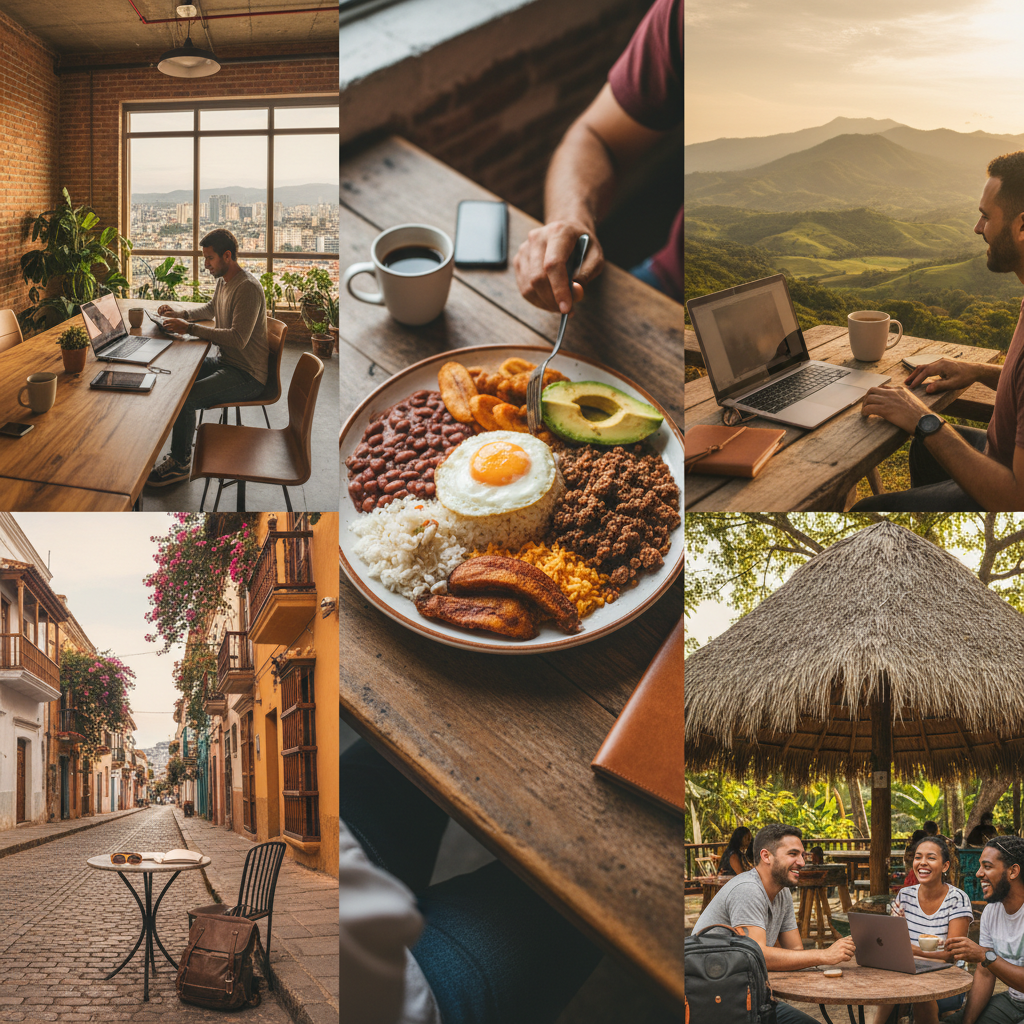
- Food: Colombian cuisine is hearty and flavorful. Must-try dishes include bandeja paisa (a monumental platter), arepas (corn cakes), empanadas, ajiaco (chicken and potato soup), and an abundance of fresh fruits. Tinto (black coffee) is a daily ritual.
- Community: The digital nomad and expat communities are flourishing, particularly in Medellín (El Poblado, Laureles). Facebook groups like